

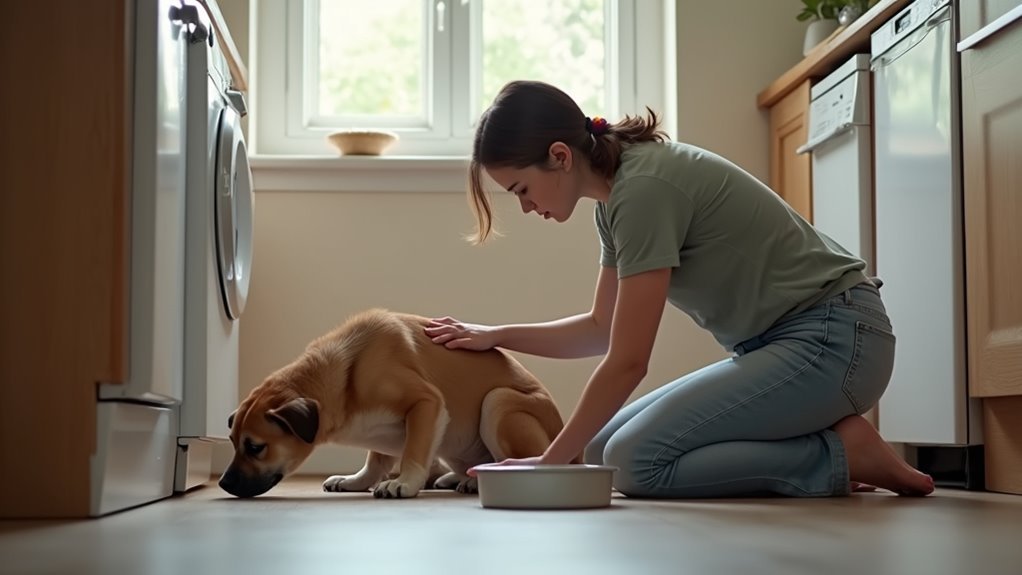

Dogs vomit for many reasons, ranging from mild stomach upset to serious health problems. Eating garbage, abrupt diet changes, infections, toxins, and intestinal blockages are common triggers. The look of the vomit, recent activities, and other signs like lethargy or diarrhea help point to the cause. Quick veterinary attention is needed for continuous vomiting, blood in vomit, or sudden weakness. Collecting a sample and noting timing and behavior helps the vet diagnose and treat faster.
Common Causes of Dog Vomiting
Most often, dog vomiting starts with something simple, like a food change or a sneaky snack from the trash.
You might notice it after your dog gulps dinner too fast, eats fatty scraps, or grabs spoiled food.
Sometimes, dietary intolerance or food allergies keep upsetting the stomach again and again.
Motion sickness can also leave your pup nauseous after car rides, and that’s no fun for either of you.
Beyond food, parasites, viruses, and bacteria can irritate the gut and trigger vomiting.
Toxins, some medicines, and serious problems like kidney disease, pancreatitis, or a blockage could also play a role.
Should your dog keep vomiting, seems weak, or can’t hold down water, call your vet soon.
How Is Vomiting Different From Regurgitation?
Vomiting and regurgitation can look a lot alike initially, but they happen in very different ways. Whenever your dog vomits, the body pushes food or fluid from the stomach with effort. With regurgitation, it comes back up gently from the esophagus, often soon after eating. That difference can matter, especially should you notice esophageal dysfunction or changes in feed timing.
| Sign | What it could suggest |
|---|---|
| Belly heaving | Vomiting |
| Quiet, sudden return | Regurgitation |
| Nausea or drooling | Vomiting |
| Right after meals | Regurgitation |
In case you’re unsure, you’re not alone, and that uncertainty is normal. Try to observe when it happens, how soon after meals, and whether your dog seems strained. Those details help you and your vet sort out what’s going on and choose the next right step.
What Dog Vomit Looks Like
Once you know the difference between vomiting and regurgitation, the next clue is what actually comes up. You may see yellow bile, partly digested food, or foam. Sometimes the mess looks chunky, sometimes soupy, and those texture differences can help you tell whether food stayed in the stomach long enough to decompose.
Red, brown, or black material can happen too, and that calls for close attention. In the event you notice grass, hair, or bits of a toy, that detail matters. Odor analysis helps as well, because sour, rotten, or very strong smells can point to different stomach problems.
A small amount of mucus can show irritation. Even then, you don’t have to panic. Just watch the color, texture, amount, and smell, and share those details with your vet.
Warning Signs in Vomiting Dogs
Should your dog starts vomiting, the warning signs can tell you a lot about how serious it is. Watch for repeated vomiting, dry heaving, a swollen belly, or pain when you touch the stomach.
You should also notice blood, weakness, drooling, fever, or a sudden loss of interest in food and play. In case your dog seems anxious, hides, or shows behavioral stress, the upset could be deeper than a simple tummy issue.
Puppies and older dogs can show age related sensitivity, so even mild vomiting can hit them harder. Trouble keeping water down, shaking, or a very tired look also deserves attention.
Whenever these signs stack up, your dog needs more than a wait-and-see approach, and you’re right to take them seriously.
What to Do When Your Dog Vomits
Once your dog vomits, start with a calm check of how they look and act, then pause food for a short time provided they seem otherwise okay.
Offer small sips of fresh water and watch closely for more vomiting, belly swelling, weakness, or anything that looks off.
Should the vomiting keep going, your dog can’t keep water down, or you suspect poison, a blockage, or bloat, call your vet right away.
Immediate Care Steps
A dog vomit can feel scary in the moment, but your initial steps matter a lot. First, stay steady and give your dog a calm environment. Remove food for now, but offer small sips of fresh water. Watch for pattern changes and note what came up. A cool, damp cloth or cold compresses can help if your dog seems hot or restless.
| Step | Why it helps |
|---|---|
| Clear the area | Keeps your dog safe and reduces stress |
| Offer water in small amounts | Helps avoid more upset |
| Record details | Helps you spot a pattern |
If your dog settles, you can rest beside them and keep things quiet. That simple support helps you both feel less alone.
When To Call Vet
Should your dog vomit once and then act normal, you can often watch closely at home, but some signs mean it’s time to call the vet right away. Trust your gut when your pup seems off, because you know their normal best. Use phone triage to share the timing, color, and any food or toy your dog might’ve eaten. Ask about insurance considerations too, so you’re not surprised later.
- Call fast for repeated vomiting or unproductive retching.
- Get help when your dog can’t keep water down.
- Seek urgent care for a swollen belly, pain, or weakness.
- Call right away should you suspect poison, a blockage, or blood.
Home Care for Mild Dog Vomiting
After a mild vomiting episode, your main job is to help your dog rest, stay calm, and avoid anything that could upset the stomach again. Keep the room quiet, then offer small sips of water while doing hydration monitoring. In case water stays down, you can try a bland meal later.
| Care step | What you do |
|---|---|
| Rest | Let your dog nap |
| Water | Offer small sips |
| Food | Wait, then feed bland food |
| Support | Use probiotic supplementation when advised |
| Watch | Notice energy and appetite |
This simple routine helps many dogs feel safe again. Skip treats, rich food, and fast play for now. Stay nearby, speak softly, and give your dog time. Should your dog seems settled, you’re helping the body reset without adding more stress.
When Dog Vomiting Needs a Vet
Even though your dog seemed fine before, some vomiting needs a vet right away because it can point to a serious problem that won’t improve on its own. Should your dog keep throwing up, can’t keep water down, or seems weak, don’t wait. You’re not overreacting, and you’re not alone.
- Call your vet should vomiting last more than 24 hours.
- Get help fast for repeated vomiting or unproductive retching.
- Treat suspected poisoning, obstruction, or bloat as an emergency.
- Watch closely after dietary changes or strong behavioral stress.
Should your dog’s belly look swollen, or should you see blood, head in now. Puppies, older dogs, and dogs with other illness need quicker care, too. Trust your gut, because you know your dog best, and timely help can make a hard day much safer.
How Vets Diagnose Dog Vomiting
Next, your vet starts like a detective and gathers clues from your dog’s story, because vomiting is a symptom, not a diagnosis. You’ll share when it began, how often it happens, and whether your dog ate trash, toys, or a new food.
Then your vet checks your dog’s belly, hydration, temperature, and gum color to spot pain or weakness. Should the cause not be clear, lab analyses can look for infection, organ trouble, toxins, or parasites.
Your vet could also use diagnostic imaging, like X-rays or ultrasound, to find a blockage or foreign object. If your dog has repeated gas and belly upset, a hydrogen breath evaluation can help point to gut trouble.
Each clue helps your vet narrow the list and choose the next step with confidence, not guesswork.
Treatment Options for Dog Vomiting
Treatment starts via calming your dog’s stomach and getting ahead of the cause, because vomiting is often a sign that something deeper is going on. You can help by pausing food for a short time, then offering small sips of water and a bland meal once your vet says it’s safe.
Should your dog have parasites, infection, pancreatitis, or swallowed something, your vet will treat that issue initially, which is the real fix. Supportive care could also include fluids and medicine for nausea.
- Ask your vet before giving any home treatment.
- Use Herbal remedies only provided your vet approves them.
- Try Acupuncture therapy for dogs who need extra support.
- Get urgent care for repeated vomiting or a swollen belly.
You’re not alone here, and help can start quickly.
How to Prevent Dog Vomiting
You can help prevent dog vomiting through keeping your dog on a consistent feeding schedule, because sudden meal changes can upset their stomach.
You should also watch what they get into, since garbage, table scraps, spoiled food, and other hazards can quickly lead to trouble.
A little extra caution at home and on walks can spare your dog a lot of discomfort.
Consistent Feeding Schedule
A steady feeding schedule can do more for your dog’s stomach than most people expect. Whenever you keep meal timing and portion control predictable, you help your dog’s body settle into a calm routine.
That rhythm can lower stress on the gut and make mealtimes feel safe.
- Feed at the same times each day.
- Split daily food into smaller meals.
- Measure portions so you don’t overfeed.
- Keep changes slow and gentle.
You’ll also notice that your dog often relaxes faster whenever food arrives on time. In case your home feels busy, a routine gives your dog a steady anchor.
And whenever your dog knows what to expect, you both get a little more peace around the bowl.
Hazard Avoidance Tips
Keeping hazards out of reach can spare your dog a rough day, because many vomiting episodes start with one quick bad bite or a curious sniff. You can lower risk by storing food, pills, and chemicals on high shelves, and by using secure trashcans with tight lids.
Next, check floors, counters, and bags for dropped snacks, wrappers, socks, toys, and bones before your dog does. Also, read labels for toxin identification, since chocolate, xylitol, grapes, and some cleaners can upset your dog fast.
Then, teach guests and kids not to share table scraps without asking you initially. Finally, watch yard areas for sticks, fertilizer, and standing water, because your dog trusts you to notice what smells fun but isn’t safe.
When to Seek Emergency Help
Should your dog keeps vomiting, starts retching without bringing anything up, or suddenly seems weak, bloated, or in obvious pain, don’t wait to see should it passes. These signs can point to bloat, blockage, or poisoning, and your buddy needs fast care. Call your vet or an emergency hotline right away in the event that you see sudden collapse, swollen belly, pale gums, or trouble breathing.
- Repeated vomiting can drain fluids fast.
- Unproductive retching often means an emergency.
- Blood in vomit calls for urgent help.
- In the event that your dog might’ve eaten a toxin, go now.
In the event that your dog can’t keep water down, acts dull, or worsens, head in today. Quick action helps you protect your dog and stay calm together.
Frequently Asked Questions
Can Stress or Anxiety Make My Dog Vomit?
Yes, stress can make your dog vomit. You may notice stress induced vomiting or anxiety related regurgitation after changes, loud noises, or separation. You can help by staying calm, keeping routines, and calling your vet if it continues.
Why Does My Dog Vomit After Exercise?
You might be seeing exercise induced regurgitation: your dog might gulp air, eat too fast, or bounce with a full stomach after a workout. Like a warning from Apollo, observe gastric torsion risk and rest, then call your vet.
Is Vomiting More Common in Puppies?
Yes, you’ll often see vomiting more in puppies because their puppy digestive systems are still developing, and infections, parasites, or milk intolerance can upset them. If it keeps happening, call your vet.
Can Kennel Cough Cause My Dog to Vomit?
Yes, kennel cough can make your dog vomit. The respiratory infection often causes postnasal drip and throat irritation, which can trigger gastrointestinal irritation and coughing up mucus. If you are worried, you are not alone; call your vet.
Should I Change My Dog’s Feeding Schedule?
Yes, you should, especially if your dog gulps meals or vomits after eating. Adjust meal timing and portion control by offering smaller, more frequent feedings, and you will help your pup feel calmer and fit in better.