

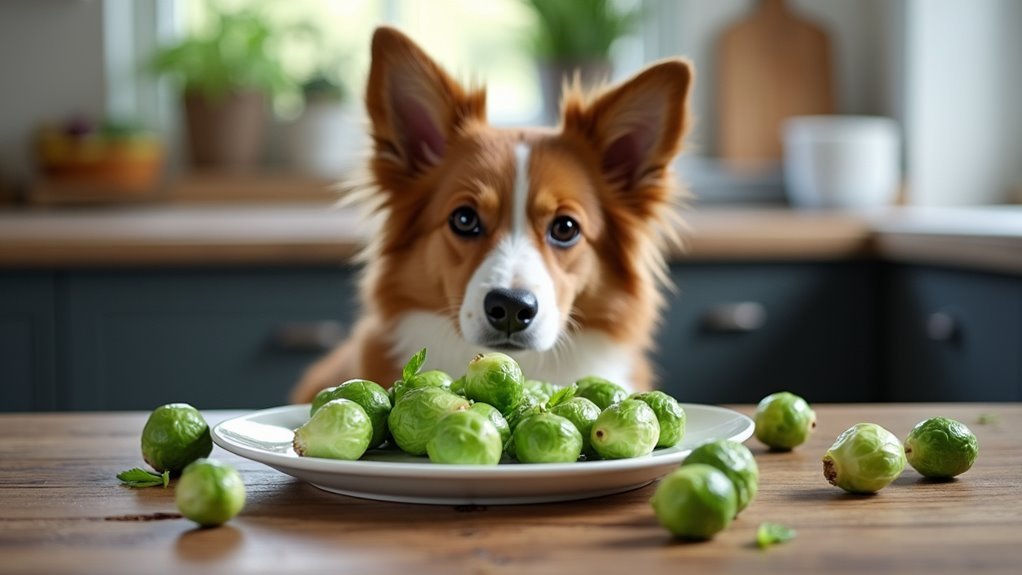

Yes — dogs can eat Brussels sprouts in small, plain portions. These veggies provide fiber, vitamin C, vitamin K, and antioxidants that support digestion and immune health. Serve them cooked and cut into small pieces to avoid choking and reduce gas. Skip salt, butter, garlic, and onion to protect your dog’s digestive system. Read on for safe serving sizes, signs of digestive upset, and situations when Brussels sprouts should be avoided.
Can Dogs Eat Brussels Sprouts?
Yes, dogs can eat Brussels sprouts, but only in moderation and only while you serve them plain, cooked, and cut into small pieces.
You may share a little with your dog whenever you want a fresh snack option, and that can fit nicely with dog digestion provided you keep the serving small.
Start with just half a sprout, then watch for gas or tummy trouble.
Provided your dog handles it well, you can use these sprouts as one of your treat alternatives instead of richer table food.
Stick to plain sprouts with no salt, butter, onion, or garlic.
Also, skip raw pieces and big chunks, since they’re harder to chew and digest.
With care, you may offer a simple snack that feels thoughtful and safe.
Are Brussels Sprouts Good for Dogs?
Brussels sprouts can be a healthy little bonus for your dog because they offer fiber, vitamins, and antioxidants in a low-calorie package.
You just need to keep them plain, cooked, and cut into small pieces so your dog can handle them safely.
Whenever you feed them in small amounts, they might support digestion and make treat time feel a bit more nourishing.
Nutritional Benefits for Dogs
A few small Brussels sprouts can give your dog more than just a crunchy snack, because they pack fiber, vitamins, and minerals in each bite. You help your pup get extra nutrients that support everyday health, and that can feel like a smart little win for both of you. The antioxidant benefits could also help protect cells, while micronutrient absorption supports normal body function.
| Nutrient | Why it matters |
|---|---|
| Fiber | Helps keep digestion moving |
| Vitamin C | Supports immune health |
| Vitamin K | Aids normal blood work |
Because they’re low in calories, Brussels sprouts can fit into your dog’s treat routine without crowding out meals. That balance can make your furry sidekick feel included at the table, minus the begging face.
Feeding Brussels Sprouts Safely
Whenever you serve them the right way, Brussels sprouts can be a safe little extra for your dog instead of a risky experiment.
You can steam or boil them, then chop them into small bites. Skip salt, butter, garlic, onion, and heavy sauces, because those can upset your dog or even hurt him.
Start with half to one sprout, then watch digestive monitoring closely for gas, loose stool, bloating, or vomiting. Should your dog do well, you could offer a small serving now and then.
Keep raw sprouts and tough stalks off the menu, since they’re harder to chew and digest.
For tiny dogs, a few pieces might work; bigger dogs could handle a little more. Use them as training treats, not a meal.
What Are the Risks of Brussels Sprouts for Dogs?
Even though Brussels sprouts aren’t toxic to dogs, they can still cause problems provided you feed too much or prepare them the wrong way.
Should you share a big serving, you might notice digestive gas, bloating, loose stool, or even vomiting.
Raw pieces can also be hard to chew and could upset your dog’s stomach.
For dogs with sensitive bellies, the fiber can hit hard, so small reactions can turn into a rough day.
You should also be careful with thyroid interaction concerns, since too much of this veggie can matter for some dogs with special health needs.
Seasonings, butter, garlic, and onion add extra risk and can make a simple snack unsafe.
Pay attention to your dog’s comfort, because that’s what keeps them feeling included and cared for.
How to Serve Brussels Sprouts to Dogs
You can serve Brussels sprouts to your dog safely through cooking them plain, since that makes them easier to chew and gentler on the stomach.
Start with a very small amount, like half to one sprout, so you can see how your dog handles it.
Keep the pieces small and skip seasoning, because your dog doesn’t need a fancy veggie makeover.
Proper Cooking Methods
The best way to serve Brussels sprouts to dogs is to keep them simple, soft, and plain. Use a gentle steaming technique or a quick boil so the sprouts turn tender and easier to chew. Then cool them and chop them into small pieces.
- Wash them well.
- Trim and use paring tips to remove tough ends.
- Skip salt, butter, garlic, and onion.
You’re helping your dog join the treat bowl without extra strain on the stomach. Suppose you want to roast them, keep it light and avoid crisp edges that can feel hard to chew.
Plain cooking lets the natural fiber stay friendly for your pup, while also making each bite easier to digest. Serve them fresh, not mixed with human food, so your dog gets a simple, safe snack.
Safe Serving Sizes
Start small, because Brussels sprouts can be a bit tricky for some dogs, even though they’re safe. For portion control, give your dog just a tiny taste initially, then watch how their belly reacts.
A small dog could do well with half to one sprout, a medium dog with one or two, and a larger dog with three or four at most. Keep the pieces cooked, plain, and soft, so they’re easy to chew.
Because these sprouts are rich in fiber, you’ll want to keep the serving frequency low, like an occasional treat rather than a daily habit. Should your dog get gassy, loose, or uneasy, pause right away and stick with foods that settle them better.
How Much Brussels Sprout Can Dogs Eat?
How much Brussels sprout your dog can eat depends on size, stomach sensitivity, and how the sprouts are prepared, so it’s best to keep the serving small and gentle. You’re building trust with your pup whenever you start slow and watch closely.
Try this simple portion checking plan:
- Give half to 1 cooked sprout for an initial taste.
- Should that go well, keep servings modest at 1 to 4 sprouts.
- Offer them only as an occasional treat, not every day.
For small dogs, use less; for larger dogs, use a bit more. Always choose plain, chopped, cooked sprouts.
With careful serving frequency, you can fit them into your dog’s routine without crowding out balanced meals. That way, your dog gets a safe snack and you stay confident.
When Brussels Sprouts Aren’t Safe for Dogs
Brussels sprouts aren’t a good choice for every dog, even though they’re safe in many cases, because some pups have sensitive stomachs, food allergies, or chewing trouble that can turn a simple snack into a messy problem. In case your dog gets gas, bloating, vomiting, or diarrhea, pause right away. Raw sprouts can also be hard to chew and digest, so they’re best avoided for dogs who gulp food.
| Situation | What you should do |
|---|---|
| Sensitive stomach | Skip sprouts |
| Allergy signs | Call your vet |
| Large or raw pieces | Cook and chop initially |
You should also check seasonal availability and storage safety, since old sprouts spoil fast and can upset your dog’s belly. Whenever you share your table, choose plain, fresh pieces only.
Frequently Asked Questions
Can Puppies Eat Brussels Sprouts Safely?
Yes, you can give puppies Brussels sprouts safely in tiny, plain, cooked pieces. Watch puppy digestion closely, start with a very small portion size and stop should you notice gas, diarrhea, or discomfort.
Are Frozen Brussels Sprouts Okay for Dogs?
Yes, you can give your dog frozen Brussels sprouts provided you thaw and cook them initially; their frozen texture can be hard to chew, but nutrient retention stays good. Serve plain, chopped, and in small amounts.
Can Brussels Sprouts Help a Dog Lose Weight?
Yes, you can use Brussels sprouts to help your dog trim down, since they are low in calorie density and can enhance fullness. Keep portion control tight, though, and serve them plain, cooked, and sparingly.
Should Dogs Eat Brussels Sprouts Leaves or Stems?
Give your dog tender leaves, not tough stems. Leaf texture is easier to chew and digest, while tough stems can upset the stomach or cause choking. Serve small, cooked, plain pieces for safety.
How Soon Should I Watch for Side Effects After Feeding?
You should watch for side effects within a few hours and sometimes by the next day. Check your symptom checklist for gas, bloating, vomiting, diarrhea, or discomfort, and stop feeding if you notice any of these.