

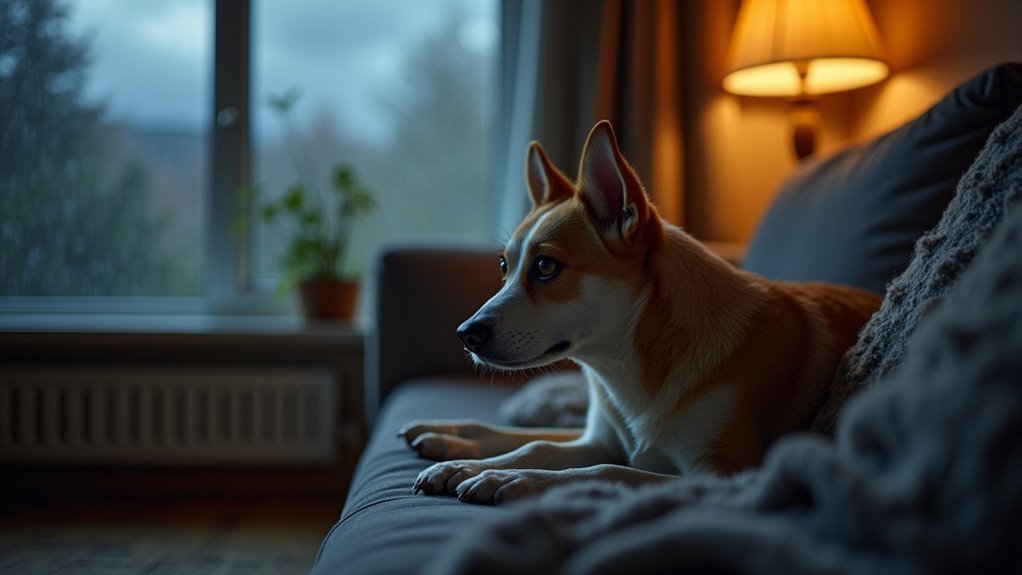

Dogs often fear thunder because their hearing and senses are far more acute than humans’. Loud rumbles, sudden flashes, and barometric shifts trigger stress and fight-or-flight reactions. Past traumatic experiences or genetic predisposition can increase sensitivity to storms. Calming routines, a safe den-like space, and gradual desensitization techniques reduce panic over time. Simple tools like pressure wraps, background noise, and pheromone products can also help a fearful dog stay calmer during storms.
Signs Your Dog Has Thunder Anxiety
Often, the initial signs of thunder anxiety show up before the storm even hits. You might notice your dog pacing, panting, or sticking close to you for comfort.
Some dogs tremble, hide, or keep scanning windows and doors as though they expect trouble. Others lick their lips, yawn, or refuse food, which can signal stress.
Should your dog seem extra jumpy at every rumble, you’re not imagining it. The more anxious response can also show up as clingy behavior or sudden attempts to escape.
To help your dog feel safer, try a calm room, pheromone diffusers, and scent enhancement. These gentle supports can make the space feel more familiar and soothing, so your dog can settle with you instead of feeling alone.
What Causes Thunder Anxiety?
Thunder can unsettle your dog because the sound is loud, sudden, and hard to predict, so it might feel far stronger than it does to you.
You might also notice that changes in barometric pressure and the feeling of a storm building can make your dog uneasy before the initial boom.
On top of that, lightning, static electricity, and other storm cues can add extra stress and cause the fear to intensify.
Loud Sound Sensitivity
Dogs can feel thunder much more strongly than we do, and that extra loudness is a big reason many of them panic.
Your dog’s hearing thresholds are lower than yours, so even distant rumbles can hit like a boom. Their frequency sensitivity also matters, because thunder carries deep sounds that can feel harsh and confusing.
When noise arrives fast and without warning, your dog might switch into a защит mode and rush to hide.
You’re not overreacting provided you notice trembling, pacing, or wide eyes; these signs usually mean the sound feels overwhelming.
Some dogs also react more whenever they’re already tense, so their fear builds quickly. That’s why a calm, quiet room can help your dog feel safer as storms roll in.
Barometric Pressure Changes
As a storm rolls in, a dog can sense changes in barometric pressure long before you hear the initial rumble, and that shift can make anxiety spike fast. Your dog’s pressure sensitivity could cause the body to feel uneasy, even when the sky still looks calm to you.
Many dogs also use weather sensing in ways we barely notice, so a drop in pressure can feel like a warning sign. That uneasy feeling can build, then turn into pacing, hiding, or clingy behavior.
Should your dog seem tense before thunder starts, trust that cue. You’re not imagining it, and your dog isn’t being dramatic either. The storm might be silent for you, but your dog might already feel it coming, and that can shake confidence quickly.
Lightning And Static Electricity
At the moment lightning flashes and the air crackles with static, your dog could feel like the whole world has suddenly turned unpredictable. That sudden glare can startle you both, and your dog might link the flash with danger before thunder even arrives.
On top of that, static buildup can make the coat tingle or give tiny shocks, which adds another layer of stress. In case your dog has lightning sensitivity, bright streaks across the sky can feel like a warning signal, not just a light show.
How to Comfort Your Dog During a Storm
As thunder starts, you can stay close and keep your voice calm so your dog feels less alone. You don’t need to act big or overly cheerful, because your steady presence often tells your dog that everything’s okay.
After that, give your dog a safe spot like a covered crate or quiet room where they can relax and feel protected.
Calm Presence Matters
Your calm can be the anchor your dog needs during a storm. Whenever you steady your voice and move with ease, you send a clear signal that the room is safe.
Your owner demeanor shapes how your dog reads the moment, so breathe slowly and keep your hands relaxed. Should you speak, use short, warm phrases.
- Stay near your dog without crowding them.
- Keep your routine simple and familiar.
- Offer gentle petting only provided your dog leans in.
- Use scent anchoring through leaving a worn shirt nearby.
These small cues help your dog feel less alone. As the storm passes, your steady presence can build trust, so your dog starts to borrow your confidence rather than panic.
Create A Safe Space
A safe den is one of the best gifts you can give a scared dog during a storm. You can turn an interior room, closet, or covered crate into one of your dog’s denning options. Add a bed, blanket, and a toy with your scent so the space feels familiar. Then close blinds and doors to block flashes and noise.
Should your dog prefers to hide under a table or behind a sofa, let them stay there. Those choices are sensory refuges, and they help your dog feel in control. You may also add white noise or soft music to soften thunder. Stay nearby, speak gently, and allow your dog settle at their own pace.
Best Calming Tools for Thunder Anxiety
Calming tools can make thunder a lot less scary for your dog, especially should you choose items that lower noise, block flashing light, and give them a clear place to hide.
You can build a comfort kit that helps your dog feel like part of a calm little pack.
- Thunder shirts add gentle pressure that can steady restless dogs.
- Calming pheromones can create a soothing scent in the room.
- White noise or soft music can cover sharp thunder crashes.
- A covered crate or blanket can make hiding feel safe and familiar.
You can also keep treats nearby and let your dog choose what feels best.
Whenever you pair these tools, you give your dog comfort, control, and a safer way to ride out the storm.
Training Tips to Reduce Storm Fear
Once you’ve set up comforting tools, training can help your dog feel safer the next time thunder rolls in. Start while skies are calm, then use clicker conditioning to mark a quiet look, a relaxed breath, or a loose body. Pair each click with a tiny treat so your dog links calm choices with good things. Next, try target training during teaching your dog to touch your hand or a mat. That simple job gives focus as storm sounds begin.
| Step | What You Do | Why It Helps |
|---|---|---|
| 1 | Cue calm behavior | Builds confidence |
| 2 | Click and treat | Rewards relaxation |
| 3 | Practice target training | Redirects worry |
Keep sessions short, warm, and kind. Your steady voice and patient pace help your dog feel like they’re not facing the storm alone.
When to Call the Vet
Call your vet should your dog’s thunder fear starts to feel bigger than normal worry and begins to disrupt daily life. You’re not overreacting, and your dog isn’t being dramatic. Should fear keeps growing, a vet can help you sort out what’s going on and what to do next.
- Your dog won’t eat, drink, or settle after storms.
- You see panic, hiding, shaking, or destructive acts.
- Your dog shows emergency signs like trouble breathing or collapse.
- You want a medication consultation for severe anxiety.
Your vet might also check for pain or other health issues that can make fear worse. That way, you get support that fits your dog and helps your home feel calmer again.
How to Prepare Your Dog Before Storms
Before the initial rumble rolls in, you can do a lot to help your dog feel safer and more settled. Build a steady pre storm routine by closing curtains, turning on white noise, and setting up a quiet room or covered crate where your dog already likes to rest.
Keep treats, water, a leash, and any calming items in an emergency kit so you’re ready without rushing. Check windows and doors, then bring your dog inside early, before the sky changes. Give calm praise and gentle attention, because your steady energy can help your dog borrow a little confidence from you.
Should you be able, feed and walk your dog ahead of time, so the storm doesn’t interrupt basic needs. That simple planning can make the whole home feel calmer.
How to Help Your Dog Over Time
Helping your dog feel better over time takes patience, but small steps can really add up. You’re not fixing one scary night; you’re building gradual resilience with caregiver consistency.
- Keep a calm routine before, during, and after storms.
- Practice low-volume thunder sounds with treats and play.
- Let your dog choose a safe spot, and stay nearby.
- Track progress, because tiny wins matter.
Should your dog shakes, don’t scold or rush. Instead, speak softly and act steady. That helps your dog borrow your confidence.
Over weeks, your dog can learn that thunder doesn’t always mean danger. In case fear stays strong, talk with your vet about extra support. You and your dog deserve that calm, safe team feeling.
Frequently Asked Questions
Can Thunder Anxiety Start Suddenly in Adult Dogs?
Yes. Thunder anxiety can start suddenly in adult dogs, like a storm cloud rolling in. You might notice a sudden onset of fear from sensory triggers, past stress, or genetics. You are not alone, and help can ease it.
Are Some Dog Breeds More Prone to Thunder Fear?
Yes, some breeds seem more prone to thunder fear because you’re seeing a mix of genetic predisposition and sensory sensitivity. Herding and some hunting dogs might react more strongly, though any dog can develop this anxiety.
Will My Own Anxiety Make My Dog More Scared?
Yes, your anxiety can make your dog more scared. Wouldn’t your dog notice your tense posture, quick breaths, and rushed movements? Your behavior as an owner matters, and calm training reinforcement helps your dog feel safer.
Do Puppies Outgrow Fear of Thunderstorms Naturally?
Not always; you cannot count on puppies to outgrow thunder fear naturally. Initial socialization helps, but gradual desensitization and calm support usually work better. You will build confidence by making storms feel safer and less overwhelming.
Can Thunder Anxiety Cause Destructive Behavior?
Yes, thunder anxiety can cause destructive behavior. You may see noise phobia trigger chewing, scratching, or escape attempts as your dog tries to cope or reach safety, so you will want to reduce stress and protect them.