

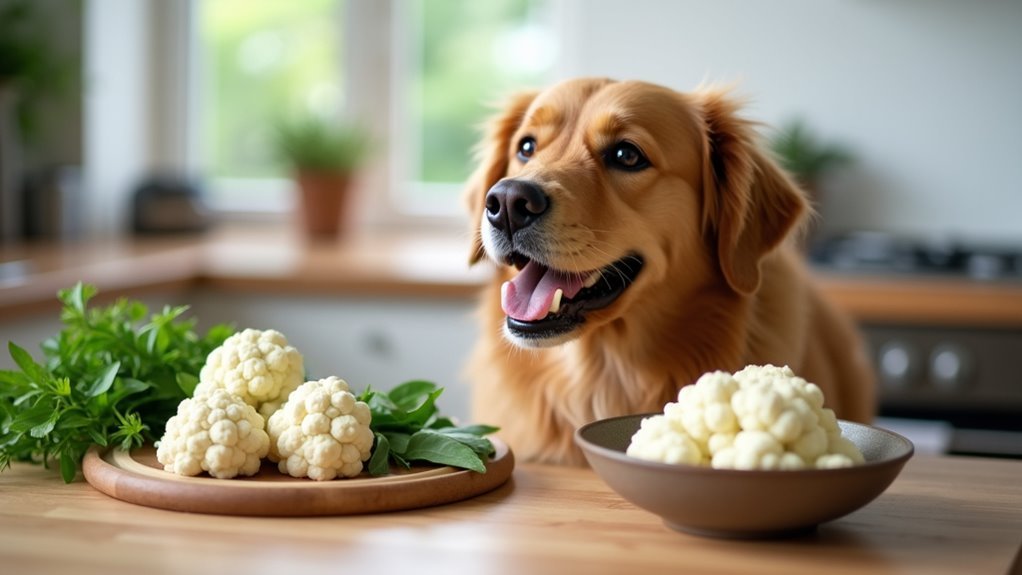

Yes — most dogs can eat cauliflower. Plain, cooked or raw cauliflower in small amounts is generally safe and nutritious for dogs. It provides fiber, vitamins C and K, and low calories that can support weight control. Avoid added oils, salts, or seasonings that can harm digestion. Large portions can cause gas or stomach upset, so offer cauliflower as an occasional, controlled treat.
Can Dogs Eat Cauliflower Safely?
Yes, dogs can eat cauliflower safely provided you serve it plain and in small amounts. You’re not alone in case you want a simple treat that feels kind and safe.
Plain cauliflower, raw or cooked, is non-toxic, but keep the feeding frequency modest so your dog’s tummy stays calm. Start with a few bite-sized pieces, then watch how your dog handles it.
Because seasonal availability can vary, you could find fresh cauliflower more often in cooler months, yet frozen plain florets can also work. Cooked pieces are often easier to chew and digest, especially for small dogs.
Avoid salt, butter, oil, and any seasoning, since those can upset your dog or add risk. Keep cauliflower as a small extra, not a meal replacement.
Is Cauliflower Good for Dogs?
Cauliflower can be a good treat for dogs because it brings a few simple benefits without piling on extra calories. You can use it to add a little variety, and many dogs enjoy the crunch or soft bite. It’s also handy whenever you want a snack that fits seasonal availability and feels fresh from your kitchen. Because it’s mild, you can build positive behavioral associations during training or mealtime.
Still, you should keep portions small and plain, since too much can upset your dog’s stomach. Consider it as a side treat, not a meal replacement. Whenever you serve it in bite-sized pieces, you help your dog enjoy it safely and comfortably, while keeping snack time easy for both of you.
Cauliflower Nutrients for Dogs
Good nutrition starts with the little things, and cauliflower brings a few helpful ones to your dog’s bowl. You can see why many dog lovers like it as a light treat. It offers fiber, which helps keep your dog’s tummy moving, plus vitamin C and vitamin K for everyday support. Its antioxidant profile adds extra plant power, and its hydration benefits come from being mostly water.
- Fiber supports gentle digestion
- Vitamins C and K add nutritional value
- Water and antioxidants make each floret useful
Because cauliflower is low in calories, you can share it without crowding out your dog’s main food. Still, plain pieces work best, so your pup gets the good stuff with less fuss.
How Much Cauliflower Can Dogs Eat?
Even though cauliflower is safe for dogs, the amount you give really matters. You should keep treats small so your pup stays happy and comfortable. Good portion guidelines usually mean 1 to 2 florets for small dogs, 2 to 3 for medium dogs, and up to 4 pieces for large dogs. Start with less, then watch for gas or loose stool.
Because cauliflower is low in calories, it can fit into your dog’s treat budget without crowding out meals. You can also adjust based on seasonal availability, since fresh cauliflower might be easier to find at some times of year. Still, keep it as an occasional snack, not a daily habit. That way, you and your dog can enjoy it together without digestive drama.
How to Serve Cauliflower Safely
As it comes time to share cauliflower with your dog, a little care goes a long way. Keep it plain, then trim it into small bites so your buddy can enjoy it safely. Good portion presentation helps you stay calm and keeps treat time friendly for everyone.
- Wash the florets well.
- Steam or lightly cook them for easier chewing.
- Skip salt, butter, garlic, onion, and sauces.
Because seasonal availability can change, you can buy fresh heads whenever they’re in season or choose frozen plain cauliflower for a steady option.
Serve only a few pieces at initially, and watch how your dog feels afterward. Should the tummy stays settled, you’ve found a simple treat that fits right into your shared routine.
Can Dogs Eat Raw Cauliflower?
Yes, your dog can eat raw cauliflower, and it’s non-toxic provided you serve it plain in small amounts.
Still, raw florets can be harder to chew and digest, so too much could lead to gas, bloating, or diarrhea.
To keep things safe, cut it into tiny bite-sized pieces and start with just a few florets.
Raw Cauliflower Safety
Raw cauliflower can be a safe snack for your dog whenever you serve it plain and in small pieces, but it still needs a little care.
You’re sharing a crisp flower bud that many dogs enjoy, especially after a texture comparison with softer treats.
Raw florets stay low in calories and keep their shape, so they can fit into your routine without much fuss.
- Cut it into bite-sized pieces
- Offer it plain, with no seasoning
- Start with a tiny amount and watch how your dog does
If your dog likes to join family snack time, this can be a simple way to include them.
Keep portions modest, and choose fresh pieces so each bite feels safe, familiar, and easy to enjoy.
Digestive Upset Risks
Even though cauliflower is safe for dogs in small amounts, too much can upset your dog’s stomach fast. Whenever you give your pup raw florets, the high fiber can stir up gas, loose stool, or bloating.
That happens because your dog’s gut microbiome could need time to adjust, and sudden fermentation reactions can make the tummy feel loud and uncomfortable. You may notice your dog acting restless, passing more gas, or skipping a meal.
Serving Size Tips
Provided you’re offering cauliflower to your dog, serving size matters just as much as the veggie itself. You can give raw cauliflower, but keep portion moderation front and center so your buddy stays comfy and happy. Start with a few tiny florets, then watch for gas or loose stool. For most dogs, this treat should stay small and plain.
- Small dogs: 1 to 2 bite-sized florets
- Medium dogs: 2 to 3 bite-sized florets
- Large dogs: up to 4 small pieces
Should you’re trying variety rotation, swap cauliflower with other dog-safe veggies across the week. That helps keep treats fun without overdoing fiber.
Cut every piece small, and skip stalks supposing they seem tough. Once you keep it light, you’re giving your dog a tasty snack that fits right into a balanced routine.
Can Dogs Eat Cooked Cauliflower?
Yes, you can offer your dog cooked cauliflower, and it’s often easier on the stomach than raw pieces.
Plain steaming or boiling keeps it safe, so skip butter, salt, and seasonings.
Start with a few small bites, since too much can still cause gas or an upset tummy.
Cooked Cauliflower Benefits
Cooked cauliflower can be a smart little treat for your dog whenever you serve it plain and in small pieces. Gentle heat changes cooking enzymes, so the florets soften and offer nice texture variation for pups who prefer easier chewing.
That can help you feel good about sharing a bite from your plate.
- It’s low in calories, so it fits as a light reward.
- It gives fiber, vitamin C, and vitamin K in small amounts.
- It’s soft enough to support dogs with tender teeth.
You still want to keep portions modest, because too much can stir up gas or loose stools. If you choose plain cooked cauliflower, you’re giving your dog a simple snack that feels thoughtful, safe, and easy to enjoy together.
Safe Cooking Methods
Whenever you cook cauliflower for your dog, the safest path is simple: keep it plain, gentle, and easy to chew.
Steam blanching works well because it softens the florets without adding salt, butter, or seasoning. You can also try oven roasting, but skip oil and let the pieces cool fully before you serve them. Then cut everything into small bites, so your dog can enjoy it without a struggle.
Light cooking can make cauliflower easier on sensitive stomachs, which helps you feel confident at treat time. At the same time, avoid garlic, onions, and heavy sauces, since those can hurt your pup.
Should the pieces look too firm, cook them a little longer, but keep them tender, not mushy.
Portion Control Tips
A little bit of cooked cauliflower can be a nice treat, but portion control really matters. You can start with a floret or two, then watch how your dog feels after eating. Keep treats under 10% of daily calories, and use meal pacing so you don’t crowd out dinner.
- Small dogs: 1 to 2 bite-sized pieces
- Medium dogs: 2 to 3 small florets
- Large dogs: up to 4 pieces, provided they stay comfortable
When seasonal availability gives you fresh cauliflower, serve it plain and lightly cooked. In the event your dog gets gassy, cut back next time. You and your pup can enjoy this snack together, as long as you keep portions steady and gentle.
Cauliflower Risks for Dogs
Even though cauliflower is safe for most dogs, the risks start once you feed too much or prepare it the wrong way. In case you push large servings, you can upset your dog’s digestive microbiome and invite gas, loose stool, or bloating.
Some dogs also have breeding sensitivities that make cruciferous foods harder to handle. Raw chunks can be tough to chew, so you should cut everything into small pieces and skip the stalk when possible.
You also need to keep it plain, because salt, butter, oils, garlic, and onions can turn a simple snack into a problem. Whenever you stay careful, you help your dog enjoy the treat without feeling left out at the family table.
Proper prep keeps the bite safe, gentle, and easy.
Signs Your Dog Ate Too Much Cauliflower
Should your dog ate too much cauliflower, you could notice an upset stomach, loose stools, or a bit of vomiting.
You may also hear more gas than usual, since cauliflower can make some dogs extra gassy.
Watch for these signs closely, because even a safe food can cause trouble whenever your dog gets too much at once.
Digestive Upset Signs
As soon as your dog eats too much cauliflower, the initial signs often show up in the belly, and that can feel worrying quickly. You might hear gut sounds or notice tummy rumbling after the snack.
Then your dog could seem off, with soft stools, mild diarrhea, or a sudden need to go outside.
- A gurgly belly after eating
- Loose stool or messy accidents
- Less interest in food for a bit
When you spot these changes, keep meals simple and watch your dog closely. Plain water helps, and a calm rest can settle things.
Most mild upset passes fast, but should the signs last, you should call your vet. You’re not overreacting; you’re paying attention, and that helps your dog feel safer.
Excess Gas Symptoms
A little extra cauliflower can stir up a lot of gas, and you could notice it pretty quickly. You might hear more tummy rumbling, see frequent farts, or catch your dog stretching out to ease pressure.
Some dogs also look bloated, pace, or seem less inclined to play because their belly feels off. In case the gas comes with loose stool, your dog likely had too much for one serving.
Keep calm and start digestive tracking so you can spot patterns after treats. Small, plain portions usually help, but a sudden big helping can tip things over.
Should your dog seem uncomfortable, slow the treats and try gentle gas remedies like a short walk or water. Were signs to linger, call your vet.
Which Dogs Should Avoid Cauliflower?
Some dogs should skip cauliflower, even though it’s safe for many others. Should your dog has breed sensitivities, a touchy stomach, or a history of gas and loose stools, you might want to pass. You should also be careful in case your dog takes medication, because medication interactions can sometimes matter with any new food.
- Puppies and small dogs can struggle with big pieces.
- Dogs with digestive trouble may react to the fiber.
- Dogs on special diets need a vet’s okay to begin with.
When you do share cauliflower, keep it plain and tiny. That helps your dog stay comfy and keeps mealtime calm. In the event your buddy already feels off after veggies, trust that signal and choose a safer treat.
Cauliflower Vs. Other Dog-Safe Vegetables
Cauliflower gives your dog fiber, vitamin C, and vitamin K, so it can stand out next to many other dog-safe veggies.
You’ll still want to compare it with options like carrots, green beans, and broccoli, since each one brings its own mix of nutrients and benefits.
Whenever you choose wisely, you can add variety without making your dog’s tummy unhappy.
Cauliflower Nutritional Edge
Nutrition can feel like a small puzzle whenever you want to give your dog a healthy treat, and cauliflower often fits that image well. It brings a few useful perks, and you can feel good offering it in small amounts.
Thanks to seasonal availability, it’s frequently easy to find fresh. With culinary trends pushing lighter snacks, cauliflower has become a friendly choice for many homes.
- It’s low in calories, so it won’t crowd out bigger meals.
- It offers fiber, which can support gentle digestion.
- It gives vitamin C, vitamin K, and antioxidants in a simple package.
Compared with many other dog-safe vegetables, you get a crisp, mild option that still feels special. That balance helps you share a treat your dog can enjoy.
Comparing Dog-Safe Vegetables
Whenever you compare cauliflower with other dog-safe vegetables, you’ll notice it sits in a very practical middle ground. It’s lighter than sweet potatoes, yet it gives more texture than cucumber, and that makes it easy to fit into your dog’s snack routine.
Because seasonal availability changes, you can swap in carrots, green beans, or zucchini whenever cauliflower isn’t fresh. With cooking comparisons, you might find lightly steamed cauliflower easier for your dog than raw pieces, while carrots often stay crunchier and peas feel softer.
You can build variety without losing safety, as long as you keep each veggie plain and small. This helps you feel confident, and your dog gets a menu that feels familiar, friendly, and easy to enjoy together.
How to Add Cauliflower to Dog Food
To make cauliflower a safe add-in for your dog’s food, start with a tiny amount of plain florets and keep the preparation simple. You can mix a few soft pieces into kibble as meal toppers, so your dog feels included at mealtime without changing the whole bowl. Should your pup likes new rewards, try small cooked bits as training treats, since they’re light and easy to carry.
- Steam or boil it without salt or oil.
- Cut it into bite-sized pieces.
- Offer it slowly and watch how your dog does.
Keep portions small, because too much fiber can upset the tummy. Through starting slow, you help your dog join the family table safely and comfortably.
Vet Tips for Feeding Cauliflower
As you talk with your vet about cauliflower, ask about your dog’s size, tummy sensitivity, and daily food needs, because those details shape what’s safe. Your vet can guide veterinary portioning so you don’t give too much at once. This matters because even a healthy treat can upset a sensitive belly.
You should also ask about feeding frequency, since a little cauliflower now and then is usually better than daily servings. Should your dog have gas, loose stool, or a history of picky digestion, your vet might suggest starting with a tiny taste and watching closely.
That simple plan helps you feel confident and keeps treat time calm. With the right advice, you could share this veggie in a way that fits your dog’s routine and comfort.
Safe Cauliflower Treat Ideas for Dogs
Turning cauliflower into a safe little treat is easier than it sounds, and you can keep it simple for your dog’s comfort. Try steamed florets, chilled and cut small, so your dog can nibble without stress. You can also mix tiny cauliflower bits into homemade cauliflower bites with plain pumpkin or oat flour. For a little extra fun, use them as training rewards whenever your dog nails a sit or stay.
- Offer raw pieces only provided your dog handles them well.
- Choose cooked florets for softer chewing and easier digestion.
- Skip salt, butter, garlic, and onion every time.
Keep portions small, and watch how your dog feels after each snack. In case the tummy stays calm, you’ve found a treat your pup can enjoy with the pack.
Frequently Asked Questions
Can Dogs Eat Cauliflower Leaves?
Yes, you can give your dog cauliflower leaves in moderation. Cauliflower nutrition adds fiber and vitamins, and careful leaf preparation means washing, chopping, and serving plain, so you keep treats safe, simple, and included.
Is Cauliflower Stalk Safe for Dogs?
No, you shouldn’t give your dog cauliflower stalks; they’re too fibrous and can upset digestion. Stick with small, plain florets instead, since they offer digestive fiber without the choking or gas risks.
How Often Can Dogs Have Cauliflower Treats?
You can offer cauliflower treats a few times a week, keeping portion sizes tiny and serving frequency low. Consider it as a small kindness so your dog feels included without upsetting their tummy.
Can Puppies Eat Cauliflower Safely?
Yes, puppies can eat plain cauliflower safely in tiny age appropriate serving sizes, but you should watch for digestive sensitivity. Start slowly, use cooked florets, and avoid seasoning, since puppy tummies can upset easily.
What Cauliflower Ingredients Are Toxic to Dogs?
Garlic and onion are the toxic culprits here, and you should also avoid heavy seasonings, butter, and oils. Cauliflower’s goitrogenic compounds and oxalate content are not toxins, but you will keep your dog safer with plain bites.