

A sudden shift to growling, snapping, or tense posture usually signals pain, fear, stress, or an underlying medical issue. Triggers can be simple, like a sore ear, a new animal in the home, or recent vaccination reactions. Behavioral causes include territorial reactions, resource guarding, or reduced tolerance due to aging. Subtle clues—changes in appetite, mobility, sleep, or grooming—often point to the problem. Quick attention from a veterinarian or qualified trainer helps identify cause and keep everyone safe.
What Sudden Dog Aggression Can Mean
When a dog suddenly starts snapping, growling, or acting wary, it often means something deeper is going on, not just a “bad mood.” Pain is one of the most common reasons, so a dog could react should you touch a sore ear, lift an aching body, or reach for food when it already feels uneasy.
You can consider this as behavioral signaling, because your dog is telling you that something feels off. A sudden shift from its usual self deserves a baseline assessment, so you can notice what changed and whenever.
Fear, stress, guarding, or confusion can also make your dog defensive, especially if it feels trapped or rushed. As you watch the pattern closely, you help your dog feel safer and better understood.
Pain and Illness That Can Trigger Snapping
Your dog couldn’t be acting out at all, because concealed pain can make even a gentle touch feel like a threat.
You could notice snapping whenever you pet, lift, or move your dog, and that sudden touch sensitivity can point to arthritis, dental pain, ear trouble, or another illness.
Whenever your dog gets irritable out of nowhere, it’s worth watching for small signs of discomfort, because a sore body often speaks before your dog does.
Hidden Pain Signals
Sometimes a dog that snaps, growls, or pulls away isn’t being “bad” at all, because pain can lurk behind the behavior.
You might notice concealed discomfort in small clues before you see a clear problem. Watch for 1. subtle limping after rest or play. 2. facial tension, like a tight mouth or squinting. 3. altered grooming, such as licking one spot too much or avoiding it. 4. flinching when you touch a shoulder, hip, or jaw. These signs often show up prior to your dog asks for space in a bigger way.
Should you catch them ahead of time, you can help your dog feel safer and more understood, and that matters to both of you.
Illness-Driven Irritability
Pain and illness can make a dog snap long before you see a bigger warning sign, and that can feel scary because the change could seem to come out of nowhere. You might notice your dog acting tense, grumpy, or quick to warn people off.
This can happen with arthritis, dental pain, stomach trouble, or subtle infections that only show small clues initially. Older dogs might also feel foggy or uneasy when their bodies aren’t working well.
Even medication side effects can leave your dog irritable and less patient. Should the aggression start suddenly, trust your gut and call your vet. You know your dog best, and a fast checkup can help rule out concealed illness before things get worse.
Sudden Touch Sensitivity
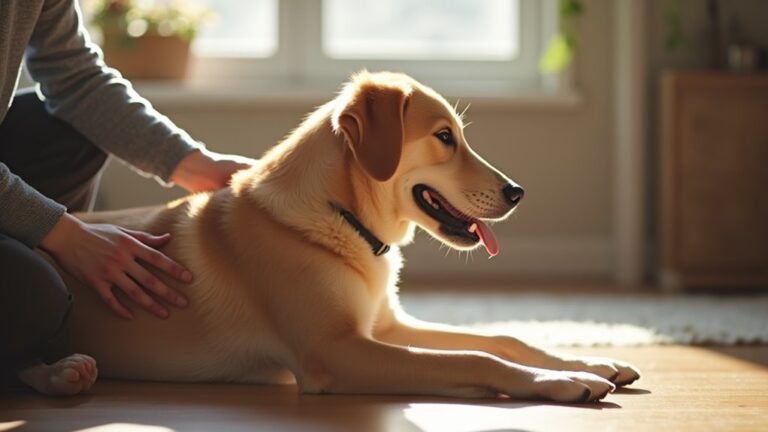
Should your dog snap whenever you reach to pet, lift, brush, or move them, that sharp reaction often means more than attitude. It can signal sudden touch sensitivity from arthritis, an ear infection, a sore tooth, or a concealed injury. You’re not managing a “bad” dog; you’re seeing pain speak up.
- Watch for flinching, stiffening, or turning away.
- Ask your vet for a vet assessment and pain mapping.
- Avoid pushing through pain, even supposing your dog seems okay later.
- After treatment, use handling desensitization in tiny steps.
Once you notice a new snap, stay calm and give space. Your dog needs relief, not a lecture. With the right care, you can help them feel safe again and protect the trust you share.
Fear as a Cause of Sudden Aggression
At the time a dog snaps, growls, or lunges out of nowhere, fear is often driving the reaction. You might see your dog’s fear thresholds drop whenever a new person, dog, or sound feels too close. Then your dog chooses fight over flight. That can look shocking, but it’s really a scared dog trying to create space.
Over time, avoidance conditioning can make this pattern stronger, because your dog learns that growling and lunging make the scary thing go away. You can help through noticing early warning signs, giving calm distance, and avoiding forced greetings.
Whenever you respect your dog’s limits, you build trust and reduce panic. That support matters, because your dog wants to feel safe with you nearby.
Stress and Anxiety Triggers at Home
At home, loud noises like banging doors, vacuum cleaners, or sudden shouting can put your dog on edge fast.
You could also notice stress whenever your routine changes, since missed walks, new schedules, or extra activity can make your dog feel unsettled.
Once that pressure builds, your dog might react with snapping, growling, or other aggressive behavior that’s really about feeling swamped.
Loud Noise Triggers
Loud noises can flip a calm dog into a worried, reactive one in a split second, especially should the sound feels sudden or hard to escape. Whenever that happens, you might see barking, lunging, or snapping. Sudden fireworks can spark a strong startle reflex, and your dog might act like it needs to protect itself.
- Your dog might freeze initially, then react fast.
- Repeated noise can build fear and tension.
- A cornered dog often uses aggression to make space.
- You can help through staying calm and giving distance.
Supposing you live with a noise-sensitive dog, you’re not alone. Soft music, a quiet room, and steady reassurance can help your dog feel safer while the sound passes.
Household Routine Changes
A change in routine can rattle a dog faster than many people expect, because dogs often feel safest whenever life stays familiar. When you face schedule disruption, your dog might grow tense, clingy, or snappy. Should caregiver changes happen, like a new walker or a family member leaving, your dog might not know who to trust.
| Change | What you might notice |
|---|---|
| Late walks | pacing, whining |
| New sitter | barking, guarding |
| Missed meals | irritability, growling |
You can help through keeping meals, walks, and rest times steady. Also, give your dog a quiet spot where they can relax without pressure. Small routines, like the same leash or bedtime cue, can rebuild confidence. Then your home feels less strange, and your dog feels more secure.
Why Resource Guarding Starts Suddenly
Resource guarding can seem to start out of nowhere, but it usually has a reason behind it. You might notice a sudden onset whenever your dog links a toy, bowl, or bed with safety, and then feels the need to protect it. That value escalation can happen fast, especially after a stressor, a new pet, or someone taking items away.
- Your dog might fear losing a prized chew.
- Competition can make food feel scarce.
- Past interruptions can teach guarding.
- Pain can make touching feel risky.
Whenever you notice stiff posture, freezing, or a hard stare, give space right away. You’re not failing your dog; you’re reading a signal that says, “Please back up.” Gentle distance helps your dog feel safer and keeps trust strong.
How Aging and Cognitive Decline Affect Behavior
As dogs age, their minds can change in ways that feel confusing and upsetting, but these shifts often make sense once you know what to look for. With cognitive decline, you might notice attention loss, nighttime pacing, or new barking at familiar faces. Sensory decline can make your dog startle more, since it can’t hear or see clearly. That confusion can look like aggression, even if your dog just feels unsafe.
| Sign | What you might see | How it feels |
|---|---|---|
| Pacing | Wandering at night | Restless |
| Staring | Missing cues | Lost |
| Snapping | Startled reactions | Frightened |
If you spot these changes, stay calm and keep routines steady. Your dog still needs your patience, and you’re not alone in this.
Hormonal Changes That Can Increase Aggression
Hormones can shift your dog’s mood in ways you mightn’t expect, and testosterone can make some dogs act more pushy or reactive.
Should you notice sudden irritability, thyroid imbalances can also play a part, so the change could be about more than attitude.
Whenever aggression seems out of character, you’ll want to look at these health factors promptly and get your vet involved.
Testosterone and Dominance
Sometimes a dog’s aggression links to hormonal shifts, and androgen can play a role, especially in intact males and dogs that are reaching social maturity. You might notice stronger testosterone effects during fights over space, mates, or control of access. Still, dominance myths can make you miss the real message: your dog isn’t trying to rule the house like a tiny king. He could feel driven, tense, or unsure.
- Intact males can show sharper reactivity.
- Maturity can change social habits fast.
- Testosterone can raise bold, pushy behavior.
- Stress and conflict can amplify it.
If you’re seeing sudden growling or posturing, stay calm and watch patterns. Then you can share clear details with your vet or trainer and feel less alone.
Thyroid Imbalances
Whenever thyroid levels shift, your dog’s mood can shift too, and that change can show up as irritability or aggression. In case you’ve noticed snapping, guarding, or sudden tension, you’re not overthinking it. Hormones can affect how your dog feels, copes, and responds.
With hypothyroidism, you might also see weight gain, low energy, or a dull coat, and those signs often travel together. That’s why thyroid screening matters whenever behavior changes fast. Your vet can check hormone levels and rule out other causes, then guide medication management should your dog needs treatment.
With the right care, many dogs settle down and feel more like themselves again. Should your home has started to feel off, trust that instinct and get help soon.
How Past Trauma Can Resurface
Past trauma can hide for a long time, then surface as your dog faces a reminder that feels a lot like the old threat. In case your dog lived through childhood neglect, abandonment triggers, rescue flashbacks, or separation trauma, you might see sudden snapping, staring, or freezing whenever something stirs that pain. You’re not seeing bad manners; you’re seeing fear.
- A hand reaching too fast can feel unsafe.
- A raised voice can bring back old fear.
- A crate, leash, or doorway can echo loss.
- Quiet, steady contact helps your dog feel included.
Whenever you notice these signs, slow down and give space. Your calm voice and patient routine could help your dog feel like part of the family again.
Routine Changes That Upset Your Dog
Whenever your dog’s daily rhythm changes, even small shifts can feel huge to them.
In case you switch work hours, move furniture, travel, or skip a usual outing, your dog might feel unsure and act sharper than normal.
You can help through keeping predictable walks, adjusted feeding times, and steady play sessions. That familiar flow tells your dog what comes next, and it lowers stress fast.
Even small details matter, like who gives dinner or at what time the door opens for the yard.
Whenever life gets busy, try to change one thing at a time so your dog can keep up.
Calm routines also help you feel more connected, and that sense of safety often softens tense behavior before it grows.
Signs of Dog-to-Dog Aggression
You can often spot dog-to-dog aggression initially whenever your dog goes stiff, locks up, or stares hard at the other dog.
You might also hear growling, snapping, or quick warning bites whenever your dog feels tense or pushed too close.
Sometimes your dog guards food, toys, space, or even you, and that’s a clear sign the situation needs careful attention.
Stiff Body Language
A stiff body is often one of the clearest initial signs that a dog feels tense, unsure, or ready to react. You might notice a tense posture, a frozen stance, or a hard look that says, “I’m not comfortable.” Whenever your dog meets another dog, these small shifts matter.
- Your dog stops moving smoothly and holds still.
- The neck and back look tight, not loose.
- The tail could stay rigid instead of wagging softly.
- The face can look fixed, with little change.
If you spot this, give space right away. Don’t crowd your dog or force a greeting. Instead, move calmly and create distance so your dog can settle.
That simple choice helps your dog feel safer and helps you stay part of the same team.
Growling And Snapping
Once that stiff, guarded posture shows up, growling and snapping can follow fast, and they often tell you your dog is trying to create distance before things get worse. Upon hearing this vocal escalation, stay calm and give space.
| Signal | What it might mean | Your move |
|---|---|---|
| Low growl | Unease | Stop closing in |
| Sharp snap | Strong warning | Back away now |
| Repeated growl | Rising stress | Reduce pressure |
| Quick air bite | Poor mouth inhibition | Separate dogs |
| Stiff face | Conflict building | Watch closely |
These sounds often fit dog-to-dog tension, especially whenever arousal climbs during play or greetings. You could feel startled, but your dog isn’t being “bad.” He’s saying he needs room. Should you step in at an earlier moment and lower pressure, you help him stay under threshold and avoid a bigger fight.
Resource Guarding Behavior
Resource guarding can look scary fast, but it often starts with a dog trying to protect something he values, like food, a chew, a toy, a bed, or even a favorite person. When you notice this, you’re seeing food possession and worry at the same time. He might stiffen, freeze, stare, growl, snap, or lunge whenever another dog comes near. Human proximity can trigger the same reaction if he believes someone could take his prize.
- He eats faster near others.
- He blocks access to the item.
- He moves away, then rushes back.
- He reacts more when you approach.
This behavior can strain your pack, but you’re not alone. With calm space and clear routines, you can help him feel safer around shared resources.
Warning Signs of a Medical Emergency
Sudden aggression in a dog can be more than a bad mood, and you should treat it like a possible medical emergency should it appear out of nowhere.
In the event you also see sudden collapse, labored breathing, severe bleeding, or limb paralysis, your dog needs urgent care right away. These signs can point to pain, injury, poisoning, or a serious nerve problem.
You might also notice confusion, glazed eyes, vomiting, or a strange wobble before the aggression starts. Trust your gut in case your dog seems unlike itself.
You know your companion’s normal rhythm, and a sharp change can mean trouble. Keep your family calm and give your dog space, but don’t wait to get veterinary help once these warning signs show up together.
What to Do When Your Dog Acts Aggressive
In case your dog suddenly acts aggressive, the initial thing to do is stay calm and give them space right away. You’re not failing, and your dog isn’t being “bad”; they might feel scared, hurt, or inundated. Use safe management to lower risk fast.
- Move kids and other pets away.
- Stop touching, staring, or crowding your dog.
- Should it be necessary, guide them to a quiet room with a leash or barrier.
- Reward calm moments later with positive reinforcement, like treats and praise.
Next, consider what changed before the behavior started. That clue can help you spot a trigger and protect your home routine. Were your dog guarding food, toys, or space, keep distance and avoid challenges. Should you feel stuck, reach out to a trainer who uses gentle, fear-free methods.
When to Call Your Veterinarian Right Away
Call your veterinarian right away should your dog’s aggression comes on fast, gets worse quickly, or happens with signs that suggest pain or illness. You’re not overreacting. A same-day emergency vet visit matters should your dog snaps when touched, can’t settle, seems weak, or has convulsions, confusion, or sudden fear. In case the dog has bite risk, ask about bite prophylaxis for anyone injured.
| Warning sign | Why it matters |
|---|---|
| Limping, fever, or swelling | Could mean pain or infection |
| Staring, wobbling, or seizures | Might signal a brain issue |
| Unvaccinated dog with sudden aggression | Rabies needs immediate attention |
Trust your gut and call, because your vet team wants to help you protect your dog and everyone at home.
How to Help Your Dog Feel Safe Again
Helping your dog feel safe again starts with lowering the pressure around them, because a worried dog can’t relax once every touch, sound, or movement feels like a threat.
Initially, give your dog a calm space with soft bedding, dim light, and less noise. Next, keep a predictable routine for meals, walks, and rest, so your dog knows what comes next.
- Speak softly and move slowly.
- Give space whenever your dog stiffens or walks away.
- Avoid grabbing collars, toys, or food bowls.
- Use treats to reward calm choices.
Then, watch for pain, fear, or triggers that set your dog off, and ask your vet or trainer for help.
At the outset you stay steady, your dog can start trusting the world again.
Frequently Asked Questions
Can Vaccination Status Affect Sudden Aggression Risk?
Yes, your dog’s vaccination status can matter. Unvaccinated dogs face a risk of rabies, and rare vaccine reactions or immune mediated aggression can change behavior. You should see your vet promptly for any sudden shift.
Does Aggression Ever Start After a Seizure?
Yes. After a seizure you can see aggression, often from postictal confusion and seizure related fear, like a storm after lightning. You should keep your dog safe, stay calm, and seek veterinary help quickly.
Could Hearing or Vision Loss Make My Dog Reactive?
Yes. Hearing or vision loss can make your dog reactive. When sensory decline makes the world feel unpredictable, environmental changes can frighten you both. Your dog may startle more, be more defensive, and need gentler support.
Is Sudden Aggression Linked to Thyroid Problems?
Yes. Thyroid dysfunction can be linked to sudden aggression. When your dog’s hormones shift, a hormonal imbalance can make them irritable, reactive, or less tolerant. You are not alone; your vet can help uncover the cause.
Can Brain Injury Cause a Dog to Act Aggressive?
Yes, brain injury can make your dog act aggressive. If you notice brain trauma, limbic disruption, confusion, or sudden mood swings, see your vet quickly and get support for your dog’s behavior.