

Dogs skip meals for many reasons, and most causes are minor rather than life-threatening. Stress, mouth pain, digestive upset, recent vaccination, or food changes often reduce appetite. Serious causes include infections, organ disease, dental problems, and certain medications. Watch for lethargy, vomiting, diarrhea, weight loss, or trouble swallowing as signs that veterinary care is needed. The following sections outline common causes, clear warning signs, and practical steps to help restore your dog’s appetite.
Why Is My Dog Not Eating?
Should your dog skip a meal, it can feel worrying fast, but there are many possible reasons, and not all of them are serious. You know your dog best, so a drop in appetite might reflect stress, a seasonal appetite shift, or even boredom with the same routine.
Changes at home, loud sounds, or less behavioral stimulation can make eating feel less inviting. In older dogs, memory changes can also dull mealtime interest.
Food issues matter too, since stale kibble, too many treats, or a sudden switch can turn your dog away. Sometimes a sore mouth, tummy upset, or a new medicine is the real culprit. Watch for other signs, and trust your instincts.
Common Reasons Dogs Stop Eating
Dogs stop eating for a lot of reasons, and many of them start with something simple, like stress, a food change, or a picky streak. You’re not alone whenever this happens, and your dog isn’t being dramatic on purpose. Medical issues can also play a role. | Reason | Clue | Common next step |
| — | — | — |
|---|---|---|
| Upset stomach | Vomiting or loose stool | Call your vet |
| Dental pain | Chewing slowly | Check the mouth |
| Seasonal appetite | Eats less in heat | Watch patterns |
| Breed preferences | Rejects certain textures | Try variety |
| Spoiled food | Sniffs then walks away | Replace it |
Other causes include parasites, infections, toxins, pain, and ongoing illness. Senior dogs might also slow down, and that can change mealtime. Whenever you notice a pattern, you can spot what’s normal for your dog and what needs care.
Stress, Routine Changes, and Picky Eating
Stress can shut down a dog’s appetite fast, and routine changes often make it worse. You might notice this after a move, visitors, boarding, or a noisy house.
Your dog might feel unsettled, so keep meals calm, steady, and in the same spot. Offer food at the usual time, then pick it up after a short while. That simple pattern helps your dog feel safe. You could also add environmental enhancement, like a puzzle feeder or a quiet sniff walk before dinner, to ease nerves and build hunger.
Should your dog be just being picky, try warming the food or mixing in a small topper. Gentle mealtime bonding can help too, because your calm presence might make eating feel easier and more rewarding.
Dental Problems That Make Dogs Stop Eating
Dental pain can make even a hungry dog turn away from the food bowl, because chewing hurts whenever teeth or gums are sore.
In case you notice slow chewing, dropping kibble, or pawing at the mouth, check for broken teeth, gum disease, tooth resorption, oral tumors, or bad breath.
You’re not alone in this, and many dogs bounce back once the cause is treated.
- Look for red gums or bleeding.
- Offer soft food, but don’t force eating.
- Book a vet exam soon.
Your vet can clean teeth, treat infection, or remove a painful tooth before your dog quits eating for longer.
Acting fast helps your dog feel safe, supported, and ready to eat again.
Pain and Discomfort in Dogs
Even though the mouth is healthy, pain anywhere in the body can make your dog back away from a meal. Should your dog has chronic pain, arthritis, a sore back, or a tender belly, eating can feel like work. You might notice slow movement, whining, hiding, or guarding a spot before mealtime.
| Clue | What you could see | Why it matters |
|---|---|---|
| Stiffness | Trouble standing | Reaching the bowl hurts |
| Restlessness | Pacing or sighing | Your dog can’t settle |
| Sensitivity | Flinching when touched | Pain could be ongoing |
| Med changes | Less interest after a new drug | medication interactions can lower appetite |
You can help through keeping meals easy to reach, staying calm, and calling your vet should pain keeps your dog from eating.
Illnesses That Can Cause Loss of Appetite
Whenever your dog skips meals, illness is often the initial thing to check.
Dental disease can make chewing hurt, while digestive problems like vomiting, diarrhea, constipation, or stomach upset can quickly turn food into the last thing your dog wants.
Should you notice bad breath, drooling, lip-licking, belly pain, or other signs alongside poor appetite, it’s time to take it seriously.
Dental Disease Signs
A sore mouth can make a dog back away from food fast, and that’s often one of the initial signs of dental disease. You might also notice bad breath, drooling, or broken teeth, and your dog could chew on one side or drop kibble.
- Look for red gums or swelling.
- Watch for pawing at the face.
- Check for yellow buildup or cracked teeth.
These signs can make meals feel scary, so your dog isn’t being stubborn. You’re seeing pain. Should eating seem slow or messy, a dental problem could be the reason. Gentle care, a soft meal, and a vet exam can help your dog feel safe again at the bowl.
Digestive Illnesses Symptoms
Digestive illness can steal your dog’s appetite before you see much else, and that can feel scary fast. You might notice nausea, vomiting, diarrhea, belly pain, or a swollen stomach.
Sometimes the clues are quieter, like less energy, lip licking, or a sudden change in stool consistency. Whenever gut motility slows, food can sit too long and make your dog feel full or sick.
Infections, parasites, ulcers, constipation, and swallowed objects can all trigger this pattern. Should your dog skip meals and also seems weak, crampy, or dehydrated, don’t wait it out alone.
You know your dog best, so trust those small changes. A vet can check the belly, examine stool, and find the cause before it grows into a bigger mess.
Medication Side Effects and Nausea
New medicines can sometimes quiet a dog’s appetite before anything else seems wrong, and that can be scary to watch. You’re not alone, and many pet parents see this.
- Watch for nausea signs like lip licking or drooling.
- Ask your vet about antiemetic strategies should the medicine upsets your dog.
- Mention all drugs and supplements, because medication interactions can make the problem worse.
In case your dog seems queasy, your vet might change the dose, switch the drug, or add support. You can also keep meals calm and familiar while the body adjusts.
Once the stomach settles, eating often returns. Should your dog won’t eat for long, call your vet soon so your buddy gets help fast.
How to Check Your Dog at Home
Start through watching how much your dog’s eating habits have changed, since skipping meals or eating less can point to a real problem.
Then gently check the mouth for sore teeth, bad breath, swelling, or anything stuck, because chewing pain can shut down appetite fast.
After that, feel the belly for bloating, pain, or unusual firmness, and should your dog seems uncomfortable, it’s time to call your vet.
Assess Appetite Changes
Whenever your dog skips a meal, it can feel unsettling fast, but a calm home check can tell you a lot before you call the vet. Start with baseline monitoring and appetite journaling so you can spot real change, not just one off fussiness. Look at what your dog ate over the last few days, then note these signs:
- Is your dog eating less than usual at breakfast or dinner?
- Does your dog show interest, then walk away?
- Has your dog stopped eating favorite treats too?
Provided the drop is mild, keep meals familiar and watch closely. Should the change last, or your dog seems off in other ways, you’re not overreacting reaching out. You’re doing what caring dog people do: paying attention promptly.
Inspect Mouth And Belly
A quick at-home look at your dog’s mouth and belly can give you real clues as soon as food suddenly loses its appeal.
Start with a gentle oral examination. Lift the lips and check for red gums, broken teeth, bad breath, swelling, or a stuck treat. Should your dog pull away, that pain might explain the skipped meal.
Next, use soft abdominal palpation. Let your hands glide along the belly and watch for tight muscles, whining, bloating, or guarding. A firm, painful belly can point to upset, constipation, or something more serious.
You know your dog best, so trust those small signals. Were your dog to seem sore, shaky, or unusually quiet, don’t wait. Call your vet and get support before the problem grows.
Safe At-Home Ways to Encourage Eating
In case your dog has suddenly turned up their nose at dinner, you can often help at home with a few gentle, safe steps while you watch for bigger warning signs. Start by making mealtime calmer and more inviting, because your dog might need comfort, not pressure.
- Warm the food slightly or add a little warm water to enhance smell.
- Try food enrichment, like a puzzle feeder, a clean bowl, or a small topper such as plain chicken.
- Keep the routine steady, limit treats, and feed in a quiet spot.
If your dog seems tense, you can also ask your vet about calming supplements that could ease stress. Stay patient and kind. Your steady care helps your dog feel safe enough to eat again.
When a Dog Not Eating Is an Emergency
Should your dog won’t eat, you should watch closely for red flags like vomiting, diarrhea, lethargy, dehydration, or pain.
You should call your vet right away provided the refusal lasts more than 24 hours, and treat two days without eating as an emergency.
In case your dog has diabetes, kidney disease, liver disease, or trouble chewing, don’t wait, since these problems can turn serious fast.
Signs of Urgent Illness
As soon as your dog stops eating, it can feel worrying fast, but some signs mean you shouldn’t wait and watch at home. Should you see rapid dehydration, sudden collapse, or repeated vomiting, your dog might need urgent help. You’re not overreacting; you’re looking out for a member of your pack.
- A swollen belly, trouble breathing, or obvious pain
- Black stool, blood in vomit, or a pale gum color
- Severe weakness, wobbliness, or refusal to drink
These signs can point to serious illness, infection, poisoning, or a blockage.
In case your dog seems dull, hot, or unable to stand, trust your gut and act fast. Your calm attention can make a big difference, and your dog doesn’t have to face it alone.
When To Call Vet
A dog who skips meals can seem like a small worry at initially, but some cases need a vet’s help right away. Should your dog hasn’t eaten for 24 hours, or two days without food, call your vet today. Use this quick guide:
| Sign | What it might mean | Action |
|---|---|---|
| Vomiting | Possible blockage or infection | Seek care now |
| Lethargy | Serious illness or pain | Call your vet |
| Dehydration | Body trouble building fast | Go in soon |
Should your dog has diabetes, kidney, or liver disease, don’t wait. Also call fast for weight loss, mouth pain, or toxin exposure. While you watch, keep doing home monitoring, observe changes, and skip behavioral therapy ideas until your vet checks your buddy. You’ll help your dog feel safe and seen.
What Vets Check for Loss of Appetite
Vets start through looking for the reason your dog stopped eating, not just the missed meal itself. They’ll ask about recent changes, stress, and your dog’s behavioral history, then do a nose-to-tail exam. Blood analyses help spot infection, liver trouble, kidney issues, and dehydration.
- Mouth and teeth: They check for broken teeth, sore gums, and pain that makes chewing hard.
- Belly and body: They feel for tenderness, constipation, swelling, or a possible blockage.
- Daily patterns: They review food, treats, meds, and any recent upset at home.
If your dog seems tired, hides, or has lost weight, your vet will pay closer attention. That’s because appetite loss can be the initial clue that something bigger is going on.
How to Help Your Dog Eat Again
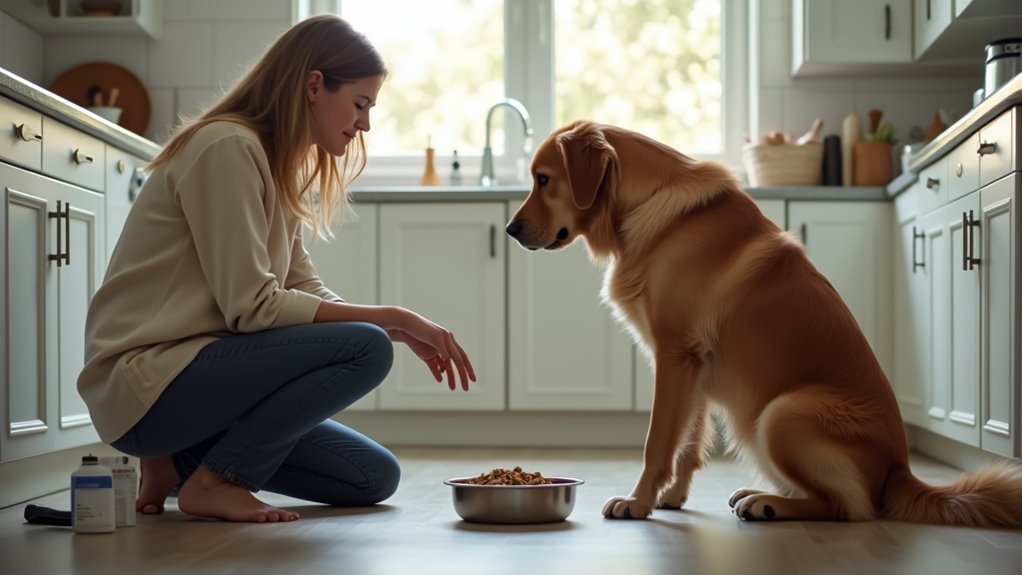
Once your vet has ruled out the bigger medical worries, you can shift your focus to helping your dog feel safe, interested, and ready to eat again. Start with a quiet spot, then warm the food a little so it smells stronger. You can also try meal enrichment with a topper or flavored supplements to make each bite feel special.
| Gentle step | Why it helps |
|---|---|
| Warm food | Brings out aroma |
| Quiet room | Lowers stress |
| Small topper | Enhances interest |
| Hand-feed | Builds trust |
Offer fresh water, keep meals calm, and give your dog time. Should your dog seem lonely at mealtime, sit nearby and use a soft voice. That simple company can help more than you’d suppose.
How to Prevent Future Eating Problems
To help prevent future eating problems, build habits that keep your dog’s meals predictable, clean, and low-stress. You’re part of a caring routine now, and that steady rhythm helps your dog feel safe at mealtime.
- Keep a fixed feeding schedule so hunger stays regular.
- Use meal planning and portion control to match your dog’s age, size, and activity.
- Support hydration management through offering fresh water and checking bowls often.
Also, clean dishes daily, store food well, and avoid too many treats between meals. Should you change food, do it slowly so your dog’s tummy can adjust.
Feed in a quiet spot, and keep mealtime calm, since your dog could pick up on your mood too. Small habits like these help your pup stay comfortable, confident, and ready to eat.
Frequently Asked Questions
How Long Can a Dog Safely Skip a Meal?
You can usually let your dog skip one meal during a temporary fast from a minor illness, but if they miss 24 hours or 12 hours as a puppy, call your vet promptly.
Should I Change My Dog’s Food if They Refuse to Eat?
Yes, you can switch brands, but don’t rush the gradual changeover — your dog won’t thank you for a surprise buffet. You’ll fit right in with wise owners through mixing foods slowly over 7 to 10 days.
Can Treats Make My Dog Stop Eating Regular Meals?
Yes. Too many treats can make your dog skip meals by causing treat dependence and meal displacement. You can limit snacks, keep mealtimes consistent, and remove uneaten food after 10 minutes to help restore hunger.
Is It Normal for Senior Dogs to Eat Less?
Yes, you can see a mild age related appetite drop in senior dogs, but do not ignore dental pain, illness, or stress. If you notice weight loss, vomiting, or a lasting refusal to eat, contact your vet.
When Should I Call the Vet About Sudden Appetite Loss?
Call your vet now if your dog has not eaten for 24 hours, or sooner if there is vomiting, diarrhea, lethargy, dehydration, pain, or an existing chronic disease. Seek emergency care immediately and ask about a behavioral evaluation.