

Dogs drink more water for clear reasons: heat, extra activity, salty food, or dry kibble can raise thirst quickly. Excessive drinking can also signal medical issues like diabetes, kidney disease, hormonal imbalances, or medication side effects. Watch for heavier urination, changes in appetite, increased tiredness, or sudden weight loss. Tracking your dog’s normal drinking and bathroom habits helps spot concerning changes early. A vet visit and basic tests can identify the cause and guide effective treatment.
What Counts as Excessive Thirst in Dogs?
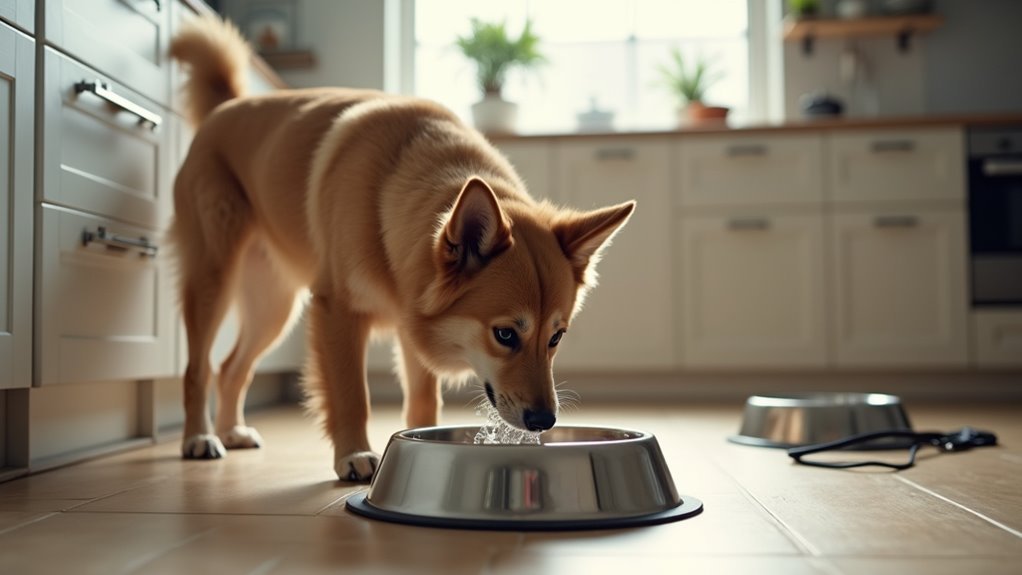
Should your dog seems to be glued to the water bowl, it can feel worrying fast, but not every big drink means something serious is wrong.
You can notice it best by watching changes from your dog’s usual routine. A thirsty pup might finish water quickly, ask out for refills often, or seem restless after drinking.
Your dog’s age related needs matter too, since puppies, seniors, and active dogs could drink differently. Breed variations can also play a part, especially in bigger or short-nosed dogs.
Still, what counts is the pattern, not one busy day. In the event you keep seeing a clear rise in drinking, or your dog also pees more, that’s worth paying attention to. Track how much goes down, and trust yourself.
Common Reasons Dogs Drink More Water
Even though your dog’s thirst seems sudden, many common things can explain it. You might notice seasonal variation whenever warmer days or drier air make your pup reach for the bowl more often.
Your dog could also drink more after salty treats, dry kibble, or a change in routine, and those everyday shifts can feel confusing at the outset. Sometimes behavioral causes play a part too, like boredom, stress, or learned habits around water.
In case your dog has less access to water during the day, it might gulp more later. These reasons are often simple, but they still deserve your attention. Through watching patterns closely, you can better understand what’s normal for your dog and whenever something else could be going on.
Heat, Exercise, and Diet Changes
Hot weather can make your dog pant more, and that extra breathing can push them to drink more water. Should your dog has been running, playing, or hiking more than usual, they might also need to replace lost fluids. A change to dry food or salty treats can make them feel thirstier too, so these everyday shifts matter.
Hot Weather Hydration
On warm days, your dog may drink a lot more water because the body works hard to stay cool. You can help by giving steady shade access, fresh bowls, and a quiet rest spot.
Whenever the air feels heavy, your dog pants more, loses moisture faster, and reaches for water to catch up. Short play breaks and cooler hours make a big difference, too. Should you offer cooling treats, like ice cubes or frozen broth in a safe amount, you can support comfort without fuss.
Warm pavement, hot rooms, and direct sun all raise thirst, so watch for those triggers. Should your dog still seems extra thirsty after things cool down, talk with your vet so you can feel confident together.
Exercise And Diet Shifts
A busy walk, a long fetch session, or a house full of dry kibble can all make your dog reach for the water bowl more often. That’s pretty normal, and you’re not alone in noticing it.
- Heat and panting raise fluid loss.
- Hard play can leave your dog thirsty.
- Dry kibble has less water than wet food.
- Portion control and meal timing can help steady drinking.
Should you’ve just changed diets, expect some shift in thirst while your dog adjusts. A salty treat, a bigger meal, or a sudden switch to dry food can all nudge water intake up.
Keep fresh water ready, then watch for patterns after exercise or meals. Were your dog to drink a lot for days, or seems off, you’ll want to check in with your vet.
Medications That Make Dogs Thirsty
Some medicines can make your dog feel extra thirsty, and that can be scary once you initially notice it. Should your pup takes steroids, diuretics, some seizure drugs, or certain heart medicines, you might see more water bowl visits and extra peeing.
These effects can show up even whenever the dose seems normal, so don’t blame yourself. Instead, call your vet and ask whether drug interactions or dosage adjustments could help.
Your vet could change the plan, swap a medicine, or check how your dog responds over time. Never stop a prescribed drug on your own, because that can create bigger problems.
With a little teamwork, you can keep your dog comfortable and still treat the condition that medicine is helping.
Diabetes and Increased Drinking
Should your dog seems extra thirsty, diabetes is one of the initial health problems your vet will want to rule out.
Whenever blood sugar stays high, your dog loses more water in urine, so drinking ramps up fast.
You might also notice:
- bigger water bowls emptied quicker
- more trips outside
- extra hunger or weight loss
- tired, dull days at home
If this sounds familiar, you’re not alone, and it’s worth calling your vet soon.
Diabetes care often depends on insulin management, so prompt testing matters.
Your vet could suggest glucose monitoring to track sugar levels and guide treatment.
With the right plan, you can help your dog feel steadier and more comfortable, and that can bring real relief for both of you.
Kidney Disease and Urinary Problems
Provided your dog is drinking more and also peeing more, kidney disease could be part of the reason.
You might also notice cloudy urine, accidents in the house, or a sudden change in urine amount, which can point to urinary tract trouble.
These signs can feel worrying, but they’re useful clues that help you know at what point to call your vet.
Kidney Disease Signs
As kidney disease begins to affect your dog, the initial clue is often a change in drinking and peeing habits. You might notice he empties the bowl fast, then asks out again and again. That happens because damaged kidneys can’t hold water well, especially once renal fibrosis or tubular necrosis starts to limit filtering.
- He drinks more after resting.
- He pees larger amounts.
- His urine looks paler.
- He seems tired or less hungry.
These signs can feel scary, but you’re not alone, and you’re not overreacting. Kidney trouble often brings fluid-loss problems that make your dog thirstier. Should you spot these changes, call your vet soon, because prompt care can ease strain and help your dog feel steadier.
Urinary Tract Issues
Urinary problems can sit right beside kidney disease and make your dog drink far more than usual. Whenever the bladder, urethra, or kidneys are irritated, your dog could pee more often, lose fluids, and then keep returning to the bowl. You might also notice straining, accidents, blood in the urine, or licking after potty breaks.
Infections can do this, but so can bladder stones, bladder cancer, and a urethral obstruction. These issues can be painful and scary, yet they’re often treatable once you catch them early on.
Should your dog seem thirsty and changes how they pee, call your vet soon. Quick help can protect comfort, prevent worse damage, and get your buddy back to feeling like themselves.
Cushing’s Disease and Other Hormone Problems
Cushing’s disease is one of the most common hormone problems behind a dog’s strong thirst, and it can make a pet seem like they can never get enough water.
You might also notice more peeing, a bigger appetite, or a belly that looks rounder than usual.
Whenever cortisol stays too high, it changes how the body handles water and stress.
- Your vet could suggest a pituitary evaluation.
- Adrenal imaging can help find the source.
- Diabetes insipidus can also raise thirst.
- Steroid medicines can resemble this pattern.
If your dog seems “extra thirsty,” you’re not overreacting.
These hormone changes are real, and you and your vet can sort them out with simple examinations.
Infections That Can Make Dogs Thirsty
Infections can make a dog drink far more water than usual, and that extra thirst often shows up right after fever, pain, or dehydration starts to build.
When you notice this, consider bacterial infections, like a bladder infection or kidney infection, because they can push your dog to urinate more and then drink to catch up.
You may also see pyometra in unspayed dogs, and that emergency can raise thirst fast.
Some fungal causes can do the same through upsetting the kidneys or raising calcium levels.
In case your dog seems tired, feverish, or sore, you’re not overreacting by watching closely. A vet can check urine, blood, and temperature, then help you get answers and relief quickly.
Why Anxiety Can Make Dogs Drink More
When your dog feels anxious, the stress response can raise hormones that change how the body handles thirst and fluids.
You might also notice nervous panting, which dries your dog out and can make them want more water.
Even should the behavior seem small, that extra drinking can be your dog’s way of coping with stress.
Stress Hormone Response
Stress can make a dog drink more because the body treats worry like a real threat and releases stress hormones that change how the kidneys handle water.
During acute stress, adrenal signaling can nudge your dog toward extra thirst, even should the bowl haven’t changed.
You may notice:
- pacing before you see a problem
- extra visits to the water dish
- a dry mouth after a tense moment
- calmer drinking once the stress fades
That pattern can feel unsettling, but it often fits your dog’s body trying to reset.
In case you can spot the trigger, you’re already helping. A quiet space, steady routines, and your calm voice can make your dog feel safer, and that safety can ease the urge to keep drinking.
Nervous Panting And Thirst
Anxiety can make your dog gulp water more than usual because nervous panting dries out the mouth fast, and that dry, sticky feeling can send them back to the bowl again and again.
When your dog feels tense, you might also notice pacing, whining, or a tucked tail. In those moments, panting management matters because fast breathing can leave them feeling parched.
Try calming techniques like a quiet room, a steady routine, gentle petting, or a favorite toy. You can also lower triggers, such as loud guests or sudden activity.
Should your dog still drinks hard after the stress passes, keep watching closely. Ongoing thirst may point to something else, and you deserve clear answers.
How to Check Your Dog’s Water Intake
Start observing watching how much water your dog actually drinks each day, because a sudden change can be the initial clue that something’s off.
To measure intake, fill the bowl with a known amount and note what’s left later. A simple notebook or phone note helps you spot patterns fast. Try to set routine checks at the same times daily, so your numbers stay fair and easy to compare.
- Mark the bowl level in the morning.
- Refill only after you write it down.
- Watch for extra trips after meals or play.
- Compare weekdays, weekends, and warm days.
This small habit helps you feel more in control, and it can reassure you that you’re not guessing alone. Should you share the job with family, everyone stays on the same page.
Symptoms That Mean It’s Time for a Vet Visit
At the time you’ve tracked your dog’s water bowl for a few days, the next question is whether the pattern looks normal or needs a vet’s eye.
In case you notice behavioral changes, like restlessness, hiding, extra clinginess, or a drop in energy, that’s worth paying attention to.
You should also watch for more thirst at night, since nighttime drinking can point to a problem instead of a hot day or salty snack.
Should your dog start asking for water often and also seems tired, messy with house training, or less interested in meals, call your vet’s office.
These signs don’t mean panic, but they do mean your dog deserves a closer look. Prompt care can help you feel calmer, and it can help your dog get back to normal sooner.
When to Call the Vet Right Away
Should your dog be drinking far more than usual and also seems weak, keeps vomiting, has diarrhea, won’t eat, or is peeing much more than normal, call your vet right away. You don’t need to wait and ponder whether it’ll pass. Fast help matters whenever you notice:
- sudden lethargy or collapse
- labored breathing
- a swollen belly or obvious pain
- repeated vomiting with water-hungry behavior
These signs can point to a serious problem that needs prompt care. In case your dog can’t keep water down, looks confused, or seems worse within hours, treat it like an urgent situation. Trust your gut, too. You know your dog’s normal habits better than anyone, and that early alarm can protect them.
What Your Vet Will Test First
Your vet will usually begin with the basics, because those initial clues often tell the biggest story. You can expect a full exam, a talk about diet, activity, medicines, and any changes in thirst or urination.
Next, your vet might run baseline labs, which check blood sugar, kidney values, liver function, and electrolytes. These results help spot diabetes, kidney trouble, or hormone problems sooner.
After that, a urinalysis culture can show whether your dog’s urine is too dilute, has glucose or protein, or carries signs of infection.
When needed, your vet could add more testing, but these opening steps usually guide the next move. That way, you and your vet can work from facts, not guesses, and give your dog the right care.
How to Help Your Dog Stay Hydrated Safely
Sometimes, the safest way to help a dog drink enough is to make water easier, fresher, and more tempting without overdoing it. You can support your pup by making small changes that feel natural and kind.
- Place clean bowls in quiet spots.
- Refresh water often so it smells better.
- Try bottle attachments for travel or crate time.
- Ask your vet before using electrolyte supplements.
Should your dog eats dry kibble, offer extra water with meals. During hot days or after play, give short drink breaks instead of one big chug. You can also add ice cubes provided your dog enjoys them.
Keep an eye on sudden thirst changes, because safe hydration works best whenever you and your vet stay in step. That way, your dog stays comfy, and you stay confident too.
Frequently Asked Questions
Can Dry Kibble Alone Make My Dog Drink Much More?
Yes. Dry food can make your dog drink more, especially when kibble moisture is low. Meal timing matters too. You might also notice bowl material affects comfort, but a large increase in thirst usually needs a vet check.
Do Salty Treats Increase Thirst in Dogs?
Yes, salty treats can definitely increase your dog’s thirst. Higher salt intake encourages more drinking, and some treats that stimulate appetite can also cause a period of dryness, so keep portions modest.
Can Liver Disease Cause a Dog to Drink Excessively?
Yes. Liver disease can make your dog drink more, especially with liver failure or hepatic encephalopathy. You may also notice poor appetite, vomiting, or confusion. Your vet can evaluate the cause and help your pup feel safer.
Could High Calcium Levels Make My Dog Thirsty?
Yes, high calcium levels can make your dog thirsty, especially with raised parathyroid issues or calcium supplements. You are not alone in noticing this; increased thirst often deserves a vet check soon.
Is Psychogenic Polydipsia a Real Cause of Drinking Too Much?
Yes, psychogenic polydipsia can be real, though it is uncommon. About 1 in 4 dogs with excessive thirst have an underlying medical issue, so you should have your veterinarian check for medical causes before assuming behavioral reasons such as compulsive licking alone.