

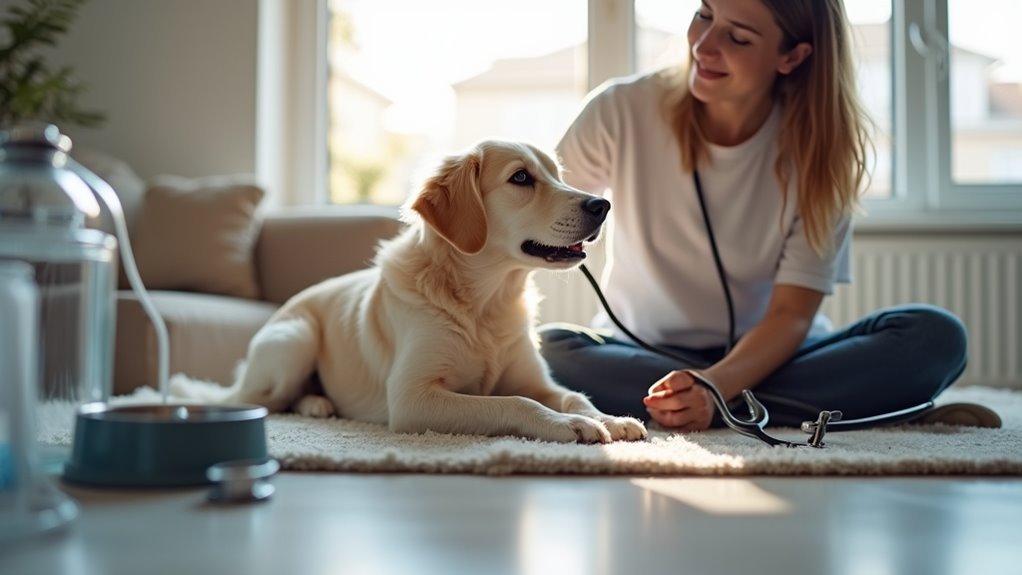

Yes — a dog cough can be a simple throat irritation or a sign of something more serious. Coughing can come from infections, heart disease, parasites, allergies, or an object lodged in the airway. The sound, timing, and other signs like lethargy or breathing difficulty help point to the cause. Some cases resolve with rest and basic care; other cases require prompt veterinary treatment. Watch for worsening symptoms, persistent coughing, or any trouble breathing and seek veterinary attention quickly.
Why Is My Dog Coughing?
As your dog starts coughing, it’s easy to feel worried, because that sound can mean anything from a mild throat irritation to a more serious health problem. You’re not overreacting, and you’re not alone. A cough can sound dry, wet, harsh, or honking, and those clues help you notice what’s off.
You could also hear vocal changes, like a hoarse bark or strained noise, which can point to airway trouble. Breed susceptibility matters too, since small dogs, flat-faced breeds, and older large dogs face different risks.
In case the cough keeps coming back, gets worse at night, or follows exercise, pay close attention. Even a simple change in breathing or energy can tell you your dog needs a closer look from your vet.
What Causes Dog Coughing?
Dog coughing can come from a lot of different problems, and that’s why the cause isn’t always obvious at the outset. You could be handling kennel cough, a chest infection, heart disease, or something stuck in the airway. Irritants also play a big role, especially dust, smoke, air fresheners, and other environmental pollutants. Seasonal patterns can matter too, since pollen and weather shifts can stir up coughing in sensitive dogs.
- A dry, harsh cough can point to airway irritation.
- A wet cough often suggests deeper lung trouble.
- Small breeds can struggle with tracheal collapse.
- Older dogs can cough from heart or airway changes.
If your dog lives in a busy home, you’re not alone. Many families notice coughing starts after walks, play, or time outdoors, and that clue helps narrow the cause.
When Is a Dog Cough Serious?
A dog cough can be serious whenever it doesn’t fade, gets worse, or starts to come with trouble breathing, lethargy, or appetite loss.
Should you notice blood, pale or blue gums, or collapse, you need to call your vet right away.
Even a cough that seems mild can still hide a bigger problem, so it’s smart to watch for warning signs closely.
Warning Signs
As your dog starts coughing, it’s easy to hope it’ll pass on its own, but some warning signs mean you shouldn’t wait. Watch for breathing trouble, blue or pale gums, coughing blood, or a collapse. Also, fever, low energy, and a poor appetite can signal something more serious. Whenever these signs show up, your dog might need fast help, and you’ll want to stay calm and close.
- Rapid breathing or noisy breaths
- Coughing that won’t stop
- Trouble standing or sudden weakness
- Signs that crucial signs feel off, with oxygen monitoring needed
If your dog seems worse at night or after play, trust your gut. You know your dog best, and quick action helps your pup feel safer.
Veterinary Evaluation
Whenever your dog’s cough starts lasting, changing, or coming with other warning signs, it’s time for a vet visit so you can get real answers instead of guessing.
You don’t need to panic, but you do need to act. Your vet will listen to the cough, check breathing, and ask about triggers, appetite, fever, and exercise.
They might suggest chest X-rays, parasite screenings, or heart checks, depending on what fits your dog’s story.
Should the cough be urgent, call ahead so appointment logistics go smoothly and your team can prepare. For milder cases, ask about telemedicine followups after the initial exam. That way, you stay connected, get guidance, and help your dog feel better without wandering through the mystery alone.
Kennel Cough in Dogs
Kennel cough is one of the most common reasons dogs start hacking, and it can sound alarming even though many cases are mild. You might hear a dry, honking cough, especially after play or whenever your dog gets excited.
- It spreads fast in day care, parks, and kennels.
- Vaccination protocols can reduce your dog’s risk.
- Most pups stay bright, but rest still matters.
- The zoonotic risk is low, yet good hygiene helps.
You can support recovery with quiet time, fresh water, and a leash harness instead of a collar. Should the cough last more than a few days, worsen, or come with fever or low energy, call your vet.
With quick care, you help your dog feel safe and stay part of the pack.
Heart Disease and Dog Coughing
Should your dog has heart disease, you could notice a cough that shows up more at night or after activity.
You might also see signs like tiredness, a faster breathing rate, or trouble keeping up on walks.
As the heart struggles, fluid can build up near the lungs or the enlarged heart can press on the airways, and that’s often during which the cough starts.
Heart Disease Signs
Heart disease can cause coughing in dogs, and the signs often show up slowly, which can make them easy to miss initially. You could notice a soft silent murmur at a vet visit, then smaller changes at home.
Your dog could tire sooner, lag on walks, or show exercise intolerance whenever you play together. A few clues can help you spot trouble sooner:
- cough that gets worse at night
- faster breathing after resting
- less interest in walks or play
- fainting or sudden weakness
You know your dog best, so trust those changes. Should the cough keep coming back, or your pup seems less lively, book a vet check. Prompt care can help your friend stay comfortable and keep joining your everyday moments.
Coughing And Heart Failure
As fluid starts to build up in and around the lungs, a cough from heart failure can sound worse and feel more upsetting than a simple throat tickle. You could notice your dog coughing more at night, after walks, or whilst lying down. This happens because the weakened heart lets fluid leak into the airways, and pulmonary edema can make each breath harder.
You may also see exercise intolerance, so your dog tires fast, slows on stairs, or wants to rest sooner. Should your dog seem restless, breathes faster, or has a wet cough, call your vet right away. With the right heart medicines and close care, you can help your dog breathe easier and feel safer.
Allergies, Irritants, and Asthma
Sometimes the cause of your dog’s cough is sitting right in the air around them. You’re not alone whenever this happens, and it can feel frustrating. Dust, smoke, pollen, and sprays can trigger seasonal allergies or environmental asthma, causing your dog to cough, wheeze, or sound tight-chested.
- Keep windows closed on high-pollen days.
- Skip scented cleaners, candles, and air fresheners.
- Run a HEPA filter in shared spaces.
- Talk with your vet provided coughing keeps coming back.
Assuming your dog seems better outdoors or worse after cleaning, that clue matters. You can help through reducing triggers and keeping routines calm.
Your vet might suggest medicine to ease inflammation and open the airways. With the right support, your dog can breathe easier and stay part of the pack.
Foreign Objects and Throat Irritation
Even although dust and sprays are the culprit, a cough can also start when something gets stuck or scrapes your dog’s throat.
When your dog suddenly coughs after chewing grass, chasing toys, or sniffing outside, consider grass seeds or a small splinter. These tiny irritants can poke the throat and cause throat trauma, which often leads to gagging, retching, or a dry cough.
You could also notice licking, swallowing, or pawing at the mouth. Stay calm and keep your dog from more chewing or rough play.
If you can safely see the object, remove it gently. Otherwise, don’t dig around and make things worse.
Because your dog’s comfort matters, watch closely for swelling, trouble breathing, or a cough that won’t quit. Should that happen, call your vet fast.
How Vets Diagnose a Dog Cough
Whenever your dog keeps coughing, the vet starts alongside listening to the story behind the sound, because the details often point straight to the cause. You’ll be asked at what point it started, what it sounds like, and whether exercise, night time, or collar pressure makes it worse. That history helps you feel seen, not rushed.
- A careful chest and throat exam
- Diagnostic imaging, such as X-rays
- Lab analyses for infection or parasites
- Bronchoscopy techniques whenever the airway needs a closer look
These steps help your vet sort out kennel cough, heart issues, irritation, or airway trouble. Should the cough be dry, wet, sudden, or harsh, that clue matters. Through working through the puzzle alongside you, your vet can narrow the cause and help your dog breathe easier soon.
Veterinary Treatments for Dog Coughing
Treatment starts with the cause, because a cough is a clue, not the problem itself. Whenever you work with your vet, you’ll get a plan that matches your dog’s illness and helps you feel less alone in the process.
For infections, your vet might use antibiotics, cough support, or other medicines. For heart disease, they could prescribe cardiac drugs and treatment for fluid buildup. Should parasites be involved, dewormers can help.
Whenever the airway is narrow or collapsing, your vet might suggest steroids, bronchodilators, nebulizer therapy, or even airway stents in severe cases. Should a foreign body block breathing, removal comes initially. Your vet might also adjust the collar, using a lead to ease pressure and protect your dog’s throat.
Home Care for a Coughing Dog
At home, you can help your dog through giving plenty of rest and making sure fresh water stays close beside, since both can ease irritation and support healing.
Watch what seems to set off the cough, like excitement, pulling on a collar, dust, or smoke, so you can reduce those triggers fast.
Should the cough keeps going or gets worse, don’t wait too long to call your vet.
Rest and Hydration
Once your dog starts coughing, rest and steady hydration can help take some pressure off the body while you watch for changes.
Keep your dog calm, warm, and away from hard play so the airway can settle.
Simple rest routines, like short leash walks and quiet time, often help your pup feel safer and less worn out.
- Offer fresh water often
- Check drinking with hydration monitoring
- Use a clean bowl each day
- Let your dog rest near you
You can also add a little water to food when your vet says it’s okay.
Should your dog seem tired, won’t drink, or the cough gets stronger, call your vet.
Your steady care can make your dog feel less alone.
Monitor Cough Triggers
Watch your dog closely, because cough triggers can tell you a lot about what’s going on. Keep a trigger diary and note when the cough starts, how it sounds, and what happened right before it. Environmental logs help you spot patterns fast, like dust, smoke, pollen, or excited play. Use this simple guide:
| Trigger | What you might notice |
|---|---|
| Collar pressure | Coughing during walks |
| Smoke or dust | Coughing indoors |
| Exercise or excitement | Coughing after zoomies |
Whenever you track these clues, you can share clear details with your vet and feel less alone in the process. Should the cough come after naps, meals, or night-time barking, write that down too. Small patterns can point to big answers, and your notes could help your dog get relief sooner.
When To Call the Vet Fast
Once your dog’s cough changes from annoying to alarming, don’t wait it out. Call your vet fast when the cough comes with trouble breathing, blue gums, or a sudden collapse. These signs can mean a true emergency, not just a rough day. Also act quickly whenever you see blood, repeated gagging, or a cough that turns wet and heavy.
- Your dog seems weak or refuses food.
- The cough starts after household hazards like smoke or cleaners.
- The sound gets worse at night or with activity.
- Breathing looks fast, loud, or strained.
You know your dog best, so trust that instinct. Should something feel off, your vet wants to help your dog feel safe and breathe easier.
How To Prevent Dog Coughing
The positive update is that many dog coughs can be prevented with a few steady habits at home and smart choices during daily life. Keep your dog current on preventive vaccinations, especially in case you visit parks, daycare, or boarding. Ask your vet about parasite prevention, too, since heartworm and lungworm can lead to coughing.
At home, protect indoor air quality by skipping smoke, strong sprays, and dusty bedding. Use a leash instead of a collar, so you don’t press on the throat. Also, limit close contact with dogs that are coughing until they’re healthy. Good weight control helps breathing, and regular checkups can catch heart or airway problems sooner. With these simple steps, you’re giving your dog a safer, easier way to breathe and belong everywhere you go together.
Frequently Asked Questions
Can Dog Coughing Be Contagious to Other Pets?
Yes, your dog’s cough can be contagious to other pets if it is caused by kennel cough or other respiratory infections, so keep them separated, wash your hands, and ask your vet about testing and care.
Should I Use Human Cough Medicine for My Dog?
No, you should not give your dog human cough medicine. Over the counter products can be toxic or contain the wrong ingredients. You need proper dosing from your vet so your pup stays safe and you both feel supported.
Can Stress Make My Dog Cough?
Yes, stress can make your dog cough by triggering behavioral triggers and respiratory stress, especially if he is anxious, excited, or pulling hard. If it keeps happening, ask your vet to check the causes.
Will My Dog Need Surgery for Coughing?
Usually not; you will only need surgery if your dog has a severely damaged airway or an object stuck in the airway. Tracheal collapse and a foreign body can sometimes require surgery, but many coughs improve with medication and supportive care.
Does Coughing Mean My Dog Has Asthma?
Not always. Your dog’s cough could be canine asthma or allergic bronchitis, but infections, heart disease, or irritants can also cause it. You should visit your vet for the right diagnosis and care.