

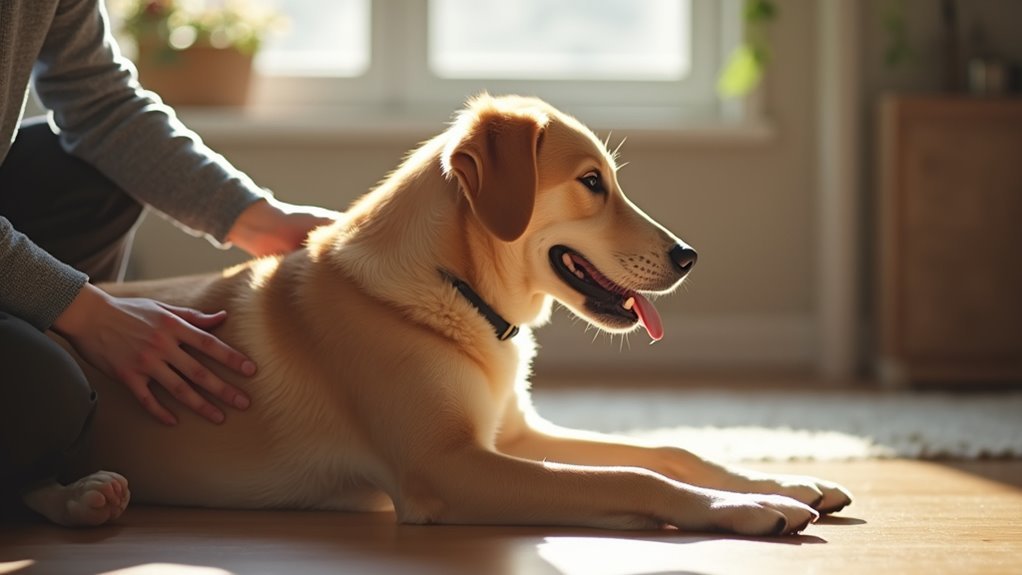

Dogs lean against people to show trust, seek comfort, ask for attention, signal pain or anxiety, or because the behavior was rewarded and became habitual. This gentle pressure can be affectionate bonding or a subtle request for reassurance. Watch body posture, facial expression, and the timing to interpret the message. Physical signs like stiff movement or reluctance to move could indicate discomfort that needs checking. Reading these cues helps you respond with appropriate care, whether offering affection, attention, or a veterinary exam.
Why Dogs Lean on You
A dog’s lean can feel a lot like a quiet little hug, and that’s often exactly what it is. You might notice your dog press in when you sit down, and that gentle weight can say, “I trust you.” It’s a simple way your dog stays close, shares affection, and feels safe beside your side.
Sometimes your dog leans because your presence helps calm nerves in new places or noisy moments. Other times, the lean is a learned habit, since your training cues could have taught your dog that closeness gets a warm response. Respecting personal space still matters, so you can enjoy the bond without feeling crowded. Whenever you read the body language, you make room for connection.
What Dog Leaning Usually Means
| Clue | Usual meaning |
|---|---|
| Relaxed body | Your dog feels settled |
| Pressing in | Your dog wants contact |
| Following you | Your dog seeks connection |
| Soft eyes | Your dog is calm |
You’ll often see this as your dog stays near you during quiet time, or whenever the room feels busy. The lean can also show that your dog wants your attention or wants to keep your bond strong. Since dogs can’t use words, they use touch, posture, and timing to tell you what they need.
Comfort, Trust, and Affection
If your dog leans into you, it often means they’re looking for physical comfort and a steady, reassuring touch.
You can read that lean as a sign of trust and affection, like your dog is saying you feel safe with me.
In anxious moments, that same pressure might help your dog settle down and stay close to you for comfort.
Seeking Physical Comfort
Leaning is often your dog’s way of saying, “I feel safe with you.” It’s a quiet form of comfort-seeking that shows trust, affection, and a need for closeness all at once.
Whenever your dog presses in, that soft pressure can soothe nerves and help them settle. Some dogs simply have a strong tactile preference, so contact feels better than distance.
You might notice this more during rest, after a busy walk, or in a noisy room. In those moments, your dog isn’t being pushy; they’re reaching for steady comfort from someone they know well.
Through staying calm and letting them lean, you give them a small anchor, and they get the reassurance they’re looking for.
Showing Trust And Affection
A warm bond often shows up in the quietest ways, and your dog’s lean is one of the clearest. When your dog presses into you, it often says, “I feel safe with you.” That gentle contact can show affection, secure attachment, and mutual bonding without a single bark.
You might notice it whenever your dog rests near you after play, sits close during quiet time, or follows you from room to room. In those moments, your dog treats you like a trusted place, almost like a cozy anchor in a busy world. This behavior builds closeness because your calm presence helps your dog feel connected.
Calming Anxious Feelings
In case your dog leans in during a storm, a loud noise, or a new place, that gentle pressure is often a way to calm worried feelings. You can regard it as your dog asking you for comfort whenever environmental triggers shake his sense of safety. He might press close to your leg, breathe more slowly, and watch your face for reassurance.
- A trembling body beside your knee
- Soft eyes in a bright, noisy room
- Warm weight resting against your shin
Once you stay steady, you help him settle and feel less alone. Your calm voice, slow movement, and familiar touch work like simple calming protocols. Because you’re his safe spot, he could borrow your confidence and feel the world soften a little.
Attention-Seeking Leaning
Often, a dog leans into you because it wants your attention and knows that this move usually works. You’re seeing one of its clear attention bids, and it’s using a simple body language message that says, “Notice me.”
Your dog might want petting, a scratch behind the ears, or a quick chat in your happy voice. These proximity gestures often grow stronger whenever you respond, because your dog learns that leaning gets results.
Anxiety and Reassurance Signs
When your dog leans into you during a storm, loud noise, or a new place, it’s often showing anxiety and looking for comfort.
You might notice a tense body, alert eyes, or extra clinginess as your dog checks that you’re close.
In moments like these, your steady touch and calm voice can help your dog feel safer instantly.
Anxiety Signals
A lean can mean your dog feels unsure, and that’s often their quiet way of asking for comfort. Whenever you notice this with separation anxiety, watch for cortisol indicators like pacing, yawning, or a tucked tail. Your dog might press in during thunder, new visitors, or a busy room because closeness helps them feel safer. You can regard it as a small anchor in a shaky moment.
- A dog tucked beside your leg like a warm shadow
- Ears pulled back while the room feels too loud
- Quick glances at doors, windows, or moving feet
Because anxiety and reassurance signs often overlap, body language matters. Should your dog lean and seems tense, give calm space, speak softly, and let them settle near you without pressure.
Reassurance Seeking
Your dog might lean in for more than comfort alone, because that body contact can also ask for reassurance whenever the world feels a little shaky. You’re seeing attachment behavior and proximity seeking at work, especially during thunder, guests, or strange sounds.
| Sign | What it can mean |
|---|---|
| Soft eyes | Your dog wants safety |
| Pressing closer | Your dog seeks your steady presence |
| Following you | Your dog needs reassurance now |
| Relaxing after contact | Your dog feels better |
Whenever you stay calm, your dog often borrows that calm from you. A gentle hand, steady voice, or quiet room can help them settle. This isn’t clinginess to punish; it’s your dog asking, “Are we okay?” That question matters, and your answer can make home feel safer.
Excitement and Overstimulation
Excitement can make a dog lean more than usual, especially provided something fun or highly stimulating is happening nearby. Whenever your dog sees a leash, a favorite friend, or a ball, that lean can come from high arousal and sensory overload. Your dog might press in to stay close while all those happy signals buzz around.
- A wagging tail and bright eyes at the door
- A crowded park full of smells, voices, and motion
- A toy squeaking while your dog bumps your leg
In these moments, leaning helps your dog manage the rush and keep you in sight. You can read it as enthusiastic connection, not bad manners.
Should the scene get too intense, your dog might lean harder because your calm presence feels like home.
Why Some Dogs Lean More Than Others
Some dogs lean more because of their breed and natural social style, so you might notice more body contact in breeds that love closeness.
Your dog’s personality matters too, since a cuddly, anxious, or highly social dog could lean more often than a more independent one.
Whenever you pay attention to these patterns, you can better understand whether your dog is asking for comfort, attention, or just a little extra connection.
Breed Differences
Breed can shape how often a dog leans, because many breeds were developed to stay close, work with people, or keep a watchful eye on their group. You might notice this more in dogs with dense coat thickness that suits outdoor work, or in breeds with sturdy skeletal proportions that make full-body contact easy and natural. That’s why a shepherd could press in beside you, while a smaller lap breed might settle against your legs like it belongs there.
- A herding dog might lean at your knee like a steady helper.
- A retriever could nudge in with warm, easy contact.
- A toy breed might tuck against you on the couch, almost like a tiny shadow.
Personality Traits
Your dog’s personality can shape leaning just as much as its body type does, and that can make the behavior feel marvelously personal. Should you have a mellow pup, you might notice calm leaning during quiet moments. Were your dog sensitive, it could press in harder when life feels noisy or new.
A quick temperament assessment can help you see whether your dog leans for comfort, attention, or both. Dogs with high social boldness often move close fast and use body contact freely. Shyer dogs might lean more when they trust you most.
Either way, you’re not imagining the bond. Your dog is using body language to say, “I feel safe with you,” and that message can mean a lot.
When Dog Leaning Is a Problem
Leaning becomes a problem whenever it starts to replace healthy space, calm behavior, or safe communication. Should your dog crowds you every step, ignores your cues, or leans so hard that you wobble, watch for health concerns like pain, weakness, or joint strain. You also need to notice space boundaries, especially should children or guests feel trapped.
- A dog pinning you to the couch like a furry anchor
- A tight hallway lean that blocks easy movement
- A tense body pressed close during noisy moments
At the moment the lean feels frantic, jealous, or protective, it can point to stress instead of simple affection. In those moments, your dog needs empathy, not punishment. Pay attention to the full scene, because body language tells a clearer story than the lean alone.
How to Respond to Leaning
Start through reading the lean, not just feeling it. Notice whenever your dog leans in, and look at the whole moment.
Should your dog seem calm, reward the closeness with a soft pet or quiet voice. In case the lean feels pushy or happens while you’re busy, use gentle boundary setting via stepping aside and giving a simple cue like “wait.”
You’re not rejecting your dog; you’re helping them feel safe with limits. Watch for signs of stress, like stiff posture or wide eyes, because those moments call for space, not more touch.
Should leaning start suddenly, get stronger, or come with other changes, schedule vet consultation to rule out pain or worry. Whenever you respond with care, you help your dog feel seen and steady.
Teach Safer Ways to Ask for Closeness
You can shape this habit into something kinder and easier for both of you. Teach safe alternatives like sitting by your leg, touching your hand with a nose, or settling on a mat. Whenever your dog comes in too hard, guide them to the new cue and reward that choice right away. That helps boundary training feel clear, not cold.
- A dog easing onto a rug beside your chair
- A soft nose bump against your palm
- A calm sit while you bend to pet them
With practice, your dog learns that closeness still brings comfort, just in a safer way. You’ll both feel more settled, and your bond can stay warm without the extra pressure on your body.
Frequently Asked Questions
Can Leaning Mean My Dog Is Trying to Protect Me?
Yes, sometimes. In roughly one in five cases you may see a protective stance or alert positioning when your dog leans against you, especially if it senses a threat. Most often, though, it is seeking comfort and closeness.
Do Puppies Lean Differently Than Adult Dogs?
Yes, puppies often lean more for comfort, reassurance, and puppy attachment during developmental stages, while adult dogs might lean for affection, trust, or attention. You’ll notice their body language shifts as they grow and feel secure.
Is Leaning More Common in Certain Dog Breeds?
Yes, some breeds lean more, especially affectionate and contact loving ones, so there is truth to that theory. Breed tendency and size influence matter, but your dog’s personality, trust, and learned habits usually matter more than breed alone.
Why Does My Dog Lean on Strangers Sometimes?
Your dog may lean on strangers to seek comfort, attention, or reassurance, using body language to express social bonding. You might notice this more when they feel unsure, are being friendly, or want closeness.
Can Leaning Indicate Pain or a Medical Issue?
Yes, leaning can indicate pain or a medical issue if you notice subtle discomfort, stiffness, or changes in behavior. You should watch closely and seek a vet assessment promptly, especially if the leaning is new or persistent.