

Dogs can smell bad for clear reasons. Common causes include dirt and skin oil, trapped moisture that breeds bacteria, ear infections, dental disease, and infected anal glands. Specific odors—sour, musty, fishy, or rotten—often point to particular problems that need attention. Some causes are manageable at home with grooming and cleaning, while others require veterinary treatment. This article explains what different smells usually indicate, which signs demand a vet visit, and safe ways to freshen your dog without making problems worse.
Why Does My Dog Smell Bad?
A bad smell from your dog can be more than just “doggy smell,” and that can feel frustrating fast. You want your pup to feel like part of the pack, not the reason the room clears out.
Often the odor starts with skin and coat trouble, like yeast, bacteria, or allergies that make skin sore and itchy. Sometimes breed odor runs stronger in dogs with folds or heavy coats, especially when moisture lingers after a bath or walk. Ear trouble, dental disease, and anal gland issues can also add a sharp or musty stink.
Even dirty paws, bedding, or skipped grooming can make it worse. With a little scent training and steady care, you can spot patterns sooner and help your dog smell like themself again.
Start With These Common Dog Odor Causes
Before you can fix your dog’s smell, it helps to start with the most common causes, because many of them live right on the skin and coat.
You could notice an itchy patch, a sour musky scent, or a yeasty odor that gets stronger after walks.
Allergies, skin infections, and seborrhea can all make your dog’s coat smell off, especially during seasonal shedding.
Trapped moisture can add to the problem, too, so a damp wash or a rainy day can seem to wake the stink up.
Don’t forget the ears and mouth, since they can carry their own strong smells.
Small diet adjustments might also help should odor keeps coming back.
Upon spotting the pattern, you’re already closer to helping your dog feel comfortable again.
Dirty Coat and Skin Build-Up
Dirty coat build-up can make your dog smell far worse than you’d expect, even though there’s no big health problem behind it. When loose hair, dead skin, and dirt sit on the coat, they trap odor and make skin oils turn stale.
You might notice a musty or dusty scent after a few days without brushing. That’s normal, and it doesn’t mean you’ve failed your dog.
Still, regular grooming helps you keep your pup feeling fresh and close to you. Brush through thick fur, check under the collar, and wash with dog-safe shampoo as needed.
Also, dry the coat well after baths or rain. Should you stay consistent, coat buildup stays low, and your dog smells cleaner, softer, and easier to cuddle.
Skin Infections That Cause Odor
As soon as a dog has a skin infection, the smell can show up fast and make you worry. You might notice a sour, yeasty, or rotten odor, and your dog could scratch, lick, or rub the area.
Bacteria and yeast often grow in warm, damp skin, especially whenever allergies or follicular occlusion trap oil and debris. Ringworm and chronic dermatophytosis can also change the coat smell and leave patchy, scaly skin.
Should the skin stay inflamed, tiny sores can form and invite more germs. You can help by keeping the area clean and dry, but you’ll want your vet to check it soon. Prompt treatment helps your dog feel better and keeps your pack life happier.
Why Your Dog Smells Bad From the Ears
Ear problems can make your dog smell much worse than a normal “doggy” scent, and the odor often gives you the initial clue that something’s wrong. Whenever you notice ear odor, check for redness, shaking, or dark discharge. Moisture buildup after baths or swims can feed yeast and bacteria fast.
| Sign | What it might mean | What you can do |
|---|---|---|
| Foul smell | Infection | Call your vet |
| Scratching | Irritation | Stop rough cleaning |
| Wet ears | Moisture buildup | Dry ears gently |
| Discharge | Yeast or bacteria | Get checked soon |
You can help your dog feel better by keeping ears dry and clean, but don’t use cotton swabs deep inside. In case the smell sticks around, your dog needs a vet visit.
Dental Disease and Bad Breath
Whenever your dog has bad breath, dental disease is often the concealed cause, and it can do more than just make cuddle time less pleasant.
You might notice yellow tartar, red gums, or a tooth that hurts when you touch the mouth.
Bacteria then grow fast, and the smell can turn sharp, sour, or rotten.
Should you skip brushing, plaque builds up and can lead to periodontal disease, tooth resorption, or even oral tumors.
That’s why your dog could chew one side, drop food, or avoid hard treats.
You can help through brushing often, offering dental chews, and booking regular cleanings.
Were the odor to linger, your vet should check the mouth soon.
Anal Gland Issues Behind That Fishy Smell
Should your dog smell fishy around the rear end, the anal glands could be the reason. These small anal saccules sit near the anus and can fill with fluid that smells sharp and unpleasant. Whenever they don’t empty well, you might notice scooting, licking, or a sudden whiff whenever your dog sits.
| Sign | What You Notice | What Helps |
|---|---|---|
| Scooting | Dragging rear on floor | Vet check |
| Fishy odor | Strong smell near tail | Quick care |
| Licking | Focus on back end | Look for irritation |
| Swelling | Sore, full area | Gland expression |
| Repeat mess | Smell comes back fast | Ask for help |
You’re not alone should this feel awkward. A vet or groomer can handle gland expression safely, and that can bring fast relief.
Why Your Dog Smells Bad After Eating?
A meal can stir up more than your dog’s appetite, and sometimes it also brings out a bad smell that catches you off guard. Whenever this happens post meal, look at the food itself initially. Strong protein, rich treats, or spoiled food leftovers can leave a smell on the mouth and coat.
Your dog also releases digestive enzymes, and that can mix with gas or burps and create a sharp breath odor. Occasionally food dust sticks around the lips, whiskers, or bowl area, so the odor seems worse right after dinner. Try smaller portions, fresher food, and clean bowls. Then wipe your dog’s face and offer water.
Provided the smell stays strong every day, or your dog seems uncomfortable, it’s time to call your vet for help.
Allergies, Yeast, and Itchy Skin
In case your dog’s skin is itchy, allergies can set off a cycle of scratching, redness, and odor that’s hard to ignore.
Yeast also loves warm, moist skin, so you may notice a musty smell along with greasy fur or dark, irritated spots.
Whenever these two problems show up together, your dog can feel pretty miserable, and you’ll want to find the trigger fast.
Allergy Triggers
Allergies can make your dog itchy, red, and miserable, and that skin trouble often leads to a strong odor fast. You might notice him rubbing, chewing, or scratching more after seasonal pollens bloom or after food additives upset his skin.
Whenever the skin stays inflamed, your dog’s coat can smell stale and sour, and that can feel frustrating for both of you. To help, watch for pattern clues, keep a simple itch log, and ask your vet about evaluation. You can also wipe paws, rinse the coat after outdoor time, and use gentle, dog-safe shampoo.
Should your dog keep flaring up, he could need a plan that calms the allergy trigger and protects his skin so he can feel like part of the pack again.
Yeast Infections
Whenever itchy skin keeps coming back, yeast can join the problem and make the smell much worse. You might notice a musty, greasy odor, especially in skin folds, ears, or paws. Allergies often weaken your dog’s skin, and then yeast grows fast.
- Watch for red skin and constant scratching.
- Notice whether the smell gets stronger after baths.
- Check for damp areas after walks or grooming.
Environmental moisture can feed the problem, so dry your dog well after rain or swimming. Dietary influences can also matter, because some dogs react to certain foods and keep their skin inflamed. Once you treat the itch promptly, you help your dog feel less miserable and help your home smell like, well, a happy dog again.
When Dog Smell Means a Vet Visit
Should your dog’s smell suddenly change or get stronger, don’t brush it off as normal pet odor. A foul, musty, yeasty, or urine-like smell can point to an infection, dental disease, or another health problem that needs care.
Once you notice red skin, discharge, head shaking, scooting, or bad breath that won’t go away, it’s time to call your vet.
Persistent Odor Changes
As soon as a dog’s smell changes and the odor hangs around, it’s worth paying close attention, because a new or stronger scent can be your initial clue that something deeper is going on. Trust your scent memory here; should your dog usually smell fine but now seems off, don’t brush it away.
Lifestyle changes like new food, extra baths, or more time outdoors can explain a short-term shift, but a lasting odor deserves a vet check.
- Notice whether the smell stays after grooming.
- Watch for odor that keeps coming back.
- Tell your vet the moment the change started.
That timeline helps your vet connect the dots faster, and you’ll feel less alone in figuring out what’s changed.
Signs Of Infection
A dog that smells stronger than usual can be coping with more than dirt, and infection is one of the initial things to rule out.
Should you notice wound odor, redness, swelling, pus, or warmth, act fast. You might also see your dog licking one spot, limping, or acting tired. Ear infections can bring a musty smell, while skin infections often add a sour or rotten scent. Dental infections could cause bad breath that won’t fade.
Once these signs show up, your dog requires a vet visit, not just another bath. Your vet can check the source, start treatment, and guide medication monitoring so healing stays on track. Quick care helps you protect your dog and keep your home feeling clean again.
How to Get Rid of Dog Smell at Home
You can often cut dog smell fast at home via starting with the source, not just the scent. Initially, wash blankets, couch covers, and dog beds, because odors hide in fabric. Then use odor neutralizing sprays and fabric revitalizing wipes on spots your dog rests. After that, vacuum rugs and corners where hair and dirt collect.
- Wipe paws after walks to stop mud and allergens.
- Open windows for fresh air and run fans to move trapped smells out.
- Clean food bowls, crate liners, and collars often, since old grime lingers.
If your dog smells musty again soon, check for damp spots in the coat, dirty ears, or mouth odor. Whenever you focus on the true source, your home feels calmer, cleaner, and more like the place you both love.
Bathing, Grooming, and Ear Care Tips
A good bath routine can cut down on that stale dog smell, especially whenever you use a gentle dog shampoo and dry your pup all the way through.
You should also brush your dog often, since loose hair, dead skin, and trapped dirt can make odors build up fast.
And provided the smell seems to linger, clean your dog’s ears carefully and keep them dry, because ear trouble can hide behind a bad odor.
Proper Bathing Routine
Regular baths can do more than make your dog look fresh, because they also help remove the dirt, oil, and loose skin that often hold onto bad smells.
Whenever you bathe your dog, use gentle oatmeal shampoos, and follow with a conditioner rinse should the coat feel dry. That small step can make your pup feel softer and more comfortable, too.
- Brush initially to lift out loose fur and tangles.
- Rinse well so soap doesn’t cling and cause irritation.
- Dry every layer, especially thick coats, so moisture won’t trap odor.
Between baths, wipe muddy paws and comb the coat to keep your dog in the clean, cozy pack you both want.
Use lukewarm water, and keep sessions calm so your dog feels safe.
Ear Cleaning Essentials
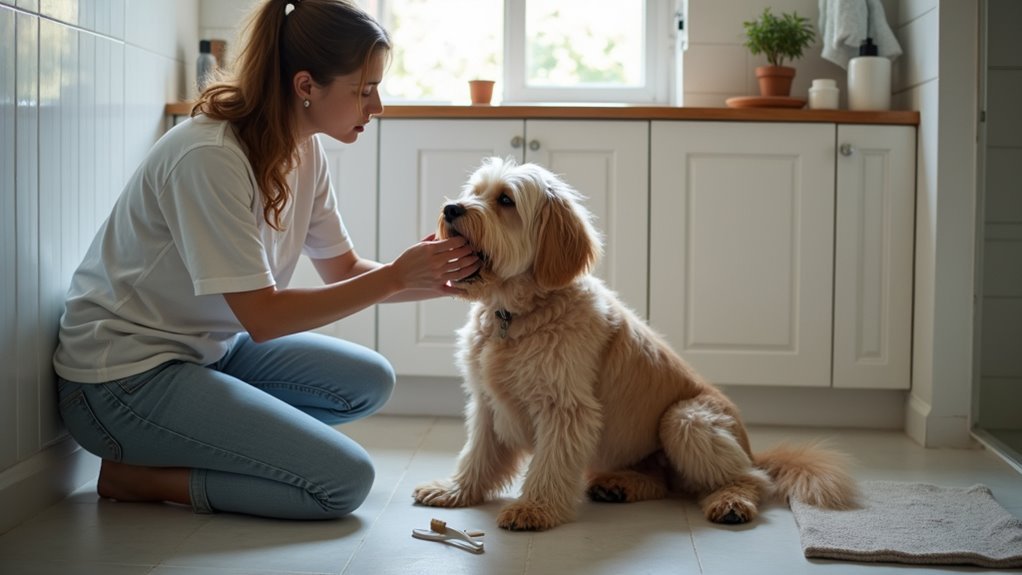
Because ear odor can come back fast, gentle ear care matters just as much as bathing and brushing. You can protect your dog by checking ear anatomy initially, since floppy ears and deep canals trap moisture.
After swims or baths, dry the ears well, then wipe only the outer parts with vet-approved solutions. Avoid cotton swabs, because they can push wax deeper and hurt the canal.
Should you prefer homemade cleansers, ask your vet prior to mixing anything, since the wrong recipe can irritate skin fast. Look for redness, discharge, head shaking, or a yeasty smell, and call your vet in case you notice them.
Whenever you pair clean ears with regular grooming, you help your dog feel fresher, more comfortable, and more like part of the pack.
How to Keep Your Dog Smelling Fresh
You can keep your dog smelling fresh with a simple mix of good hygiene, steady grooming, and quick attention to small problems before they grow.
Brush your dog often, wipe paws after walks, and dry the coat well after baths or rainy days.
Fresh bedding and clean collars also help your dog stay comfy and feel like part of the pack.
- Bathe with dog-safe shampoo whenever needed.
- Use scent neutralizing sprays for quick touch-ups.
- Ask your vet about dietary supplements in case odor keeps coming back.
Next, check ears, teeth, and skin, because concealed issues can cause stubborn smells.
Should you notice scratching, bad breath, or a strong rear-end odor, don’t wait.
A little care now helps your dog stay fresh, healthy, and close to you every day.
Frequently Asked Questions
Can Certain Dog Breeds Naturally Smell Stronger Than Others?
Yes, some breeds do smell stronger. Breeds with a genetic predisposition to oilier skin, skin folds, or heavier coats have different skin microbiomes. Regular grooming and thorough drying help keep things fresher.
Why Does My Dog Smell Worse in Humid Weather?
Humid weather traps moisture on your dog’s coat and skin, which increases sweat gland activity and microbial growth. You’ll notice stronger odors from damp fur, ears, and skin folds, so dry him well and groom him often.
Can Dog Bedding Make My Dog Smell Bad Again?
Yes, dog bedding can make your dog smell bad again. One damp blanket can harbor odors fast. Wash bedding weekly with dirty laundry, dry it fully, and prevent mold growth so your dog feels fresh and included.
Does Stress Ever Affect a Dog’s Body Odor?
Yes, stress can change your dog’s body odor because stress hormones can affect the skin microbiome, leading to oilier skin, more licking, and sometimes infections. You can help by easing stress and checking for concealed health issues.
Can Medications Cause Changes in My Dog’s Smell?
Yes. Medications can change your dog’s smell, especially if they affect medication metabolism or skin secretions. You may notice a scent alteration after a dose change. If it persists, have your vet check.