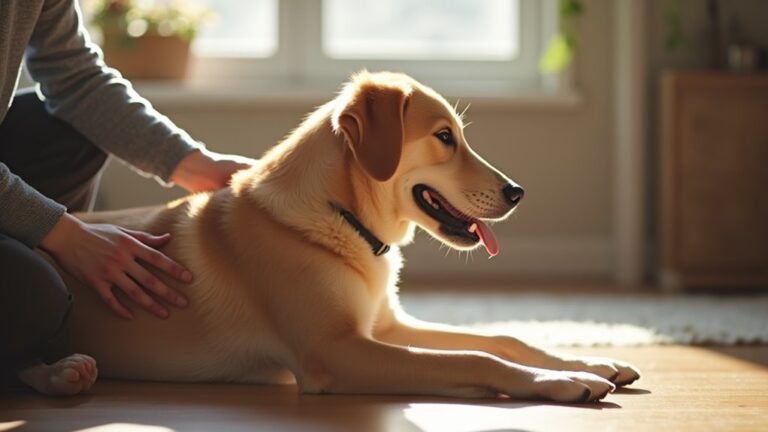

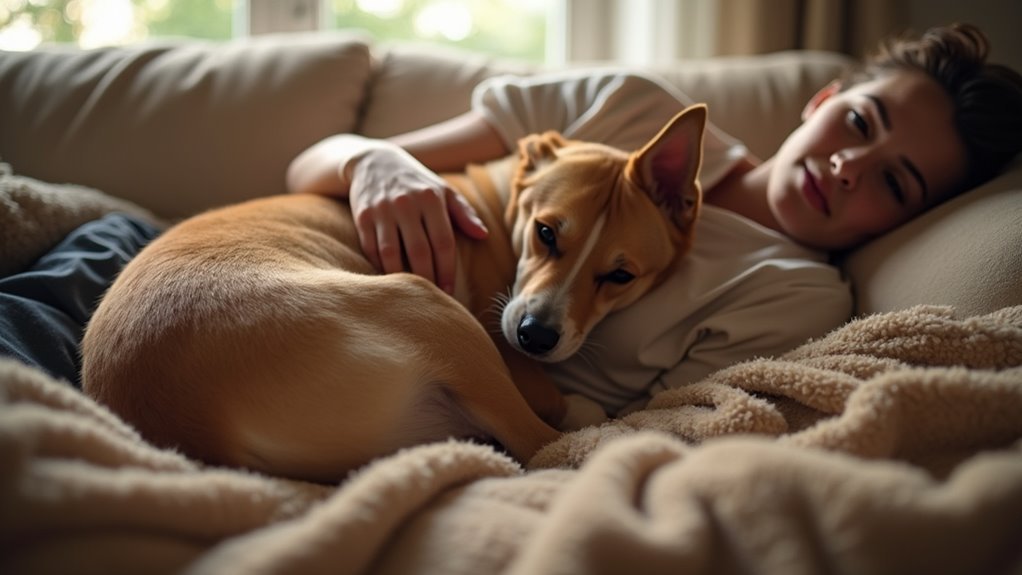

Dogs sleep on people because they feel safe, warm, and bonded. This behavior stems from trust, comfort, and ancestral pack instincts. Physical contact helps dogs regulate body temperature and stress hormones like cortisol. Puppies and adult dogs use closeness to monitor and protect their social group. Over time, casual cuddling can become a regular sleep habit reflecting attachment and security.
Why Does My Dog Sleep On Me?
Should your dog keeps curling up on you, they’re usually telling you something sweet and simple. You’re their safe place, and that matters a lot at bedtime. Your scent, steady breathing, and familiar napping rituals help them settle fast.
Whenever they choose your lap or chest, they could be showing trust, affection, and a little pack-style loyalty. Sometimes, they also use close contact as territorial marking, saying, “This human is mine.” That sounds funny, but it’s a normal way dogs claim comfort.
You might notice it most after a busy day or a noisy evening, whenever they want your calm nearby. In those moments, your dog isn’t being clingy for no reason. They’re reaching for closeness, and you’re giving them the belonging they crave.
Your Dog’s Need For Comfort And Warmth
Often, your dog’s love for sleeping on you starts with something very simple: comfort. Your body gives off steady warmth, and that makes your lap or chest feel like a cozy spot, especially whenever the room feels cool. Dogs also like routine, so provided cuddling helps them settle, they might keep choosing you night after night. Their blanket preference can shift, too, because your skin and scent feel softer and more familiar than fabric alone.
| Clue | What It Means | Why It Matters |
|---|---|---|
| Warm body heat | Better comfort | Helps rest |
| Close contact | Less tossing | Feels cozy |
| Stable spot | Easy settling | Supports sleep |
| Familiar scent | Calm habit | Builds routine |
This kind of contact also supports temperature regulation, so your dog can relax without working so hard to stay warm.
How Sleeping On You Shows Trust
Whenever your dog chooses to sleep on you, it usually means they feel deeply safe with you. That choice is a quiet vote of trust.
Your steady breathing, familiar scent, and calm touch give them silent reassurance whenever the world feels big. They don’t guard themselves as much, because your presence lowers their sense of personal vulnerability. In that moment, they show you they can rest without worry.
This closeness also says they feel accepted, not judged, so they can let go and relax. You become the place where their body and heart can settle. Even though they sprawl like a tiny furry blanket, they’re telling you something simple and sweet: whenever you’re around, they feel secure, wanted, and completely at home.
How Pack Behavior Shapes Sleeping Habits
Even now, your dog’s habit of sleeping on you can trace back to deep pack instincts. In the wild, dogs stayed close for warmth, safety, and shared vigilance, so resting together felt natural. That old pattern still guides your bond today, and it can help you feel like part of your dog’s trusted group. Pack hierarchy also matters, because your dog might settle near the member who feels calm and steady.
- Close sleeping helped dogs guard each other.
- Tight groups reduced fear at night.
- Puppies learned comfort from body contact.
- Your scent can signal safe belonging.
Why Your Dog Chooses Your Lap, Chest, Or Feet
Your dog doesn’t choose your lap, chest, or feet via accident, because each spot meets a different need. On your lap, your dog gets a cozy sleep spot and your steady warmth. On your chest, your dog might want rhythm, closeness, and a calming pulse. At your feet, your dog could want to stay near you while keeping a bit of personal space.
| Spot | Why it helps |
|---|---|
| Lap | Warmth and snug contact |
| Chest | Close bonding and comfort |
| Feet | Proximity with more room |
| Side | Easy rest without crowding |
When you notice the choice, you can read your dog’s mood better. That small preference says, “I trust you,” and it also shows where your dog feels most settled beside you.
Signs Your Dog Is Seeking Security
Often, the clearest sign your dog is seeking security is that they stay unusually close and seem reluctant to settle anywhere else.
You might notice they follow you from room to room, press their body against you, or choose your side instead of a bed.
Their body language often looks soft but alert, with quick glances at the door or a startle at small sounds.
At night, this can turn into quiet night vigilance, wherein they rest lightly near you and relax only once you do.
- They circle you before lying down.
- They pick your clothes or blanket.
- They sigh only after contact.
- They shift closer whenever noise starts.
These cues show trust, but they also show they’re looking to you for calm, comfort, and belonging.
When Sleeping On You Becomes Too Much
Whenever a dog loves sleeping on you, that closeness can feel sweet initially, but it can start to wear you down in case it happens every night. You might notice sleep displacement, sore hips, or a cramped arm, and that’s not selfish. It just means your body needs room too. | Sign | What It Means | |—|—| | Heavy shifting | You keep waking up | | Heat buildup | You feel stuck and sweaty | | Paw pressure | You can’t fully relax | | Edge sleeping | You lose your own space | | Nightly crowds | You’re always making room | Gentle space negotiation helps you share comfort without losing rest. Should you feel drained, your bond could still be strong, but your bed needs breathing room.
How To Set Boundaries Without Hurting Your Bond
Setting boundaries can actually make your bond feel safer, not weaker, because dogs do best whenever love and limits work together. You’re not pushing your dog away; you’re teaching a calm bedtime rule that still feels warm and close. Try establishing limits by picking one sleep spot and sticking with it. Then reward alternative choices, like a bed nearby or a soft mat, with praise or a treat.
- Keep bedtime predictable so your dog knows what happens next.
- Use a cue word like “bed” with a gentle tone.
- Give extra affection before sleep, not just after.
- Stay patient, because new habits need time to settle.
Whenever you respond with kindness, your dog can feel secure, included, and loved without sharing your pillow every night.
What This Habit Says About Your Bond
Whenever your dog sleeps on you, it usually says that they trust you and feel safe beside your side.
It can also mean they’re drawn to your warmth and comfort, which makes your body feel like the best spot in the room.
At the same time, this habit often points to a strong pack bond, where your dog sees you as part of their close circle.
Trust and Safety
A dog that sleeps on you is usually showing deep trust, and that matters more than people often realize.
Whenever your dog chooses your chest, legs, or feet, it says, “I feel safe here.” That closeness can reflect calm body language and a need for steady reassurance.
In quiet moments, your dog might even seem like it’s doing night guarding, but it’s really checking that its favorite person is near.
- Your dog relaxes instead of staying alert.
- Your scent helps it settle faster.
- Gentle contact can ease fear in new places.
- It treats you like part of its safe circle.
Seeking Warmth
Your dog’s need to curl up on you is often about warmth as much as trust, and the two usually work together.
Your body gives off steady heat, so your dog perhaps simply prefer your lap, chest, or legs whenever the room feels cool. This thermal preference helps with heat conservation, since close contact lets your dog stay cozy without extra effort.
You could notice this more at night, after a walk, or whenever the floor feels chilly.
At the same time, warmth can make your dog relax faster and settle deeper. Whenever your dog chooses you as a soft, heated spot, it shows that your presence feels pleasant, familiar, and worth staying near. That simple choice can make you feel wanted, too.
Pack Connection
That little pile-on habit can say a lot about the bond you share. Your dog isn’t just looking for a soft spot; they’re choosing you as part of their pack. Whenever your dog settles on you, they might feel safer because your scent, heat, and steady presence signal home. This can also reflect pack hierarchy in a gentle way, where your dog trusts you to keep watch while they rest.
- They might feel included, not left out.
- They might want close contact to relax faster.
- They might copy sleep synchronization from pack life.
- They might see you as their safe center.
Frequently Asked Questions
Can Puppies Develop This Habit Before They Are Fully Trained?
Yes, puppies can start this habit before they are fully trained. During the socialization window, initial bonding and maternal imprinting can create a comfort association, so they will seek your warmth, security, and closeness at bedtime.
Does Sleeping on Me Mean My Dog Has Separation Anxiety?
Not always. Your dog may simply be seeking comfort, warmth, or closeness. If the behavior occurs mainly when you are absent and is accompanied by panic or clinginess, separation anxiety could be a factor. Territorial marking is less likely.
Why Does My Dog Choose Different Body Parts at Night?
You’ll notice your dog picks different body parts because each spot offers a different head placement and comfort preference. He will choose warmth, security, or closeness, whichever feels best at night, to help him relax.
Can Changes in Routine Make My Dog Sleep on Me More?
Yes, routine shifts can make your dog sleep on you more. Like a compass seeking north, your dog might crave sleep proximity whenever schedules change, finding your warmth and presence steadier, safer, and more comforting.
Is This Behavior More Common in Certain Dog Breeds?
Yes, you’ll often see it more in some breeds because breed tendencies and size influence the behavior. Smaller, velcro style dogs might cuddle more intensely, but any dog can choose you whenever they want warmth, safety, and closeness.