

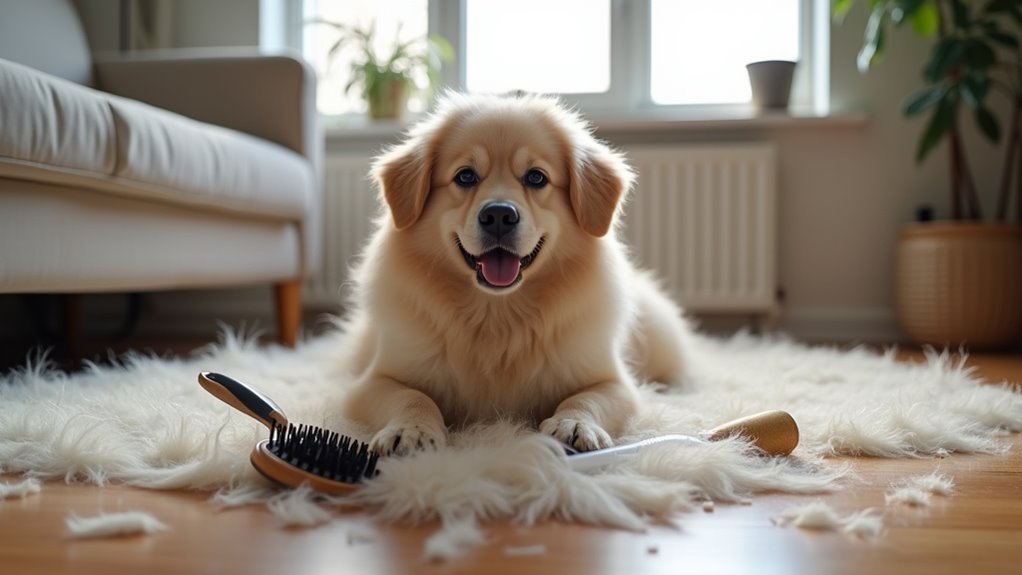

Dogs shed for many reasons: normal coat cycles, breed characteristics, diet, stress, or medical issues. Seasonal changes and double coats cause heavier shedding in some breeds. Poor nutrition, parasites, allergies, or hormone imbalances produce abnormal hair loss. Regular grooming, balanced diet, and vet checks reduce excess shedding and reveal underlying problems. This article explains common causes and practical steps to manage shedding and keep your dog’s coat healthy.
What Causes Excessive Dog Shedding?
Excessive dog shedding can feel like it shows up out of nowhere, but there’s usually a clear reason behind it. You might notice more fur in spring and fall whenever seasonal hormones help your dog swap coat layers for changing weather. Coat genetics also matter, so some breeds shed more than others all year.
Your dog’s age, indoor heat, and outdoor light can shift that cycle too. Stress can add to the pile, especially after travel, a move, or a new pet in the home. Food and water count as well, because weak nutrition can dull the coat and loosen hair. Should shedding seem sudden or keeps building, you’re not alone, and it’s worth paying close attention.
Dog Shedding vs. Hair Loss
You’ll often see normal shedding in spring and fall whenever your dog swaps out old coat layers for a new one.
But should the hair loss shows up as bald patches, red skin, or nonstop itching, it’s more than routine shedding. Watching for those warning signs can help you tell a healthy coat change from a problem that needs attention.
Normal Seasonal Shedding
This natural molt helps regulate body temperature, so you’ll notice more loose fur on beds, floors, and your clothes.
Should your dog has a thicker coat density, the change can look dramatic, but it still could be normal. You can support your dog through brushing more often during these seasons, which catches shed hair before it floats around your home.
Bathing can also release loose strands, so a little extra fur after a wash doesn’t always mean trouble. With steady grooming, you and your dog can ride out shedding season together.
Warning Signs Of Hair Loss
As shedding starts to look more like hair loss, it helps to zoom in on what your dog’s skin and coat are telling you. You’ll notice bald patches, thin spots, broken hairs, redness, or nonstop itching. That’s different from normal seasonal shedding, where the coat stays even and new hair grows back.
Should your dog have seasonal alopecia or a genetic predisposition, the pattern could repeat each year or run in certain breeds. You might also see flakes, sores, or a dull coat, and those signs often point to something bigger than extra fluff on the floor. Trust your gut here. Were the loss to look sudden, uneven, or tied to scratching, your dog needs a closer look from your vet.
How Breed and Coat Type Affect Shedding
Breed and coat type play a big role in how much hair ends up on your floors, clothes, and couch. Your dog’s genetic predisposition shapes shedding, so some breeds naturally lose more hair than others.
Double-coated dogs often shed more because they carry two layers that trap and release old fur. Short-haired dogs can still shed plenty, and long coats might look dramatic even when loose hair clings together.
Regular coat maintenance helps you stay ahead of it. Brushing removes dead hair before it lands on your sofa, and the right grooming tools make the job easier.
Should you learn your dog’s coat pattern, you can care for it with less stress and feel more in tune with your pack every day.
Seasonal Dog Shedding Cycles
You’ll often notice more shedding in spring and fall because your dog’s coat shifts with the seasons.
In spring, your dog might lose a thicker winter coat, and in fall, your dog could shed lighter hair to make room for a denser layer.
This is usually normal, and a little extra brushing can help you keep the loose hair under control.
Spring And Fall Shedding
Spring and fall often bring a bigger pile of dog hair on the floor, and that’s usually normal. During these months, your dog’s coat responds to seasonal acclimation and temperature cues, so loose fur comes out faster. You might notice more hair on your couch, clothes, and brush, but you’re not doing anything wrong.
You can help through brushing more often, especially outside or before a bath. A steady grooming routine catches loose hair before it spreads everywhere. It also gives you a calm moment to check for dry skin, mats, or sore spots. Should the shedding look sudden, come with itching, bald patches, or a dull coat, it’s worth calling your vet. Most of the time, though, this is just your dog’s normal way of getting ready for the next season.
Coat Changes By Season
Watching your dog’s coat change through the year can feel a little dramatic, but it’s usually just nature doing its job. In many dogs, shedding rises when temperature cues shift and light exposure changes, so the body knows it’s time to swap coats. You might notice more hair in spring as your dog thins out a heavy winter layer, then again in fall as a thicker coat starts coming in.
Indoor heating and cooling can blur the pattern, so your dog could shed a bit all year. Should your pup seem extra fuzzy on the couch, don’t worry. Brushing often helps you keep up with the loose hair and gives you a quiet bonding moment too. Watch for changes that feel sudden, patchy, or itchy.
Diet Problems That Increase Shedding
A healthy coat starts in the bowl, and once a dog’s diet falls short, shedding often shows it fast.
Should your dog’s food is low in protein, fatty acids, or key minerals, the skin can dry out and the coat can weaken. You might also notice that poor nutrient bioavailability keeps good ingredients from doing their job. Choose a balanced food that lists named meats and healthy fats initially.
Next, watch water intake, because even mild dehydration can leave skin flaky and hair loose.
Should your dog eats a lot of fillers, switch to a more nutrient-dense formula slowly. Also, keep treats sensible, since junky extras can crowd out better nutrition.
Whenever you feed well, you help your dog feel comfortable, supported, and part of the pack.
Stress and Anxiety-Related Shedding
Stress can make your dog shed more than usual, especially after travel, moving, vet visits, or changes at home.
Whenever your dog feels anxious, you may notice extra loose hair, along with licking, scratching, or biting at the coat. A steady routine and a calm space can help ease these shedding spikes and help your dog feel more settled.
Stress Triggers In Dogs
Whenever your dog starts shedding more after a big change, it’s often their body’s way of saying life feels a little off-balance. You can notice this after travel, a new schedule, loud guests, or moving rooms. Stress can show up in small ways, and your dog might shed more whenever they feel unsure.
| Trigger | What you might see | What helps |
|---|---|---|
| noise sensitivity | pacing | quiet space |
| separation distress | whining | calm routine |
| new pet | tense body | slow intro |
| vet visit | extra loose hair | gentle praise |
| home change | clingy moments | steady habits |
If you spot these signs, you can help your dog feel safe with familiar bedding, regular meals, and calm time with you. That comfort often eases shedding, too.
Anxiety-Induced Hair Shedding
Anxiety can make your dog shed more than usual, and it can feel worrying whenever tufts of hair show up after a tense day. You’re not alone in noticing this, because stress can push hair out faster and make the coat look dull.
Should your dog pace, hide, lick, or startle easily, the shedding could tie to that uneasy state. To help, keep routines steady, offer quiet breaks, and use behavioral therapy to ease fear over time.
Pheromone diffusers can also make your home feel calmer. Then brush your dog gently to remove loose hair and check for skin trouble.
Should the shedding keep growing or your dog seems uncomfortable, talk with your vet so you can protect both comfort and coat.
Parasites That Can Make Shedding Worse
Parasites can make shedding look sudden and upsetting, especially whenever your dog starts scratching like something invisible just declared war on the couch. Fleas, ticks, mites, and lice can all damage the coat by biting, feeding, or burrowing into skin. You might notice thin spots, broken hairs, scabs, or restless grooming that leaves you both tired and worried.
Mange prevention starts with steady parasite control, clean bedding, and quick checks after walks or playtime. That matters because vector ecology affects where these pests spread, particularly in warm yards, parks, and shared spaces. Should you spot heavy scratching or patchy fur, call your vet soon. With prompt care, you can help your dog feel calmer, keep your home cleaner, and protect the coat your pack depends on.
Skin Allergies and Itchy Irritation
Even a mild skin allergy can turn your dog’s coat into a mess of scratching, licking, and loose fur, and that can feel stressful fast. You’re not alone should the itch keep coming back. | Trigger | What you could notice | Helpful move |
| — | — | — |
|---|---|---|
| Pollen | Paw chewing | Wipe after walks |
| Dust | Sneezing, scratching | Use hypoallergenic bedding |
| Food | Ear rubbing | Try a vet guided diet |
| Shampoo | Red skin | Switch to gentle products |
| Smoke | Restless itching | Notice air purifier benefits |
Whenever you spot this pattern, you can make your home calmer and kinder. Wash bedding often, brush gently, and keep rooms clean. Then watch for less licking, less flaking, and a more comfortable coat. Small changes can help you and your dog breathe easier together, and that shared relief matters.
Medical Conditions Behind Excessive Shedding
In case shedding abruptly becomes worse, a medical issue could be the real cause, not just a messy coat. You might notice thin patches, dull fur, or skin changes that don’t match normal seasonal shedding.
Hormone problems like thyroid disease or Cushing’s disease can weaken coat growth and make hair fall out. Chronic illness, such as kidney or liver trouble, can also affect your dog’s skin and fur.
In some dogs, autoimmune alopecia causes patchy loss without much itching. Also, medication reactions can trigger extra shedding after a new drug starts.
Because these causes can look alike, your vet can help you sort out the reason. Should you see bald spots, sores, or sudden coat changes, don’t wait too long.
How to Reduce Dog Shedding at Home
Whenever your dog’s shedding looks tied to a health problem, home care can still make a big difference whilst you work on the cause. You can start with gentle home remedies like keeping water fresh, offering balanced meals, and using a damp cloth to lift stray hairs from furniture.
Next, check your rooms for dust and dry air, since both can leave skin feeling cranky. Then, give your dog a calm, steady routine, because stress can make fur fly everywhere, just as you thought the couch was safe.
For linen protection, use washable covers, throw blankets, and a lint roller near favorite nap spots. Also, vacuum often and wash bedding on a regular schedule. These simple habits help you feel more in control, and they help your dog feel cared for too.
Grooming Tips for a Healthier Coat
A healthy coat starts with how you care for it, because brushing, bathing, and tool choice all work together to keep loose hair under control and your dog comfortable.
You can brush your dog a few times a week with a slicker, pin brush, or comb that matches the coat. Work gently from the skin out, and take your time detangling mats so you don’t pull or stress the hair.
Whenever you bathe, use coat friendly shampoos that clean without drying the skin, then dry well so old hairs lift out.
After that, check ears, paws, and the undercoat for concealed knots. In case your dog enjoys the routine, grooming can feel like quiet bonding time.
That little extra care helps you both feel more at home together.
When to Call Your Veterinarian
Even though some shedding is normal, you should call your veterinarian should the hair loss seems sudden, heavy, or out of step with your dog’s usual pattern. That’s where your pack needs a closer look.
- Watch for emergency signs like trouble breathing or collapse.
- Book sooner whenever you see bald spots, sores, or bleeding skin.
- Reach out should your dog scratches, bites, or licks nonstop.
- Call whenever the coat change comes with low energy, weight loss, or vomiting.
- Use simple appointment prep: remember when it started, take photos, and list foods, meds, and recent stress.
Your vet can help you sort out allergy, parasite, or hormone clues without guesswork.
Should you’re worried, you’re not overreacting. You’re speaking up for your dog, and that matters.
How to Control Dog Shedding Long-Term
Should your vet has ruled out a bigger problem, you can shift from worry to daily care that keeps shedding under control. You and your dog can settle into a steady routine that feels simple and kind. Brush a few minutes most days, feed a balanced diet, and keep water fresh. Watch seasonal humidity, because dry air can make loose hair cling, while changes in weather can stir up more fur.
| Habit | Why it helps | Easy move |
|---|---|---|
| Brush often | Lifts loose coat | Use the right tool |
| Bathe wisely | Releases dead hair | Don’t overdo it |
| Improve air | Cuts dander | Try air filtration |
Keep bedding clean, control fleas, and notice stress after travel or house changes. Whenever you stay consistent, you help your dog feel comfy, and you feel like a solid team.
Frequently Asked Questions
Can Shedding Increase After I Bathe My Dog?
Yes, you’ll often see more shedding after bathing because you’ve loosened hairs that were ready to fall out. Even if it seems alarming, that’s normal. Bath timing and water temperature can help reduce excess release.
Does My Dog’s Age Affect How Much He Sheds?
Yes, your dog’s age can change shedding. Puppies often lose their puppy coat, and older dogs might show more senior moulting. You will notice shifts in thickness and loose hair as his coat changes over time.
Can Household Products Trigger Extra Shedding?
Yes, household products can trigger extra shedding. You may notice fabric softeners, air fresheners, or cleaners irritate your dog’s skin, causing itching and increased hair loss. Switch to gentler products and watch for improvement.
Should I Worry if Shedding Starts After a Vet Visit?
Usually you do not need to worry. A vet visit can trigger stress induced moulting and post vaccine shedding might happen briefly. If you notice itching, bald spots, or behavior changes you should call your vet.
Can Certain Medications Cause My Dog to Shed More?
Yes, certain medications can increase your dog’s shedding as a side effect, and steroids can cause steroid induced alopecia. Watch for sudden hair loss, itching, or skin changes and contact your veterinarian.