

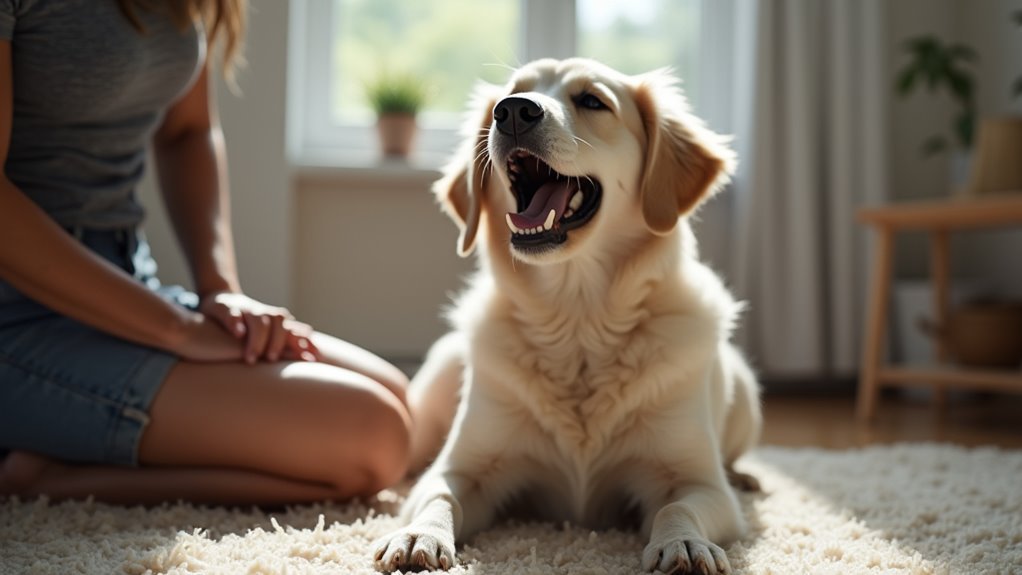

Dogs yawn for social and health reasons, not just sleepiness. About 60% of dogs yawn in response to stress or social tension, so a big yawn can signal discomfort. Yawning commonly appears after play, during vet visits, or in tense household moments. Patterns and context give the best clues about what the yawn means. Observing when and how often the yawns occur helps determine whether the cause is behavioral or medical.
Why Do Dogs Keep Yawning?
When your dog keeps yawning, it often means something simple is going on, like tiredness, stress, or boredom. You could notice it before nap time, after a busy day, or during a tense moment. Dogs also use yawns for social bonding, and mirror neurons might help them copy your yawn. That shared signal can feel oddly sweet, like your dog is saying, “I’m with you.”
In other cases, a yawn helps your dog calm down, avoid conflict, or handle extra excitement. Should your dog only yawns now and then, you usually don’t need to worry. But should the yawning keeps showing up with low energy, restlessness, or a change in mood, pay attention and watch the bigger image closely.
When Is Dog Yawning Normal?
Your dog’s yawn is usually normal whenever it shows up as a calm, natural relaxation signal, like whenever your pup is getting sleepy, waking up, or settling in for a nap.
You’ll often see it during everyday moments such as quiet evenings, after play, or before a walk, and that can simply mean your dog is managing its feelings.
A few yawns here and there are common, so you usually don’t need to worry unless they start happening a lot or come with other odd signs.
Natural Relaxation Signals
A single yawn is often just your dog’s body saying it’s time to relax. You’ll often see it whenever your dog settles in, stretches out, or shifts into sleep. These calm cues help your dog ease tension and feel safe with you.
- During quiet time, a yawn can show your dog is ready for rest.
- In familiar places, it can fit into normal relaxation routines.
- Around gentle attention, it might signal comfort, not worry.
- After play, it can help your dog slow down and reset.
Whenever you notice this soft signal, you can usually smile and give space. Your dog might simply be saying, “I’m good here.”
In that moment, you’re reading a peaceful cue, and that’s part of belonging together.
Common Trigger Situations
Not every yawn means something is wrong, and that’s a relief for most dog parents.
You’ll often see it whenever your dog is sleepy, just waking up, or settling down for a nap.
It can also show up during stress, like a vet visit, loud storm, or tense social dynamics with other pets. In those moments, your dog could be trying to calm themselves and avoid conflict.
Boredom can trigger it too, especially in case your dog needs more environmental enrichment and mental play.
You may notice a yawn before a walk, during training, or at times excitement feels big. In each case, the yawn is usually a normal signal of emotion, not a warning sign.
Healthy Yawning Frequency
Usually, a healthy dog yawn here and there, and that’s completely normal. You’ll often see it around naps, after waking, or during calm daytime patterns. A little yawning can also show your dog is easing tension, getting bored, or matching your yawn. That’s part of normal social life.
- One yawn after rest usually means sleepiness.
- A few yawns before a walk can mean happy anticipation.
- Gentle yawns in new places can help your dog settle.
- Seasonal variation, like warm weather or long indoor days, can shift energy and yawning a bit.
What matters most is change. In case your dog suddenly yawns much more, or you notice pacing, trembling, hiding, or poor rest, that’s your cue to pay closer attention and check in with your vet.
Can Stress Cause Dog Yawning?
Yes, stress can absolutely cause dog yawning, and it often shows up as one of the initial quiet clues that your dog feels uneasy. You might notice stress yawning during vet visits, loud storms, or tense moments with new people. It can also work as a calming signal, helping your dog feel safer and avoid conflict. Whenever you see this, look for other clues like pacing, licking, or trembling.
| Situation | What You See | What It Means |
|---|---|---|
| New room | Yawn, tucked tail | Uneasy |
| Loud noise | Yawn, panting | Stress |
| Dog-to-dog meeting | Yawn, look away | Social contagion |
If yawning keeps showing up, your dog could need extra comfort and space.
Do Boredom and Excitement Trigger Yawning?
Boredom and excitement can both make your dog yawn, even though they seem like opposite moods. Whenever your pup lacks mental stimulation, a yawn can show the day feels dull and slow.
- A quiet afternoon can leave your dog restless.
- A puzzle toy or short game can wake up their brain.
- Anticipatory excitement often shows up before walks, meals, or visits.
- A big burst of joy can also trigger a yawn as your dog settles down.
Can Dog Yawning Signal Pain?
Pain can make a dog yawn more often than you might anticipate, and that yawn is sometimes your pet’s way of saying, “Something feels off.” Should your dog yawns again and again, especially whenever they also seem stiff, restless, sore, or less interested in normal activities, pain could be part of the scenario. You know your dog best, so trust those little changes.
| Sign | What it might mean | What to notice |
|---|---|---|
| Repeated yawns | Ongoing discomfort | Pattern and timing |
| Tight body | Chronic pain | Stiff movement |
| Paw licking | Soothing effort | Same spot often |
| Dropped appetite | Sore mouth | Dental discomfort |
| Hiding | Unease | Less engagement |
Whenever yawning comes with these signs, your dog could need a gentle checkup soon.
What Health Problems Cause Yawning?
At the point that yawning starts to happen a lot, it can point to a health problem rather than just tiredness. You’re not overreacting should you notice it often.
Some dogs yawn more whenever hormonal imbalances upset their body’s rhythm, and others do it with neurological disorders that affect the brain or nerves. Ongoing pain can also drain energy and make yawning pop up again and again.
- Thyroid issues can leave you seeing more sleepy yawns.
- Brain or nerve problems could change normal signals.
- Long-term illness can wear your dog down.
- Poor sleep from sickness can add to the pattern.
Should your dog seems “off,” trust that feeling. You know your buddy best, and a vet can help you sort out what’s driving the yawns and what care fits best.
What Other Signs Appear With Yawning?
When your dog yawns, look at the body language around it, like loose posture, tucked tail, or turned-away eyes.
In case you also see stress signs such as pacing, panting, trembling, or hiding, the yawn could be a calming signal, not just tiredness.
But provided yawning shows up with lethargy, pain, or other unusual changes, it’s smart to pay close attention and check with your vet.
Body Language Clues
Usually, the clue isn’t the yawn itself but the body language that comes with it. You can read the whole scene by watching how your dog moves, looks, and settles. Small changes often say more than the yawn.
- In case your dog gives less eye contact, it might be trying to back off and keep things calm.
- Should you notice posture shifts, like a loose body turning stiff or sideways, pay attention.
- A relaxed face and soft ears often point to simple tiredness.
- A frozen body, tucked tail, or sudden movement can show your dog needs space.
When these clues fit together, you can respond with patience. That helps your dog feel safe, and it helps you feel more connected too.
Stress And Anxiety Signs
Should your dog yawn and also pace, pant, or keep scanning the room, stress could be the real reason. You might also notice a tucked tail, lip licking, or ears pulled back. These signs often show up together because your dog is trying to calm itself. In tense moments, yawning can work like a reset button, not a sleepy cue. You may spot cortisol indicators such as restlessness or repeated shifting. Your dog might also lean close to you, which can be attachment behavior, or try to move away from noise and people. If the yawns keep coming in busy settings, your dog likely feels swamped. Whenever you read the whole image, you can respond with patience, space, and comfort.
Health Red Flags
Whenever your dog yawns a lot and you also notice other changes, those extra signs matter more than the yawn itself. Look for clues that say your dog needs help, not just sleep. In your pack, you want to spot patterns promptly.
- Lethargy or weakness that lasts.
- Pacing, trembling, or hiding.
- Loss of appetite, vomiting, or belly pain.
- Poor sleep, including chronic insomnia, or odd movements that suggest neurological causes.
If yawning comes with these signs, call your vet soon. Pain, illness, or stress can drain your dog fast, and you know your dog best. A single yawn might be nothing, but repeated yawning plus new behavior changes deserves attention. Acting promptly helps your dog feel safe, seen, and cared for.
When Should You Call the Vet?
Provided that your dog is yawning now and then, there’s often no reason to worry, but repeated yawning can be a clue that something bigger is going on.
Call your vet should the yawning keeps showing up with hiding, pacing, panting, trembling, or low energy.
You should also reach out ought you dog seems sore, can’t settle, or sleeps poorly at home.
That can point to pain, stress, or a health issue.
Should the yawning started after a new medicine, ask about medication side effects.
The same goes for sudden changes in appetite, play, or bathroom habits.
Whenever you know your dog well, odd patterns stand out fast.
Trust that instinct.
Your vet can help you sort out whether it’s home sleepiness or something that needs care.
Frequently Asked Questions
Can Puppies Yawn More Than Adult Dogs?
Yes, you’ll often notice puppies yawn more than adult dogs because they are in developmental stages and learning stress modulation. They tire faster, get overstimulated easily, and yawn to soothe themselves while settling down.
Does Yawning Happen During Car Rides?
Yes, your dog can yawn during car rides. You’ll often see stress signals or motion sickness, especially if he’s anxious, overstimulated, or sleepy. Watch for pacing, drooling, or trembling too, and comfort him.
Can Yawning Spread From Dogs to Humans?
Yes, your dog’s yawn can make you yawn too; contagion studies show that’s social, not zoonotic transmission. You’re not catching anything, you are sharing an empathetic, belonging building cue that helps you feel connected.
Is Yawning Common After Meals?
Yes, it can be common after meals, especially if you notice post meal relaxation or digestion related yawning. You are usually seeing your dog settle, not a problem. If it is frequent, watch for signs of discomfort.
Should I Track How Often My Dog Yawns?
Yes, you should track it using frequency logging and a yawning diary. You’ll spot patterns such as stress, boredom, or pain, and you can share clear observations with your vet whether it’s happening often.