
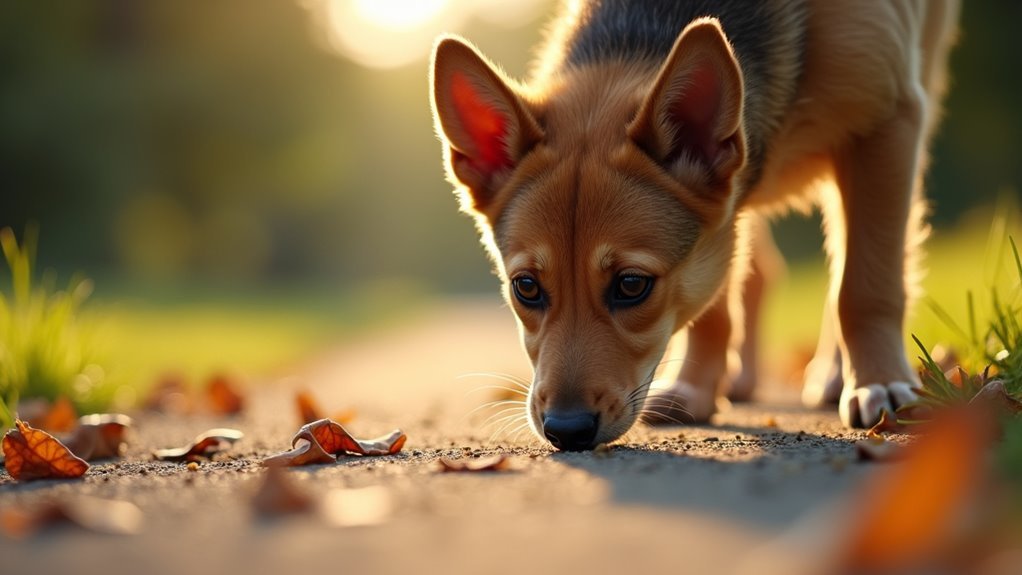

Your dog stops to sniff everything because scent is its primary way of learning about the world. Each sniff delivers details about other animals, their health, territory markers, and recent activity. Dogs have thousands more scent receptors than humans, so smells form a rich, dynamic map. Regular sniffing during walks provides mental stimulation and reduces stress. Recognizing sniffing as purposeful behavior helps make walks more satisfying for both of you.
Why Dogs Sniff Everything on Walks?
Sniffing on walks is your dog’s way of reading the world, one scent at a time. As you head outside, your dog isn’t being stubborn; they’re gathering clues.
Every patch of grass, pole, and curb can hold news about other animals, people, and changes in the area. That’s why scent trailmapping often slows the pace.
Your dog’s nose helps them feel safe and oriented, so leash negotiation can turn into a gentle back-and-forth instead of a tug of war. Once you let them investigate, you support their natural curiosity and give their brain a workout.
A walk becomes more than exercise. It becomes their chance to check in, make sense of the neighborhood, and feel like they belong there too.
How Dogs Use Scent to Explore
With every deep breath, your dog is building an image of the world around them. Through scent, your dog does olfactory mapping, turning a sidewalk, room, or yard into a rich guide. Each smell adds a piece to those scent mosaics, so your dog can move with confidence and curiosity.
At the moment you let them pause and investigate, you’re not slowing them down. You’re helping them examine in the way that feels most natural. They notice trails, corners, and familiar spots, and they connect those scents into a bigger portrayal.
That’s why a simple sniff can look so intense. Your dog isn’t being stubborn; they’re reading their world, one breath at a time, and that’s a beautiful part of belonging.
What Dogs Learn From Each Sniff
Every sniff gives your dog a tiny burst of information, almost like opening a new message. Your dog learns what passed past, how fresh the trail is, and whether a place feels familiar. With olfactory memory, those scent patterns help your dog recall people, pets, and spots from earlier walks. That’s why one patch of grass can feel like a whole story to your dog.
| Sniff detail | What it tells your dog | Why it matters |
|---|---|---|
| Fresh scent | Something changed | Sparks curiosity |
| Repeated scent | A familiar place | Builds comfort |
| Strong trail | Recent activity | Guides next steps |
How Dogs Use Sniffing to Communicate
A sniff is more than a quick check for your dog, because it can also act like a social message. Whenever your dog pauses at a tree, hydrant, or shoe, they’re reading chemical signals left by other animals.
Those scents can tell your dog who passed by, how they might feel, and whether they belong nearby. Your dog also sends messages back through social marking, which leaves a scent-based calling card in shared spaces.
This helps your dog connect with the pack world around them and feel informed, not left out. So, whenever you see your dog investigating a spot, they’re not being nosy for fun. They’re joining a quiet conversation that helps them understand their place in it.
When Lots of Sniffing Is Normal
Sniffing nonstop is often totally normal, because your dog’s nose is one of their main ways to investigate the world. When you see them pause at grass, sidewalks, or your couch, they’re gathering details, not being stubborn. This kind of curiosity helps with environmental mapping, so they can understand where things are and what changed.
It also supports novelty recognition, which means they notice new scents, visitors, or that mysterious crumb under the table. During walks, extra sniffing can simply show that your dog is taking in the scene and building a clearer image. At home, it can also help them feel settled and engaged. Should the sniffing look relaxed and steady, you’re likely seeing normal, healthy exploration.
Why Some Dogs Sniff More Than Others
Some dogs sniff more than others because their breed can give them a stronger scent drive, and that can make their noses seem like tiny supercomputers.
Age and experience also matter, since younger dogs and dogs that are new to a place often stop to investigate more. So provided your dog seems extra nose-led, that usually reflects who they are, not just what they’re doing.
Breed And Scent Drive
Even though all dogs use their noses, breed can shape how hard they work at sniffing. In case you live with a hound, terrier, or retriever, you might notice a strong genetic predisposition to follow scents with full focus. That doesn’t mean your dog is being stubborn. It means their body is built for that job.
Some breeds were developed to track game, hunt underground, or find lost items, so smelling feels rewarding and natural. With scent training, you can guide that drive into games, walks, and calm search tasks that help your dog feel included and understood. Whenever you match the activity to your dog’s instincts, sniffing becomes less of a hassle and more of a shared language between you and your best friend.
Age And Experience
As dogs grow older and collect more life experiences, their sniffing habits often change in ways that can feel surprisingly personal. You might notice a pup with strong early-stage socialization checks new places with easy confidence, while a shy dog lingers longer because every scent feels like a clue. Age matters too. Young dogs usually rush, but older dogs often slow down and savor details.
| Life stage | What you might see | Why it happens |
|---|---|---|
| Puppy | Quick, curious sniffing | Learning the world |
| Teen dog | Busy, scattered sniffing | Extra energy |
| Adult | Focused sniffing | Better scent sorting |
| Senior | Gentle, patient sniffing | senior adaptation |
| Nervous dog | Repeated sniffing | Seeking comfort |
You’re not doing anything wrong. You’re just meeting your dog where they are, and that builds trust.
How to Balance Sniffing and Walking
Balancing sniffing and walking starts with accepting that your dog isn’t being stubborn whenever they stop every few feet. You can set a calm pace that gives both of you a good rhythm.
Try leash etiquette through keeping the leash loose and letting your dog investigate a safe spot, then gently guide them onward. Interval timing helps, too: let them sniff for a short stretch, then walk a few steps before the next pause.
This keeps the outing moving without rushing their nose. You’ll both feel more relaxed whenever you treat sniffing as part of the walk, not a break from it. Should you stay patient and steady, your dog can roam about, and you can still enjoy real forward progress together.
When Sniffing Signals a Health Problem
Sometimes your dog’s sniffing changes all of a sudden, and that can point to more than simple curiosity. A nose that stays busy because of a nasal infection, irritation, or another concealed health issue could make your dog sniff far more than usual.
Should you notice this shift along with sneezing, discharge, or breathing trouble, it’s worth paying close attention and checking with your vet.
Sudden Smell Changes
Should your dog start sniffing a lot more all of a sudden, it can mean more than simple curiosity. You might notice a new scent drift or an odd odor mosaic that pulls your dog from room to room. That shift can come from anxiety, a new pet, fresh cleaning products, or something outside that your dog finds significant.
- Watch for nonstop sniffing.
- Notice pacing or restlessness.
- Check for strong new smells.
- Call your vet should it keep going.
You don’t need to panic, but you should pay attention. Whenever sniffing seems sudden and intense, your dog could be telling you that the environment feels different or that something else is bothering them. Through staying calm and observant, you help your dog feel safe, and you’re better able to spot when help’s needed.
Nasal Infections
Once a dog keeps sniffing and the behavior seems more intense than usual, a nasal infection can be one reason to take seriously. You might notice extra sneezing, noisy breathing, or a runny nose that makes your pup look uncomfortable.
Because nasal infections can irritate the lining inside the nose, your dog could sniff more to clear the airways and find relief. Your vet can use diagnostic examinations to check for swelling, discharge, or other clues, and that helps narrow down the cause.
Then you can talk through treatment options, which might include medicine and home care that fits your dog’s needs. Should the issue lasts, chronic rhinitis could be involved, so prompt care matters.
With the right support, you and your dog can feel more at ease again.
Hidden Health Issues
Whenever your dog’s sniffing suddenly feels harder to explain, concealed health issues could be part of the image, and that can be worrying to notice. You’re not overreacting provided the pattern changes fast or seems tied to other odd signs.
Sometimes covert tumors press on nerves or block airflow, so your dog keeps investigating with its nose. Other times, allergies, dental pain, or even gustatory seizures can trigger strange sniffing spells.
- Watch for swelling, bleeding, or facial pain.
- Notice appetite changes or sudden drooling.
- Track twitching, staring, or brief confusion.
- Call your vet provided sniffing is new, forceful, or constant.
You know your dog best, and your concern matters. A quick exam can help your dog feel safer and more like themself.
Frequently Asked Questions
Can Sniffing Help My Dog Feel Calmer During Stressful Moments?
Yes, you can use sniffing to help your dog settle during stress; it gives them focus and control. Try scent work and calming protocols, and you will help them feel safer, more connected, and less inundated.
Why Does My Dog Suddenly Sniff More in a New Room?
Your dog’s nose becomes a compass in a new room, using novelty recognition and sensory mapping to build spatial learning. You’re watching curiosity bloom, as unfamiliar scents help your dog feel oriented and included.
Do Certain Scents Make Dogs Investigate Longer Than Others?
Yes. Stronger or unfamiliar scents can keep your dog investigating longer. High scent intensity and novel ingredients spark curiosity, especially around food, people, or outdoor trails. You will notice extra sniffing whenever something feels new.
Could Boredom Cause My Dog to Sniff Excessively Indoors?
Yes, boredom can make your dog sniff excessively indoors. You can enhance mental stimulation with games and environmental improvement, like puzzle toys, scent trails, and safe new smells, so your dog feels engaged and included.
When Should Sudden Sniffing Be Checked by a Vet?
You should see a vet when your dog’s sudden sniffing starts abruptly, persists, or comes with nasal discharge, pain, breathing trouble, sudden loss of smell, or neurological signs. You will protect your dog and ease your worry.