

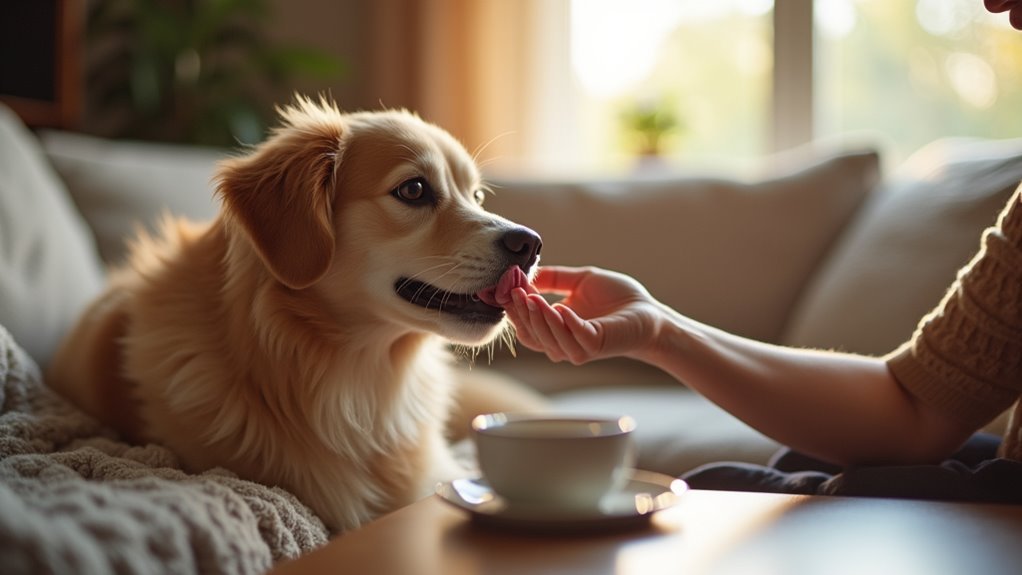

Dogs lick for simple reasons: communication, affection, taste, grooming, and stress or health signals. Licking often starts as a friendly greeting or a way to show attachment. Salty skin or food residue can make licking feel rewarding to your dog. Some dogs groom themselves and others with licks, while excessive licking can signal anxiety, skin problems, or pain. Watch body language and timing to tell harmless licking from behavior that needs veterinary or behavioral attention.
What Your Dog’s Licking Means
Most of the time, your dog’s licking is their way of talking to you. It can show affection, trust, and a wish to feel close.
Whenever your dog leans in, makes eye contact, and uses soft body language, you’re often seeing a gentle social signal. Sometimes, licking also says, “Notice me,” especially whenever your dog wants play, petting, or a little reassurance.
In other moments, it could be part of greeting behavior, like a happy hello after time apart. You can read this as your dog reaching for connection in the easiest way they know.
Why Dogs Lick People
Your dog might lick you for a mix of simple and surprising reasons, and affection is only part of the story. Dogs often use licking as olfactory investigation, tasting your skin to learn where you’ve been and what you’ve touched. Warm, salty skin can tell your dog plenty. Licking also links to social grooming, a natural behavior that helps dogs feel connected and calm around their pack.
- Your dog could be reading your scent.
- Your dog might be copying close-group grooming habits.
- Your dog could be signaling comfort in a safe bond.
Licking for Affection and Attention
Often, a dog’s licking starts with simple affection, and it can feel pretty sweet whenever that warm little tongue shows up out of nowhere. You might notice it most during greeting rituals, whenever your dog rushes over and licks your hand or face like you’re the best part of the day. That’s often bond reinforcement in action, because your dog links licking with closeness, praise, and your happy response.
Should you laugh, pet, or talk back, your dog learns that licking works. So, your dog could keep doing it to get more of you. In many homes, licking becomes a gentle habit that says, “Stay with me.” It’s a small gesture, but it can carry a lot of love and a clear wish to connect.
Why Your Skin Tastes Interesting to Dogs
That sweet licking habit doesn’t come from affection alone, because your skin can be a pretty interesting snack to your dog, too.
- Sweat leaves salty residue, and many dogs love that taste.
- Your lotions, soaps, and laundry scents can mix with scent chemistry and grab your dog’s attention.
- Tiny bits of food or outdoor dirt can linger on you, and your dog notices fast.
Signs Dog Licking Has Become Excessive
Should your dog lick you nonstop and seem unable to stop, that can be a sign the behavior has gone too far.
You might also notice restlessness or pacing, which can show your dog feels unsettled or stressed.
In some cases, your skin could get red or irritated from all that licking, so it’s worth paying attention to the pattern.
Frequent Repeated Licking
As your dog licks you repeatedly, it can feel sweet initially, then a little too much. You might notice the same ritual patterns at the couch, at meals, or whenever you stop petting. That steady loop can cross your behavioral thresholds whenever it no longer feels like a quick hello.
- Your dog could keep licking to ask for attention, and each smile or touch can keep it going.
- Your dog might do it because your skin tastes salty or smells interesting.
- Your dog might also use licking to soothe feelings and stay close to you.
If the licking feels nonstop, you’re not being dramatic. You’re noticing a sign that your bond is strong, but the habit could need clearer limits.
Restlessness Or Pacing
Sometimes the licking doesn’t stay simple or sweet, and you could start to see your dog get fidgety, pace the room, or seem unable to settle. That shift often means the habit is tied to stress, boredom, or a need for comfort, not just affection. Notice patterns like nighttime pacing or restless chewing, because those often travel together.
| What you notice | What it could mean |
|---|---|
| Pacing after licking | Your dog can’t relax |
| Restless chewing | Nervous energy needs an outlet |
| Following you nonstop | They want reassurance |
| Wandering at night | Something feels off |
| Hard-to-stop licking | The habit’s growing stronger |
Should this sound familiar, you’re not alone. You can respond with calm routines, gentle play, and steady attention. Were the restlessness keeps growing, your vet can help you sort it out.
Skin Irritation Signs
A little licking can seem sweet initially, but should it keep going, your dog’s skin could start to show it.
You might observe skin redness, damp fur, or scaly patches where the tongue keeps landing.
That spot can also look sore, feel warm, or lose hair.
Once you see these changes, your dog might need a break from the licking loop.
- Check the area daily for rough skin or swelling.
- Watch for itching, chewing, or repeated rubbing nearby.
- Should the irritation spreads or won’t fade, call your vet.
You’re not overreacting.
Small changes can mean your dog’s skin is feeling stressed, and catching them promptly helps your buddy stay comfy and close.
Health Problems Behind Excess Dog Licking
When your dog’s licking has started to feel new, intense, or hard to stop, health problems could be part of the reason.
You might notice an oral infection, sore gums, or loose teeth, and your dog could lick more to ease that discomfort.
Nausea or stomach upset can also drive repeated licking, especially after meals.
Sometimes a hormonal imbalance changes skin, appetite, or mouth comfort, and that can nudge the habit higher.
Should your dog keep licking your skin, furniture, or paws, pay attention to other clues like bad breath, drooling, or low energy.
You know your dog best, and that matters. A vet visit can sort out pain from habit and help your buddy feel like themselves again.
Anxiety and Stress Licking
Whenever your dog starts licking you more during noisy days, changes at home, or busy moments, stress could be part of the story. You might notice stress signals like pacing, yawning, tucked ears, or clingy behavior, and licking can help your dog feel safer.
- Watch for patterns. Provided the licking rises during storms, guests, or tension, your dog might be trying to cope.
- Offer calming strategies. Keep your voice soft, give space, and use a quiet room with familiar bedding.
- Stay steady. Your calm presence can help your dog relax and trust that you’re both okay.
Whenever you respond with patience, you help your dog feel seen, and that bond can ease the pressure together.
How to Stop Unwanted Licking
When your dog’s licking has started to feel more like a sticky habit than a sweet hello, you might help shape it without hurting the bond you share.
First, set consistent boundaries. Gently turn away, step back, or offer a calm cue like “enough” each time the licking starts. Then reward quiet, four paws on the floor, so your dog learns what works.
Next, give alternative stimulation that fits your dog’s energy, like a chew toy, a sniff walk, or a short training game. These choices help your dog trade licking for a more useful job.
Also, keep your responses steady. Should you laugh one day and stop it the next, your dog can get mixed messages. With patience, you can guide the habit and still keep your connection warm.
When to Call Your Vet
Provided your dog’s licking suddenly changes, you should pay close attention because that can be a sign something’s off.
Call your vet provided you also notice drooling, pawing at the mouth, vomiting, pain, or a loss of appetite, since those signs can point to discomfort or illness.
Even provided your dog still seems playful, trust your instincts and check in provided the licking feels intense, new, or out of pattern.
Sudden Licking Changes
A sudden change in licking can mean more than just extra affection, so it’s worth paying attention to the pattern. Should your dog starts licking you far more, or stops almost overnight, observe what changed around the same time. Behavioral shifts often show up after new routines, visitors, or environmental triggers, and your dog could be trying to cope or connect.
- Watch for a new timing pattern.
- Consider recent stress or changes at home.
- Call your vet should the shift feels big or lasts.
You know your dog’s usual style, and that helps. Once licking no longer fits their normal habits, your vet can help you sort out whether it’s a simple reaction or something that needs a closer look.
Signs of Discomfort
Not every lick is a sign of love, and some dogs use it to show that something feels off. Should your dog’s licking comes with stiff body language, facial tension, panting, or a tucked tail, pay attention. These clues can help you spot discomfort before it grows.
| Clue | What it might indicate |
|---|---|
| Lip licking | Nausea or stress |
| Pawing at face | Mouth discomfort |
| Restless pacing | Unease |
| Avoiding touch | Pain |
| Quiet withdrawal | Feeling unwell |
Once you notice these signs together, your dog could need support, not correction. Stay calm, speak softly, and watch for patterns in whenever the licking starts. Should it keep showing up with obvious discomfort, reach out to your vet. You’re not overreacting. You’re helping your dog feel seen and safe.
Vet Visit Triggers
Once licking starts to look different, your vet should be part of the conversation sooner rather than later. Should your dog licks nonstop, seems restless, or stops eating, that’s a good time to call.
Sudden changes, pain, nausea, bad breath, or licking one spot again and again can point to a health issue. You’re not overreacting by asking for help; you’re protecting your dog’s comfort and your peace of mind.
- Watch for intensity, timing, and new behavior.
- Note any vomiting, drooling, swelling, or mood changes.
- Use appointment preparation and clinic etiquette through bringing notes, staying calm, and sharing clear details.
That way, your vet can spot patterns fast and help your pup feel safe again.
Frequently Asked Questions
Can Puppies Learn Licking Habits From Their Mother?
Yes, you can absolutely see puppy imprinting from maternal grooming. Your pup might carry that gentle habit forward as a sweet little hello, seeking closeness, comfort, and belonging with you, too.
Do Certain Lotions Make Dogs Lick More?
Yes, certain lotions can make your dog lick more because scent attraction and skin irritation draw them in. You may notice sweet, salty, or food like smells on your skin, and your dog will investigate enthusiastically.
Is Licking Ever a Sign of Submission?
Yes, you can see licking as a form of submission. Your dog might use appeasement gestures to show respect or reduce tension, especially around dominance signals. It is often a gentle way to seek safety and connection.
Can Boredom Cause My Dog to Lick Me?
Yes. Boredom can make your dog lick you like a tap on the shoulder. You could also see boredom chewing and attention seeking. Your dog is asking for connection, play, or reassurance, not just a taste.
Should I Worry if My Dog Suddenly Starts Licking Objects?
Yes, you should worry if your dog suddenly starts licking objects because it can signal unusual pica, anxiety, pain, or a neurological issue. You should call your vet promptly and observe any other changes.