

Dogs hiccup because their diaphragm spasms, often after rapid eating, fast drinking, excitement, or stress. Puppies experience hiccups more frequently due to immature respiratory control. Most hiccup episodes are brief and harmless, resolving without treatment. Simple home measures can reduce hiccuping and make a dog more comfortable. Persistent, severe, or unusually frequent hiccups warrant veterinary evaluation to rule out medical causes.
Are Dog Hiccups Normal?
Yes, dog hiccups are usually normal, and they’re often just a short-lived sign that your dog’s diaphragm is twitching on its own.
You’ll notice them most in puppies, because their developmental stages include fast growth and quick breathing changes.
Still, older dogs can get them too, and breed predispositions could make some pups seem more prone than others.
In most cases, you don’t need to panic or rush for help. You can stay calm, keep your dog comfortable, and watch the episode pass.
If the hiccups resolve on their own, that’s a good sign. But should they keep returning, last a long time, or come with other worrisome changes, then you ought to check in with your vet for reassurance and next steps.
Why Dogs Get Hiccups
Dogs usually get hiccups for simple reasons, and most of the time, there’s no need to worry. You’re seeing a tiny spasm in the diaphragm, the muscle that helps your dog breathe. Whenever diaphragm anatomy works a little out of sync, that muscle can twitch and make the familiar hiccup sound.
Puppies get this more often because their bodies are still learning, and neonatal reflexes can pop up as they grow.
- Fast breaths can shake the system.
- Fast eating can add air.
- Excited play can change breathing.
- A cold snap can nudge the body.
What Triggers Dog Hiccups?
Several everyday things can set off dog hiccups, and most of them are tied to breathing, eating, or plain old excitement.
Whenever your dog gets worked up during play, stress, or fear, the breathing pattern changes and the diaphragm might twitch. Cold air, sudden weather shifts, and other environmental triggers can also start a spell, especially in younger pups.
Sometimes an odd smell, dust, or smoke irritates the airway and makes hiccups pop up. You could also notice them after medication side effects, since some drugs can upset normal breathing or stomach comfort.
Even a bouncy walk or a noisy house can leave your dog a little shaky inside. Usually, these hiccups pass quickly, so you can stay calm and help your buddy settle.
Eating and Drinking Too Fast
One of the biggest reasons hiccups show up is as your dog gulps food or water too quickly. Whenever your pup rushes, it swallows extra air, and that can tug at the diaphragm.
You can help your dog feel better with simple mealtime changes:
- Use slow feeders to slow the pace.
- Offer smaller meals with portion control.
- Give water in small sips, not big bowls.
- Let your dog rest after eating.
These small steps can ease gulping and keep your buddy more comfortable. In case you share meals calmly and make feeding feel safe, you’re already helping your dog’s body settle down.
A little patience goes a long way, and your dog doesn’t need to race the clock to belong at mealtime.
Excitement, Stress, and Playtime
Whenever your dog gets too excited, stressed, or caught up in rough play, its breathing can speed up and throw the diaphragm off rhythm. You could notice quick panting, darting eyes, tucked tail, or other stress signals before the hiccup sound starts. That doesn’t mean your dog is in trouble, but it does tell you the moment feels bigger than its body can handle.
Should play gets too wild, your dog might gulp air and hiccup more often. A little play modification can help. Try calmer games, shorter bursts, and easy pauses so your dog can reset. You’re not taking the fun away, you’re helping your dog stay comfortable and included. Once you read your dog’s mood sooner, you can keep play joyful and those hiccup bursts usually fade.
How to Stop Dog Hiccups at Home
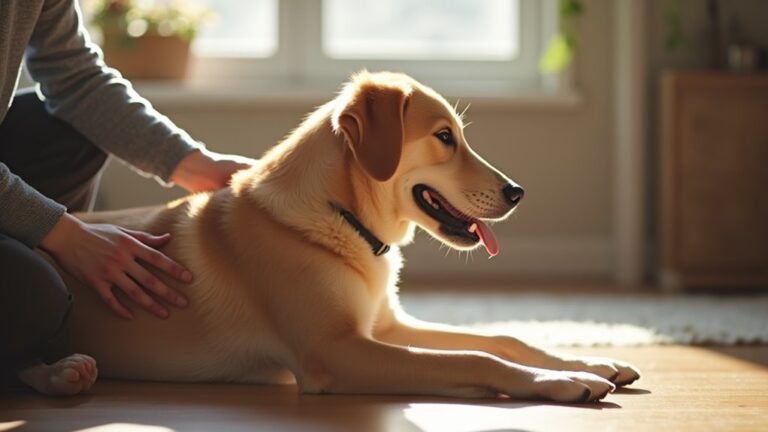
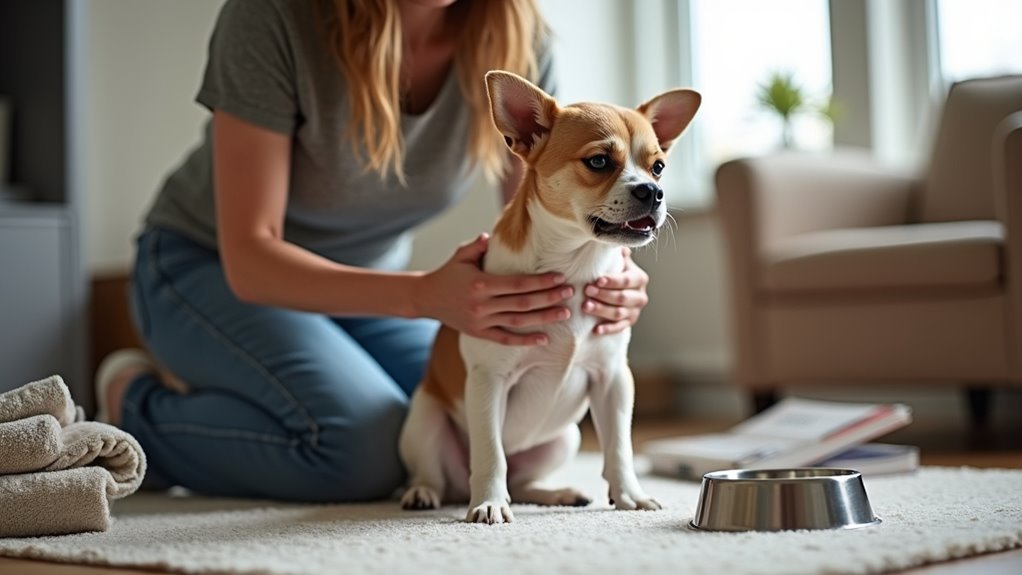
Whenever your dog gets the hiccups, start by helping them breathe more calmly. You can keep the room quiet, slow things down, and offer a gentle belly rub or chest rub to help their body relax.
Provided they seem settled, give a small sip of water so they can swallow slowly instead of gulping.
Calm Breathing Support
Should your dog has hiccups, the best initial step is usually to help them settle their breathing. Stay close, lower your own energy, and let your dog feel safe with you. Gentle breathing exercises can help provided you guide a slow pace with a soft voice and steady touch.
- Keep the room quiet.
- Ask for a calm sit or down.
- Use calming aids like a favorite blanket or chew.
- Reward slow, relaxed breaths with praise.
This works best whenever you stay patient, because stress can make hiccups linger. In case your dog starts panting harder, pause and give more space. Your calm presence often does more than any trick, and it helps your dog feel like part of a steady, caring pack.
Gentle Water Breaks
After you’ve helped your dog settle down, a few gentle sips of water can sometimes ease those little hiccup spasms. Offer the bowl calmly, and let your dog take slow sips instead of gulping.
In case your pup gets excited by the water, pull the bowl away for measured pauses so the breathing stays steady. You can also try fresh, room temperature water, since icy water could make hiccups linger.
Keep the serving small, then wait a moment before offering more. This helps protect your dog from swallowing extra air.
Should your dog keep hiccuping, pair the water break with a quiet cuddle or a short rest. You’re doing a caring thing here, and that calm routine often helps your dog feel safe, soothed, and back to normal.
When to Call Your Vet
Even though dog hiccups are usually harmless, you shouldn’t ignore them in case they start happening often, last more than 20 minutes, or seem to get worse over time. You know your dog best, so trust your gut provided something feels off.
Call your vet when hiccups come with coughing, vomiting, trouble breathing, low energy, or a poor appetite. These signs can mean your buddy needs help sooner rather than later.
Your vet could suggest:
- A checkup and long term monitoring
- Questions about recent eating or play
- Diagnostic evaluations to look deeper
- Care based on your dog’s age and history
Provided the hiccups keep returning, don’t feel silly asking for help. You’re being a caring teammate, and that matters.
How to Prevent Dog Hiccups
The positive news is that you can lower the odds of dog hiccups with a few simple habits at home.
Start with meal pacing by serving smaller portions and using a slow-feeder bowl, so your dog doesn’t gulp air. After meals, keep things calm and skip hard play for a bit.
Give water in small sips, especially after exercise, and let your dog rest before more excitement.
You can also use environmental enhancement, like puzzle toys and sniff games, to burn energy without wild panting.
A steady routine helps your dog feel safe, and that can calm breathing too.
Should your pup gets worked up fast, pause and let the moment settle.
These small steps make daily life smoother for both of you, and hiccups might show up less often.
Frequently Asked Questions
Can Dog Hiccups Happen During Sleep?
Yes, you can notice sleep hiccups in your dog, especially during REM spasms. They are usually harmless and brief. If they keep happening, wake your dog, or come with breathing trouble, you should call your vet.
Do Certain Breeds Get Hiccups More Often?
Yes, you might notice hiccups more in some breeds with breed predisposition and delicate diaphragm anatomy, especially puppies. They are usually just a little internal flutter. If they are frequent or long lasting, you should check with your vet.
Are Puppy Hiccups Different From Adult Dog Hiccups?
Yes. Puppy hiccups usually come from a developmental reflex and a more rapid diaphragm, so you will notice them more often. You can usually relax since they are brief; adult hiccups happen too, but persistent episodes deserve attention.
Can Hiccups Be Mistaken for Coughing or Retching?
Yes, you can mistake hiccups for coughing or retching; they are brief, jerky throat spasms, not harsh respiratory sounds. The phrenic nerve triggers them, while esophageal reflux or illness can make them seem similar to you.
Should I Record My Dog’s Hiccups for the Vet?
Yes, you should record your dog’s hiccups for the vet. A video diary helps you show the sound and timing, and a symptom timeline lets you track patterns, triggers, and when you will need care.