

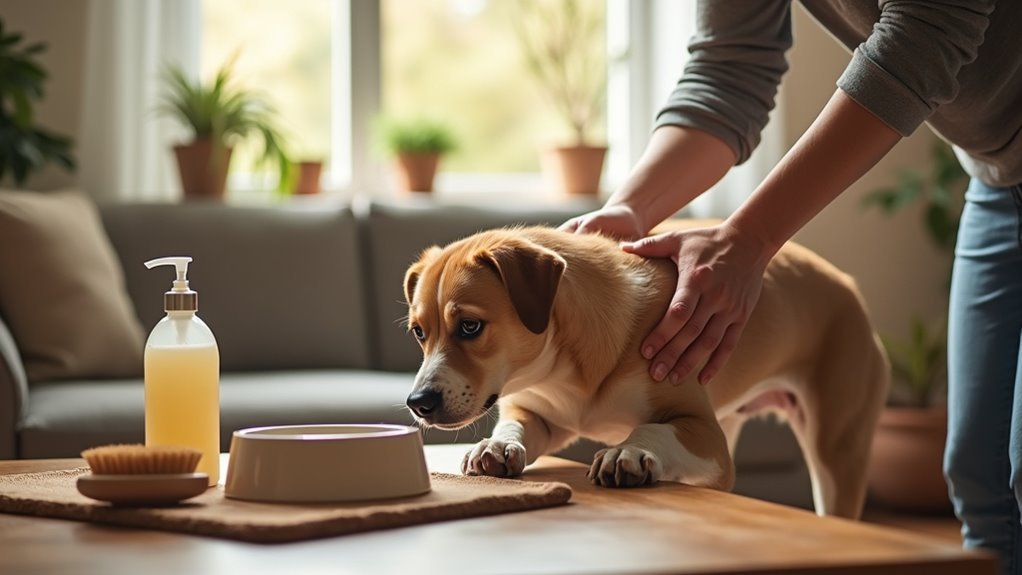

Dry skin on dogs happens for many reasons, and the main causes are environmental factors, grooming habits, parasites, allergies, and nutritional gaps. Indoor heating, low humidity, and harsh shampoos strip natural oils from the skin. Fleas, mites, and fungal infections cause irritation, flaking, and odor. Food lacking essential fatty acids leads to dull coats and itchy skin. Look for persistent scratching, excessive flakes, or a foul smell and consult a veterinarian for proper treatment and testing.
Common Causes of Dry Dog Skin
Whenever your dog’s skin starts looking dry or flaky, several common triggers could be at work. Dry air from winter heat, blasting AC, or low humidity can pull moisture from the skin fast.
You might also notice seasonal shedding changing coat texture, which can make flakes stand out more. Poor diet can leave the skin less supported, and a dull coat often shows it initially.
Sometimes parasites like fleas or mites irritate the skin and leave it rough. Stress can add to the problem, too, because it could make your dog’s skin less steady.
As these causes stack up, your dog can feel itchy and uncomfortable. That’s why paying attention sooner helps you spot the pattern and give your dog the care your pack wants.
How Allergies Trigger Flaky Skin
Allergies can make your dog’s skin feel like it’s under constant attack, and the flakes often show up before the bigger clues do. Whenever environmental allergens like pollen, mold, or grass touch the skin, your dog’s immune response kicks in fast. That reaction can inflame the skin, dry out the surface, and turn a small itch into steady scratching.
You might notice more dandruff, red patches, or a coat that looks rough and tired. Even after a walk or time in the yard, the irritation can linger. Should your dog keep licking, rubbing, or shaking, that’s often the skin asking for help.
You’re not alone in this; many dogs deal with the same cycle, and getting the trigger named is the initial step toward relief.
How Diet Affects Dog Skin Health
What your dog eats can show up fast in the coat and on the skin. Whenever the food lacks essential fatty acids, protein quality, or key vitamins and minerals, you might notice dryness, dull fur, or more scratching.
With the right balance of nutrients, you could help your dog’s skin hold moisture and stay calmer and healthier.
Essential Fatty Acids
A healthy dog’s skin often starts with the right fats in the bowl, because essential fatty acids help keep the skin barrier strong and the coat soft.
Whenever your dog doesn’t get enough, you might notice flakes, itchiness, and a dull coat that just won’t quit. That’s where omega supplementation can help, but it works best provided you choose the right kind with your vet’s guidance.
These fats also support skin absorption, so your dog can use nutrients more effectively. You can enhance daily intake with balanced food and a little moisture rich meal support.
Should your dog’s skin looks dry, don’t panic. You’re not alone, and small diet changes can make a real difference.
Over time, steady fat support helps your dog feel more comfortable and look healthier.
Protein Quality Matters
Good fats can help your dog’s skin, but protein quality matters just as much because skin and coat cells rely on steady, usable amino acids to stay strong and repair well. When you choose a food with high amino digestibility, your dog can use more of each bite instead of wasting it. That means less patchy, tired-looking fur and a coat that feels smoother under your hand.
- Envision a shiny back as soft as a fresh blanket.
- Envision fewer flakes on the couch after a cuddle.
- Envision your dog scratching less at bedtime.
- Envision strong fur growing in like grass after rain.
If you’re pondering collagen supplementation, ask your vet initially. You want a diet that fits your dog’s body, and that shared care can really help.
Vitamins And Minerals
Even a small vitamin or mineral gap can show up on your dog’s skin, because the body sends key nutrients where they’re needed initially, and the coat can feel the strain fast.
Whenever vitamin absorption works well, your dog can use vitamins A, E, and B more fully to support skin repair and oil production. Then mineral balance matters too, since zinc and copper help keep the skin barrier strong and the fur shiny.
Should your dog eat a bland or uneven diet, you might notice dull fur, flakes, or slower healing. So, choose a complete food and consult your vet before adding supplements. That way, you and your dog could build a routine that supports comfort, confidence, and a softer coat together.
Can Baths and Grooming Dry Out Skin?
Yes, baths and grooming can dry out your dog’s skin provided they happen too often or with the wrong products, but fortunately this is usually fixable.
Whenever bath frequency climbs, your dog loses protective oils, and product residue can linger on the coat, adding more irritation.
You can help through choosing gentle dog shampoo, rinsing well, and spacing baths to fit your pup’s needs.
Brushing also matters, because it spreads natural oils and keeps the coat comfy.
- Soft foam sliding through fur
- A warm towel wrap after bath time
- Loose flakes on a dark couch
- A brushed coat with a healthy shine
Provided your dog’s skin still feels rough, you’re not alone.
Small changes often make a big difference, and your dog can feel better fast.
Parasites That Cause Dry Skin
Fleas, mites, and lice can all make your dog’s skin feel dry, itchy, and uncomfortable.
Flea allergies might cause the biggest reaction, since even a few bites can trigger nonstop scratching and flaky skin.
Mites and lice can also damage the skin barrier, so your dog could need treatment before the dryness settles down.
Flea Allergies
Flea allergies can render your dog miserable fast, because a single bite can trigger days of itching, redness, and dry, flaky skin. You might notice your dog chewing at the rump, spinning in circles, or asking for relief with those sad eyes you know so well.
Whenever this happens, the skin barrier breaks down, and flakes show up quickly.
- Tiny bites along the tail base
- Pink, irritated patches under the fur
- White specks on dark bedding
- A restless dog pacing beside you
If your dog has seasonal sensitivity, your vet could suggest year-round flea control and topical immunotherapy for tougher cases. You can also wash bedding, vacuum often, and check fur after walks.
These steps help you protect your dog and keep home life calmer for both of you.
Mites and Mange
As soon as mites move in, your dog’s skin can go from a little flaky to deeply uncomfortable fast. You might notice nonstop scratching, tiny crusts, hair loss, and pruritic lesions that make your dog look and feel miserable.
Mange often starts with follicular inflammation, so the coat can thin while the skin turns red, rough, and sore. Because mites live on or in the skin, they keep causing damage unless you treat them.
Your vet can confirm the cause with a skin exam and choose the right medicine. After that, you’ll want to wash bedding, clean grooming tools, and treat every pet in the home when necessary.
Acting promptly helps your dog feel safe, settled, and back with the pack sooner.
Lice Infestations
Lice can sneak in quietly, but they can quickly leave your dog feeling itchy, restless, and worn down. Once you understand lice biology, you can spot the tiny, wingless bugs faster. They cling to fur, feed on skin debris or blood, and spread through close contact, shared bedding, or grooming tools.
You might notice:
- a dull coat with tiny white nits
- raw spots from nonstop scratching
- close-together pups acting uneasy
- dry flakes falling on dark fur
Because lice live so close to the skin, your dog’s coat can look rough and feel dry. So act fast with humane removal from your vet, plus washing bedding and treating all pets in the home. That way, you help your dog feel safe, comfy, and back with the pack.
Dry Weather and Your Dog’s Skin
As dry weather settles in, your dog’s skin can start to feel the effects fast. When low outdoor moisture meets indoor humidity drops, skin loses water and could look dull or flaky.
Seasonal adjustments matter too, because winter heat and long air-conditioned days can leave your pup feeling itchy and off-balance. You might notice more dandruff, extra scratching, or a coat that just doesn’t shine like it should.
Small changes in routine can help you stay ahead of the problem. Keep your home comfortable, watch how your dog reacts as the weather shifts, and pay attention to any new rough patches.
Should dryness linger or seem to spread, your dog deserves a closer look from your vet.
At-Home Remedies for Dry Dog Skin
Often, you can soothe mild dry dog skin right at home with a few simple changes that help your dog feel more comfortable fast. Start with home remedies that protect the skin barrier: brush your dog gently, bathe with a dog-safe moisturizing shampoo, and pat the coat dry. Then add moisture with a cool-mist humidifier and fresh water nearby. Should your dog seems itchy, try vet-approved topical balms on rough spots, but keep them away from eyes and paws when directed.
- Soft brush strokes over a fluffy coat
- A warm towel after bath time
- A bowl of fresh water beside the bed
- A calm room with gentle humidity
You can also switch to a balanced diet with healthy fats. These small steps can help your dog feel cared for, and you’ll likely feel better too.
When Chronic Dry Skin Needs a Vet
Whenever your dog’s dry skin keeps coming back, it’s time to look past at-home care and check for a deeper cause. In case you notice a chronic itch, red patches, hair loss, scabs, a bad smell, or skin that looks sore, call your vet.
These signs can point to allergies, parasites, infection, or a medical problem that needs more than shampoo. Your vet could recommend diagnostic evaluations, such as skin scrapes, allergy checks, or blood work, to find the real issue.
That step can feel stressful, but you’re not managing it alone. Getting answers promptly helps your dog feel better sooner and keeps small skin troubles from turning into bigger ones.
In your pack, that kind of support matters.
How to Prevent Dry Dog Skin
A little daily care can go a long way whenever it comes to your dog’s skin. You can help providing a balanced diet, brushing often, and using gentle dog shampoo only whenever needed. Keep fresh water nearby, and watch for flakes or scratching after walks.
- A soft brush glides through a shiny coat like morning sunlight.
- Seasonal humidifiers add moisture whenever heaters dry the room.
- Good home air quality can feel like a calm, cozy den.
- Clean bedding helps your dog rest without itchy distractions.
Also, protect against fleas and ticks year-round, because tiny pests can spark big discomfort. Provided you bathe your pup, rinse well and don’t overdo it. Small habits like these help your dog feel comfy, safe, and part of the pack.
Frequently Asked Questions
Can Stress Alone Cause My Dog’s Skin to Flake?
Yes, stress can trigger flaking, but you should not blame it alone. Check for behavioral causes and a hormonal imbalance, since they often join forces with allergies, dry skin, or parasites.
How Do I Tell Dry Skin From a Fungal Infection?
Dry skin usually looks like general flaking and mild itchiness. Fungal infections often cause scaly patches, redness, odor, or hair loss. If you are unsure, your vet can recommend assessment, including biopsy confirmation.
Are Certain Dog Breeds More Prone to Dry Skin?
Yes, you are more likely to notice dry skin in breeds with a genetic predisposition or certain coat types. Nearly 1 in 5 dogs gets skin issues, and you can help yours by watching sensitive breeds closely.
Can Dry Skin Affect My Dog’s Paws and Nose Too?
Yes, you can notice dry skin on your dog’s paws and nose too. Paw cracking and nasal dryness often happen with low humidity, allergies, or irritation, so you will want to moisturize, protect, and ask your vet.
Should I Change My Dog’s Bedding for Dry Skin?
Yes, you should. Choose soft, breathable fabric and wash it with a gentle, fragrance free detergent. Keep wash frequency regular enough to remove allergens, but do not overdo it so you help your dog feel comfortable and cared for.