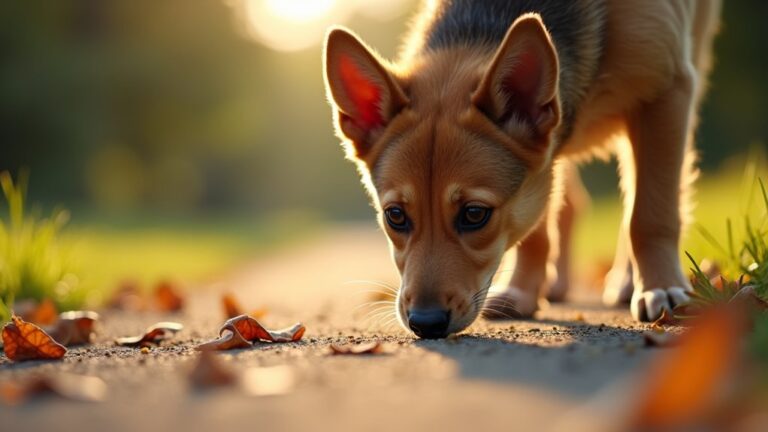

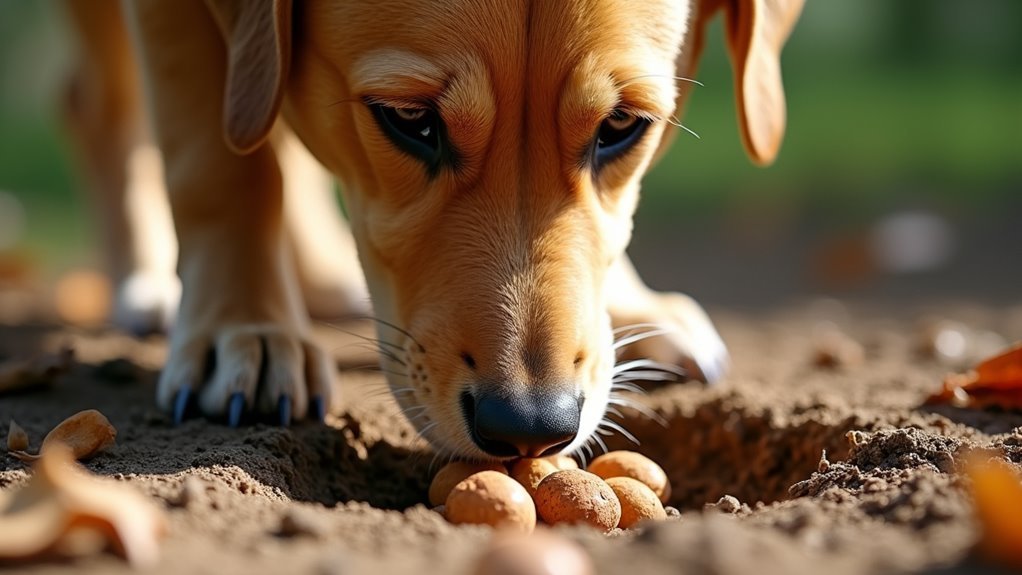

Dogs bury food because of an ancestral survival instinct to hide extra supplies from rivals and predators. This behavior can appear at home as stashing kibble in blankets, under furniture, or in yard holes. Burying often reflects resource-guarding tendencies, past scarcity, or stress, rather than simple mischief. Observing location, timing, and body language reveals the likely cause. Practical responses range from adjusting feeding routines to offering enrichment and reducing stress.
Why Dogs Bury Food
Even though it can look odd, dogs bury food for very normal reasons, and most of the time it comes from instinct. You’re not seeing bad manners or drama. Your dog might simply feel a strong food preference for certain treats, so it tries to save the good stuff.
At other times, meal pacing matters more than hunger. Should your dog doesn’t want to eat fast, it could hide leftovers and come back later. This can happen whenever meals feel too big, too rich, or just extra exciting.
In a calm home, the behavior often seems funny, but it usually means your dog is managing food in a way that feels safe and familiar. That’s part of normal dog behavior.
The Instinct Behind It
At the heart of this habit is an old survival instinct that dogs still carry today. Your dog’s ancestral imprint tells it to protect value for later, even although dinner is safe and certain.
When food feels extra, instinctual triggers can push your dog to move, nudge, or cover it. That old logic once helped wild canines save energy for lean times. Now, you might see the same pattern at home, and that’s normal.
- Save food for later
- Shield a prized treat
- Act on old habits
- Follow a quick urge
Why Dogs Hide Food at Home
Whenever your dog conceals food at home, it’s usually not trying to be sneaky in a bad way. Your dog could be following old caching instincts, which helped wild canines save extra bites for later.
At home, that same habit can look like food preservation, especially when a treat seems special or there’s more than your dog wants right now. You may see food tucked under a rug, behind a chair, or into a bed corner.
That can also be indoor stimulation, because digging and hiding feel fun and rewarding. Sometimes your dog simply wants to keep a prized snack close. Should the behavior be mild, it often just shows a normal instinct existing happily in your house, not a problem to fix.
When Food Burying Signals Stress
Should your dog starts burying food more often, stress or anxiety could be part of the story. You might notice other stress indicators, too, like pacing, licking lips, or eating in a rush. Whenever your dog feels unsure, hiding food can act like a tiny comfort ritual. It gives your dog something to control, and that can feel safer.
- A new home or noisy room
- Changes in feeding time
- Another pet nearby
- Less interest in eating
If you spot these signs, stay calm and keep meals quiet. Your dog doesn’t need pressure; it needs steady care and calm. Try gentle routines, a safe feeding spot, and simple calming strategies like slow praise and predictable mealtimes. With your support, your dog can feel more secure and less alone.
How Breed and History Affect It
Some breeds still carry stronger caching instincts because their history shaped them to save food for later.
Should your dog comes from a hunting or working background, you might notice this behavior more often, since those dogs once had to protect meals during lean times.
Breed-Specific Instincts
Breed history can shape this habit in a big way, because many dogs still carry the instincts their ancestors needed to survive.
In case your dog comes from a line built for scent driven retrieval, or strong herding instincts, you might see more digging and hiding.
These breeds often stay alert, busy, and quick to stash something precious.
- Retrievers might mouth, move, and tuck food.
- Herding breeds might stay watchful and organized.
- Terriers might dig initially and reflect later.
- Working dogs might treat extras like supplies.
Hunting Heritage
A dog’s hunting past can shape this habit just as much as the breed name on a pedigree chart. You might notice it more in dogs with strong ancestral hunting lines, because their bodies still recall old jobs.
Breeds bred for scent tracking, like hounds and terriers, often follow a trail with focused energy, and that same drive can spill into food burying. In your home, this doesn’t mean your dog is being odd or rude. It means history is still speaking.
Whenever your dog nudges, paws, or covers a treat, you’re seeing a leftover skill from dogs that once managed food with care. So should your pup act secretive, you can smile a little. That instinct is part of a deep family story.
Survival Behaviors
Watching a dog tuck food away can feel odd, but it usually comes from survival habits that run deep. Whenever your dog buries a treat, you’re seeing ancestral caching at work.
Breeds shaped through harsher work or leaner diets might show it more, because their history rewards survival strategies that save food for later.
- Wild canines hid extra food from scavengers.
- Cool soil helped keep meals safer.
- Some breeds still act on that old script.
- Stress or scarcity can make the urge stronger.
Signs Your Dog Is Saving Food
You could notice your dog tucking food away in secret spots, like behind furniture, under blankets, or in the yard.
In case this happens more than once, you might be seeing a repeated saving habit rather than a one-time quirk.
These little food stashes can show that your dog feels the need to keep a meal for later.
Hidden Food Stashes
As your dog begins tucking food away instead of eating it, the clues can be easy to miss initially. You could spot little caches under rugs, behind furniture, or near a favorite bed. Your dog might sniff the spot initially, then nudge food into place with calm focus. That’s often about odor preservation and seasonal caching, old habits that helped canines save meals for later.
- A treat vanishes from the bowl
- Your dog paws at blankets or cushions
- Crumbs show up in concealed corners
- Your dog returns to the stash later
When you notice these signs, you’re seeing your dog protect something that feels precious. In a busy home, that stashed food can mean comfort, not mischief.
Repeated Burying Patterns
Whenever food hiding starts happening repeatedly, it usually means your dog isn’t just being playful. You might notice the same spot, the same scrap, or the same careful nose-work after meals. That pattern points to saving, not random mischief.
| Sign | What it can mean |
|---|---|
| returns to food | plans to keep it |
| digs after eating | checks a stash |
| hides treats often | values them highly |
| repeats in new spots | reacts to environmental triggers |
| changes with seasons | shows seasonal variation |
If your dog does this, you’re seeing old caching instinct at work. In busy homes, noise, visitors, or other pets can push the habit harder. During colder months, seasonal variation could also make the behavior show up more. You’re not coping with a bad dog, just a clever one trying to feel secure.
How to Stop Indoor Food Burying
Stopping indoor food burying starts with acknowledging that your dog isn’t being naughty or weird for no reason. Your dog could be following a caching instinct, so you can guide that urge in kinder ways.
- Offer smaller portions at meal times.
- Keep meal timing steady each day.
- Use crate training only when it helps your dog feel calm and safe.
- Remove leftover food before your dog tries to stash it.
You can also feed in a quiet spot so your dog feels settled, not rushed. In case your dog likes to “save” treats, give them one at a time instead of a pile. Then praise calm eating with a soft voice or a quick cuddle.
Small changes like these help your dog feel understood, and they make your home feel more peaceful for both of you.
When Food Burying Becomes a Problem
At the time food burying starts to happen too often, it can feel a little strange, but it usually means your dog is trying to cope with something, not misbehaving. You might notice your dog hides food after meals, skips eating, or guards tasty treats.
Once that pattern grows, it can point to stress, resource guarding, or even a health issue. Should your dog seem anxious, tense around food, or changes appetite, a veterinary evaluation can rule out pain, nausea, or other problems.
After that, behavioral therapy can help you and your dog build calmer habits and safer mealtime routines. You’re not alone in this. Many dogs need a little support, and with patience, your home can feel secure again.
Frequently Asked Questions
Does Burying Food Mean My Dog Dislikes the Meal?
Not usually. You can view burying as caching rather than rejection. Your dog may simply save extra food, show food preferences, or signal anxiety. Check portion sizes, treats, and comfort, and watch eating habits for patterns.
Why Does My Dog Bury Treats but Not Kibble?
Your dog might bury treats but not kibble because treats trigger stronger scent preference and possible texture aversion. You are seeing a normal caching instinct and your dog might simply value treats more or feel safer saving them.
Can Burying Food Happen Even After a Full Meal?
Yes, you can still see it after a full meal. Your dog might follow food caching and pantry instincts, saving extras, feeling secure, or simply enjoying the burying routine even though they are already satisfied.
Is Food Burying More Common in Puppies or Older Dogs?
Usually you’ll see food burying more in puppies, because puppy hoarding often shows up during play and learning. But older dogs can do it too; senior caching usually reflects habit, anxiety, or competition.
Should I Worry if My Dog Buries Food Outdoors Only?
Usually no. You can relax provided your dog buries food outdoors only; it often reflects instinct. Watch for seasonal changes, neighbor presence, or stress. If it is frequent, ask your vet.