

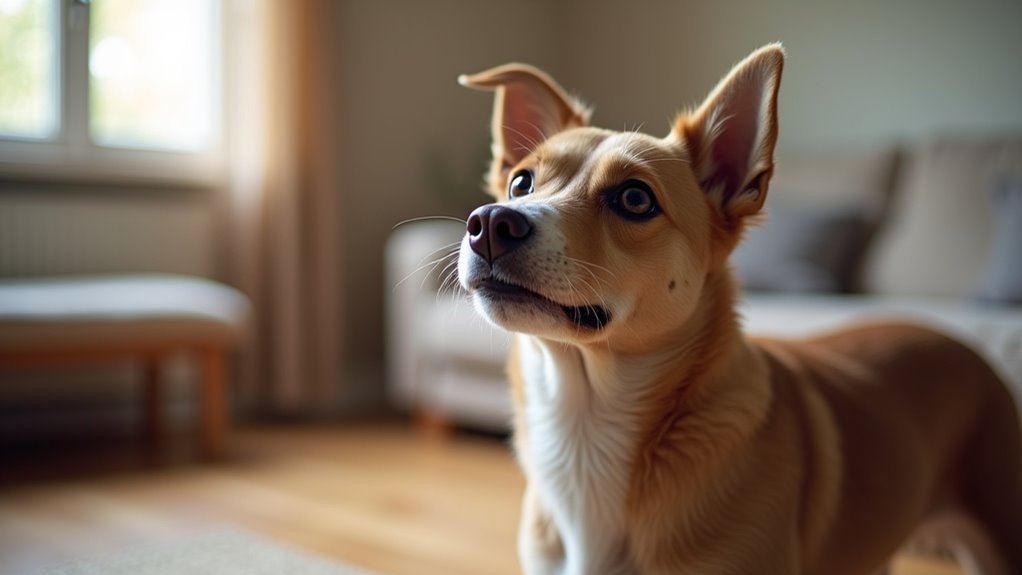

Dogs tilt their heads to better locate sounds, focus on faces, and interpret human speech and gestures. That tiny posture change adjusts ear position for clearer hearing and opens up a clearer line of sight. Head-tilting often signals curiosity or an attempt to communicate and can be reinforced by positive attention. Persistent, sudden, or asymmetric tilting can indicate an ear or neurological problem requiring veterinary care. This behavior blends sensory advantage, social communication, and learned response.
What Does a Dog Head Tilt Mean?
A dog head tilt usually means your dog is trying to understand what’s happening right in front of them. You could see it whenever you talk, laugh, or make a strange sound. In that moment, your dog is likely sorting out meaning, not just noise.
The tilt can show attention, curiosity, and emotional signaling, especially whenever your voice matters to them. It could also reflect neuroanatomical correlates that support how your dog processes familiar words and human cues.
You’re probably noticing a little mix of listening and pondering. Dogs often use this gesture whenever they want more information, or whenever they feel close to you. So whenever your dog tilts, they’re often saying, “I’m with you, keep going.”
How Head Tilts Help Dogs Hear Better?
If you tip your head, you help your ears change angle, which can allow sounds easier to catch and sort out.
That small shift can block less sound from your ear flaps and help you pinpoint where a noise is coming from.
It’s one reason your dog might tilt toward a voice or a high-pitched sound while trying to hear it better.
Pinpointing Sounds
Dogs tilt their heads because it helps them pin down where a sound is coming from. You can consider it as acoustic triangulation, with your dog comparing tiny differences in what each ear picks up.
Binaural timing matters too, because even a split second helps the brain judge direction and distance. Whenever you speak, your dog might tilt toward the sound to sort out a word, a whistle, or a strange noise.
That small shift can also reduce interference from the ear flaps and sharpen the signal. So if your dog leans in with that curious face, it isn’t being dramatic. It’s working hard to listen with you, stay connected, and figure out what matters.
Ear Angle Adjustment
Gently cocking their head, dogs can shift the angle of their ears so they catch sound more clearly. You’ll notice this ear orientation whenever a voice, toy, or rustle grabs their attention.
Through turning slightly, your dog lets each ear face sound in a better way, and that helps with auditory filtering. The pinnae can block or soften some noise, so a small tilt might reduce that interference. This matters whenever your dog wants to sort out one sound from the rest, especially in a busy home.
At the same time, the tilt shows you’re being heard, which can feel sweet for both of you. So as your dog leans in, they’re not just posing. They’re adjusting their ears to listen with you.
Better Sound Detection
Often, a small head tilt helps your dog hear a sound more clearly, and that’s because it changes how both ears collect information at the same time.
Whenever you shift your dog’s ear angle, you help reduce acoustic shadowing from the ear flap, so faint details stand out. That matters whenever a bark, whistle, or your voice sits near the edge of your dog’s frequency range.
Your dog’s aural sensitivity is already strong, but the tilt can support sound localization processors, letting your pup judge where the sound comes from and how far away it is.
Why Dogs Tilt Their Heads to See Faces
When you tilt your head, you can give your dog a clearer view of your face, especially provided their muzzle blocks part of what they see.
That small shift also helps them catch your voice cues while they watch your expressions. So, your dog might be trying to read both your words and your feelings at the same time.
Better View Of Faces
Sometimes, a small head tilt helps your dog see you more clearly. Whenever you face your dog, that little turn can shift the muzzle and open a better view of your eyes and mouth. Your dog then picks up eye contact and visual cues that make your expression easier to read. That can matter whenever you smile, call its name, or cue a favorite routine.
- The tilt can reduce muzzle blocking.
- It can sharpen facial details.
- It can help your dog track your lips.
- It can support quicker recognition.
- It often feels like a warm, shared moment.
Listening For Voice Cues
Your dog’s tilt isn’t just a cute face move. It can help your dog catch the way you talk.
Whenever you speak, your dog might use speech recognition to pick out familiar words, and the tilt can sharpen that focus. Through shifting the head, your dog changes ear position and follows vocal timing more closely, especially whenever your tone changes fast.
You’ll often see this whenever you say “walk,” “treat,” or a name your dog loves. The tilt also shows effort, not confusion. Your dog is listening hard, sorting sound, and trying to match your voice with meaning.
That little lean can make your bond feel stronger, because it says, “I’m with you.”
Reading Facial Expressions
Ever notice how your dog cocks that little head just so? Whenever you talk, he’s not only hearing you. He’s also watching your face for clues. His expression sensitivity helps him notice a smile, a frown, or raised brows, and that tilt can bring your eyes and mouth into clearer view.
That’s part of why facial mimicry matters too, because dogs often mirror your mood with their own soft look.
- A slight tilt can reduce muzzle blockage.
- Better face view helps reading emotion.
- Your tone and face work together.
- Curious dogs gather more social clues.
- Gentle praise can strengthen the habit.
Curiosity and Confusion Behind the Tilt
As a dog tilts its head, curiosity is often the initial thing at work, because that little lean can mean, “Wait, what was that?”
A new sound, a strange word, or a noise with no clear source can make a dog pause and try to sort things out. You’re seeing novelty detection at work, and sensory integration helps your dog blend hearing and sight into one quick check.
That moment of confusion isn’t a flaw; it’s a smart way to gather clues. Whenever your dog can’t match a sound to anything known, the tilt gives a bit more time to ponder.
When Dogs Tilt Their Heads for Attention
Sometimes, a dog tilts its head because it wants to stay connected with you. Whenever you speak, your dog might watch your face, catch your tone, and use that little tilt as one of its attention cues. It’s a warm sign of social bonding, because your dog is trying to follow you and stay in the moment with you.
- Your voice can spark quick focus.
- Your face gives helpful clues.
- The tilt can show “I’m listening.”
- A familiar word can pull full attention.
- Your reaction can deepen trust.
Whenever you smile or answer back, you help your dog feel seen. That shared moment can make your bond feel easy, close, and real.
Can Head Tilting Become a Learned Behavior?
Yes, head tilting can become a learned behavior, especially should your dog notices that it gets a happy response from you.
Whenever you smile, laugh, or offer praise, your dog could repeat the move because those conditioning effects teach, “That works.” Over time, social learning helps your dog link the tilt with your attention and warmth. You may even see it more whenever you talk in an excited voice or use words tied to good things, like walk or treat.
Still, the habit usually grows from natural listening and curiosity originally. Your dog isn’t trying to perform for applause alone. It’s just smart enough to notice what brings connection, and that can make the tilt show up more often, and with more confidence.
What Different Dog Head Tilts Mean?
What does your dog’s head tilt really mean? Usually, it means your dog is trying hard to understand you.
A small tilt can show curiosity, better sound tracking, or a quick visual check whenever the muzzle blocks a view. Because dogs notice tiny changes in tone, they might tilt whenever a word feels familiar. The amount of tilt can also hint at ear asymmetry or extra cognitive load while your dog sorts out a noisy moment.
- Slight tilt: listening closely
- Deeper tilt: checking sound direction
- Left or right tilt: using one ear more
- Repeated tilts: strong interest
- Slow tilt with soft eyes: warm attention
When a Head Tilt Could Signal a Problem
Most head tilts are cute and harmless, but a tilt that shows up out of nowhere or keeps happening can point to a real health issue. Should your dog also seems wobbly, circles, vomits, or looks confused, you might be seeing neurological signs that need a vet check. A steady lean to one side can also happen with vestibular disease, which affects balance and makes the world feel off.
You know your dog best, so trust that gut feeling ought something seems wrong. Even though the tilt looks small, pay attention whenever it comes with ear pain, eye flicking, or trouble walking. In those moments, your dog isn’t being dramatic. They’re asking for help, and you belong in that next step with them, together.
How to Respond When Your Dog Tilts Its Head
As your dog tilts its head, the best response is usually simple: stay calm, notice what’s happening, and give your dog a little room to figure things out.
You don’t need to correct the pose; you can meet it with a soft voice and steady eyes. Then, in case your dog seems curious, reward that focus with positive reinforcement, like praise or a small treat.
- Watch for a new sound or word.
- Speak clearly and keep your tone gentle.
- Let your dog look, listen, and process.
- Ignore the urge to laugh too loudly.
- Use mimic training to invite attention.
In the event your dog tilts often during play or talk, that’s a nice sign you’re connecting.
You’re helping your dog feel safe, understood, and part of the moment.
Frequently Asked Questions
Why Do Puppies Tilt Their Heads More Often Than Adult Dogs?
You’ll notice puppies tilt more because their developing vision and neural maturation make sounds and faces harder to interpret. They are also extra curious, so you often reinforce the cute behavior with attention, praise, and treats.
Do Certain Dog Breeds Tilt Their Heads More Frequently?
Yes, you’ll often notice breed tendencies: dogs with longer snouts or floppy ear anatomy might tilt more, because a shepherd once tilted at my whistle like a curious neighbor, trying to hear and see me better.
Can a Head Tilt Help Dogs Locate Sounds Outdoors?
Yes, you can help your dog use a head tilt to localize sounds outdoors, sharpening spatial hearing. Tilting can offset wind effects and tricky outdoor acoustics and help them pinpoint where that rustle or call comes from.
Why Do Dogs Tilt at High-Pitched Noises?
You’ll notice dogs tilt at high pitched noises because their auditory sensitivity makes those sounds stand out, and they might show pitch preference whenever they’re trying to locate, understand, or simply belong in your conversation.
Does Head Tilting Improve a Dog’s Understanding of Human Speech?
Yes, it can help you. Whenever your dog tilts its head, it might sharpen auditory processing and social cognition, allowing them to catch key words, tone, and cues from you. That attention can make your speech easier to read.