
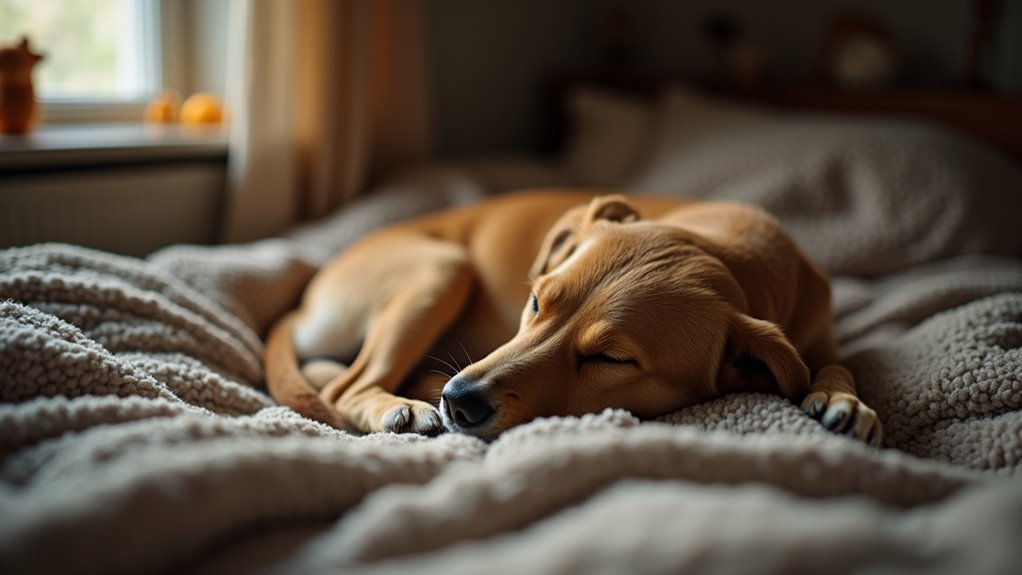

Dogs do dream. During REM sleep their brains become active while muscles stay mostly relaxed, allowing sensory experiences and memories to replay. Twitching paws, soft barks, and tail movement commonly appear as the brain processes smells, sounds, and emotions from the day. Puppies enter REM more often and show more sleep movements than adult dogs. Most dream-related activity is normal, though sudden stiffness, prolonged thrashing, or distressful noises warrant a vet check.
How Dog Dreaming Works
Dogs usually start dreaming during REM sleep, the stage where their brains become highly active even though their bodies rest. You can regard this as the moment at which neural mechanisms switch on while muscle movement stays mostly paused.
During this stage, your dog’s brain could run sensory replay, which means it brings back bits of the day in sleep. Because of that, the same circuits that help your dog notice smells, sounds, and motion can light up again.
These sleep patterns often link to memory work, too. So once your pup twitches, paddles, or gives a quiet bark, you’re likely seeing the brain processing familiar experiences. It’s a normal part of how dogs sleep, and it shows how close their rest is to learning.
What Dog Dreams Look Like
Usually, what you see on the outside of a sleeping dog is a small, lively hint of a bigger story going on inside. You could notice soft twitching, a paw paddling once, or a quiet bark, and that can feel oddly sweet.
Their facial expressions might shift too, with a tiny lip curl or relaxed ears that make you believe they’re somewhere familiar and safe. In REM sleep, your dog’s mind could mix sensory overlays from the day, so a game of fetch, a walk, or your voice can flicker through the dream.
You can’t see the full scene, but you can read these gentle signs. They often show your dog is resting deeply, not struggling, and that’s comforting for you both.
What Causes Dogs to Dream?
What makes those sleepy twitches happen is mostly the way a dog’s brain moves through REM sleep, the stage most tied to dreaming. | Cause | Brain action | Result |
| REM sleep | Neural replay | Daily scenes return |
|---|---|---|
| REM sleep | Sensory consolidation | New details settle |
| REM sleep | Memory links | Skills stick |
| REM sleep | Emotional sorting | Familiar bonds feel safe |
| REM sleep | Active circuits | Paws, whiskers, and barks move |
When you see your dog twitch, the brain might be replaying a walk, a game, or your voice. That neural replay could be helping sensory consolidation, so your dog can store what mattered today.
In this stage, the body stays mostly still, but the mind stays busy. So those tiny jerks aren’t random. They’re part of how your dog sorts experiences, learns patterns, and keeps the world feeling known and comforting.
Do Puppies Dream More?
Puppies often seem to dream more than adult dogs, and there’s a good reason for that. You’re watching a brain that’s still wiring itself, so puppy REMs can happen more often and more intensely.
During these short sleep bursts, your puppy might twitch, paddle, or softly yip while developmental dreaming helps sort new sights, smells, and sounds. Since every day brings fresh lessons, sleep gives your little companion space to practice and store them.
You don’t need to worry whenever these sleepy moves stay light and brief. In fact, they often show healthy growth at work. So should your pup wiggles in bed, you can feel a little awe, a little warmth, and perhaps a tiny smile too.
When Dog Dreaming Is Normal
Dog dreaming is often completely normal, and it can look a little dramatic whenever it occurs. You may see typical twitching, a soft bark, or little paw kicks while your dog rests. These signs usually show up during sleep cycles that include REM sleep, the stage most tied to dreaming.
Your dog’s brain is busy then, and that activity can make the body move a bit. So, in case your dog jerks, whimpers, or shifts under a blanket, you usually don’t need to worry.
Many dogs seem to dream about everyday moments, like playing, running, or being with you. In a calm home, these sleepy scenes often mean your dog’s mind is working just as it should, while you both share a peaceful night.
When Sleep Movements Need a Vet
In case your dog twitches a little in sleep, that’s often normal, but jerking that looks stiff, repeated, or out of control can point to something more serious.
You should also watch for long-lasting restlessness, loud distress, or sleep that keeps getting interrupted, because those signs can mean pain, illness, or a sleep disorder.
Whenever your dog’s sleep movements look different from the usual dream wiggles, it’s a good time to call your vet.
Abnormal Seizure Signs
Most sleep twitches are harmless, but a few signs can point to something more serious than a dream. If your dog stiffens, falls over, paddles hard, drools, or loses bladder control, you should ponder seizure differentiation, not simple REM sleep.
During a seizure, your dog couldn’t respond to your voice or touch, and the episode can look intense and sudden. Afterward, watch for postictal behavior like confusion, wobbling, blank staring, or clingy restlessness.
That calm, sleepy look after a seizure can fool you, so trust the full image. Should the movement lasts longer, repeats often, or seems paired with odd awareness, call your vet.
You know your dog best, and getting help promptly can bring real peace of mind.
Excessive Sleep Disturbance
Sometimes a little twitch in sleep is just a dream, but a dog that jerks hard, whines often, or seems restless night after night could need a vet’s attention.
You know those small twitches are common, yet sleep fragmentation can leave your dog worn out instead of refreshed. Should the night keeps getting broken, you might see daytime lethargy, crankiness, or less interest in play.
That matters because healthy REM sleep helps your dog rest, process the day, and feel safe.
Vet Visit Triggers
Whenever your dog’s sleep movements turn from a few soft twitches into hard jerks, loud whines, or repeated restlessness, it’s worth paying closer attention.
You know your dog best, and that bond matters. Should the shaking lasts, occurs often, or comes with stiffness, confusion, or daytime changes, call your vet.
These signs can point to pain, illness, or a sleep disorder, not just dreaming.
- Sudden post visit anxiety can make sleep look chaotic.
- clinic conditioning might also link the exam room with stress that follows home.
- In case your dog seems scared, unsafe, or unlike themself, you’re not overreacting.
A calm checkup can ease worry and help your dog feel like part of the pack again.
Frequently Asked Questions
Can Dogs Dream About Specific People or Places?
Yes, you can suppose so: your dog might dream in snapshots of familiar people and places, like a scrapbook fluttering at night. Dogs likely replay familiar scents, childhood places, and beloved faces from waking life.
Do Dogs Have Nightmares During REM Sleep?
Yes, you can see nightmare like REM sleep in dogs, with twitching or whimpering. You will not diagnose sleep paralysis from afar; watch for stress indicators, and if it is frequent, comfort them and call your vet.
Why Do Dogs Twitch While Sleeping?
Most twitching happens because you’re seeing REM sleep in action; about 20% of a dog’s sleep can be REM. You’ll notice muscle spasms, developmental reflexes, or dream related movements as your dog processes familiar experiences safely.
What Do Dog Dreams Mean Emotionally?
Dog dreams might mean you’re seeing emotional processing at work, plus memory consolidation. You can think of them as your dog’s brain sorting comfort, stress, and joy, often replaying bonds, play, and familiar routines during sleep.
Can Dreaming Help Dogs Learn New Behaviors?
Yes, it can. During REM sleep your dog might strengthen training consolidation and behavior reinforcement. Studies suggest sleep helps lock in learned cues; in fact dogs spend about 10 to 12 hours daily asleep, supporting memory.