

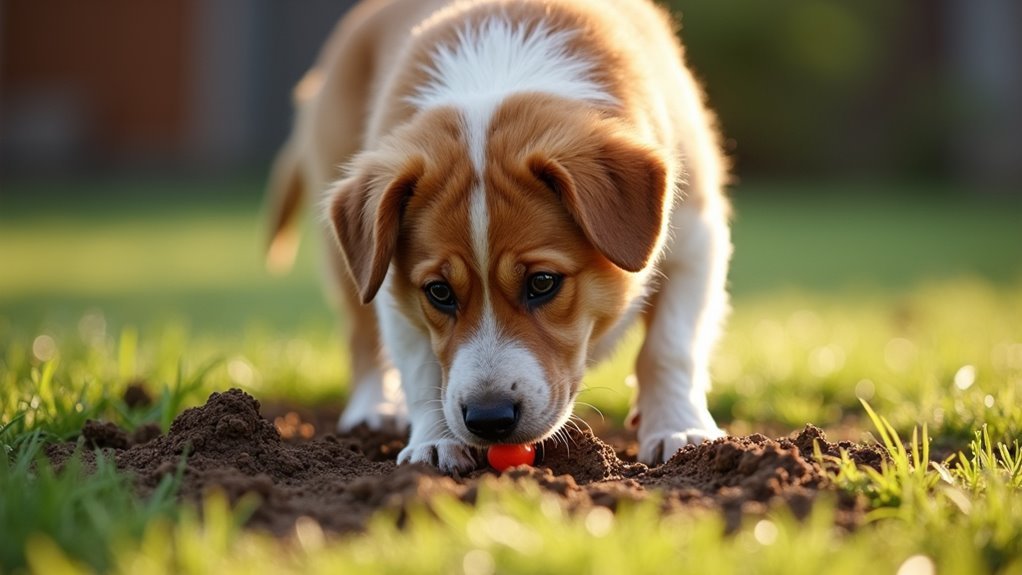

Dogs bury toys because of instincts, comfort-seeking, resource management, play, and stress relief. This behavior traces back to wild ancestors who hid surplus food and valuables. Many dogs also stash toys to create a cozy, secure spot or to protect prized items from others. Puppies may dig and hide during play as a natural exploration and practice behavior. Changes at home, tiredness, or sudden attachment to a toy often trigger the same burying routine.
The Main Reasons Dogs Bury Toys
Whenever your dog keeps burying toys, it usually isn’t being strange or sneaky. You’re seeing a normal habit that can come from wanting to keep a favorite item safe, especially whenever other pets or busy owner interactions make toys feel less secure.
Sometimes your dog also hides a toy because it’s excited by it or wants it close for later. Boredom can play a part too, since digging and stashing give your dog something to do.
You might notice more hiding during seasonal fluctuations, whenever routines shift and your dog feels less settled. Should the toy seem extra special, your dog could treat it like a treasure. That’s a pretty common dog move, even though it leaves your yard looking a little overworked.
Instincts Passed Down From Wild Ancestors
Deep down, your dog’s habit of burying toys comes from the same instincts that helped wild canids survive. Through ancestral memory and genetic inheritance, your pup still knows how to save a prized item for later. That old survival script can show up whenever a toy feels special, even in case dinner is easy now. You’re seeing a normal instinct, not a weird flaw.
| Wild Need | Dog Action | What You Notice |
|---|---|---|
| Save food | Hide value | Toy disappears |
| Stay ready | Cache extras | Digging starts |
| Keep control | Revisit stash | Careful sniffing |
| Pass survival traits | Repeat habit | Familiar behavior |
Comfort, Safety, and Toy Guarding
You might notice your dog burying a toy whenever they want it to feel safe and close nearby.
That habit can help them relax, especially supposing they see the toy as something special they don’t want to lose.
In some cases, your dog could also be protecting that toy from other pets or people, which is a simple form of resource guarding.
Comfort And Security
Often, a dog buries a toy because it makes that item feel safer and more secure. You might notice this most during bedtime routines, whenever your dog wants a favorite toy near secure bedding. That small stash can help your dog relax, much like a child keeping a lucky blanket close.
Whenever the world feels busy or a little too loud, hiding a toy gives your dog a private comfort spot. It can also help your dog feel in control of something special. So, should you see this habit, regard it as a quiet way your dog seeks comfort and peace.
With a calm home and gentle routines, your dog could feel less need to tuck toys away.
Resource Guarding Instinct
Even though your dog looks calm, toy burying can come from a strong urge to protect what feels precious. You might see this most whenever another pet hovers nearby, because your dog wants comfort, safety, and control.
In that moment, burying works like territorial signaling, telling others, “This is mine.” It can also reflect social hierarchy in a multi-dog home, where your dog tries to keep a prized toy from moving lower on the pecking order.
- Your dog could stash a toy after play.
- He could hide it near sleeping spots.
- He could guard it from curious paws.
- He could feel calmer whenever it stays out of sight.
Whenever you notice this, you’re seeing instinct, not bad manners, and that could help you respond with patience.
Why Dogs Hide Toys During Play
During play, dogs might hide toys because they’re following a mix of instinct, excitement, and plain old fun.
You could see your dog grab a favorite toy, dart away, and tuck it under a blanket or chair. That’s often a natural caching habit showing up in a playful way.
In interactive games, your dog can treat the toy like a prize to save for later. Sometimes, your dog also hides it for attention seeking, hoping you’ll join the chase or make the game bigger.
This behavior can feel quirky, but it usually means your dog feels engaged and happy. If you respond with a smile, you help your dog feel included, and play stays bright, safe, and social.
When Toy Burying Becomes a Problem
At the point toy burying starts happening again and again, it can stop looking cute and start feeling like a signal that something’s off. Should you notice compulsive burying, watch for other clues too. Your dog could seem tense, clingy, or snappy around toys, and social stress can make that pattern stronger. You’re not overreacting should the habit feel different from normal play.
- Burying happens many times a day
- Your dog guards toys or growls
- The behavior follows changes at home
- Your dog looks worried, not playful
When these signs show up together, your dog might need more calm and support. You belong in this process, and your steady attention can help you spot trouble sooner. Even a small shift in routine can matter.
How to Redirect the Burying Habit
You can start to shift the habit through giving your dog a better place to put that busy energy. To begin, provide alternatives like a chew, snuffle mat, or a soft bed they can claim as their own.
Then use training games that reward nose work and gentle searching, so your dog feels successful without hiding toys. Add environment enrichment with puzzle feeders, scatter meals, and safe digging spots in case your yard allows it.
Next, schedule play at regular times, because routine helps reduce boredom and worry. Should your dog start to stash again, calmly redirect them to the new option and praise the choice. That small win builds trust, and it helps your dog feel included, secure, and understood.
Frequently Asked Questions
Do Certain Dog Breeds Bury Toys More Often?
Yes, some breeds show stronger breed tendencies, especially terriers, retrievers, and hounds, but any dog can do it. You will see ancestral instincts pop up whenever your dog feels playful, guarded, bored, or stressed.
Why Do Dogs Bury Toys in Couches or Beds?
You’re tucking a treasure into a soft fortress as you bury toys in couches or beds. Your nesting instinct and resource guarding guide you, helping you claim comfort, safety, and belonging within your home.
Can Burying Toys Damage Your Yard or Furniture?
Yes, your dog can damage both your yard and furniture. Digging causes soil disruption, and burying toys indoors can leave furniture stains. You are not alone; redirecting this habit with play and enrichment helps protect your home.
Should I Let My Dog Bury Toys Indoors?
You can allow it indoors sometimes, but supervise playtime and redirect digging to a blanket or bed. If your dog guards toys, hide them later. You will keep your home peaceful and your dog included.
How Do I Stop My Dog From Hiding Toys in the Yard?
Stop giving your dog unsupervised yard access with toys, and offer secure storage instead. You can train fetch, reward returning toys, and redirect digging with games, exercise, and calm praise so they will feel included.