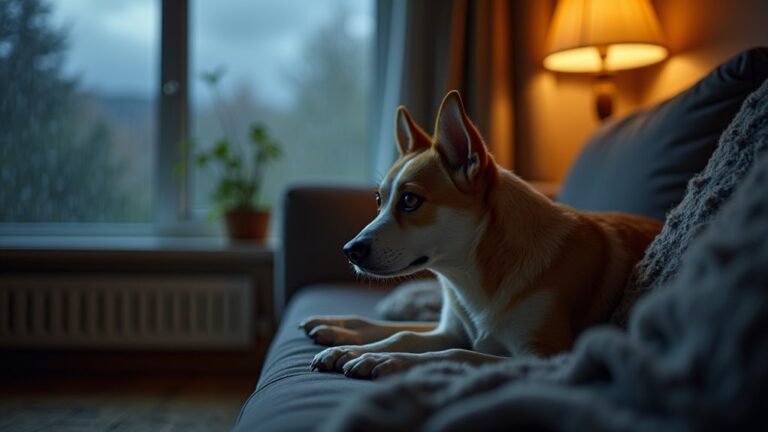

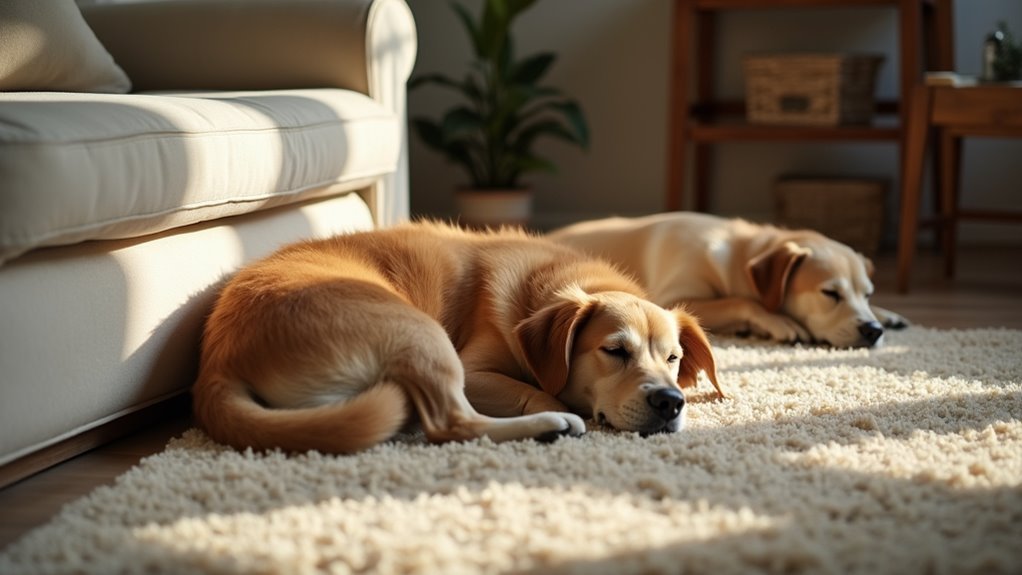

Dogs typically sleep 12 to 14 hours a day. Puppies and senior dogs often need more rest. Sleep needs change with age, activity level, and daily routine. Patterns of naps and deep sleep can signal overall health. Observing sleep quality and changes helps spot potential issues early.
How Long Do Dogs Sleep on Average?
Usually, adult dogs sleep about 12 to 14 hours a day, and that can surprise people who expect them to stay awake like we do. Whenever you watch your dog drift off after a walk or a meal, you’re seeing normal circadian rhythms at work.
Their sleep framework includes light naps, deeper rest, and quick dream phases, so they don’t sleep in one long block like you could. Some dogs rest a bit less or more, depending on breed, age, and activity, and that’s still okay.
Provided your dog eats well, moves comfortably, and greets you with steady energy, this sleep pattern usually fits. So, you’re not missing anything. Your dog’s body simply knows when it needs recovery, and it often chooses naptime.
How Much Sleep Do Puppies Need?
Puppies need a lot of sleep, and that’s completely normal because their bodies and brains are growing so fast. You might see your puppy sleep 16 to 20 hours a day, often in short bursts. Those sleep cycles help tiny bodies build muscle, store energy, and learn from each busy moment.
| Need | What to expect |
|---|---|
| Nap length | Short and frequent |
| Night sleep | Interrupted through potty breaks |
| Play time | Quick bursts |
| Sleep environment | Quiet, cozy, safe |
| Growth support | Brain and body development |
When you set up a calm sleep environment, your puppy can settle easier and feel secure. Should your pup wakes often, that’s normal too. Gentle routines, soft bedding, and low noise help your little buddy rest well and feel like part of the family.
How Much Sleep Do Adult Dogs Need?
Adult dogs usually sleep a lot, and that’s part of what keeps them healthy and steady. You’ll usually see your dog sleeping 12 to 14 hours a day, though many healthy adults rest anywhere from 8 to 15 hours.
Your dog’s circadian rhythm helps set the pace, so sleep often follows a familiar pattern with longer sleep at night and calmer naps during the day. A steady bedtime routine can make those sleep cycles smoother and more comfortable.
Should your home have noise sensitivity, your dog might wake more often, especially with sudden sounds or busy evenings. Breed, activity level, and overall wellbeing also shape how much rest your dog needs, so a sleepy day isn’t always a worry.
Why Do Senior Dogs Sleep More?
As dogs grow older, they often slow down, and that extra sleep is usually part of that change. You might notice your senior dog dozing longer because the body now needs more time to recover. Joints can ache, energy can dip, and the brain could work a bit harder, especially with age related cognition changes. As a result, naps can come more often and last longer.
Some dogs also rest more whenever medication interactions make them drowsy or less steady. You can help through watching for big shifts in eating, drinking, or bathroom habits, since those signs matter. Should your dog still enjoys meals, walks, and your company, more sleep usually fits a normal senior routine.
How Size and Activity Affect Sleep
Your dog’s size can shape how much sleep feels right, so small dogs and big breeds might rest in different ways.
Bigger dogs often need more downtime to recover their muscles, while active dogs can still sleep a lot because exercise wears them out.
Should your dog seem extra sleepy after a busy day, that usually just means their body’s asking for a little repair time.
Small Dogs, Bigger Sleep Needs
Smaller dogs sometimes seem to run on a different battery, but many of them still need plenty of sleep, especially whenever their day is full of play, noise, or new faces.
In case you live with lap dogs, you might notice they crash hard after short bursts of energy. That’s normal. Their breed genetics can shape how much rest they want, and a busy home can leave them extra tired.
You can help through giving them calm spots, steady routines, and quiet time following excitement.
Smaller dogs often nap in short chunks, then wake ready for more cuddles or a quick zoom around the room.
Whenever you respect their sleep cues, you make them feel safe, seen, and part of your pack.
Large Breeds and Rest
Large breeds often bring a bigger body and a bigger appetite for rest, so they can seem like gentle sleep champions compared with their smaller cousins. You’ll often notice your big dog settling down for long stretches, and that’s normal.
- A larger frame can make lounging feel like real work.
- Soft bedding can improve orthopedic comfort.
- A calm routine helps your dog relax faster.
- Cool ambient temperature can support deeper rest.
- Quiet spaces make naps easier to protect.
Because size affects strain on joints, your dog might choose sleep more often. In case your home feels steady and welcoming, your big companion can rest with confidence. Whenever you give space, warmth, and comfort, you help your dog feel like part of the pack, even while snoozing.
Active Dogs Need Recovery
Active dogs often sleep more than you’d expect, because all that running, chasing, and training leaves their bodies asking for repair time. You might notice your dog crash after a big park day, and that’s normal.
During post exercise relaxation, your dog’s heart rate slows, and calm sleep helps the body refill energy stores. That quiet time also supports muscular recovery, so sore legs and tired paws can bounce back.
If you share life with a high-energy pup, expect extra naps after walks, fetch, or agility practice. Bigger, stronger dogs might need even more rest because their muscles carry more work.
When you give your dog space to snooze, you’re helping them heal, reset, and stay ready for the next adventure with you.
Which Dog Breeds Sleep the Most?
In case you’re curious which dog breeds sleep the most, you’ll usually see larger breeds on the list because their bodies use more energy to grow and recover.
You’ll also notice that puppies and senior dogs often rest more, even though their breed is usually active. So should your dog seem to nap a lot, that doesn’t always mean something’s wrong.
Large Breeds Sleep More
At the point at which it comes to sleep, bigger dogs often take the lead, and that can surprise new pet parents who expect the most energetic pups to need the most rest.
You might notice Great Danes, Mastiffs, and Saint Bernards napping like they own the couch, because their size requires more recovery time.
Their heavier bodies can make rest feel especially crucial for joint health, and thick coat thickness can also influence how comfy they feel while they relax.
- You’ll often see longer naps after walks.
- Calm home routines support steady sleep.
- Warm spots invite bigger breeds to settle.
- Gentle exercise helps them rest well.
- Quiet evenings can feel like family time.
Puppies and Seniors Rest
While puppies and senior dogs may seem like they live on opposite ends of the energy scale, they both need extra rest to stay healthy and feel good. You’ll notice puppies crash often because their bodies work hard on developmental milestones, like growing bones and learning routines. A calm sleep environment helps them settle between play bursts and potty breaks.
Senior dogs rest more too, since age can slow them down and make recovery take longer. So, should your dog naps a lot, you’re not alone in the dog park crowd. You can support both life stages with soft bedding, quiet spaces, and steady schedules. Whenever you watch for normal eating, drinking, and movement, you’ll know their extra sleep usually fits right in.
Why Do Dogs Nap So Much?
Dogs nap so much because their bodies and brains need regular reset time, and that need is completely normal. You’re not doing anything wrong whenever your dog curls up again. Their circadian rhythms guide sleep in short bursts, so naps feel natural throughout the day. They also save energy for growing, healing, and staying alert around you.
- A long walk can result in a deep snooze.
- Quiet rooms invite longer naps.
- Puppies need extra shut-eye for growth.
- Older dogs often choose more rest.
- Stress napping can help dogs calm down.
Whenever your dog dozes off, it often means they feel safe with you. That’s a good sign, even though the couch looks permanently claimed.
What’s the Difference Between Day and Night Sleep?
Night and day sleep might look different, but both are part of your dog’s normal rest pattern. At night, your dog usually settles into longer stretches of sleep because circadian cues tell the body it’s time to slow down. Darkness, quiet, and your own routine help reinforce that rhythm, so numerous dogs stay asleep for most of the night.
During the day, sleep often comes in shorter naps. Your dog could doze between play, meals, and family time, especially provided the room feels calm. Light sensitivity can also shape these naps, since bright spaces may keep your dog more alert. So, in case your dog snoozes in bursts throughout the day and rests more deeply at night, that’s a healthy balance many dogs share.
What Changes a Dog’s Sleep Schedule?
A dog’s sleep schedule can shift for a lot of simple reasons, and most of them are tied to daily life. You might notice changes whenever routine shifts alter meals, walks, or bedtime. Environmental triggers like noise, guests, weather, or bright light can also nudge your dog’s rest.
- A later walk can delay sleep.
- Travel can make naps choppy.
- A new home could feel less settled.
- More play can lead to deeper rest.
- Less activity can bring extra snoozing.
Whenever you keep a steady rhythm, your dog often settles more easily. Should your days change often, your dog might follow along and sleep at odd times. That’s normal for many dogs, and it helps to stay patient with them.
How to Tell If Your Dog Sleeps Normally
Provided your dog’s sleep seems steady, it usually helps to look at the bigger image instead of one long nap. You know your dog best, so check the pattern across a full day.
Normal sleep often looks like calm naps, easy waking, and steady energy during playtime or mealtime. You’ll also notice sleep signals like stretching, circling, and settling in without stress.
Then, watch for behavioral changes. Should your dog still greet you, eat well, drink normally, and move around with ease, rest likely fits their routine.
Puppies and seniors might sleep more, and that can still be part of a healthy rhythm. Whenever sleep stays familiar, your dog’s body is probably doing its quiet, essential work, and you can relax too.
When Should You Worry About Too Much Sleep?
Usually, more sleep is normal for dogs, but you should pay attention while it comes with a clear change in behavior. Should your dog seems unusually hard to wake, skips meals, or hides from you, something might be off. These behavioral changes can matter more than the nap count.
- Sleepier than usual after a normal routine
- Low interest in walks, toys, or family time
- Trouble standing, climbing, or moving
- Needing extra bathroom breaks or having accidents
- Breathing, coughing, or pain signs
Should this pattern lasts more than a day or two, call your vet. A medical screening can help rule out illness, pain, or hormone problems. You know your dog’s normal vibe best, so trust that gut feeling whenever their sleep suddenly feels different.
How to Help Your Dog Sleep Better
Once you know your dog’s sleep looks healthy, you can make bedtime easier and more restful with a few simple habits.
Keep a steady bedtime routine so your dog knows what comes next. A short walk, a potty break, and a quiet cuddle can help your dog settle. Then dim the lights and lower noise so the room feels safe and calm.
You’re also able to give your dog a cozy bed in a spot that stays familiar each night. Should your vet agree, calming supplements could help nervous dogs relax a little more.
During the day, give your dog enough exercise and mental play, but avoid wild games right before bed. Small changes like these can help you both enjoy a calmer night.
Frequently Asked Questions
Do Dogs Dream While They Sleep?
Yes, your dog probably dreams during REM sleep, while dream cycles flicker like little lanterns behind closed eyes. You might see paws twitch, whiskers quiver, or soft barks; that’s normal sleep storytelling.
Can Dogs Have Sleep Disorders Like Humans?
Yes, you can see sleep disorders in dogs, such as sleep apnea or signs of narcolepsy. If you notice loud snoring, collapsing, or sudden daytime sleepiness, contact your vet so your dog can be evaluated and treated.
Why Do Dogs Twitch or Move in Their Sleep?
You’ll notice your dog twitch or paddle because they are likely in REM sleep, where dreams spark muscle reflexes. These brief movements usually mean healthy rest, so you can relax and feel connected to your pup.
Do Dogs Sleep More When the Weather Changes?
Yes, your dog could sleep more when the weather shifts, especially with seasonal lethargy or temperature sensitivity. You may notice extra naps in hot or cold conditions or during storms, since your dog’s energy and comfort can change.
Is It Normal for Dogs to Snore Loudly?
Yes, your dog can snore loudly, and you are not alone — about half of dogs do. Breed differences matter, and airway health can make it louder. In case it is sudden or harsh, you should ask your vet.