
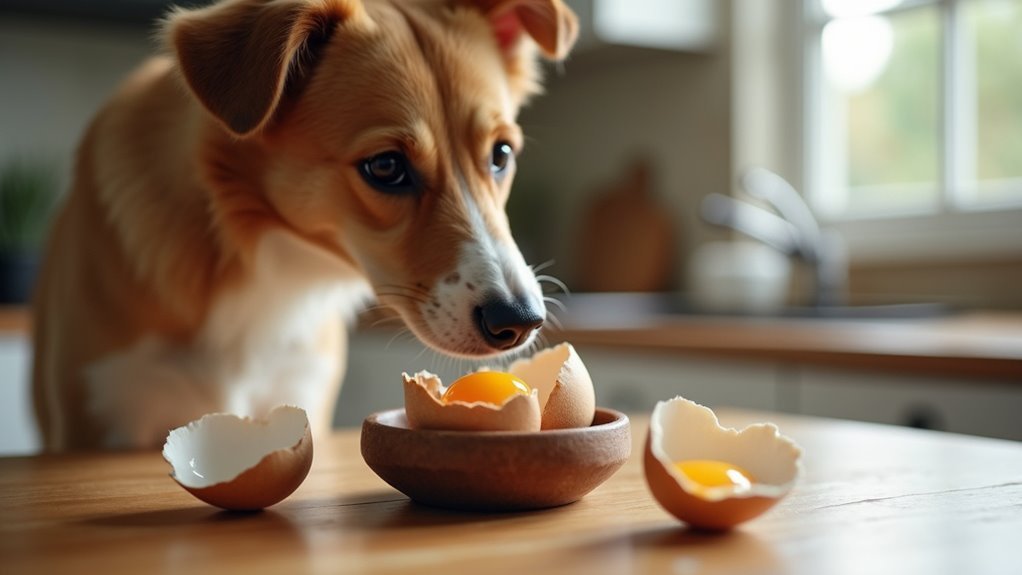

Yes, dogs can eat raw eggs, but there are clear benefits and risks to consider. Raw eggs offer high-quality protein, healthy fats, and several vitamins that support coat and muscle health. Raw eggs carry a risk of bacterial contamination, especially salmonella, which can cause illness in pets and humans. Biotin deficiency is rare but possible with frequent raw egg whites due to avidin binding. For most dogs, cooked eggs provide the same nutrients with lower safety concerns.
Can Dogs Eat Raw Eggs?
One raw egg could seem like a simple, healthy snack for your dog, but it’s usually not the safest choice. You want what’s best for your pup, and raw eggs can carry bacteria like Salmonella. That can upset your dog’s stomach and could spread to your home, too.
With the right egg preparation, fully cooked eggs are the safer pick because heat lowers that risk. Should you still want to add eggs, keep feeding frequency low and treat them like an extra, not a meal. Plain boiled or scrambled eggs can fit better into your dog’s routine, especially when you watch portion size. Were your dog to have a sensitive belly, ask your vet initially.
What Benefits Do Raw Eggs Offer?
Raw eggs could sound like a quick way to give your dog a protein lift, but the benefits aren’t as special as they could seem.
You might notice some raw benefits, like easy-to-digest protein, healthy fats, and vitamins such as B12 and D. These nutrients can support your dog’s muscles, skin, and energy.
Some people also point to nutrient bioavailability, since raw food can seem more natural. Still, your dog can get these same nutrients from cooked eggs too.
What Risks Do Raw Eggs Pose for Dogs?
Raw eggs can carry germs like Salmonella, and that can make your dog sick and even spread to your home.
They can also cause a biotin problem should your dog eats raw egg whites often, since avidin can block that vitamin.
On top of that, you could notice stomach upset like vomiting, diarrhea, or a gassy, uneasy belly.
Bacterial Contamination Risks
Even a small amount of bacteria can turn a simple snack into a stomach upset, so it’s worth appreciating why veterinarians usually skip raw eggs for dogs. You mightn’t see trouble right away, but Salmonella and other germs can ride on the shell or inside the egg.
Then your dog can pick them up during mealtime, and they can spread through cross contamination pathways to bowls, counters, or your hands. Because these bacteria show environmental persistence, they don’t always disappear after a quick rinse.
That means your home can stay exposed longer than you expect. Should you want to keep your dog in the safe circle of the family, fully cooked eggs are the kinder choice. They lower the chance of illness and help you feed with confidence.
Biotin Deficiency Concerns
Sometimes the bigger concern with eggs isn’t just germs, but what happens should your dog eats them often. Raw egg whites carry avidin, a protein that can bind biotin and interrupt biotin metabolism over time. Should you lean on raw eggs as a regular treat, your dog might miss out on this B vitamin, even though the risk feels small initially.
You can still share egg time without stress by choosing cooked eggs, which don’t create this issue. That’s why numerous dog lovers prefer safer egg white alternatives like plain scrambled or boiled eggs. They fit better into a balanced routine and help you keep your pup in the pack without worry. For you, that means less guesswork and more confident, caring feeding.
Digestive Upset Signs
Provided your dog has been eating raw eggs, the biggest clue that something’s off is often the tummy, not the plate. You might notice soft stool, diarrhea, gas, or even vomiting.
Some dogs also show stool changes that look looser, darker, or more frequent than usual. Should your pup seem tired, skips meals, or shows appetite loss, take that seriously.
Raw eggs can carry germs like Salmonella, and those bugs can upset the gut fast. You know your dog’s normal routine best, so trust those small shifts.
When signs start after a raw egg snack, stop feeding them and call your vet should the upset lasts, gets worse, or your dog acts weak, feverish, or dehydrated.
Can Raw Eggs Upset Your Dog’s Stomach?
Yes, raw eggs can upset your dog’s stomach, and they can do it in a few different ways.
Should your dog gulp them down too fast, the rich texture might cause nausea, loose stool, or gas. Bacteria like Salmonella can also irritate the gut and leave your buddy feeling off. Even without germs, raw egg whites could bother some dogs over time.
To keep things gentler, pay attention to meal timing and use portion control, especially provided your dog is new to eggs. Start with a tiny amount and watch for vomiting or belly rumbling. Many dogs do better with small, calm servings than with a surprise egg snack. Whenever you stay mindful, you help your dog feel safe, settled, and included.
Which Dogs Should Avoid Raw Eggs?
Puppies and senior dogs should avoid raw eggs because their bodies can be more sensitive to bacteria and stomach upset.
In case your dog has a health issue, like a weak immune system, digestive trouble, or a special diet, raw eggs can add extra risk.
Whenever you’re unsure, it’s safer to choose fully cooked eggs and ask your vet what fits your dog best.
Puppies And Senior Dogs
At the time you’re deciding whether to offer raw eggs, puppies and senior dogs deserve extra caution because their bodies can be more sensitive to foodborne bacteria and sudden diet changes.
For puppies, wait until puppy vaccinations are on track, then ask your vet before adding any egg. Their growing stomachs can get upset fast, so a tiny taste of fully cooked egg is safer.
For older dogs, senior mobility can make a bad tummy day feel even harder, so you’ll want to keep meals simple and gentle. Should you do share egg, serve it plain, fully cooked, and in a small amount. That way, you help your dog stay part of the family table without adding avoidable risk or a messy surprise.
Dogs With Health Issues
Should your dog has health issues, raw eggs are usually not the safest treat to try. In case your dog deals with chronic illness, immune suppression, or a sensitive stomach, you’ll want to skip the raw version and choose cooked eggs instead.
Raw eggs can carry Salmonella, and that risk can hit your dog harder whenever the body already struggles. Also, raw whites could block biotin over time, which isn’t ideal for a dog that needs every bit of support.
How Should You Serve Eggs to Dogs?
Upon the occasion it comes to serving eggs to your dog, the safest choice is to cook them fully and keep them plain.
You can offer scrambled, boiled, or poached eggs, as long as you skip butter, oil, salt, and spices.
Should your dog enjoys a softer bite, soft boiled portions can work only once the yolk and white are set enough to be safe.
Start with a small amount, then watch how your dog handles it.
Eggs make nice egg based treats, not everyday meals, so keep portions modest and fit them into the day’s food plan.
For many dogs, a little egg brings extra protein and a happy tail without upsetting the routine.
When Should You Call Your Vet?
Call your vet should your dog eats raw eggs and then starts acting off, because even a small upset can turn into something more serious. In the event you spot emergency signs, like vomiting, diarrhea, trembling, swelling, or trouble breathing, seek help fast. For milder signs, a vet consultation can still calm your nerves and keep your pup safe.
| Symptom | What it could mean | What you should do |
|---|---|---|
| Vomiting | Stomach irritation | Call your vet |
| Diarrhea | Foodborne bug risk | Watch closely |
| Weakness | More serious illness | Get help now |
| Swelling | Possible emergency signs | Go right away |
You know your dog best, so trust your gut. Should your buddy seems quiet, droopy, or won’t eat, don’t wait too long.
Frequently Asked Questions
Can Dogs Eat Egg Shells Safely?
No, you should not give your dog egg shells routinely. They can splinter, irritate digestion, and increase the risk of bacteria. If your vet approves, finely ground shell powder might provide a calcium enhancement, but plain food is safer.
How Many Eggs Can a Dog Have Weekly?
Usually, you can give your dog one egg two to three times weekly, like a small treat in a balanced diet. Keep portion control tight, and do allergy monitoring so you will keep your pup safe and happy.
Are Cooked Eggs Better Than Raw Eggs for Dogs?
Yes, you will usually do better with cooked eggs for your dog. They are safer, improve protein digestibility, and still fit taste preferences. You can serve them plain, in moderation, as a nutritious treat your pup can enjoy.
Can Puppies Eat Raw Eggs?
No, you shouldn’t feed puppies raw eggs. Their puppy digestion and immune development are still maturing, so bacteria like Salmonella can hit harder. Choose plain, fully cooked eggs in tiny amounts, and ask your veterinarian first.
What Egg Toppings Are Unsafe for Dogs?
You shouldn’t top your dog’s eggs with garlic butter, salt, onion, spices, or raw eggshells — those can hurt them. Keep eggs plain and cooked, and you’ll help your pup feel safe, included, and happy.