
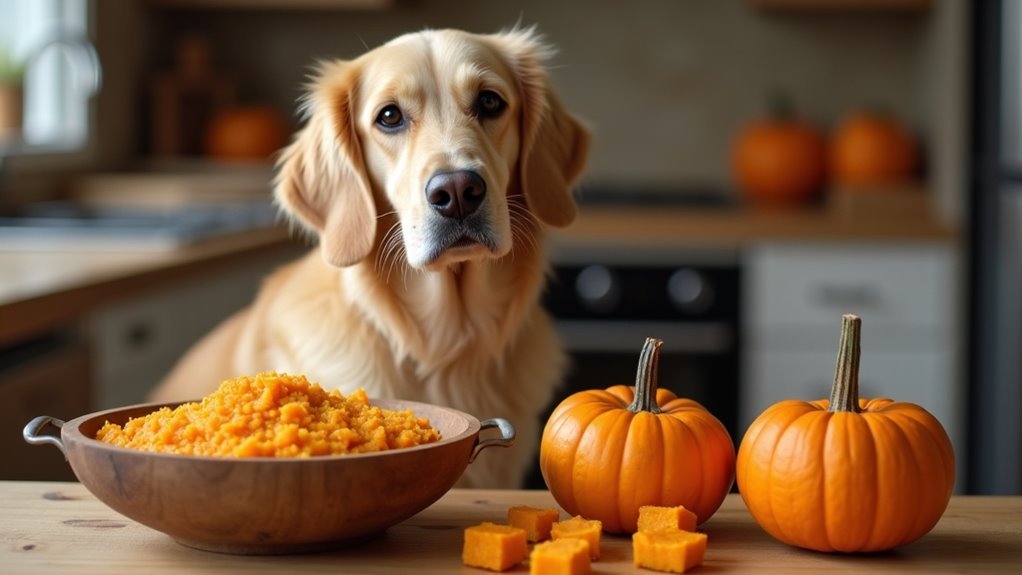

Yes — plain cooked or canned pumpkin is safe for dogs and often helps with both diarrhea and constipation. Pumpkin’s soluble and insoluble fiber soaks up excess water in loose stool and adds bulk to firm up slow-moving bowels. Choose pure pumpkin puree without spices, sugar, or additives; avoid pumpkin pie filling. Feed small portions based on your dog’s size and watch for changes in stool and appetite. Consult your veterinarian for persistent digestive issues or questions about proper dosing.
Can Dogs Eat Pumpkin Safely?
Sharing pumpkin with your dog can be safe provided you keep it plain and simple. You can offer plain canned pumpkin or plain cooked pumpkin in small amounts, and your pup can usually enjoy it without trouble.
Skip raw pumpkin, because it’s harder to decompose and could upset the stomach. Also, avoid pumpkin pie filling, which often hides sugar, spices, or sweeteners that don’t belong in your dog’s bowl.
Pumpkin doesn’t need digestive enzymes added to work as a treat. Start with a little, observe how your dog responds, and keep the serving modest. That way, you help your buddy feel included at mealtime while staying smart and calm about what goes in the dish.
How Pumpkin Helps Dog Digestion
Pumpkin can often help your dog’s digestion because it brings a smart mix of fiber and moisture to the bowl. Whenever you add a small spoonful, you give your pup a gentle food that can support steady movement through the gut.
Its soluble fiber can slow things down just enough, while insoluble fiber helps keep everything moving. That balance matters, and it can make meals feel easier on your dog’s belly.
Pumpkin also supports fiber fermentation in the colon, which feeds the gut microbiome and helps friendly bacteria do their job. So, you’re not just adding taste; you’re adding support your dog can use.
For many dogs, that simple uplift can make daily digestion feel a little calmer and more comfortable.
Can Pumpkin Help Constipation and Diarrhea?
Yes, in many cases, a small amount of plain pumpkin can assist with both constipation and diarrhea in dogs because its fiber works in two different ways. Whenever you add a little, you might support stool balance and help your dog feel more comfortable, like part of the pack again.
| Effect | Why it helps | What you might notice |
|---|---|---|
| Soluble fiber | Slows digestion | Firmer loose stools |
| Insoluble fiber | Adds bulk | Easier stool passage |
| fiber fermentation | Feeds helpful gut bacteria | Better gut microbiome support |
Because pumpkin is gentle, it often fits short-term care. Still, too much can backfire and upset your dog’s belly. Start small, watch your dog closely, and keep plain pumpkin only. Should signs last, call your vet soon.
What Kind of Pumpkin Is Best for Dogs?
The best choice for dogs is plain pumpkin, and that usually means 100% canned pumpkin or plain cooked pumpkin with nothing added. You can trust the canned variety because it stays simple, smooth, and easy to mix into your dog’s food. Should you cook fresh pumpkin, keep it plain and soft, with no butter, sugar, salt, or spices. Skip pumpkin pie filling, since it can upset your dog’s stomach. Raw alternatives aren’t the best pick, because they’re harder to digest and might cause tummy trouble.
Whenever you want to help your dog feel included at mealtime, choose the safest option initially. A small spoonful of plain pumpkin can fit right into your routine and support that cozy, cared-for feeling you both desire.
How Much Pumpkin Should Dogs Eat?
If you feed your dog pumpkin, start small so you can see how their stomach handles it.
A few teaspoons is often enough for small dogs, while larger dogs might do well with a little more.
You can offer it once a day or split it into meals, but keep the amount modest so it stays helpful, not messy.
Portion Size Guidelines
Portion size matters just as much as the pumpkin itself, so start small and let your dog’s body tell you how it’s doing. You can use age based portions and calorie adjusted servings to keep treats in a safe range. For many dogs, a little goes a long way.
- Small dogs might do well with 1 to 2 teaspoons.
- Medium dogs often start with 2 to 3 teaspoons.
- Large dogs could handle 1 to 2 tablespoons.
Keep pumpkin plain, smooth, and mixed into food your dog already trusts. Should your pup have a sensitive stomach, tiny amounts help you stay in tune with what feels right. This makes it easier for you and your dog to feel confident together, without pushing things too fast.
Serving Frequency Tips
Usually, pumpkin works best as a small, steady add-on rather than a big daily scoop, so you can give it in short bursts or a light regular routine based on what your dog needs. Should your pup’s tummy be off, start with a tiny spoonful and watch how they do. For many dogs, a daily rotation of plain pumpkin can stay gentle whenever you keep the amount low. Provided occasional treats, use even less so you don’t crowd out other foods.
| Dog need | Frequency |
|---|---|
| Mild upset | 1 to 2 meals |
| Loose stool | Short-term daily |
| Constipation | Short-term daily |
| Healthy topper | A few times weekly |
| Treat time | Rare, small portions |
You’ll feel better once you keep portions steady and simple, and your dog’s belly usually will too.
How to Feed Pumpkin to Dogs
You can feed your dog pumpkin by choosing plain canned pumpkin or plain cooked pumpkin with no sugar, salt, spices, or fat.
Start with a small spoonful, then watch how your dog’s stomach handles it before you give more.
Once you measure the portion carefully, you help pumpkin support digestion without causing a messy surprise.
Choosing Safe Pumpkin
Whenever it comes to feeding pumpkin to dogs, the safest choice is plain pumpkin with no extras at all. You can pick 100% canned pumpkin or plain cooked pumpkin, and many pet parents like organic varieties whenever they find them. Seasonal availability matters too, so fresh pumpkin can work during its season, as long as you cook it simply.
- Check the label for only pumpkin.
- Skip pie filling, sugar, salt, spices, and fat.
- Avoid raw pumpkin because it can be hard on your dog’s stomach.
While you shop, consider like a teammate for your dog’s gut. The right can or fresh option helps you feel confident, and that calm choice makes feeding easier for both of you.
Serving Portion Sizes
Start small, then build up only provided your dog does well. You can offer 1 to 4 teaspoons of plain pumpkin puree per meal, and a tiny dog might only need 2 teaspoons. A bigger dog could handle up to 2 tablespoons, but portion control still matters. Because pumpkin adds calories, keep calorie counting in mind should you use it often. Mix it into food so your dog accepts it easily, and watch for softer or firmer stools over the next day.
Were you to want to use pumpkin as a topper, keep the amount lower than you’d for short-term tummy support. You’re doing the right thing by easing in slowly and paying attention. That care helps your dog feel safe, comfortable, and included.
Easy Ways to Add Pumpkin to Dog Food
A spoonful of pumpkin can fit into your dog’s bowl in more than one easy way, and most of them take just a minute.
You can stir plain pumpkin into kibble, so your dog gets a gentle lift without a big change. In case you like simple routines, try these ideas:
- mix a little puree into wet food for easy puree swaps
- freeze small portions into frozen cubes for quick toppers
- spread a thin layer on a lick mat for calm mealtime fun
You can also blend pumpkin with a splash of water to soften dry food.
Keep it plain and smooth, and your dog can enjoy the same cozy bowl with a little extra fiber. That small touch helps you care with confidence.
Signs Your Dog Ate Too Much Pumpkin
Provided that your dog overdoes it on pumpkin, the signs often show up fast, and they can be a little messy. You could see soft stools, gas, or a sudden need to go outside more often.
Some dogs also get mild belly rumbling, and that can make them act restless or clingy. Watch for overfeeding symptoms like vomiting, loose poop, or a big drop in appetite.
You might also notice behavioral changes, such as your dog seeming tired, picky, or less interested in play. Should the tummy upset lasts more than a day, or your dog seems uncomfortable, step back on the pumpkin and let the gut settle.
A little too much usually indicates discomfort, not a crisis, but your dog still deserves your care.
When Pumpkin Isn’t Safe for Dogs
Pumpkin is usually safe for dogs, but there are times while it can cause trouble, and being aware of those moments can save you a lot of stress.
In the event your dog has a pumpkin allergy, skip it completely, since itching, swelling, or tummy upset can show up fast. You should also avoid pumpkin pie filling, raw pumpkin, and any mix with spices or sweeteners.
- Watch for seed toxicity, especially in the event your dog eats lots of seeds or hard pieces.
- Remove skins and large chunks, since they can be tough to digest.
- Keep portions small, because too much can upset the stomach.
When you stick with plain, simple pumpkin, you help your dog stay comfortable and feel like part of the pack.
When to Ask Your Vet
You should call your vet should your dog keeps vomiting or has diarrhea after eating pumpkin, since that can point to more than a simple stomach upset.
You also need to check in sooner should your dog has a health condition like diabetes, pancreatitis, or a sensitive gut, because pumpkin mightn’t fit every dog.
Your vet can help you figure out whether pumpkin is safe, how much to give, and whether something else is causing the problem.
Vomiting Or Diarrhea
Should your dog starts vomiting or gets diarrhea after eating pumpkin, don’t brush it off right away. Mild upset can happen assuming your pup ate too much, but repeated signs need a vet call. You can try gentle stomach soothing remedies, yet keep water nearby so your dog can protect electrolyte balance.
- Offer plain water in small sips.
- Pause pumpkin and any rich treats.
- Watch for blood, pain, or tiredness.
Provided the mess keeps going, your dog might need care, not just a home fix. Pumpkin helps many dogs, but it isn’t magic for every tummy. You belong in a calm plan, and your vet can help someone select the next safe step.
Underlying Health Conditions
Provided your dog has a health condition, pumpkin mightn’t be the simple fix it seems. In case your pup lives with chronic pancreatitis, extra fiber or any added fat can worsen pain, nausea, or loose stools.
Should your dog have immune mediated disorders, your vet could want a tighter diet plan so food changes don’t muddy the waters during treatment.
You should also check beforehand whether your dog takes medicine, because pumpkin can change stool timing and hide a bigger problem.
That doesn’t mean pumpkin is off the table forever; it just means you and your vet need a smarter path. A quick call can protect your dog’s comfort and keep your care team in the loop. Together, you can choose the safest amount, or skip it.
Frequently Asked Questions
Can Puppies Eat Pumpkin Safely?
Yes, you can give puppies plain pumpkin, and it can gently ease tummy troubles like a soft blanket. Keep pumpkin dosage tiny, watch puppy digestion, and skip sugary pie filling or raw chunks.
Is Pumpkin Good for Dogs With Sensitive Stomachs?
Yes, pumpkin can be good for your dog’s sensitive stomach provided you choose plain unsweetened pumpkin. Its fiber content might help firm loose stools. Follow serving guidelines, start small, and watch how your dog responds.
Can Pumpkin Help Dogs Lose Weight?
Yes, pumpkin can help your dog lose weight. The fiber helps control appetite by making your pup feel full without many calories. Keep portions small so you do not overdo it.
Are Pumpkin Seeds Safe for Dogs?
No, you shouldn’t feed your dog pumpkin seeds unless you remove them carefully. Pumpkin seed toxicity concerns are usually low, but seed extraction methods matter, and too many seeds can upset your dog’s stomach.
Can Dogs Eat Pumpkin Every Day?
Yes, you can give your dog pumpkin every day, but keep daily servings small. One teaspoon or two of plain puree treats can support digestion, and about 10 percent of calories should come from treats.