
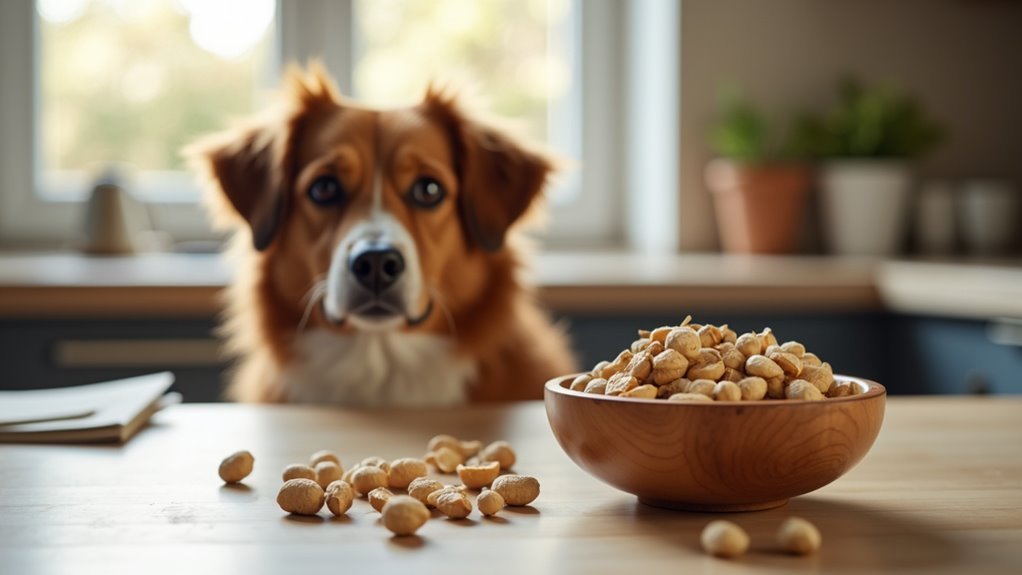

Yes — dogs can eat peanuts in small amounts. Plain, unsalted, shelled peanuts provide protein, healthy fats, and vitamin E. Peanuts are calorie-dense, so portion control is essential for weight management. Avoid peanuts coated in salt, sugar, chocolate, or xylitol, as these are harmful to dogs. Consider your dog’s size and any food allergies before offering peanuts as an occasional treat.
Can Dogs Eat Peanuts Safely?
Yes, dogs can eat peanuts safely, but only provided you keep them plain, shelled, and served in small amounts. You can share them as an occasional treat whenever you want to include your dog in snack time. Plain, unsalted peanuts work best, and you should skip any flavored, chocolate-coated, or sugary versions. Also, remove the shell to begin with, since shells can upset your dog’s mouth and stomach. Start with one or two peanuts, then watch for any itching, vomiting, or loose stool.
You can also use tiny pieces as training rewards, which helps build positive behavioral associations around good choices. That way, your dog feels included, and you keep treat time simple, safe, and kind.
Peanut Nutrition Facts for Dogs
Peanuts give your dog a bit of protein, which helps support muscles and daily energy.
They also bring healthy fats, so a small amount can feel filling, but too much can add extra calories fast.
You’ll also find some vitamins and minerals in peanuts, yet they still work best as an occasional treat, not a food replacement.
Peanut Protein Content
Protein is one of the main reasons plain peanuts can look appealing as an occasional dog treat. You might like that they offer a little extra nutrition, but protein isn’t the whole story.
A few shelled, unsalted peanuts can add protein without much fuss, yet they still shouldn’t replace balanced dog food. That’s because your dog needs protein from steady, complete meals, not snack-time guesswork.
Should you want to share peanuts, keep them plain and small, and watch for any reaction. Allergenic assays can help researchers study peanut sensitivity, and they also remind you that allergies can happen.
Processing residues from flavored or coated peanuts can add extra risk, so stick with simple, clean peanuts. Then you could treat your dog with more confidence.
Healthy Fat Profile
Just a small handful of peanuts can seem harmless, but the fat in them deserves your full attention. You and your dog can share a safe treat moment, yet the rich oils in peanuts can add up fast. That’s why portion control matters so much for your pack’s table.
- Peanut fat gives quick energy, but too much can feel heavy.
- The fat mix includes some unsaturated fats, which can fit an omega balance.
- Whenever you keep servings tiny, you also support heart support by avoiding extra strain.
Plain, shelled peanuts work best, and you’ll want to skip salty or flavored kinds. Provided your dog has a sensitive stomach, start slow and watch how they do. This keeps treats enjoyable without tipping the scale.
Key Vitamins And Minerals
While the fat in peanuts gets a lot of attention, the vitamins and minerals inside them also help explain why this snack can seem so appealing in the initial instance. You’ll find vitamin E, niacin, folate, and some B vitamins, plus minerals like magnesium, phosphorus, and potassium.
These nutrients support energy use, nerve function, and normal muscle work in small ways. They also add trace elements benefits that could look nice on paper, but they don’t turn peanuts into a must-have food.
Your dog still gets the best nutrition from balanced meals, not from a peanut bowl. Should you want extra support, dog safe supplements can be a better fit, because you can match them to your dog’s real needs without overdoing calories or fat.
Health Benefits of Peanuts
When you offer plain peanuts in tiny amounts, you can give your dog a little protein and healthy fats that help support muscles and everyday energy.
You might also add a small lift of vitamins and minerals that fit into a balanced diet. For active dogs, that extra energy can be handy, as long as you keep portions small and treat peanuts like an occasional snack.
Protein and Healthy Fats
Peanuts can offer a small nutrition lift because they pack protein and healthy fats into a tiny bite. Whenever you share a plain, shelled peanut, your dog gets a little fuel that can help support strong muscles and steady energy. The protein’s amino profiles add useful building blocks, while the fats can help your dog feel satisfied between meals.
- A small amount can help curb hunger.
- The fats can make treats feel richer.
- Protein gives a quick, simple surge.
That said, you still want to keep servings tiny, because too much can crowd out balanced food. Should your dog seem full sooner, those satiety signals can help you stop before overdoing it. You’re part of the same treat routine, so small choices matter.
Vitamin and Mineral Boost
A few peanuts can bring more than protein and fat to the bowl, since they also carry small amounts of vitamins and minerals that help support your dog’s body.
You get a little vitamin E, niacin, folate, magnesium, and phosphorus, and these nutrients work together through micronutrient interaction. That means each one helps the others do their jobs a bit better.
You might also notice trace mineralation benefits, which can add quiet support for normal body functions.
This mix won’t replace a balanced dog food, but it can make an occasional treat feel more meaningful. If you share plain peanuts in small amounts, you’re giving your dog a tiny nutrient lift that fits nicely into a caring routine.
Energy for Active Dogs
For active dogs, a few plain peanuts can offer a quick burst of energy thanks to their protein and healthy fats.
Whenever you need endurance fueling for hikes, fetch sessions, or busy playdays, you can use them as small helpers, not a full meal.
Keep the shell off and choose unsalted peanuts so you don’t upset your pup’s stomach.
- Offer one or two peanuts before activity.
- Use tiny portions as recovery snacks after exercise.
- Watch your dog closely for choking or tummy trouble.
Because peanuts are calorie-dense, you should keep them occasional.
That way, you support your dog’s energy without crowding out balanced food.
It’s a simple team effort, and your dog gets to stay lively with you.
Peanut Risks Dog Owners Should Know
Careful feeding matters, because even a simple snack can bring a few concealed risks. You might believe peanuts are harmless, but peanut mold can hide aaflatoxin risk that upsets your dog’s liver and stomach. That’s why you should check every bag and toss anything stale, damp, or oddly scented.
Next, watch the shell. Shell ingestion can irritate the throat, and it also raises blockage risk in the gut, especially for smaller dogs. Even a few pieces can cause trouble should your dog gulp fast. So you need to stay alert, keep portions tiny, and serve only with calm supervision.
In the event your dog has a sensitive belly, you’ll want to be extra careful, because a snack should feel safe, not stressful for either of you.
Which Peanuts Are Safe?
You should stick to plain, unsalted peanuts provided you want to share a safe snack with your dog.
Flavored, salted, and seasoned peanuts can add extra risks your dog doesn’t need, and some coatings can include harmful ingredients.
Whenever you choose simple peanuts and keep the portion tiny, you make treat time a lot safer.
Unsalted Peanuts Only
Plain, unsalted peanuts are the only kind worth considering for your dog, because they keep the focus on safety instead of extra salt, sugar, or risky coatings. You get the best unsalted benefits whenever you keep them plain and shelled, because shell removal lowers choking risk and helps your dog enjoy a simple treat.
- Choose raw or dry-roasted peanuts with no added flavor.
- Remove every shell piece before you offer one.
- Serve just one or two peanuts so you stay in the treat zone.
That small step can help your dog feel included at snack time without upsetting a balanced diet. In the event you share with care, you’re building a safe little routine your dog can trust.
Avoid Flavored Varieties
At the moment a peanut has extra flavor, it often stops being a safe snack for your dog, so it’s smart to skip the tempting varieties and stick with the simple ones.
Whenever you practice ingredient reading, you protect your buddy from salt, sugar, chocolate, xylitol, and heavy seasonings that can upset his stomach or worse. Plain peanuts keep flavorless training easy, because your dog learns that safe treats can still feel special.
You can save flavored snacks for people and give your dog only shelled, unseasoned pieces in tiny amounts. Should a label lists spices, honey, or mixed nuts, leave it on the shelf. That small choice helps you share treats with confidence and keeps your pup feeling included at snack time.
Why Salted and Flavored Peanuts Are a Bad Idea
Salted and flavored peanuts could look harmless, but they can quickly turn a simple snack into a poor choice for your dog. Whenever you share them, you might add extra sodium, sugar, or spice that your dog doesn’t need. That can raise the risk of salt induced dehydration, and some coatings can trigger seasoning allergens in sensitive dogs.
- Salt can make your dog thirsty and uncomfortable.
- Flavor packets could hide ingredients that upset the stomach.
- Spices and sweet coatings can turn a treat into trouble.
If you want your dog to feel included, choose plain peanuts instead. Keep the shell off, offer only a tiny amount, and skip any mix that smells zesty or bold. Your dog’ll enjoy the treat more safely, and you’ll feel better too.
Can Dogs Eat Peanut Butter Too?
Peanut butter can be a tasty way to give your dog a small treat, but it needs the same careful check you’d give plain peanuts. You can share it provided the label shows no xylitol, chocolate, or extra salt. A simple homemade peanutbutter made from plain peanuts is often the safest choice, because you know what’s inside.
Even then, you should offer only a little at initially and watch your dog closely. That’s where allergy screening matters, since some dogs can react with itching, stomach upset, or swelling. In case your dog has had pancreatitis, extra weight, or a sensitive stomach, it’s wiser to skip it. Whenever you do serve it, keep it plain, smooth, and rare.
How Many Peanuts Can Dogs Have?
A few peanuts can be a safe little treat for most dogs, but the right amount matters a lot. Start with portion guidelines that keep treats tiny, since peanuts pack fat and calories fast. For many dogs, one or two shelled, plain peanuts is enough for a trial snack, while bigger dogs might handle a few more. Still, you should match age ranges and size, because puppies and older dogs often need extra caution.
- Small dogs: 1 peanut
- Medium dogs: 2 peanuts
- Large dogs: 3 to 4 peanuts
Keep peanuts occasional, not daily, and count them toward the 10% treat limit. Should your dog have a sensitive stomach, stop sooner. At a loss, consult your vet and keep your shared snack moments calm and happy.
Best Ways to Serve Peanuts
To keep snack time safe and easy, serve peanuts the simple way. You can give your dog plain, shelled, unsalted peanuts in tiny pieces so chewing stays easy. Keep portion control in mind, because even a few peanuts pack a lot of fat and calories. Start with one or two peanuts, then watch how your dog handles them.
Should your dog seem picky, you may mix a crumb or two into a meal topper for a fun surprise. For extra peace of mind, choose peanut alternatives like plain pumpkin or a small bit of banana whenever you want a treat without the same richness. Always skip flavored, salted, or coated peanuts, since those don’t fit a safe snack routine.
Signs Your Dog Ate Too Many Peanuts
Even a safe snack can become a problem should your dog get too much, so it helps to know what overdoing peanuts can look like. You might notice digestive symptoms like vomiting, loose stool, gas, or a swollen belly after your pup sneaks extra peanuts. Because peanuts are rich and dense, your dog could also seem tired, restless, or less interested in food.
Those behavioral changes can show up alongside mild discomfort or a sudden need to pace and lie down often.
- Soft stool or diarrhea
- Belly pain or repeated licking
- Low energy or unusual fussiness
When you spot these signs, pause peanut treats and watch your dog closely. A little care now helps you feel confident and keeps your dog feeling safe, comfortable, and part of the pack.
What to Do If Your Dog Chokes
Provided your dog starts choking, remain calm and act swiftly, because your next steps can make a real difference.
To begin, check whether your dog can cough or breathe. Should you see emergency indicators like blue gums, panic, or collapse, call your vet or an emergency clinic right away.
Next, open your dog’s mouth only when you can do it safely, and look for a visible piece of peanut or shell. In case you can reach it without pushing it deeper, remove it.
Then, use basic first aid with firm chest thrusts or the Heimlich maneuver for dogs, but only once your vet has shown you how. After that, get help fast, even in the event the object comes out. Your calm focus can help your dog feel safer and supported.
Dogs That Should Avoid Peanuts
Some dogs should skip peanuts altogether, especially should they’ve had pancreatitis before, because the high fat content can be hard on the pancreas and could bring on another flare-up. You want to protect your dog, and that starts with understanding who needs extra caution.
Senior dogs might also struggle should peanuts upset their stomach or add unwanted calories. Dogs from allergic breeds can react fast, so watch for itching, swelling, or vomiting.
- Avoid peanuts unless your dog has obesity or weight issues.
- Skip them whenever kidney disease limits diet choices.
- Stay away provided your dog has a food allergy history.
Provided your dog fits one of these groups, you can still share treats safely by choosing easier snacks that feel like part of the pack.
Vet Tips for Safer Peanut Treats
Whenever you offer peanuts as a treat, it helps to keep things simple and safe. Choose plain, shelled, unsalted peanuts, and give just one or two initially so you can watch for stomach upset or itching. Your vet can help you decide whether peanuts fit your dog’s needs, especially provided your dog has pancreatitis, kidney disease, or weight concerns.
In the event you use peanuts for training rewards, keep pieces tiny and count them toward the 10% treat rule. That way, behavioral conditioning stays fun without piling on extra calories. Also, skip flavored nuts, chocolate, and xylitol products, since those can create real trouble.
Should your dog cough, vomit, or act off after eating peanuts, stop sharing them and call your vet soon.
Frequently Asked Questions
Can Puppies Eat Peanuts Safely?
No, you shouldn’t give young puppies peanuts regularly; plain, shelled bits can be occasional training treats, but teething relief is better from safer chews. Watch for choking, tummy upset, or allergies, and ask your vet.
Are Peanut Shells Dangerous for Dogs?
Yes, they are. Peanut shells create shell hazards, and peanut ingestion can cause choking or intestinal blockage. You’ll protect your dog best by skipping shells and offering only plain, shelled peanuts as an occasional treat.
Do Peanuts Cause Allergies in Dogs?
Yes, peanuts can trigger a peanut allergy in your dog, like a concealed spark in dry grass. You may notice skin reactions, itching, or stomach upset. Should symptoms appear, stop feeding peanuts and call your vet.
Can Raw Peanuts Be Contaminated With Aflatoxins?
Yes, raw peanuts can be contaminated with aflatoxins, so check aflatoxin monitoring reports and watch storage conditions closely. You will protect your dog better by choosing trusted sources and discarding anything moldy or stale.
Should Dogs With Kidney Disease Avoid Peanuts?
Yes, you should skip peanuts if your dog has kidney disease unless your vet approves. You’ll need kidney friendly choices and phosphorus control, so choose safer treats that support your dog’s health and comfort.