
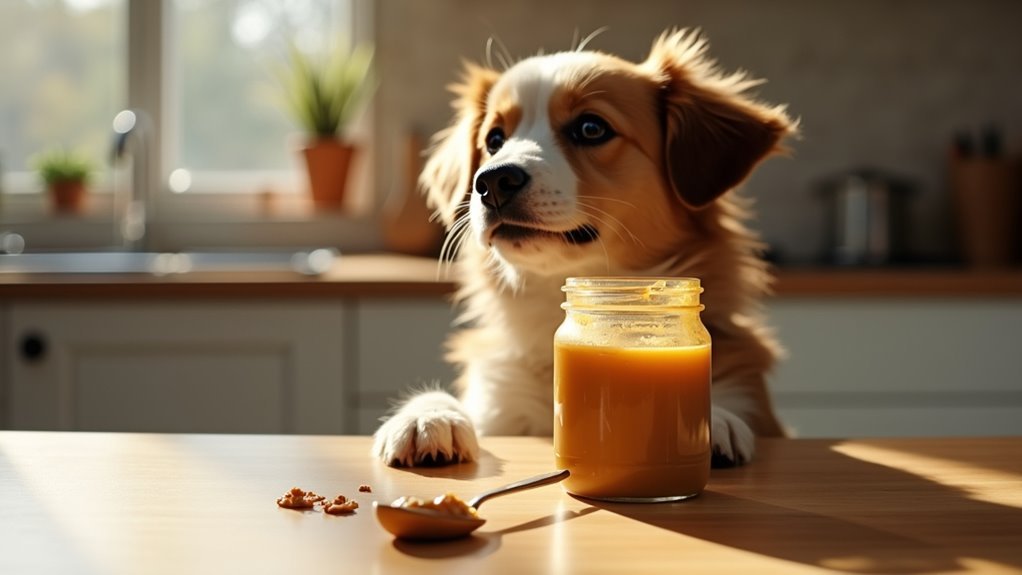

Yes — dogs can eat peanut butter in small amounts. Plain, unsalted peanut butter without xylitol is safe and enjoyable for most dogs. Avoid peanut butter labeled sugar-free or containing artificial sweeteners, especially xylitol, which is toxic to dogs. Use peanut butter sparingly as an occasional treat or to hide pills, and stick to portion sizes appropriate for your dog’s weight. Watch for vomiting, diarrhea, or allergic reactions and stop feeding peanut butter if any symptoms appear.
Can Dogs Eat Peanut Butter Safely?
Yes, dogs can eat peanut butter safely, but only provided you choose the right kind and give it in small amounts. You’ll want a jar with xylitol-free ingredients, since that sweetener can harm dogs.
Next, check for simple, natural recipes with little or no salt, sugar, or extra additives. That helps you protect your dog while still giving a tasty reward.
Peanut butter can also support behavioral enrichment, because you can use it in puzzle toys, lick mats, or training games. In case your dog has texture preferences, try a smooth version initially, then see what fits best.
Keep portions tiny, though, because this treat is rich and easy to overdo. Whenever you share it wisely, you both get a happy moment together.
Is Peanut Butter Safe for Dogs?
Yes, peanut butter can be safe for your dog provided you choose a xylitol-free jar and keep the ingredient list simple.
You should always check the label initially, because even a small amount of xylitol can be dangerous.
You’ll also want to keep portions small, since peanut butter is rich and works best as an occasional treat, not a daily snack.
Peanut Butter Safety
Although peanut butter can be a safe treat for dogs, it only stays safe provided you choose a xylitol-free product and keep the serving small. You can protect your dog by checking the label, choosing simple ingredient sourcing, and favoring unsweetened, unsalted jars. Should your dog has a sensitive stomach or past reactions, talk with your vet about allergy screening before you offer it.
Then, keep portions tiny. Peanut butter should stay as an occasional reward, not a meal. A little can help with training or hiding medicine, but too much can upset your dog’s belly and add extra calories fast.
You also want to watch for health needs. Dogs with weight concerns or pancreatitis history might need a different treat. Whenever you choose carefully, you help your dog enjoy the snack while staying part of the pack.
Check Xylitol Ingredients
The initial thing to check is the ingredient list, because xylitol can turn a simple snack into a real emergency for your dog. You belong to the group of careful dog owners when you do label verification before sharing a lick. Look for xylitol, birch sugar, or sugar alcohols, since each one can hide in products that seem harmless.
Even though the jar looks healthy, ingredient sourcing matters, and a sugar-free spread could still carry risk. So, choose peanut butter with a short list and clear wording you can trust. Should the label feel vague, put the jar back. That small pause protects your dog and gives you peace of mind. Your pup gets the treat, and you get the relief of being aware you checked initially.
Portion Control Matters
Even a safe treat can cause trouble provided the serving gets too big, so portion control matters just as much as ingredient safety.
You and your dog can enjoy peanut butter, but keep it small and planned. Consider portion balancing, not spoonful freedom. A thin smear on a toy or a tiny lick after training usually works well. For many dogs, treats should stay under 10% of daily calories, so calorie tracking helps you stay on target.
- Use a pea-sized amount for small dogs
- Offer a little more only for larger dogs
- Count peanut butter as part of the day’s treats
When you measure initially, you protect your dog’s belly, weight, and routine. That’s how you keep snack time friendly for both of you.
What Makes Peanut Butter Dangerous for Dogs?
Peanut butter can become dangerous for your dog whenever it contains xylitol, a sweetener that can cause a fast and serious poisoning risk.
You also need to watch for choking hazards, since thick peanut butter can stick in your dog’s mouth or throat, especially whenever you use big spoonfuls.
And in case your dog has a food allergy, even a small amount can trigger itching, swelling, or stomach trouble.
Xylitol Poisoning Risk
Because xylitol can hide in some peanut butter jars, this is the ingredient that turns a normal treat into a real emergency for dogs. Whenever you read a label, you protect your dog from xylitol metabolism problems that can crash blood sugar fast.
After a bite, clinical signs could show up quickly, and you might see weakness, wobbling, vomiting, or shaking.
- Check every jar for xylitol before you share it.
- Choose plain, unsweetened peanut butter with a short ingredient list.
- Call your vet right away should your dog eat any xylitol-containing food.
You’re not overreacting should you act fast. You’re doing what caring dog people do, and that quick response can make a huge difference.
Choking And Allergies
Upon a dog grabbing a big, sticky mouthful of peanut butter, the danger isn’t just what’s inside the jar. Thick peanut butter can cling to the throat, slow swallowing, and raise choking risk, especially whether your dog gulps fast or you stuff it into a toy.
For choking prevention, spread only a thin layer and watch your dog while he eats. Then, pay attention to allergy signs too. Some dogs get itchy skin, ear trouble, vomiting, or loose stools after peanut butter. In case your dog’s been sensitive to other foods, ask your vet about allergy screening before you share this treat. You want snack time to feel safe, calm, and part of your usual routine, not a rushed moment that ends with worry.
How Much Peanut Butter Can Dogs Have?
The right amount of peanut butter for your dog is usually quite small, even though many pups would happily vote for a bigger scoop. You can use portion guidelines to keep treats tiny and safe, especially unless you’re sharing often. For most dogs, a lick or a thin smear is enough, and larger dogs still need restraint. Because peanut butter is rich, calorie tracking helps you avoid sneaky weight gain.
- Start with a pea-sized taste.
- Offer only one or two small servings.
- Count each spoonful toward daily treats.
When you employ it for training or pills, keep the rest of the day lighter. That way, you’re caring for your dog without crowding out balanced meals, and your pup still feels included.
Which Peanut Butter Ingredients Should Dogs Avoid?
You’ll want to watch the label closely, because xylitol and other artificial sweeteners can be dangerous for your dog.
Sugar and extra salt don’t help either, and they can make the treat less healthy than it should be.
You can also skip peanut butters with lots of added oils, since simple ingredients are usually the safest choice.
Xylitol And Artificial Sweeteners
Xylitol is the biggest ingredient to avoid in peanut butter, because even a small amount can be very dangerous for dogs. Whenever you read labels, watch for artificial sweeteners that can trigger a fast drop in blood sugar and lead to fear, weakness, or seizures. You’re not being overly cautious. You’re protecting your buddy.
- Look for xylitol presence on the ingredient list.
- Skip sugar-free jars unless you verify every sweetener.
- Move fast with emergency response should your dog eat any.
Should your dog possibly have swallowed xylitol, call your vet right away and bring the jar. Clear action helps you feel less alone, and it gives your dog the best chance for a safe recovery.
Salt, Sugar, And Oils
Even though a peanut butter jar is xylitol-free, salt, sugar, and extra oils can still turn a simple treat into a less healthy choice for your dog. You want a jar that feels easy to trust, so check the label for added sugar to begin with, since it can add empty calories fast.
Next, watch the salt, because too much can make snacks less dog-friendly and could leave your pup thirstier than usual. Should you be comparing salt alternatives, pick the plainest option you can find.
Then look at oil types. Peanut butter needs some natural fat, but extra palm, hydrogenated, or mystery oils can raise the fat level more than you’d like. So choose a short ingredient list, and keep every spoonful small.
What Peanut Butter Is Best for Dogs?
The best peanut butter for dogs is the kind that keeps things simple and safe, with xylitol-free ingredients and no extra sugar or salt. Whenever you pick single ingredient jars, you give your pup a treat that feels special without the junk. That helps you stay in the safe dog-parent club, where good choices matter and tails keep wagging.
- Choose natural peanut butter with peanuts as the main ingredient
- Use homemade recipes whenever you want full control over what goes in
- Keep servings small, since peanut butter is rich and filling
If your dog has a sensitive stomach, start with a tiny taste and watch how they do. Then you can share with more confidence and less worry, which makes treat time feel easy for both of you.
How to Check Peanut Butter Labels
Once you’ve picked a peanut butter that sounds dog-friendly, it still pays to read the label like a detective with snack duty. Start with the initial ingredient, then compare the rest using quick ingredient comparison and reading tips below.
| Check | Good sign | Skip it unless… |
|---|---|---|
| Initial ingredient | Peanuts | Sugar comes first |
| Sweeteners | None | Xylitol appears |
| Salt | Low or none | It’s heavily salted |
| Additives | Short list | Artificial flavors show up |
| Texture | Simple natural blend | You see sugar-free claims without details |
When you shop, choose jars that feel familiar and plain. That helps you join the safe-snack crowd with confidence. Should the label look crowded, keep walking. You’re not being picky, you’re protecting your dog. And in case anything feels unclear, put the jar back and pick a simpler one.
Can Puppies Eat Peanut Butter?
Suppose you’re pondering whether puppies can eat peanut butter, the answer is yes, but only in tiny amounts and only after you check that it’s xylitol-free.
Young puppies have delicate stomachs, so you should wait until they’re old enough for treats and keep servings very small.
A little peanut butter can help with training or pill-hiding, but you’ll want to treat it like a special reward, not a daily snack.
Puppy Age Considerations
At the time your puppy is still young, peanut butter can be a handy little reward, but you’ll want to be extra careful with both the ingredients and the amount.
During initial weaning, tiny tummies can react fast, so start only after your vet says your pup is ready.
For many puppies, a small lick can also bring teething relief, which makes training feel a little easier for both of you.
- Pick xylitol-free peanut butter every time.
- Choose a short ingredient list with no added sugar.
- Use it as an occasional treat, not a meal.
- Watch for loose stool, itching, or an upset belly.
- Should your pup have health issues, ask your vet beforehand.
That way, you can share a safe, happy moment together without worry.
Safe Serving Amounts
Now that you know peanut butter can be a handy puppy treat, the next question is how much is actually safe. Keep it tiny. For most puppies, a lick or two is enough, and you should treat peanut butter as an extra, not a meal. Watch daily limits so treats stay under 10% of calories, and use calorie tracking in case your pup gets snacks elsewhere.
Pick serving sizes that match your puppy’s size: a pea-sized dab for small pups, a little more for bigger ones. Space out treat frequency so you don’t offer it every day. That way, you protect your puppy’s tummy and help your buddy stay lean, happy, and ready for more training fun.
When Should Dogs Skip Peanut Butter?
Dogs should skip peanut butter any time the jar isn’t clearly xylitol-free, because that one ingredient can put your dog in real danger. You should also pass whenever the label looks vague, sugar-free, or packed with extra sweeteners and salt.
Provided your dog has seasonal allergies, a sensitive stomach, or medication interactions, ask your vet to begin with. Some dogs also need to avoid high-fat treats because of weight gain or pancreatitis risks.
- Check every ingredient before you share.
- Choose plain, unsweetened, short-list jars.
- Stop whenever your dog gets vomiting, diarrhea, or weakness.
You want your dog to feel included, not left out, so safer choices matter. In case you’ve already seen signs after eating it, call your vet right away.
How to Give Peanut Butter as a Treat
Spoon out a tiny serving and keep it simple, because peanut butter works best as a special treat, not a meal. You can spread a thin smear on a lick mat or tuck it into interactive puzzles for mealtime enhancement. That turns snack time into a shared win, and your dog gets a fun job to do.
| Dog size | Start with | Treat feel |
|---|---|---|
| Tiny | 1/4 teaspoon | Quick lick |
| Medium | 1/2 teaspoon | Happy pause |
| Large | 1 teaspoon | Calm reward |
Keep the jar closed between uses, and offer peanut butter only whenever you want a little joy, not an everyday habit. Suppose you measure to begin with, you’ll help your dog stay comfortable, satisfied, and part of the family circle.
How to Use Peanut Butter for Pills and Training
A little peanut butter can make pill time feel less like a battle and more like a trick worth doing, especially provided your dog already loves the taste from training.
Use a tiny dab to coat the pill, then offer a second dab right after so your dog swallows fast and feels rewarded.
You can also hide pills in puzzle toys or freeze small peanut butter spots into frozen treats for calm practice.
- Check the label for xylitol-free ingredients.
- Keep portions small and simple.
- Use peanut butter as a helper, not a meal.
When you practice this way, you build trust, and your dog learns that good things can happen during medicine time too.
Signs Your Dog Ate Too Much Peanut Butter
Should your dog got into too much peanut butter, the initial clues often show up in the belly. You could notice digestive distress like drooling, gas, loose stool, or vomiting. Your pup could also seem extra restless, tired, or less interested in play, and those behavioral changes can make you worry.
| Sign | What You Notice | Why It Matters |
|---|---|---|
| Belly gurgles | Loud stomach sounds | Fat load could upset digestion |
| Soft stool | More frequent poop | Too much treat can irritate the gut |
| Vomiting | Food comes back up | The stomach could be overloaded |
| Lethargy | Low energy | Your dog could feel uncomfortable |
| Loss of appetite | Skips meals | Rich food can throw off normal eating |
If these signs show up, keep a close eye on your dog and trust your gut.
What to Do If Your Dog Eats Xylitol
Should your dog got into xylitol, act fast because this sweetener can turn a snack into an emergency very quickly.
Initially, take the package and check the label, then call your vet or a poison hotline right away.
Tell them how much your dog could have eaten, because that shapes the veterinary timeline and the care you need.
Keep your dog calm and watch for weakness, vomiting, or wobbliness while you wait.
These emergency steps help your vet act before blood sugar drops too low.
Don’t offer more food or peanut butter, and don’t try home fixes unless a professional tells you to.
You’re not alone here; quick action gives your dog the best chance for a safe recovery, and your vet team’s guidance can steady you.
Safer Dog Treat Alternatives to Peanut Butter
Should you’re looking to switch things up, plenty of safer treats can take peanut butter’s place without losing the fun. Try plain pumpkin, mashed banana, or apple slices for quick rewards. Your dog might also enjoy carrot sticks, cucumber, or freeze dried chicken. These homemade alternatives keep snack time simple and feel a lot like family sharing.
| Treat | Why it works | Best use |
|---|---|---|
| Pumpkin | Gentle and easy | Small lick or spoonful |
| Banana | Sweet and soft | Training reward |
| Apple | Crisp, fresh | Crunchy snack |
| Carrot | Low calorie | Chewy treat |
| Blueberries | Tiny fruit treats | Pocket sized reward |
When you want extra bonding, stuff a toy with yogurt or broth ice cubes. You’ll keep your pup happy, and your treat stash can stay safe, varied, and stress free.
Frequently Asked Questions
Can Peanut Butter Cause Allergies in Dogs?
Yes, peanut butter can trigger peanut sensitivity in your dog, though it is uncommon. Watch for delayed reactions like itching, vomiting, or swelling, and you will keep your pack safe, old time traveler.
Is Peanut Butter Safe for Dogs on a Diet?
No, not as a regular diet food. You can offer xylitol free peanut butter sparingly for calorie control. Watch portion sizing since it is calorie dense and can derail your dog’s diet.
Can Dogs Eat Crunchy Peanut Butter?
Yes, you can give your dog crunchy peanut butter provided it is xylitol free and served in moderation. Check the protein content, respect your dog’s texture preference, and keep portions small to avoid stomach upset or weight gain.
Does Peanut Butter Help With Dog Constipation?
No, peanut butter usually will not help your dog’s constipation. It is low in fiber and will not replace the importance of proper hydration. Consider it a snack, not a remedy. If your dog is straining, seek veterinary guidance.
Can Peanut Butter Hide Bad-Tasting Medication Safely?
Yes, you can use xylitol free peanut butter to hide bad tasting medication safely, and it can improve masking flavors. Just keep dosage accuracy in mind, use only tiny amounts, and check your vet’s guidance beforehand.