
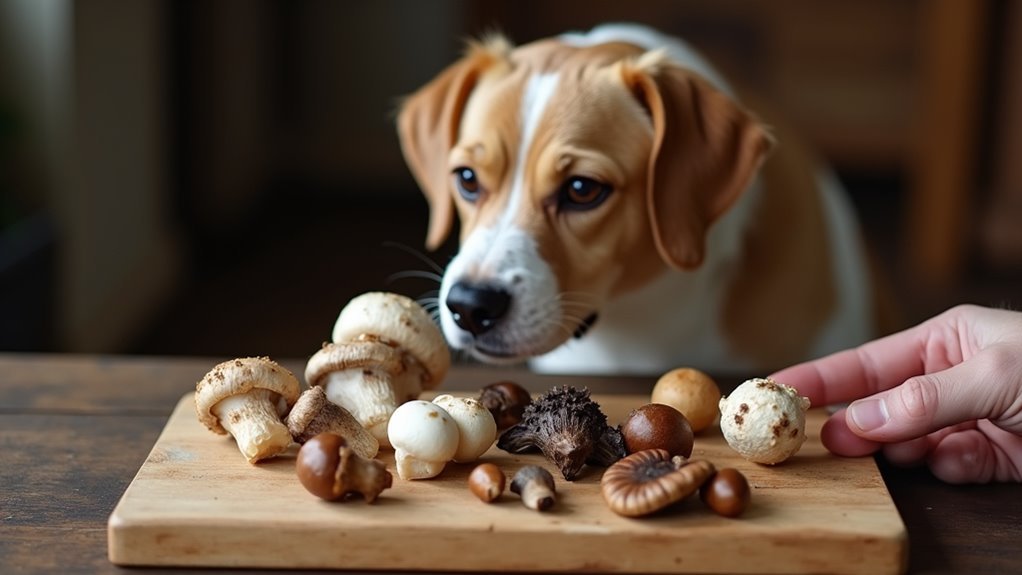

Yes — some mushrooms are safe for dogs, but many wild varieties are toxic and can cause severe illness. Store-bought common mushrooms like white button or cremini are generally okay in small, plain amounts. Avoid feeding dogs any wild mushrooms or unknown species because toxins can be life-threatening. Watch for symptoms such as vomiting, diarrhea, lethargy, drooling, or trouble breathing and seek veterinary care immediately. When in doubt, skip the mushroom and offer a veterinarian-approved treat instead.
Which Mushrooms Are Safe for Dogs?
Usually, the only mushrooms you should consider for your dog are plain, store-bought kinds that people also eat.
You can offer a few cooked white button, cremini, or portobello mushrooms when they’re unseasoned and cut small.
You could also choose shiitake, maitake, or oyster mushrooms from the grocery store, but only in tiny amounts.
Because dogs have different digestive enzymes, keep portions light so their stomach can handle the change.
Some dogs with mushroom allergies could still react, even to safe types, so watch for itching, vomiting, or loose stool.
Should your dog do fine, you can feel calm understanding you picked the safer path.
Keep every bite simple, because garlic, butter, and heavy spices don’t belong in your dog’s bowl.
Which Wild Mushrooms Are Most Dangerous?
You need to watch out for deadly Amanita species, since they can cause fast and severe poisoning in dogs.
Toxic Galerina varieties are just as worrying, and even a tiny bite can turn into a real emergency.
False morels also belong on your danger list, because they can trigger serious illness and leave you feeling scared and unsure about what to do next.
Deadly Amanita Species
Among wild mushrooms, Amanita species are some of the most dangerous for dogs, and that’s why they deserve extra caution.
Whenever you’re out with your dog, bear in mind that seasonal prevalence can rise after warm rains, and geographic hotspots often include wooded parks, damp lawns, and hiking trails.
Death caps and fly agarics can look oddly harmless, so don’t rely on color or shape.
Should your dog sniffs, licks, or eats one, act fast and call your vet right away. You’re not overreacting; you’re protecting your pack.
Keep your dog on leash in risky areas, watch for mushrooms after storms, and clear any you find in your yard.
Prompt action gives your dog the best shot at staying safe.
Toxic Galerina Varieties
Galerina mushrooms could look small and plain, but they can be very dangerous for dogs, so it’s smart to treat them as a real emergency threat. Should you spot them on a walk, keep your dog close and move on fast.
Galerina identification is tricky because these wild mushrooms blend in with wet wood, moss, and leaf litter. You can’t safely guess here. Spore printing methods can help experts, but you should never examine a mushroom at home after your dog has touched it.
Should your dog bites or swallows one, call your vet or poison line right away. You’ll protect your pack best by assuming every unknown Galerina is toxic and by leaving your curious pup well away from it.
Dangerous False Morels
False morels deserve special caution because they can look odd, tempting, and harmless at initial glance, yet they’re among the wild mushrooms most likely to make a dog very sick.
Should your dog sniffs one on a walk, treat it like a real threat, not a curious snack.
These false morels can cause vomiting, wobbliness, and a serious brain impact, so you shouldn’t wait for symptoms to “see what happens.”
Instead, keep your dog close, stop the chewing, and call your vet fast.
Even a small bite can matter, especially whenever you can’t confirm the mushroom’s identity.
You and your pup deserve safer outings, so stay alert around damp woods, lawns, and trail edges where false morels might hide.
Why Some Mushrooms Are Toxic to Dogs
Some mushrooms make your dog sick because they carry toxic compounds that can attack the liver, kidneys, or nervous system.
You also can’t judge safety by looks alone, since many dangerous wild mushrooms hide in plain sight beside harmless ones.
That’s why you should treat any unknown mushroom as a real risk, even in case your dog only had a tiny nibble.
Toxic Mushroom Compounds
Whenever a dog eats the wrong mushroom, the danger usually comes from powerful natural toxins that attack the body fast and hard. You can regard these as tiny chemical traps.
Their toxin mechanisms could damage the liver, kidneys, nerves, or stomach, and species variability means one mushroom might upset a dog while another can kill. That’s why you can’t judge risk on looks alone.
Some toxins trigger vomiting and drooling initially, then weakness, tremors, or collapse. Others work quietly and cause harm after a delay, which makes prompt help even more crucial.
Should your dog snatches a wild mushroom, don’t wait for signs. Call your vet right away, because every minute counts and your dog deserves that circle of care.
Hidden Wild Mushroom Dangers
Wild mushrooms hide their danger well, and that’s what makes them so risky for your dog. You can’t trust color, shape, or smell, because toxic lookalikes often blend in with safe species. That’s why foraging hazards matter so much on walks and in yards.
- Some wild types contain fast-acting poisons.
- Others cause liver or nerve damage.
- Spore spread can bring new mushrooms back after rain.
- Even a tiny bite can trigger a vet emergency.
When you and your dog investigate together, stay alert near damp grass, mulch, and woods. Should your dog sniff or nibble a mushroom, act fast and call your vet. You’re not being overcautious; you’re protecting your pack.
What Are the Signs of Mushroom Poisoning?
Provided your dog has eaten a mushroom, the signs of poisoning can show up fast and could look serious right away. You might notice initial symptoms like drooling, vomiting, belly pain, diarrhea, wobbliness, or shaking.
Your dog could also seem weak, restless, or unusually sleepy. These clues can appear within minutes or hours, so don’t brush them off.
Some mushrooms bring delayed effects, too, and those can be even harder to spot at outset. You may observe a slow decline, poor coordination, yellow gums, or confusion later on.
In severe cases, seizures, trouble breathing, or collapse can follow. Because every dog reacts differently, trust your gut when something feels off. You know your friend best, and that instinct matters here.
What to Do If Your Dog Eats a Mushroom
Initially, try to identify the mushroom provided you can, because that helps you decide how urgent the situation is.
Then call your veterinarian right away, since even a small bite can turn into a serious problem should the mushroom be wild or unknown.
In case you’re unsure, treat it like an emergency and get help fast, because acting quickly can make a big difference.
Identify the Mushroom
A quick mushroom check can make all the difference should your dog has taken a bite. You can help by looking closely and staying calm.
Provided you still have the mushroom, use these steps:
- Note the cap texture and color.
- Check the odor testing result, in case any smell stands out.
- Save a spore print provided you can do so safely.
- Snap photos of microscopic features or close-up details for later ID.
Wild mushrooms stay risky, even when they look plain. Store-bought mushrooms usually seem smoother and more uniform, but you should still match them to the package.
Should you can’t tell what it is, treat it as unsafe. You’re not alone here. Many dog parents face this scary moment, and careful ID gives you a stronger next step.
Contact a Veterinarian
In case your dog ate a mushroom, call your veterinarian right away, because fast action can make a real difference.
Should you can, save the mushroom, take a clear photo, and note where your dog found it. Then use any emergency contacts you already keep, and ask about teletriage options should the clinic be closed.
Stay calm, because your steady voice helps your dog feel safer. Tell the vet how much your dog ate, at what time it happened, and whether your dog is drooling, vomiting, weak, or acting wobbly.
Should the mushroom came from a yard, park, or hike, treat it like a possible toxin until a pro says otherwise. Don’t wait for symptoms to get worse; quick guidance can protect your dog and your peace of mind.
Can Dogs Eat Store-Bought Mushrooms?
Yes, dogs can eat some store-bought mushrooms, but only while you keep things simple and safe. You’re part of a smart pet crowd whenever you choose plain, human-edible kinds from the store. Keep these points in mind:
- Pick white button, cremini, or portobello mushrooms.
- Skip wild or unknown mushrooms every time.
- Stick to small portion sizes, since mushrooms aren’t a must-have food.
- Watch your dog’s flavor preferences and tummy response.
If you choose plain mushrooms, you can offer a tiny taste and see how your dog handles it. Some dogs enjoy the earthy flavor, whereas others turn away like they’ve got better plans. That’s okay. Your dog’s comfort matters more than joining the mushroom fan club.
How Should You Serve Mushrooms to Dogs?
Most of the time, the safest way to serve mushrooms to dogs is to keep them plain, cooked, and simple. You can steam or lightly sauté store-bought mushrooms in a little water, then let them cool before you share any. Skip butter, oil, salt, garlic, onion, and spices, since those can upset your dog’s stomach or cause harm.
Choose small serving methods that mix the mushrooms into regular food, so your dog feels included without getting a rich treat. Keep portion sizes modest, and make sure the pieces are soft and easy to chew. Should your dog have a sensitive stomach, start with a tiny taste and watch how they respond. Whenever uncertain, choose a different snack and save mushrooms for your own plate.
How Much Mushroom Is Safe for Dogs?
The right amount of mushroom for your dog is usually very small, because even safe mushrooms should stay more like a tiny treat than a real snack.
You can protect your pup through keeping portion sizes tiny and watching feeding frequency, so mushrooms stay rare in the routine.
Try this simple guide:
- Give only a few small pieces.
- Offer plain, cooked, store-bought mushrooms.
- Serve them once in a while, not daily.
- Stop unless your dog gets an upset stomach.
That little bit helps your dog fit in at the table without overdoing it.
Since mushrooms don’t add much to a dog’s diet, you don’t need much at all.
Whenever you’re unsure, skip the serving and keep your buddy on safer treats.
How Do Vets Treat Mushroom Poisoning?
Should your dog eats a mushroom you can’t identify, vets act quickly because time matters. They’ll check the mouth, watch for vomiting, tremors, or wobbliness, and ask what you observed. In case you bring a sample, that helps the team act with confidence. Treatment often starts right away:
| Step | Why it helps | What you might notice |
|---|---|---|
| Exam | Finds early danger | Fast questions |
| Activated charcoal | Limits absorption | Given shortly after eating |
| IV fluids | Supports kidneys and hydration | Hospital care |
| Monitoring | Catches delayed signs | Blood tests |
You’re not alone in this. Your vet could add anti-nausea medicine, seizure control, or liver support as required. Quick care gives your dog the best shot at recovery, and that steady support can feel like a relief when fear is running high.
How Can You Keep Dogs Away From Mushrooms?
After you’ve handled a mushroom scare, it makes sense to focus on stopping the next one before it starts. You can help your dog stay safe by building habits that fit real life and your pack.
Start with leash training so you can guide quick sniffs away from shady spots. Then keep up yard maintenance by clearing damp mulch, leaf piles, and anything fuzzy after rain. Use these supervision protocols whenever your dog roams outside: watch closely, scan ahead, and redirect fast. Finally, try sniff deterrents near known mushroom patches, but pair them with treats and praise so your dog feels supported, not scolded.
- Check play areas often
- Trim out-of-sight corners
- Stay alert on walks
- Reward quick turnaways
Frequently Asked Questions
Can Dogs Be Allergic to Mushrooms?
Yes, your dog can be allergic to mushrooms, though it is uncommon. You may notice mushroom sensitivities or immune reactions like itching, vomiting, or swelling — an old tale with modern bite. Call your vet should symptoms appear.
Are Mushroom Stems Safe for Dogs?
Usually you can give your dog plain store bought mushroom stems in tiny amounts, but avoid wild ones because of mushroom stem toxin risks. A stem digestibility study does not make them essential, so you should keep portions small.
Can Puppies Eat Mushrooms?
Not really. You shouldn’t feed puppies mushrooms unless your vet okays plain, store bought ones. Their puppy digestion is still developing, and mushroom toxicity can hit fast. If in doubt, play it safe and skip them.
Do Mushrooms Offer Any Health Benefits for Dogs?
Yes, you might get minor benefits from plain mushrooms: a little fiber, antioxidants, immune support, and digestive enzymes. Still, they are not essential, so feed them sparingly, and only provide them if they are store bought and safe.
Can Dogs Eat Canned Mushrooms?
Yes, you can give your dog canned mushrooms only provided they are plain and rinsed, but the sodium content and canned preservatives can be a lightning bolt to their stomach. You will fit right in choosing fresh instead.