

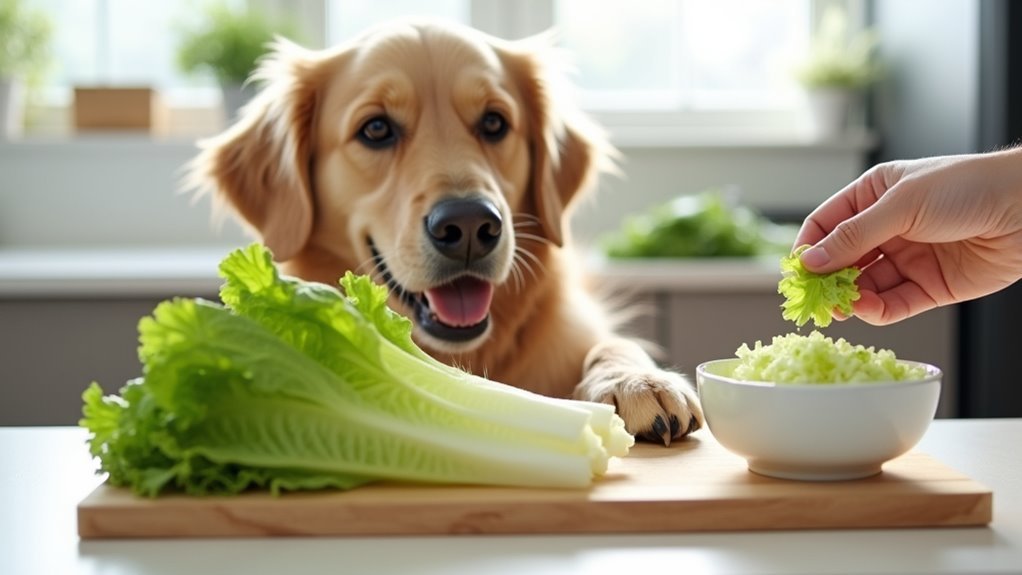

Yes — dogs can eat plain lettuce in small amounts safely. Lettuce is low in calories and can be a crunchy, hydrating snack. Soft varieties like romaine and butterhead are gentler on a dog’s stomach than bitter leaves or thick stems. Always wash leaves thoroughly, remove any dressing or toppings, and chop into small pieces to prevent choking. Pay attention to portion size based on your dog’s size and diet to keep treats balanced with regular meals.
Can Dogs Eat Lettuce Safely?
Yes, dogs can eat lettuce safely provided you serve it plain, washed, and in small pieces.
You can feel good sharing a crisp leaf with your pup whenever you keep it simple.
Skip dressings, salt, onions, garlic, and other salad extras, because dietary interactions can turn a safe snack into trouble.
Wash each leaf well, since dirt and chemicals might hide on the surface.
Cut out thick stems and tough cores so your dog doesn’t choke on them.
Give only a little initially, especially should your dog have a sensitive stomach.
Seasonal availability can change what you find at the store, but plain lettuce stays a mild option year-round.
Whenever you prepare it carefully, you help your dog join in safely.
Benefits of Lettuce for Dogs
Lettuce can give your dog a light, low-calorie crunch that feels like a fun treat without adding much to the bowl.
Because it holds so much water, it can also help with hydration, especially on warm days or after playtime.
Plus, it offers a small burst of vitamins and fiber, so you get a simple snack that does a little more than just taste good.
Low-Calorie Crunch
Often, the biggest win with dog treats is keeping them light, and lettuce does that well. You can use this low-calorie crunch whenever you desire portion control without making your dog feel left out.
A few chopped leaves give your pup sensory enhancement, because the crisp texture adds something fun to chew. Since lettuce is mostly water and fiber, it fills space without piling on many calories, fat, or protein.
That makes it a friendly option for dogs watching their weight or for days when you’d like a tiny extra treat. Just keep it plain and small, so you stay in the safe zone while your dog gets a fresh, simple bite.
Hydration Support
Because lettuce is packed with water, it can give your dog a little extra hydration while still feeling like a light, satisfying snack. Whenever you share a few crisp bites, you support your dog’s water content without adding heaviness. That matters on warm days, after playtime, or whenever your pup just wants something fresh beside you.
| Portion | Water content | Best use |
|---|---|---|
| Small bite | High | Quick treat |
| Chopped mix | High | Meal topper |
| Few leaves | High | Cool snack |
This simple snack won’t replace a bowl of water, but it can help your dog stay comfortable. It also fits well with electrolyte balance whenever you keep portions modest and plain. So, you can feel good offering a little crunch that helps your dog stay part of the pack.
Nutrient Boost
A crunchy handful can do more than just keep your dog busy, since lettuce brings a few helpful nutrients to the bowl without piling on extra calories.
Whenever you share it plain, you give your pup a light source of vitamin A, vitamin K, and leafy antioxidants that support normal cell health.
That matters because small, steady lifts can help you feel good about every treat you serve.
- You add variety without burdening the diet.
- You offer tiny minerals that support daily wellness.
- You support micronutrient absorption whenever lettuce joins a balanced meal.
- You give your dog a fresh snack that feels kind and familiar.
Which Lettuce Is Safest for Dogs?
Romaine lettuce is one of the safest picks for your dog because it’s mild, crisp, and easy to serve in small, plain pieces.
You can also choose other light greens, but skip bitter lettuces since their stronger taste and tougher texture might upset your dog’s stomach.
Whenever you keep it washed, chopped, and simple, you give your dog a fresh treat without the extra worries.
Romaine Lettuce Benefits
Whenever it comes to leafy snacks, safety and simplicity matter most, and romaine lettuce is one of the better choices for dogs. You can share it plain, washed, and chopped, and your dog might enjoy the light crunch without extra calories. That makes it handy whenever you want a small reward that still fits your dog’s satiety cues and garden safety habits.
- Romaine offers lots of water, so it can support hydration.
- It’s low in calories, which helps with weight-friendly treats.
- The fiber could help keep digestion steady in small amounts.
- Its crisp texture can make snack time feel special.
You’ll still want to keep portions modest, because too much can upset your dog’s stomach.
Avoiding Bitter Greens
Which lettuce is safest for dogs? You’ll usually do best with romaine, green leaf, red leaf, or butterhead, because they’re mild and less likely to taste bitter.
Should your dog seems unsure, start with a tiny taste sampling bite and watch for a happy crunch, not a picky pause. Bitter greens like some arugula or older leaves can feel harsh, so you might need a little flavor masking through mixing them with a favorite plain treat, but skip salt, dressing, and cheese.
Wash every leaf well, trim tough stems, and cut pieces small so you keep snack time safe and easy. Whenever you choose softer lettuce, you’re giving your dog a light treat that fits right into your shared routine.
How Much Lettuce Dogs Can Eat
A little lettuce can go a long way, so the right amount depends on your dog’s size, tummy, and the rest of their diet. You can use simple portion guidance and seasonal availability to keep treats easy and friendly. Start small, because your pup’s body needs time to tell you what feels good.
- Tiny dogs often do best with a few chopped leaves.
- Medium dogs can handle a small handful now and then.
- Large dogs might enjoy up to a cup, provided their stomach stays calm.
- Should you notice loose stool, give less next time.
You’re not feeding a meal here, just a light treat that fits your pack’s rhythm. Keep portions modest, and you’ll help your dog feel included without upsetting their balance.
How to Serve Lettuce to Dogs
Start by washing the lettuce well so you can cut away dirt, germs, and leftover chemicals.
Then chop it into small, easy-to-chew pieces so your dog won’t choke or struggle.
Keep it plain and fresh, because your dog doesn’t need dressing, salt, or extra toppings to enjoy a simple snack.
Wash Thoroughly First
Before you hand your dog a piece of lettuce, wash it thoroughly under cool running water so you can rinse away dirt, bacteria, and leftover pesticide residue. This simple step helps you feel confident, and your dog gets a cleaner treat with less risk. Use safe wash methods, like gently rubbing each leaf with your fingers. For better pesticide removal, keep rinsing until the surface feels clean, not slimy or gritty.
- Rinse each leaf under cool water.
- Rub both sides to loosen debris.
- Check folds where dirt can hide.
- Pat the lettuce dry with a clean towel.
When you take a minute for this, you’re protecting the whole snack routine. Your dog mightn’t notice the prep, but you and your pup both benefit from that extra care and shared trust.
Cut Into Small Pieces
Cut the lettuce into small, bite-sized pieces so your dog can chew it safely and without a struggle. Whenever you keep the pieces tiny, you lower choking risk and make each bite feel easy and welcoming. Aim for a size that matches your dog’s mouth, especially should you’ve got a speedy chewer or a little pup.
Small pieces also help you control texture variety, since thinner bits mix nicely with a soft crunch. Assuming the lettuce feels too cold, let it sit until the serving temperature is comfortable, so it doesn’t startle your dog.
You can scatter the pieces over a bowl or offer them in hand, which helps your dog stay calm and included. That simple prep makes the snack feel thoughtful, not awkward.
Serve Plain And Fresh
Plain lettuce is the safest way to serve it, so keep it simple and fresh for your dog.
You’ll give your pup a crisp treat that feels kind and familiar, without risky extras.
- Wash each leaf well to remove dirt and bacteria.
- Choose plain, fresh seasonal varieties like romaine or green leaf.
- Skip dressings, salt, and crunchy add-ons for better garden safety.
- Cut it small so your dog can chew it easily.
When you serve it this way, you help your dog enjoy a light snack that fits your routine.
Fresh lettuce can be a small, happy moment at mealtime, and that shared treat can feel good for both of you.
Just keep portions modest, because too much can upset your dog’s stomach.
Lettuce Risks and Choking Hazards
Even though lettuce is usually safe for dogs, it can still cause problems provided you serve it the wrong way. You should watch for leafy allergies, since a few dogs react with itching or stomach trouble.
You also need to wash every leaf well, because gardening pesticide, dirt, and bacteria can stay on the surface. Then cut the lettuce into small, easy bites. Big pieces, thick ribs, and hard stems can slip in fast and turn into a choking hazard, especially for enthusiastic eaters.
In case your dog loves crunch, stay close and offer only plain lettuce, never mixed with rough add-ins. That way, you keep snack time calm, safe, and part of the pack.
Signs Your Dog Ate Too Much Lettuce
Should your dog got into a little too much lettuce, you’ll usually notice it pretty fast. You might see behavior changes, like extra restlessness, gassiness, or a weird look that says, “I regret that salad bar visit.” Next, watch their belly and bathroom habits closely.
- Loose stool or watery diarrhea can show up soon after eating too much.
- Stool abnormalities, like mucus or smaller, softer piles, could follow.
- Mild belly rumbling, bloating, or repeated squatting can mean the fiber hit hard.
- Your dog might seem less interested in play and more clingy than usual.
If these signs stay mild, give your dog water and a calm space. Most pups bounce back once their tummy settles, and you’ll both feel better soon.
When Dogs Should Avoid Lettuce
Lettuce isn’t always a safe choice for every dog, especially unless your pup has a sensitive stomach or a history of digestive trouble.
Should you notice vomiting, loose stool, or lots of gas after a few bites, stop serving it and give your dog’s gut a break.
You should also avoid lettuce whenever your dog has food allergies, since even a simple snack can trigger itching, ear trouble, or belly upset.
In case your dog takes daily pills, check for medication interactions before you share any greens, because some health plans need tighter food control.
Whenever your dog is recovering from illness, has trouble chewing, or acts unsure around new foods, skip lettuce for now.
That keeps mealtime calm and helps your dog feel safe, steady, and included.
Ingredients to Avoid in Dog Salads
Whenever you make a dog salad, the safest move is to keep it plain and simple, because many common add-ins can upset your dog’s stomach or even cause serious harm. You want to skip toxic dressings, since oil, salt, garlic, and onion can hurt your pup fast. Also, pass on crunchy toppings like croutons, nuts, seeds, and chips, because they can choke your dog or add too much fat.
- Skip sweet sauces and creamy dressings.
- Avoid onions, garlic, and chives.
- Leave out grapes, raisins, and avocado.
- Don’t add cheese, bacon, or spicy extras.
Whenever you keep the bowl calm and clean, you help your dog feel safe at the table. That small choice builds trust, and it makes snack time feel like a shared win.
Other Crunchy Veggies Dogs Can Eat
While lettuce makes a light snack, your dog can also enjoy other crunchy veggies that bring a little more flavor and variety to the bowl. You can reach for carrots, cucumber, green beans, and bell pepper for a fresh snap that feels fun and familiar.
Should you want a softer option, try a small bite of cooked sweet potato, which still gives a cozy crunch once cooled. Just keep each piece plain, washed, and cut small so your pup can chew safely.
Offer new veggies one at a time, and watch how your dog reacts. That way, you’ll spot any tummy trouble at an early stage and keep snack time calm. These simple choices can make you feel like you’re building a treat routine your dog actually looks forward to.
Frequently Asked Questions
Can Puppies Eat Lettuce Safely?
Yes, you can give puppies plain, washed lettuce in tiny, chopped pieces, provided you monitor puppy digestion. It will not help teething relief much, but it can be a crunchy, low calorie treat in moderation.
Is Organic Lettuce Better for Dogs?
Yes, organic lettuce can be a bit better for your dog because it might lower pesticide residues, but you should still wash it well. You are choosing safely whenever you offer plain, chopped leaves in moderation.
Can Lettuce Help Dogs Lose Weight?
Yes, it can support weight management, but only as a low calorie snack, not a calorie replacement. You will need portion control, since too much can upset digestion. It may also give your dog a hydration boost.
Should Dogs Eat Lettuce Daily?
No, you shouldn’t feed your dog lettuce daily; consider it a green whisper, not a daily feast. Choose a leafy variety, wash it well, and keep serving frequency to occasional, small shared treats.
Can Dogs Eat Frozen Lettuce?
Yes, you can give your dog frozen lettuce in small, plain pieces, but frozen storage can make texture changes that might be harder to chew. You will want to thaw it and offer it sparingly.