

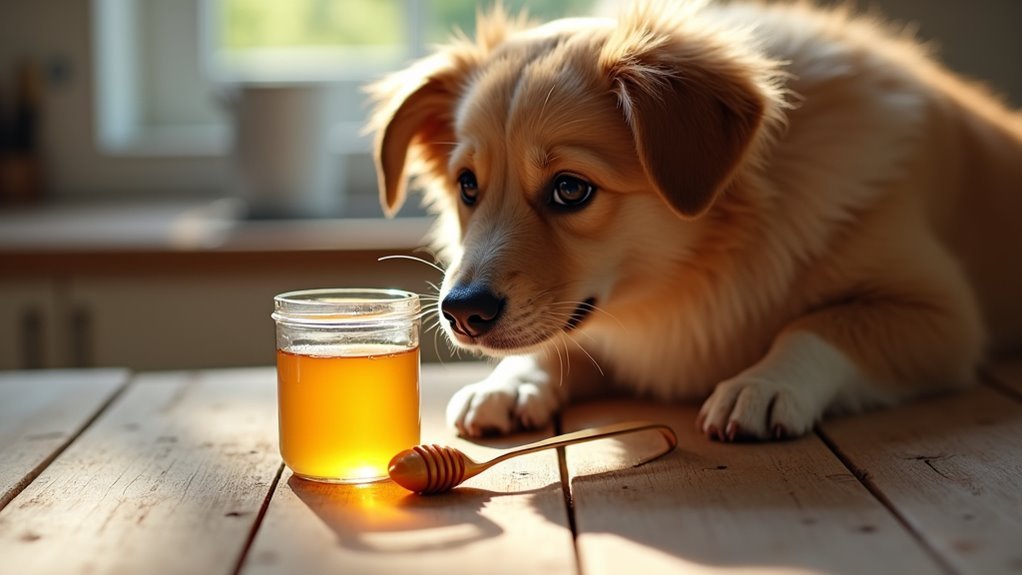

Yes — plain, pasteurized honey is generally safe for most healthy adult dogs in small, occasional amounts. Honey can soothe a sore throat and provide a quick boost of simple carbohydrates. Puppies and dogs with diabetes, obesity, or sensitive digestion should avoid honey. Raw honey can contain botulism spores that pose risk to vulnerable dogs. Always consult a veterinarian before introducing new foods to a dog’s diet.
Can Dogs Eat Honey?
Yes, dogs can eat honey in small amounts, and for most healthy adult dogs, it’s not toxic. You can regard it as an occasional treat, not a daily habit. Still, check source verification initially, because some human products hide xylitol or other unsafe add-ins. Keep your honey storage clean and sealed, and choose plain honey only.
In case your dog has diabetes, obesity, or a sensitive stomach, ask your vet before you share any. Begin with a tiny taste and watch for upset stomach, itching, or odd behavior. Small dogs need even less, so a little goes a long way. That way, you keep snack time safe, simple, and part of the pack.
Honey Benefits for Dogs
Honey can give your dog a quick natural energy lift because it has simple sugars that your dog can use fast. It also brings trace antioxidants and nutrients, so you might see it as a small extra perk, not a miracle fix.
Plus, a little honey can soothe a scratchy throat and make your pup feel more comfortable whenever you need a gentle option.
Natural Energy Boost
Sometimes, a tiny spoonful of honey can give your dog a quick natural energy lift because it’s packed with simple sugars that the body can use fast. Whenever you need a little lift for walks, play, or training, you can reach for it as one of those quick treats that feels easy and kind.
Because honey might support natural stamina for a short burst, it can help your dog stay bright and engaged without a heavy snack. Still, you should keep the portion small, since too much sugar can upset the balance you want for your buddy.
Antioxidant Support
Even after that quick burst of energy, honey can offer your dog a little antioxidant support too, since it contains natural compounds that help fight cell damage.
Whenever you share a tiny lick, you’re also giving your pup a small dose of plant-like compounds, especially from its flavonoid content.
These helpers might support your dog’s body during everyday stress, even though the effect stays modest.
That’s why plain honey can feel like a simple, comforting treat for your pack.
Its storage stability also matters, because honey keeps these compounds well over time whenever stored properly.
Still, you should regard it as a light extra, not a cure or a big health fix.
A little goes a long way, and moderation helps your buddy enjoy it safely.
Soothing Sore Throats
A small taste of honey can sometimes help calm a dog’s scratchy throat, and that gentle coating can feel soothing whenever your pup seems uncomfortable. You can offer a tiny amount for throat soothing, but you should keep the honey dosage very small. For many dogs, just a lick or two is enough to ease swallowing and add a little comfort.
Should your dog have a cough, pick plain honey and skip any mix with xylitol or extra sugar. You should also watch for belly upset, since too much can cause trouble. Puppies, dogs with diabetes, and dogs with weak immune systems need extra care, so consult your vet initially. With the right amount, you can give your buddy a sweet little bit of relief.
When Is Honey Safe for Dogs?
Honey is safe for dogs provided you give it in small amounts, choose plain honey, and keep your dog’s health in mind. For most healthy adult dogs, a tiny taste can fit into an occasional treat routine.
Should you’re checking age thresholds, wait until your dog is past puppy stage and use extra care with raw honey. Also, follow storage precautions through keeping the jar sealed and clean so it stays fresh and free of contamination.
Start with just a little and watch for tummy upset, itching, or odd behavior. Because honey is sugary, keep portions modest and skip anything with added ingredients.
Whenever you share it wisely, honey can feel like a small, sweet moment between you and your dog.
Which Dogs Should Avoid Honey?
Dogs with diabetes, obesity, a sensitive stomach, or a history of food reactions should avoid honey or only use it after your vet indicates it’s okay. You want to protect your dog’s comfort, not gamble with extra sugar.
Senior dogs might also need extra caution because weight gain can hit harder, and their digestion can be less forgiving. Immunocompromised pets should skip raw honey, since safety matters even more whenever the immune system is weak.
- Watch for vomiting, loose stool, or itching.
- Check labels for xylitol and other risky add-ins.
- Use plain honey only once your vet approves it.
Should your dog already struggle with a health issue, honey can create more trouble than joy. A small taste could seem harmless, but your shared routine ought to feel safe for both of you.
Can Puppies Have Honey?
Even though puppies may seem keen to taste whatever you’re eating, they shouldn’t have raw honey, and it’s best to be very cautious with any honey at all.
Your puppy’s immunity is still growing, so a tiny mistake can matter more than it would for an adult dog. Raw honey can carry a botulism risk, and that makes it a poor choice for young pups. Should you want to share a sweet moment, wait until your vet says it’s okay and choose only plain, pasteurized honey in a very small amount.
Still, you should watch your puppy closely for tummy upset, itching, or odd behavior.
Through staying careful, you help your pup feel safe, included, and cared for without adding avoidable trouble.
How Much Honey Can Dogs Have?
You can give your dog honey in only small amounts, since it’s a sweet treat, not a regular snack.
A tiny dog might only need about 1/4 teaspoon, while a larger dog could handle a little more, but size, health, and activity level all matter.
To keep things safe, use honey sparingly and make it an occasional treat, not a daily habit.
Safe Serving Sizes
At the time honey is safe for your dog, the key is keeping the portion tiny and the use occasional. You’ll do best with portion control, calorie counting, and a steady feeding schedule so treats don’t crowd out meals. Consider spoon measures, not glugs from the jar.
- Begin with a small taste, then watch how your dog feels.
- Keep honey under 10% of daily treats.
- Use plain honey only, never mixed human spreads.
A small lick can fit into a happy routine, but more than that can add sugar fast. In case your dog already gets snacks, trim them beforehand so honey stays a special moment. That way, you both stay in the same treat-loving club without upsetting the balance.
Breed And Size Differences
Small dogs usually need far less honey than big dogs, and that simple fact can save you a lot of worry. You know your dog best, so consider about body size initially. A tiny breed could do fine with just a dab, while a larger dog can handle a bit more. Even then, keep the amount modest, because honey is rich and sweet.
Next, look at Activity Level and Coat Thickness. A lively, lean dog might use energy faster than a couch buddy, but size still matters more than breed name. Thick-coated breeds don’t need extra honey for warmth or comfort.
Treat Frequency Limits
Honey should stay an occasional treat, not a daily habit, because even a sweet spoonful can add up fast.
You can keep your dog in the safe zone through using weekly limits and watching calorie tracking, especially provided your pup already gets snacks.
A tiny lick now and then usually fits better than a full serving.
- Small dogs: about 1/4 teaspoon
- Medium dogs: about 1/2 teaspoon
- Large dogs: up to 1 teaspoon
Give honey only once or twice a week, and keep it plain.
In case your dog has diabetes, extra weight, or a sensitive stomach, ask your vet initially.
You want treat time to feel fun, not stressful, so start small and watch how your buddy handles it.
How to Give Dogs Honey Safely
Drizzle just a little honey provided you want to share it with your dog, and keep the initial taste very simple. Use plain, pasteurized honey, not flavored spreads, and check the label for xylitol. Start with a tiny lick, then watch your dog during feeding timing so you can see how he handles it.
Should he like it, you can mix a small amount into food or use texture alternatives like a thin smear on a lick mat. Keep portions modest, since honey should stay an occasional treat. For tiny dogs, a quarter teaspoon is plenty. For bigger dogs, only a little more makes sense.
In case your dog has diabetes, immune issues, or you’re unsure, consult your vet to begin.
Honey Side Effects in Dogs
Even a harmless spoonful of honey can cause trouble for some dogs, especially should they get too much or in case they already have a health issue. You might see your pup act off after eating it, and that can feel unsettling for both of you. Watch for:
- digestive distress, like loose stool or vomiting
- calorie overload that can add extra pounds over time
- itching or other rare allergy signs
If your dog has diabetes, obesity, or a sensitive stomach, honey can hit harder. Start with a tiny taste, then stay alert for changes in energy, appetite, or bathroom habits. Also, plain honey is safer than sweet spreads with concealed ingredients.
Whenever you pay attention ahead of time, you help your dog feel secure, cared for, and part of your everyday pack.
Honey for Dog Coughs and Allergies
Assuming your dog has a mild cough, a little honey could help soothe the throat and make your pup feel more comfortable.
You could also hear people say honey helps with allergies, but the relief is limited and not well proven in dogs.
Whenever you try it, keep portions tiny and occasional, and check with your vet beforehand provided your dog has diabetes, is overweight, or takes other medicines.
Soothing Mild Coughs
Honey can sometimes ease a mild cough in dogs because it coats the throat and could calm short-term irritation. In case your pup has a dry, scratchy cough, this simple home remedy might bring a little nighttime comfort and help them settle. You can offer a tiny spoonful of plain honey, then watch how they do.
- Start with a small amount, like 1/4 teaspoon for a tiny dog.
- Choose plain honey, not flavored spreads or products with xylitol.
- Give it only occasionally, so you keep treats in balance.
Should your dog seems better, that’s lovely. In the event the cough lasts, gets harsher, or your dog acts off, check with your vet.
Allergy Relief Limits
While honey can calm a mild cough, its allergy support is much less certain. You might hear that it helps your dog adjust to local pollen, but that idea stays shaky.
Different pollen types trigger different reactions, and honey won’t match every one. Also, seasonal timing matters, because your dog’s symptoms could rise before honey even offers any comfort.
Should your pup seems to scratch, sneeze, or lick paws more often, honey can’t replace proper care. You’re not alone should that feel frustrating; allergies are messy, and every dog’s story is a little different.
Consider honey as a gentle treat, not a real fix. It might soothe the throat, yet it usually won’t control the deeper immune response that causes allergy flare-ups.
Safe Serving Tips
For a small cough or a little throat irritation, you can offer honey in a careful way so it stays helpful and not too rich. Consider small portion comparisons: a tiny dog might only need 1/4 teaspoon, while a bigger dog still needs just a modest taste. Use serving timing to your advantage after a meal, so it’s gentler on the stomach.
- Choose plain honey with no xylitol or flavor add-ins.
- Mix it into a spoon, lick mat, or a little warm water.
- Watch for itching, loose stool, or extra panting.
If you’re helping with seasonal allergies, keep it occasional and short-term. That way, you and your pup can stay in the safe, familiar crowd of smart treat choices.
Ask Your Vet Before Giving Honey
Because every dog is a little different, it’s smart to ask your vet before you give honey, even provided you only plan to offer a tiny taste. A veterinary consultation helps you get individualized guidance that fits your dog’s age, weight, and health needs.
Should your dog has diabetes, obesity, allergies, or a weak immune system, your vet might say to skip honey altogether. Even for healthy dogs, your vet can help you choose the right amount and spot products with xylitol or other unsafe additives.
That extra check can save you from stomach upset, extra calories, or a sticky mess on your pup’s face. Whenever you want to share a sweet moment, a quick call keeps your dog safe and helps you feel confident too.
Frequently Asked Questions
Can Dogs Eat Raw Honey From Any Source?
No, you should not feed your dog raw honey from any source; even tiny jars can hide risks. If you do share any, choose pasteurized honey, because wild sources, pollen content, and floral origin can vary.
Is Honey Safe for Dogs With Diabetes?
No, you should not give honey to a dog with diabetes. It can spike blood glucose, complicate insulin interactions, and undermine diabetic management. Work with your vet on dietary planning and choose safer treats instead.
Can Honey Cause Allergic Reactions in Dogs?
Yes, allergic reactions in dogs can occur but they are rare. Honey’s bee venom and pollen content might trigger itching, swelling, or stomach upset. If your dog reacts, stop giving honey and call your vet.
How Should I Check Honey Labels for Xylitol?
Check the ingredients first: look for xylitol, birch sugar, or sugar alcohols on the label. If you are unsure, contact the manufacturer and ask directly. This will help protect your dog and give you confidence in choosing safe honey.
Does Honey Help Dogs With Seasonal Allergies?
Perhaps a spoonful of honey could be a tiny shield against your dog’s sniffles, but it is not proven. Local pollen and bee propolis get talked about, yet you should not count on them; ask your vet.