
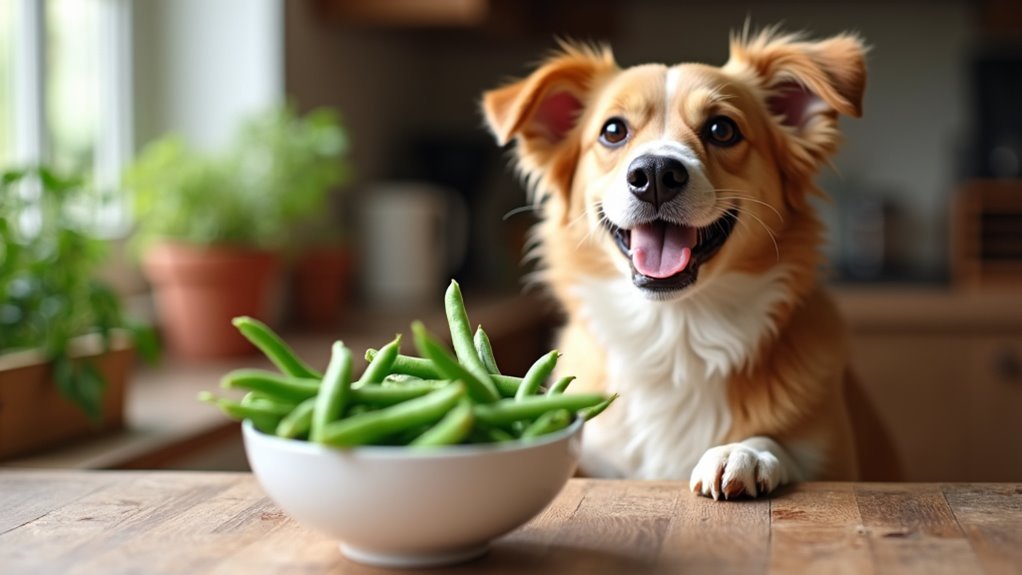

Yes — dogs can eat green beans as a healthy snack. Plain green beans offer fiber, vitamins A and C, and low calories, which supports weight management. Fresh, steamed, or plain canned varieties are best choices without added salt, oil, or seasonings. Portion size should match the dog’s size and daily calorie needs to avoid stomach upset. Watch for any vomiting, diarrhea, or refusal to eat after introducing green beans.
Can Dogs Eat Green Beans?
Yes, dogs can eat green beans, and in most cases they’re a safe, healthy snack provided you serve them plain and in moderation.
You can feel good sharing them whenever you wash, trim, and cut them small. That helps you avoid choking scares and keeps snack time easy.
Fresh, frozen, cooked, or canned beans can all work, but check for seasonal availability and skip anything with salt, butter, garlic, or onions.
In the event your dog has bean allergies, or you notice itching, gas, or an upset stomach, pause and call your vet.
Start with a tiny amount, then watch how your dog feels.
With simple prep, you can make this treat fit your dog’s day without stress or guesswork.
Health Benefits of Green Beans for Dogs
Green beans do more than make a dog’s bowl look a little healthier. You give your dog a crisp, low-calorie snack that fits well beside a balanced diet. Their fiber can help keep digestion steady, while their vitamin mix supports everyday wellness. You also get antioxidant content that helps protect cells from stress, plus nutrients like vitamin K and calcium that support bone health.
Should your dog needs a lighter treat, green beans can feel like a smart swap for richer snacks. They’re simple, familiar, and easy to enjoy together. Because you want your dog to thrive with you, this small choice can add variety without making mealtime feel boring. A plain bean can still bring real value.
How Many Green Beans Can Dogs Eat?
A few bite-sized green beans can be a smart treat for your dog, but the right amount depends on your dog’s size, daily diet, and general health.
As a simple guide, keep green beans to a small snack, not a meal. For tiny dogs, a few pieces could be enough. For bigger dogs, a small handful can fit better.
You should also watch feeding frequency so treats don’t crowd out regular food. Should you add them often, keep the portions even smaller.
Your dog’s individual tolerance matters too. Start with a little, then check for gas, loose stool, or picky behavior. Once your dog feels fine, you might keep green beans as an easy, friendly treat that fits your routine.
Should Dogs Eat Raw, Cooked, or Frozen Green Beans?
Should you’re choosing between raw, cooked, or frozen green beans, the safest pick is the one you can serve plain, bite-sized, and easy to chew.
You can match the form to your dog’s texture preferences, because some pups like a crisp snap while others do better with softer beans.
Raw beans work well provided they’re fresh and cut small.
Cooked beans can feel gentler for dogs that prefer a softer bite, and frozen beans can be handy during seasonal availability provided fresh ones aren’t around.
Just keep every option unseasoned and simple, so your dog gets the bean, not extra extras.
Watch how your pup handles each type, then stick with the one that fits their comfort best.
How to Prepare Green Beans Safely
Now that you know the safest form can depend on your dog’s taste and chewing style, it helps to know how to prep the beans the right way.
Start with fresh beans, then rinse them well for kitchen hygiene.
Trim the ends, cut them into small pieces, and cook them plain in case your dog likes a softer bite.
After that, let them cool fully before you serve them.
- Wash the beans under cool water.
- Snip off tough tips and stringy bits.
- Steam or boil them without salt.
- Store extras with smart storage methods in the fridge.
When you serve them, keep portions small and calm, so your pup feels included at mealtime without any fuss.
Should you freeze some, thaw only what you need and toss soggy leftovers.
When Green Beans Are Bad for Dogs
Green beans can be a safe snack, but they can turn risky whenever they’re spoiled, too salty, or mixed with harmful ingredients.
You also need to watch the size and texture, because big or hard pieces can choke your dog or upset their stomach.
Should your dog gets gas, diarrhea, or seems uncomfortable after eating them, it’s time to stop and check what went wrong.
Spoiled Green Beans
Although green beans are usually safe for dogs, spoiled ones can quickly turn into a problem because they could upset your dog’s stomach and, in some cases, carry harmful bacteria or mold. Should you spot a moldy smell or slimy texture, don’t share them with your dog. You want your buddy to feel good, not spend the night feeling off. Check the beans before serving, and toss any that look dull, wet, or oddly colored.
- Fresh beans look firm and bright.
- Spoiled beans could show bacterial growth.
- A sour odor means it’s time to throw them out.
- Old beans can spoil fast after cooking.
When in doubt, skip the snack and choose a fresh batch. Your dog deserves safe treats, and you deserve peace of mind.
Choking And Digestive Risks
Even safe foods can cause trouble should your dog eats them the wrong way, and green beans are no exception. Should you serve big, hard pieces, your dog could choke or gulp them down too fast. To support choke prevention, cut beans into small bites and skip stringy stems.
You should also watch how your dog handles them. Some dogs have sensitive stomachs, so too many beans can upset gut motility and lead to gas, loose stool, or mild belly pain. That’s why you’ll want to start with a few plain beans and see how your buddy does.
In case your dog eats too fast, slow feeding helps more than extra treats. Once you keep portions small and pieces soft, you give your dog a safer snack and a calmer tummy.
Green Beans for Dogs on a Diet
In case you’re trying to help your dog slim down, green beans can be a smart low-calorie treat that still feels satisfying.
You can also use them as a simple meal topper or swap for richer snacks, which might help your dog feel full without adding many extra calories.
Just keep portions small and plain, so you support the diet without upsetting your dog’s balance.
Low-Calorie Treats
Green beans can be a smart treat choice whenever your dog needs to lose weight, because they’re low in calories but still feel like a real snack.
You can lean on them as low calorie alternatives whenever you want your pup to join the fun without extra guilt.
With simple calorie counting tips, you can keep treats in check and still share that happy moment.
- Serve them plain and bite-sized.
- Offer a few pieces after a walk.
- Swap them for a heavy biscuit.
- Keep the portions small and steady.
That way, you and your dog can stick together through diet changes without feeling left out.
Green beans help you give a caring reward, so your dog gets crunch, comfort, and a little celebration, all with fewer calories.
Meal Replacement Aid
Whenever you’re trying to stretch a dog’s regular food during a weight-loss plan, plain green beans can help you add volume without piling on extra calories. You can use them as part of your meal planning strategies whenever you want your dog to feel included at mealtime without drifting off track.
Because green beans are low in calories and high in fiber, they make one of the better calorie replacement options for a dog who needs a lighter plate. Keep them plain, cooked or chopped, and easy to chew so your buddy can enjoy them safely.
This simple swap can make dieting feel less lonely for both of you, especially whenever your pup still gets a satisfying bowl and you get peace of mind.
Portion Control Tips
To keep your dog on track during a diet, portion control matters just as much as the food itself. Green beans can help you feel included in healthy treat choices, but they still need limits. Use portion monitoring so you don’t crowd out balanced meals.
- Measure a small handful and keep it plain.
- Cut beans into bite-size pieces for easy chewing.
- Offer them as treat swaps instead of biscuits.
- Watch your dog’s daily calories and adjust fast.
In case you’re feeding green beans often, start small and notice how your dog feels. A happy tummy means you’re doing it right. Should gas or loose stools show up, ease back. With steady limits, you can support your dog’s diet without making snack time feel lonely or boring.
Signs of a Bad Reaction in Dogs
Should your dog have a bad reaction after eating green beans, the signs usually show up pretty quickly, and they can range from mild tummy trouble to a more serious problem.
You could notice vomiting, diarrhea, gas, or a swollen belly, and those symptoms can make your pup seem uncomfortable fast. Watch for allergic reactions too, like itching, hives, red skin, or facial swelling.
You might also see behavioral changes, such as restlessness, hiding, whining, or acting less interested in food and play.
In case your dog seems weak, has trouble breathing, or keeps getting worse, treat it as urgent. Trust your gut and stay close, because you know your dog’s normal behavior best, and prompt action can help protect that wagging tail.
What Vets Say About Green Beans for Dogs
Vets usually say green beans can be a smart snack for your dog provided you keep them plain, bite-sized, and small enough to stay within about 10% of daily calories.
You can use them as a light treat or topper, but you should skip them in case your dog needs a special diet or has trouble with digestion.
Should you offer them, watch for choking risks, salty canned beans, and any tummy upset.
Vet-Approved Snack Size
Most vets say green beans can be a smart snack for dogs once you keep the portion small and the beans plain. You can start with portion trials so your pup’s belly can show you what feels right.
A quick vet consultation helps should your dog have a sensitive stomach or a special diet. Consider green beans as a tiny bonus, not a meal.
- A few bite-sized pieces can fit into your dog’s day.
- Small dogs need less, while bigger dogs might handle a little more.
- Your dog should still get most calories from regular food.
- In case your dog seems happy and comfortable, you’re on the right track.
That’s how you keep snack time friendly, simple, and safe for your pack.
Safe Serving Guidelines
Serving green beans the right way matters just as much as choosing them in the initial place, because a safe snack can still cause trouble provided it’s too big, too salty, or packed with extras. You should serve them plain, washed, trimmed, and cut into bite-size pieces so your dog can chew with ease.
Lightly steam or boil them, then cool them before you offer a few pieces. Keep serving frequency modest, since treats should stay near 10% of daily food. In case you use canned beans, pick ones with no salt or seasonings. Fresh or frozen options both work, and seasonal availability won’t stop you from keeping this snack on hand.
Begin slowly, watch how your dog feels, and enjoy a simple treat that fits your pack.
When To Avoid Green Beans
Even though green beans are usually a safe snack, there are occasions at which it’s better to skip them and consult with your vet initially. Should your dog has a sensitive tummy, you should pause and watch for gas or loose stool.
Should your dog has had a food reaction before, your vet might suggest allergy screening before you add new foods. Also, kidney concerns can change what’s right for your pup, so ask beforehand whether your dog eats a special diet.
- Skip beans with salt, garlic, or onion.
- Stop should chewing feels risky.
- Avoid them after vomiting or diarrhea.
- Ask your vet should you feel unsure.
That way, you keep your dog safe and still feel like part of the same caring pack.
Simple Green Bean Recipes for Dogs
Should you want to make green beans more appealing for your dog, simple recipes can help you turn a plain veggie into an easy, dog-friendly treat.
You can steam plain beans, then cool and chop them into bite-size pieces for quick training rewards.
In case your dog likes softer textures, try homemade purees by blending cooked beans with a little water until smooth. You can spoon small amounts over meals for a gentle topper.
For busy days, freezing portions in silicone trays gives you ready-made snacks that feel special without extra fuss.
You can also mix chopped beans into plain cooked rice or low-sodium pumpkin for variety.
Keep every recipe free of salt, butter, garlic, and onions so your dog gets a safe treat that still feels made with love.
Other Vegetables Dogs Can Eat Safely
Beyond green beans, your dog can safely enjoy a handful of other vegetables that add crunch, color, and variety to the bowl. You can build a happy routine with simple picks that feel fresh and familiar. Try these:
- Carrots, raw or steamed, for a sweet crunch.
- Pumpkin, plain and cooked, to support digestion.
- Zucchini, chopped small, for a light bite.
- Peas or sweet potato, in small portions, for extra flavor.
Seasonal vegetables like squash and green peas can keep snack time interesting, and even ethnic varieties such as bok choy or cooked chayote can fit well provided they’re served plain. Always wash, cut, and serve small pieces.
That way, you help your dog feel included at mealtime without adding stress, spice, or unwanted extras.
Frequently Asked Questions
Can Puppies Eat Green Beans Safely?
Yes, you can offer puppies green beans safely. Imagine a tiny gardener tending a simple, green snack garden: keep serving sizes small, plain, and bite sized, and you will protect puppy digestion while giving them a wholesome treat.
Are Frozen Green Beans Better Than Fresh for Dogs?
Frozen green beans aren’t better than fresh for your dog, but they’re handy. You’ll notice texture differences: frozen can stay crunchier, fresh can be softer. Use plain, bite sized pieces, and choose whichever fits your convenience.
Can Dogs Eat Green Bean Pods?
Yes, your dog can usually enjoy a green bean pod provided you serve it plain, trimmed, and cut into bite sized pieces. Check the seed count, avoid seasonings, and keep portions small so your pup stays happily part of the pack.
Do Green Beans Help Dogs Lose Weight?
Yes, green beans can help your dog with weight management by supporting calorie control. You’ll still need smart portion sizing, and it’s wise to check with your vet before making them a regular treat.
Can Green Beans Cause Allergies in Dogs?
Yes, green beans can sometimes trigger allergies, though it is uncommon. You may see food sensitivity or skin reactions. They are usually safe, but if your dog itches, vomits, or has diarrhea, stop feeding them and consult your vet.