
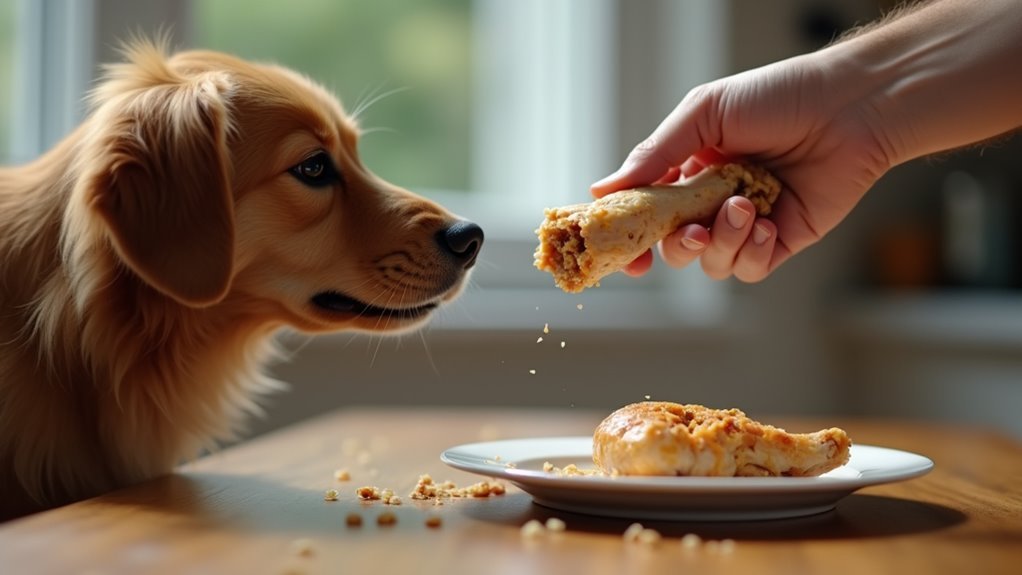

Cooked chicken bones are unsafe for dogs because they can splinter and cause choking, cuts, or intestinal blockage. Raw chicken bones still carry risks like bacterial infection and broken teeth. Small bones swallowed whole can lodge in the throat or digestive tract and require emergency care. Watch for vomiting, drooling, difficulty breathing, lack of appetite, abdominal pain, or blood in stool after a bone incident. Contact a veterinarian promptly if any of these signs appear or if bone ingestion is suspected.
Can Dogs Eat Chicken Bones?
No, dogs shouldn’t eat chicken bones, because even a small piece can turn into a serious problem fast.
You want to keep your dog safe, and that means skipping bones at every meal. Chicken bones can hurt your dog, even provided your feeding frequency stays steady and your routine feels normal.
Should your dog have meat allergies, boneless options also help you avoid extra risk while you choose safer food. Stick with vet-approved treats, and keep scraps off the floor and out of reach.
In case your family shares food, remind everyone that bones aren’t a shared snack for pets. Your dog depends on you for good calls, and this one’s simple: chicken bones don’t belong in a healthy bowl.
Why Cooked Chicken Bones Are Dangerous
Whenever you give your dog cooked chicken bones, they can splinter into sharp pieces that break more easily than you may expect.
Those fragments can get stuck in the throat and cause choking, or they can move deeper and create painful blockages in the stomach or intestines.
Even supposing your dog seems fine initially, a small shard can still cause a serious problem later.
Brittle Bone Fragments
Cooked chicken bones turn risky fast because heat makes them dry, brittle, and sharp. Whenever you understand bone density, you can see why a cooked bone snaps instead of bends.
That changes splinter behavior, so each bite can break off jagged pieces that feel like tiny razors in your dog’s mouth.
- These fragments can cut soft tissue.
- They can scrape the throat and belly.
- They can keep breaking as they move.
If your dog grabbed a bone, stay calm and act like part of the same caring team. Remove leftovers, offer water, and call your vet for next steps. You’re not overreacting; you’re protecting a friend who trusts you.
Rapid, gentle help matters more than hoping the pieces will just pass.
Choking And Blockages
Sharp fragments can turn a simple bite into a real emergency, because they could catch in your dog’s throat or slide down and block the passage to the stomach.
Should that happen, you might notice gagging, drooling, pawing, or hard breathing fast. You’ll want to stay calm and call your vet right away, because airway management could be needed should the bone lodge near the windpipe.
Even after the danger passes, tiny pieces can keep moving and create a blockage later in the gut. So watch for vomiting, belly pain, and no stool.
Your vet could suggest long term monitoring, since some dogs look okay at outset, then worsen as swelling builds and food can’t move normally.
Raw vs. Cooked Chicken Bones
Raw chicken bones might seem less risky than cooked ones, but you still can’t treat them as safe for your dog.
Cooked bones break into sharp splinters more easily, while raw bones can still cause choking, internal injury, and harmful bacteria exposure.
Raw Bone Differences
Even though people sometimes believe a bone from the freezer is safer than one from the oven, chicken bones can still be risky for dogs in either form. You might suppose raw bones fit your dog’s chew preferences, but they can still crack teeth, choke your pup, or upset the microbiome impact with harmful bacteria. That’s why you should stay cautious and choose safer chews instead.
- Raw bones can still splinter.
- Raw bones can carry germs.
- Raw bones can block the gut.
If you’re part of a dog-loving home, you want your buddy to feel included at treat time without extra danger. So, skip chicken bones and offer vet-approved chews that match your dog’s size and chewing style.
That way, you keep snack time calm, safe, and still fun for both of you.
Cooked Bone Hazards
Cooked chicken bones are far more dangerous for your dog than a raw bone, and that’s where the real trouble starts.
Whenever heat dries them out, they turn brittle and snap into sharp shards. Those pieces can create bone dust, then cut your dog’s mouth, throat, stomach, or intestines.
You mightn’t see trouble right away, but a lodged fragment can trigger choking, vomiting, bleeding, or a blockage later.
Raw bones still bring marrow hazards and germs, yet cooked bones break with much less warning.
Can Dogs Pass Chicken Bones Safely?
In most cases, a dog can’t pass chicken bones safely, and that’s why this situation needs quick attention rather than hopeful waiting.
You might see no trouble initially, but sharp pieces can still move slowly and cause concealed harm. Stay calm, and start digestive monitoring right away so you can catch changes sooner. Watch for these signs:
- gagging or repeated retching
- bloating, belly pain, or no stool
- blood in vomit or stool
If your dog acts normal, don’t assume the bones are harmless. They can still lead to longterm complications later.
Call your vet, follow their advice, and keep your dog close. Once you act fast, you protect your dog and stay part of a caring team that puts safety foremost.
What Happens If a Dog Eats Chicken Bones?
In case your dog eats chicken bones, the initial danger is choking or a blockage in the throat, which can turn serious fast.
Sharp pieces can also scratch or puncture the mouth, stomach, or intestines as they move through your dog’s body.
Even should your dog look okay at the outset, concealed internal injury can still show up later.
Choking And Blockage
Chicken bones can turn into a serious choking or blockage problem very fast, and it often starts the moment your dog swallows a sharp piece. Should your dog starts gagging, you need quick airway management, because a fragment can sit in the throat and block breathing.
Should the piece moves down, it could still lodge in the esophagus or gut and stop food from passing. You’re not alone in this worry, and home prevention really matters here.
Watch for:
- pawing at the mouth or neck
- repeated retching or drooling
- straining, swelling, or no stool
Should you see these signs, call your vet right away. Stay calm, keep your dog quiet, and don’t try to push the bone down.
Internal Injury Risks
Even though the bone doesn’t cause choking right away, it can still hurt your dog on the way down. As sharp pieces move through the stomach and intestines, they can scrape tissue, cause intestinal hemorrhage, and even lead to gut perforation.
You couldn’t see trouble initially, which makes it feel scary and unfair, but damage can build fast. Watch for vomiting, belly pain, dark stool, or sudden tiredness. Those signs mean your dog might be bleeding or experiencing a tear inside.
In case your dog just ate chicken bones, call your vet right away. Don’t wait for symptoms to get worse. Prompt care gives your buddy the best shot at staying safe and getting back to normal soon.
Signs Your Dog May Have a Bone Injury
A bone injury can show up fast, or it can hide for a while and quietly get worse, so you’ll want to watch your dog closely after any bone exposure.
Look for behavioral changes, like restlessness, whining, hiding, or sudden mood shifts. These often mean your dog hurts but can’t explain it. You might also notice dental trauma, such as broken teeth, mouth bleeding, bad breath, or drooling.
- pawing at the mouth
- gagging or repeated swallowing
- belly pain, bloating, or trouble pooping
If your dog seems off, trust that feeling. You know your pet’s normal habits better than anyone, and small changes can matter.
A quiet dog can be a warning sign, too.
What to Do If Your Dog Eats Chicken Bones?
Should your dog eats chicken bones, stay calm and act quickly, because the next few minutes can really matter. Initially, remove any loose pieces from reach and offer a quiet spot so your dog can settle. Then call your vet for guidance before you try anything else. Do not make your dog vomit unless a professional tells you to. Use this aftercare checklist:
| Step | What you do |
|---|---|
| 1 | Watch for coughing, drooling, or gagging |
| 2 | Track eating, drinking, and stool changes |
| 3 | Keep your dog rested and relaxed |
| 4 | Follow your vet’s home monitoring plan |
Stay close, observe every change, and share updates with your care team. You’re not handling this alone.
When to Call the Vet Right Away
In case your dog starts choking, gagging, or acting painful after eating chicken bones, call your vet right away, because those signs can point to a serious problem fast.
Keep your emergency contacts ready, then share the symptom timeline so the clinic knows once it started and how it’s changed.
Should you see any of these signs, don’t wait:
- repeated vomiting or dry heaving
- blood in saliva, vomit, or stool
- bloating, weakness, or trouble pooping
Even though your dog seems okay for now, sudden pain can show up later.
Stay calm, keep your dog close, and tell your vet exactly what happened. That way, you and your pup can get support from the right team quickly.
How Vets Treat Chicken Bone Problems
Once your vet knows your dog ate chicken bones, they’ll choose treatment based on where the bone is, how your dog looks, and whether the bone is stuck or already moving through.
If your dog is stable, they might watch closely, give fluids, and use medicine to ease pain or nausea.
Whenever a bone sits in the throat or stomach, endoscopic retrieval can sometimes remove it without surgery.
Should sharp pieces have moved deeper or caused a tear, surgical intervention could be needed to protect the gut and stop infection.
Your vet might also take x-rays or ultrasound to track the bones.
You’re not alone in this, and quick care gives your dog the best chance.
Staff will guide you, answer questions, and help you through each step with calm, clear support.
Safer Chews Instead of Chicken Bones
After your vet handles the bone issue, you can shift your focus to keeping your dog safe with better chew choices. You’re not alone in wanting a happy, busy pup, and the right chew can help your dog feel included in the family routine.
- Tough rubber toys can support dental benefits while standing up to strong jaws.
- Stuffable chews offer training enhancement and keep your dog busy with a clear job.
- Vet-approved dental sticks can satisfy chewing urges without sharp splinters.
Pick sizes that match your dog’s mouth, and watch the initial few sessions so you know the chew feels comfortable.
Also, rotate options to keep interest high and avoid boredom.
Whenever you opt wisely, you give your dog relief, fun, and safer gnawing all at once.
How to Prevent Chicken Bone Scavenging
To keep chicken bone scavenging from becoming a scary surprise, start via treating every leftover bone like a real hazard, because even a quick dash to the trash can turn into an emergency. You can protect your dog through using secure trash with tight lids, wiping counters fast, and placing plates out of reach.
After meals, pick up scraps right away so tempting smells don’t linger. During family dinners, keep your dog in another room or use supervised meals, so no one slips a bone under the table. Also, remind guests that bones are never safe for your pup.
When you grill or order takeout, check the floor, yard, and car seats before your dog gets curious. These small habits help your dog stay close, calm, and safe.
Frequently Asked Questions
Can Chicken Bone Broth Be Safe for Dogs?
No, you shouldn’t give chicken bone broth unless you know it is bone free and unseasoned. Your safest homemade broth uses boneless chicken, while commercial products need vet approved ingredients. If in doubt, ask your veterinarian initially.
Are Chicken Bone Fragments Hidden in Dental Chews?
Yes, you cannot assume chicken bone fragments are always absent in dental chews. Fragments and manufacturing contamination can occur. Choose trusted brands, inspect chews closely, and call your vet if your dog’s mouth appears injured.
Can Small Dog Breeds Face Greater Chicken Bone Risks?
Yes — small breeds face greater chicken bone risks because their size risk is higher, and a fragment can cause airway obstruction faster. You should treat even tiny pieces as emergencies and call your vet right away.
Should I Wait if My Dog Seems Normal?
No, you should not wait; delayed symptoms can still appear after chicken bone ingestion. Since one in three emergency cases worsens quickly, call your vet now and use watchful waiting only with their guidance.
Are Emergency Fees Higher for Bone Ingestion Cases?
Yes, emergency costs can be higher because bone ingestion often needs imaging, exams, and possible surgery. If you have insurance coverage, it could help, but you should still call your vet right away.