
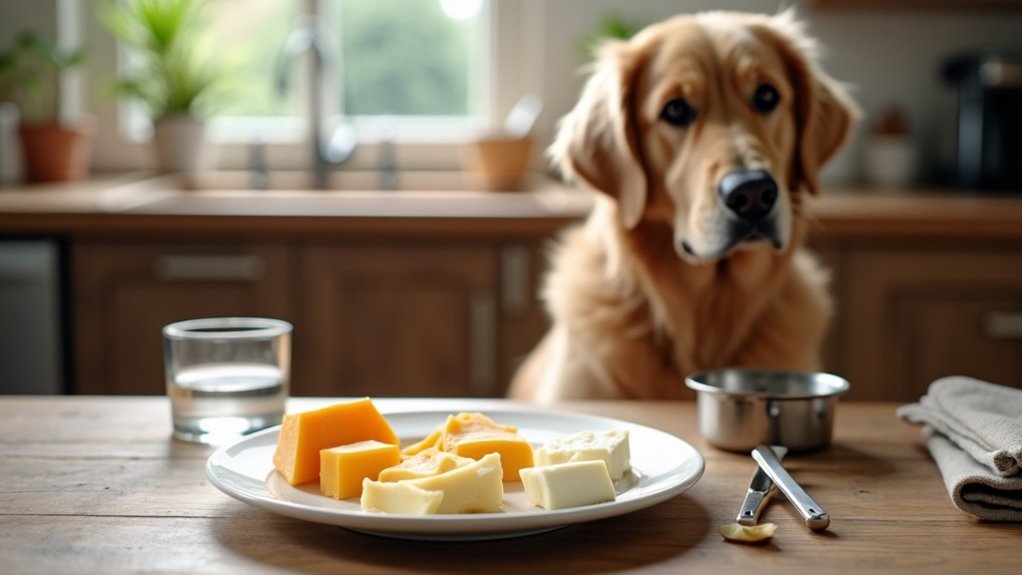

Yes—dogs can eat cheese in modest amounts. About 60% of dogs have some food sensitivity, so small portions matter. Cheese works well as a tasty treat or to hide medication, but watch fat, lactose, and added ingredients that can cause stomach upset or longer-term issues. Hard, low-lactose cheeses like cheddar or Swiss are generally safer than soft, high-lactose varieties. This guide explains safe portion sizes, which cheeses to prefer, and which ingredients to avoid.
Can Dogs Eat Cheese Safely?
Yes, dogs can eat cheese safely in many cases, but only in small amounts and only provided your dog handles dairy well. You should treat it as an occasional snack, not a daily habit, because cheese myths can make it sound safer than it is.
In case your dog gets gassy, throws up, or has loose stool, stop right away. You’ll also want to skip cheese for dogs with dairy allergies, sensitive stomachs, or a history of pancreatitis.
Plain, low-lactose choices often fit better than rich, flavored kinds. This matters because cultural feeding can tempt you to share from your plate, but your dog’s body still sets the rules.
Whenever you’re unsure, start with a tiny trial bite and watch closely for any reaction.
Why Cheese Can Be a Good Dog Treat
Cheese can be a surprisingly handy treat for your dog because a tiny bite can go a long way. You can use it to match your dog’s flavor preferences, which helps training feel fun and rewarding.
Because many dogs love the smell and taste, cheese often grabs attention fast, even during squirrels or toys seem more exciting. It also works well for hiding medicine, since a soft piece can wrap around a pill with less fuss.
Whilst you pay attention to serving presentation, you can offer small cubes or thin bits that feel special without overdoing it. That little extra care helps your dog feel included, and it turns simple moments into shared wins.
When Cheese Is Unsafe for Dogs
Some cheeses can be unsafe for your dog, even in case a small amount seems harmless initially.
Moldy cheese is a big concern because it can upset your dog’s stomach and, in some cases, cause more serious problems.
You also need to watch for lactose intolerance, since signs like gas, diarrhea, or vomiting can show up subsequent to your dog eats cheese.
Moldy Cheese Risks
Spotting mold on a cheese snack is your cue to stop and think twice, because moldy cheese can be unsafe for dogs in a way fresh cheese usually isn’t.
Those fuzzy patches might carry mold spores and compounds that upset your dog’s body. Some molds also affect toxin metabolism, which can make a small nibble feel like a bigger problem later.
In the event your dog grabs blue cheese or any spoiled piece, stay calm and take the cheese away fast. Then watch for odd behavior, even should your dog seem fine at the outset.
Your safest move is to skip moldy scraps completely and choose a plain, fresh treat instead. That simple habit helps you protect your dog and keeps snack time in your shared routine.
Lactose Intolerance Signs
Should your dog get upset after eating cheese, lactose intolerance could be the reason. You might notice loose stool, gas, belly noises, or vomiting within a few hours. Should your pup seems better when dairy disappears, that clue matters.
| Sign | What it could mean |
|---|---|
| Diarrhea | The gut microbiome might struggle with lactose |
| Gas or bloating | Cheese is passing through poorly |
| Vomiting | Your dog could need lactose testing |
You’re not alone should this feels worrying. Many dogs simply need less dairy, or none at all. Should signs keep returning, skip cheese and call your vet. They can check for lactose intolerance, dairy allergy, or another issue. With the right plan, you can keep treats safe and still help your dog feel like part of the snack squad.
Signs Your Dog Is Lactose Intolerant
Provided cheese doesn’t sit well with your dog, the signs usually show up pretty fast. You could notice loose stools, extra gas, or a sudden need to go outside. Some dogs also drool, lick their lips, or seem restless after eating. Should your pup’s belly rumbles, seems crampy, or he turns away from food, that matters too.
A quick change in gut microbes can upset digestion and make breath odor stronger than usual. Vomiting can happen after a bigger serving, and that’s a clear sign to pause cheese for now. Watch for repeated symptoms each time you offer it, because that pattern tells you more than one bad day. Were the reaction to feel strong, call your vet and keep your buddy comfy.
Safest Cheeses for Dogs
As you pick cheese for your dog, begin with plain, low-fat options that are easier on the stomach.
Mild choices like cottage cheese, mozzarella, and a little parmesan can be better picks because they’re usually lower in lactose.
Even so, you’ll want to offer only a small bite initially so you can see how your dog handles it.
Low-Fat Cheese Options
Provided that you want to share cheese with your dog, low-fat choices are usually the gentlest place to start. You can keep treats light and still make your pup feel included. | Cheese | Why it works |
| — | — |
|---|---|
| low fat ricotta | soft, lower in fat, easy to portion |
| reduced fat cheddar | familiar taste, small amounts feel special |
| plain cottage cheese | gentle for many dogs, should they tolerate dairy |
| part-skim mozzarella | simple, mild, and easy to dice |
Start with a tiny taste, then watch for gas or loose stool. In case your dog does well, you can use these cheeses for training or pill hiding. Keep portions small, because even safer cheese can add calories fast. Whenever you choose plain, low-fat options, you help your dog join in without upsetting that happy, shared moment.
Best Mild Cheeses
In case you’ve already picked a low-fat option, you’re on the right track, and now it helps to know which mild cheeses are usually the easiest on your dog’s stomach.
You can usually reach for plain mozzarella, cottage cheese, or a little parmesan, since these have softer flavors and often gentler aging effects. These choices work well for mild flavor pairings, like tucking a tiny piece into a pill pocket or using a crumb during training. Still, you should choose plain, unsalted cheese without garlic, onion, or spices.
Because every dog’s tummy is different, start with a small taste and watch for gas, loose stool, or vomiting. In the event your dog does well, keep cheese as an occasional treat, not a habit.
Cheeses Dogs Should Avoid
Some cheeses are much safer for dogs than others, but a few should stay off the menu completely. Blue cheese tops the list because its mold can trigger vomiting, diarrhea, fever, and even seizures.
You ought to also skip flavored or processed cheeses with onion, garlic, herbs, or extra seasoning. These artisanal hazards can hide in fancy snacks, and some international varieties might sound harmless but still upset your dog’s stomach.
Provided your dog has a dairy allergy, lactose trouble, or a sensitive belly, cheese isn’t the right treat. Even plain cheese can bother some dogs, so watch for gas, loose stool, or discomfort after a tiny taste.
In situations of doubt, choose a safer reward and keep your pup in the good-cheese club.
How Much Cheese Can Dogs Eat?
Most dogs only need a tiny amount of cheese, because even a tasty bite can add up fast. Consider it as a special treat, not a snack you hand out freely. Keep portions small, then watch how your dog handles it.
Should your pup stays comfortable, you can use cheese for training or to hide medicine, but keep portion timing spaced out. For most dogs, a little cheese should fit inside calorie tracking for the day, especially in case you already offer other treats.
In the event your dog has a sensitive stomach, start with just a tiny trial bite. Plain, simple cheese works best, and you’ll protect your dog’s belly while still sharing something that feels rewarding and fun.
Cheese Portion Sizes by Dog Weight
Your dog’s weight helps you figure out how much cheese is a safe treat, because a tiny pup needs far less than a big dog.
Small dogs usually do best with just a few tiny bites, while medium and large dogs can handle a little more.
Even then, you’ll want to keep cheese treats rare and small so your dog stays happy and comfy.
Portion Guide By Weight
Whenever it comes to cheese, portion size really matters, and a tiny dog needs far less than a big one. You can use simple portion variations and calorie calculations to keep treats safe and fair. Start with a pea-sized piece, then watch how your dog handles it. Should your dog do well, you can stay with a tiny bite or two.
- Use a small cube for training moments.
- Cut each piece into mini-bites.
- Count cheese as part of daily calories.
- Offer it only as an occasional snack.
That way, you help your dog enjoy the treat without crowding out healthier food. Small, careful servings also make it easier for you to notice what feels right for your dog’s body and tummy.
Small, Medium, Large Dogs
Provided you match cheese to your dog’s size, you can keep treats safer and easier on the stomach. For portion control, reckon small and steady, not generous.
| Dog size | Cheese amount |
|---|---|
| Small | 1 to 2 tiny bites |
| Medium | 2 to 3 bites |
| Large | 1 small cube, split |
Small dogs need the least, since breed differences and body size change how fast calories add up. Medium dogs can usually handle a little more, but only as an occasional reward. Large dogs might get a slightly bigger piece, yet you should still keep it rare. In case you’re training, use cheese as a quick, happy reward, then stop. That way, you fit in with your dog’s needs, protect digestion, and keep treats special instead of routine.
Using Cheese for Dog Training Treats
Cheese can be a very handy training treat whenever you use it the right way, especially because many dogs get excited about its smell and taste.
You can keep sessions fun by using tiny bits, creative textures, and smart training timing so your dog stays focused without getting stuffed.
- Cut cheese into pea-size pieces
- Use plain, low-lactose options whenever you can
- Reward right after the behavior you want
- Save cheese for special wins, not every cue
That way, you build trust and make your dog feel like part of the team.
In case your dog loses interest, switch treats and come back later.
A little cheese can go a long way, and that makes training feel rewarding for both of you.
Using Cheese to Give Dog Medicine
Tuck a tiny piece of plain cheese around your dog’s medicine, and you can often turn a stressful moment into an easier one. You can press the pill into soft cheese, then shape it so your dog swallows it fast.
Should you need extra help, try pill pockets or a small smear for dosage masking, which can hide the taste without much fuss. Keep the piece tiny, because too much cheese can upset sensitive stomachs.
Also, use plain cheese only, since flavored kinds might include ingredients your dog shouldn’t have. In case your dog spits it out, stay calm and try again with a smaller bit.
With patience, you can make medicine time feel less tense for both of you.
Healthy Cheese Alternatives for Dogs
In case you want to give your dog a safer snack than cheese, try plain, simple options that are gentle on the stomach and easy to control. You can keep snack time friendly and still feel like you’re choosing well for your pack.
- Plain cooked chicken
- Tiny carrot coins
- A spoon of plain yogurt provided your dog handles dairy
- Homemade ricotta in a very small amount, or Goat alternatives like goat milk yogurt
These choices can fit training, pill hiding, or calm treat moments without the extra salt and fat found in many cheeses. Should your dog have a sensitive belly, start with a tiny taste and watch how they do.
That way, you stay in tune with your dog’s needs and keep snack time positive, simple, and shared.
What to Do If Your Dog Eats Too Much Cheese
Provided that your dog got into too much cheese, stay calm and act fast, because most cases are manageable with a little attention. To begin, remove the cheese and check whether it was plain or had onion, garlic, or blue mold.
Next, offer fresh water and watch for vomiting, diarrhea, or other stomach upset. These emergency measures help you spot trouble early on.
Then start bathroom monitoring so you can track how often your dog pees and poops. In the event you see dehydration signs, such as dry gums, weakness, or sunken eyes, call your vet right away.
A quick vet contact matters more should your dog be small, have pancreatitis, or seem very uncomfortable. With steady care, you can help your buddy feel better fast.
Frequently Asked Questions
Can Puppies Eat Cheese Safely?
Yes, you can give puppies cheese safely in tiny amounts because apparently every tiny gourmet needs a prize. Check lactose tolerance initially, use it for puppy training, and stop should you notice upset.
Is Cheese Okay for Dogs With Diarrhea?
No. Do not give cheese while your dog has diarrhea. If you suspect lactose intolerance, skip dairy and offer a bland diet instead. This will help calm your dog’s stomach and support recovery.
Can Dogs Eat Cheese Every Day?
No, you shouldn’t feed your dog cheese every day. Keep it in daily moderation and only provide it if your pup shows good lactose tolerance. This lets you fit treats into their routine without upsetting their tummy or causing weight gain.
Is String Cheese Safe for Dogs?
Yes, you can give your dog string cheese in small amounts if they tolerate lactose well. Choose plain, not flavored varieties, and give it only as an occasional treat to avoid stomach upset.
Should Dogs Avoid Cheese if They Have Pancreatitis?
Yes, you should avoid giving your dog cheese if they have pancreatitis. Even a small bite can trigger problems, and many dogs with dairy intolerance react poorly. The fat in cheese can worsen flare ups, so choose safer treats.