
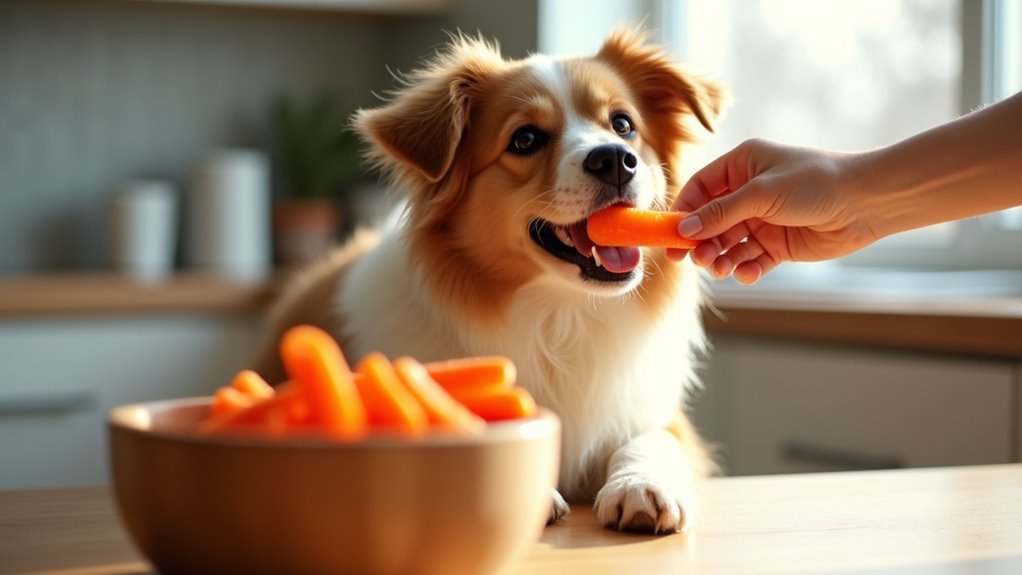

Yes — carrots are safe and healthy for most dogs. Raw carrots offer low-calorie crunch and help clean teeth, while cooked carrots are easier to chew and digest for older or smaller dogs. Carrots supply vitamin A, fiber, and antioxidants that support vision and gut health. Limit portions to avoid excess sugar and introduce new servings gradually to spot sensitivities. Always cut carrots into appropriate sizes to prevent choking and skip any seasonings, oils, or additives.
Can Dogs Eat Carrots?
Yes, dogs can eat carrots, and for many pups, they make a smart, crunchy snack. You can feel good sharing a plain carrot because it’s non-toxic and easy to find.
Still, you should watch for carrot allergies, since any treat can bother a sensitive dog. Start with a small piece, then check how your dog acts after eating. Use portion tracking so you keep treats small and don’t crowd out regular food.
Cut raw carrots into bite-size pieces, or soften them provided your dog chews fast. Always skip seasoning, glaze, salt, onion, and garlic.
Should you be unsure, ask your vet, especially whenever your dog has tummy issues or a special diet.
Benefits of Carrots for Dogs
Carrots can do more than add a little crunch to your dog’s snack time. You give your pup a simple treat that supports eye health, thanks to beta-carotene and vitamin A. That matters whenever you want your dog to keep up with every walk, game, and backyard zoomie.
Carrots also bring antioxidant support, which helps protect cells from daily wear. Plus, their fiber can help your dog’s gut microbiome stay in better balance, so digestion feels easier and more comfortable.
- Bright orange slices in a happy bowl
- Tiny bite-size pieces for enthusiastic noses
- A cool, crisp treat after playtime
Whenever you choose carrots, you’re offering a familiar snack that fits into your routine and helps your dog feel cared for.
Raw vs. Cooked Carrots
Should you give your dog raw carrots, you’ll notice a crisp crunch that many dogs enjoy and that can also help slow down fast chewing. Cooked carrots feel softer, so they might suit older dogs, small dogs, or pups with sensitive teeth better. Either way, you’ll want to keep them plain and serve them in small, safe pieces.
Raw Carrot Crunch
A fresh carrot crunch can be a great snack for many dogs, and the raw-versus-cooked choice mostly comes down to safety, chewing ability, and what your dog likes. Whenever you offer a raw carrot, you give your buddy a crisp texture and a little garden freshness that can feel fun and rewarding.
- Bright orange sticks on a clean bowl
- Tiny bite-size pieces beside a wagging tail
- A happy dog working on a crunchy treat
You should wash the carrot well, then cut it into thin slices or small chunks so your dog can chew it safely. This helps you share a simple treat that fits into your routine and feels good to give. Raw carrots can work well as a light reward, especially whenever you want something plain, tasty, and easy to carry on walks or training days.
Cooked Carrot Softness
Warming the bite can make carrot time easier for some dogs, especially whilst your pup has a weak jaw, sensitive teeth, or a habit of gulping food too fast.
Whenever you compare raw and cooked carrots, the texture comparison matters most. Raw carrots stay crisp, while cooked ones turn softer and gentler on the mouth.
That softer feel can help you share a snack with more ease, and it could also support slower chewing. Cooked carrots hold more moisture levels, so they can feel easier to swallow and less scratchy for picky eaters.
You should still serve plain pieces, cut small, so your dog stays safe. Steam or boil them without salt, butter, onion, or garlic. Keep portions modest, and use carrots as a tasty treat, not dinner.
How Many Carrots Can Dogs Eat?
- Bright orange coins in a bowl
- A happy nose leaning in
- Crunchy pieces in a training pouch
Start small, then watch your dog’s tummy and energy. In the event your dog does well, you can keep carrots as a friendly snack that fits your pack’s routine without crowding out meals.
How to Serve Carrots Safely
To keep carrot snacks safe, focus on size, shape, and plain prep before you hand them over.
Initially, wash thoroughly to remove dirt and residue, then peel when necessary.
Next, cut carrots into thin slices or bite-size pieces so your dog can chew them without stress.
In case you choose to cook them, steam or boil them until they’re soft, and skip salt, oils, and seasoning.
Keep portion control in mind, too, because carrots should stay a small part of your dog’s day.
A few pieces can feel like a special shared moment, but too much can upset the stomach.
Also, watch your dog while they eat, especially when they like to gulp food.
Carrot Treat Ideas for Training
Whenever you use carrots for training, bite-sized pieces work best because your dog can chew them fast and stay focused.
You can also make easy homemade cubes by chopping or lightly cooking plain carrots into tiny reward-ready bits.
Keep a few quick pieces in your pocket or treat pouch, and you’ll have a simple reward that feels fresh without piling on extra calories.
Bite-Sized Training Treats
Tiny carrot pieces can make training feel easier for both you and your dog. You get quick rewards, and your dog stays focused without feeling stuffed. For portion control, cut carrots into pea-size bits and keep a small stash ready in a pocket or treat pouch. That way, you can praise good behavior fast and keep the session moving.
- Bright orange coins on your palm
- Crisp bites that snap softly
- Little rewards after a happy sit
You can also try texture variations, like raw slivers for crunch or lightly steamed pieces for a softer chew. Both can fit your routine provided your dog likes them. Keep each piece plain, fresh, and small, so you build trust with every treat and keep your training crew cheering along.
Easy Homemade Cubes
Freezing carrot cubes can make treat time simple, tidy, and a little more fun for both of you.
You can blend peeled carrots with water or a little flavored water, then pour the mix into an ice tray.
After freezing cubes, you get neat little rewards that feel special and stay easy to grab.
Should your dog likes a cooler crunch, these cubes can help you create a calm training moment at home.
Keep each cube small, so your dog can chew safely and enjoy the taste without rushing.
You can also mix in plain broth should you want extra interest, as long as it has no salt or onion.
With a few trays ready, you’ll always have a cheerful reward waiting.
Quick Reward Tips
Carrot treats can make training feel easier, because your dog gets a fast reward without a lot of extra calories.
- Dice a washed carrot into tiny coins for quick rewards.
- Keep a few steamed bits in a pouch for training hacks on the go.
- Use crunchy raw slivers when your dog needs a cheerful, one-bite win.
You’ll help your dog stay focused once you pair each cue with a small carrot piece right away. That fast timing builds trust and keeps the lesson moving.
Suppose your dog gulps food, make the pieces smaller so you both stay safe and calm. You can also mix raw and cooked carrots to match your dog’s taste.
With simple carrot treats, you’re not just teaching manners, you’re joining your dog in a routine that feels fun, kind, and easy to repeat each day.
When Carrots Are a Bad Idea
Even though carrots are usually a safe snack, they can be a bad idea should your dog has trouble chewing, tends to gulp food, or has a sensitive stomach.
In case your pup has cloudy teeth, jaw pain, or past dental damage, hard raw pieces can make things worse. You should also pause in the event you notice vomiting, loose stool, itching, or other allergic reactions after a new bite. In those cases, stop the treat and check in with your vet.
Even a healthy dog can struggle whenever you offer too much, too fast, or in pieces that are too large. So, stay alert, keep portions tiny, and make sure your buddy feels comfortable and included at snack time. That way, you protect their belly, mouth, and trust.
Other Safe Vegetables for Dogs
Provided you’re looking to build out your dog’s snack list, a few other vegetables can fit nicely beside carrots. You can lean on simple options that feel like part of the family, not a random extra.
Try these:
- Green beans: crisp, low-calorie, and easy to serve plain
- Sweet potatoes: soft, warm, and comforting when cooked
- Peas: small bites that can slip into a meal or treat pouch
You should always wash, cook, or chop them as needed, then skip salt, butter, and seasoning. That way, your dog gets a snack that’s gentle and satisfying.
Provided you keep portions small, you’ll give your pup variety without crowding out a balanced diet. That little bit of veggie joy can make snack time feel shared and special.
Frequently Asked Questions
Can Puppies Eat Carrots Safely?
Yes, you can feed puppies carrots safely, so start with tiny plain pieces. You’ll want puppy portioning and texture progression to match their chewing skills, and carrots should stay just a small treat, never a meal.
Do Carrots Help Clean Dogs’ Teeth?
Yes, they can help a little. If you let your dog crunch raw carrot pieces, the chewing abrasion might aid plaque reduction, but it will not replace brushing or veterinary dental care.
Can Dogs Eat Carrot Tops or Leaves?
You should not feed your dog carrot tops or leaves. They can irritate the stomach and may carry toxins or garden pesticide residues. Stick with washed plain carrot roots and consult your vet if you are unsure.
Are Frozen Carrots Safe for Teething Dogs?
Yes, you can give your teething dog frozen carrots as frozen chews provided they are plain, washed, and bite sized. They offer soothing textures, but supervise closely to avoid choking and keep portions small.
Can Diabetic Dogs Have Carrots?
Yes, you can usually offer diabetic dogs carrots in tiny amounts; their glycemic impact is modest. For diabetic management, you would count them as treats, not staples. They are a tiny, crunchy win for your pup.