

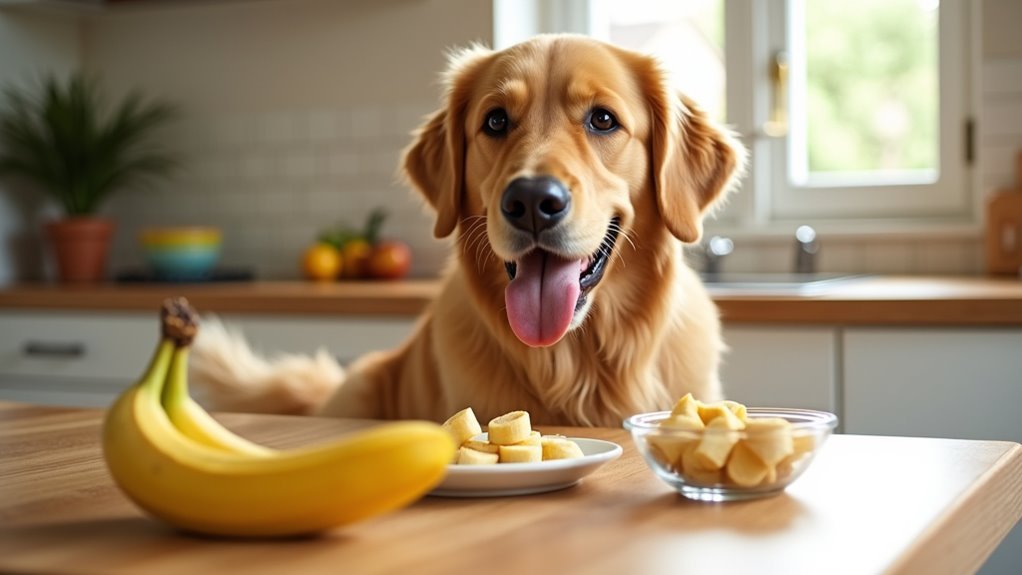

Yes — dogs can eat bananas in small amounts. Bananas provide fiber, potassium, vitamin B6, and vitamin C that support digestion and overall health. Sugar content is relatively high, so servings should be limited to avoid weight gain and blood sugar spikes. Always serve peeled, plain banana slices to reduce choking and digestive upset. Watch for vomiting, diarrhea, or unusual behavior after feeding and stop feeding if such signs appear.
Can Dogs Eat Bananas Safely?
Yes, dogs can eat bananas safely provided you give them plain, ripe pieces in moderation. You can feel good sharing a little with your pup, as long as you skip the peel and any extra sugar. Begin with small bits, since banana slicing helps you control size and keeps chewing easy.
In case you want to use them for training rewards, keep the pieces tiny so your dog stays focused and doesn’t fill up too fast. Bananas should stay as an occasional treat, not a big snack, so they fit within a balanced diet. Watch your dog after the initial taste, because some pups handle new foods better than others.
Should your dog have a sensitive stomach, go slow and choose only fresh banana.
Banana Benefits for Dogs
Bananas can do more than just make your dog happy for a second. You can use them as training rewards, and that small taste often keeps your pup focused and enthusiastic.
Since they’re soft and easy to chew, they work well for older dogs, puppies, and dogs with sensitive mouths. You might also like that bananas can add gentle support for digestion, because some dogs handle them well and benefit from their natural fiber and digestive enzymes.
In a calm routine, a few tiny bites can feel like a shared win between you and your dog. They can also make treat time feel special without turning every snack into a big event. That balance helps you bond while keeping your dog’s treat routine simple and joyful.
Banana Nutrition for Dogs
You’ll find that bananas bring a mix of potassium, vitamin B6, vitamin C, fiber, and magnesium, so they offer more than just sweetness.
These nutrients can support your dog’s heart, muscles, digestion, and bone health, but the fruit also comes with natural sugar and calories. That’s why you’ll want to keep portions small and treat bananas as an occasional snack, not a daily staple.
Banana Nutrients Overview
A ripe banana can look like a simple snack, but it carries a mix of nutrients that can add a little extra support should you share it with your dog in small amounts. You’ll find fiber, natural sugar, and banana antioxidants inside each soft slice.
Fiber can help move food along, while sugar breakdown gives quick energy without needing a big meal. The antioxidants also help protect cells during everyday wear and tear.
Since bananas aren’t complete food, you should treat them as a small add-on, not a staple. That way, you give your dog a tasty bite that fits nicely with a balanced diet.
Keep portions modest, and you’ll make snack time feel caring, calm, and safe for your buddy.
Key Vitamins And Minerals
The real value in a banana comes from its vitamins and minerals, and that’s where this fruit can offer a little extra support for your dog.
You’re not just sharing a sweet bite. You’re giving a small mix of nutrients that fit into a healthy routine.
Potassium helps your dog’s heart and muscles, while vitamin B6 and vitamin C add general support.
Magnesium benefits also matter because they help with bone growth and protein use.
- banana electrolytes can help replace what your dog uses during play.
- Small amounts of fiber can support gentle digestion.
- These nutrients work best whenever you keep banana treats occasional.
That’s why a few plain pieces can feel like a smart, caring choice for your pack.
Calorie And Sugar Content
Bananas may bring helpful nutrients, but they also come with sugar and calories that you need to keep in check.
Whenever you give your dog a slice, consider about the sugar breakdown initially: most of it comes from natural fruit sugar, not fiber. That means the sweet taste can still add up fast.
In a quick calorie comparison, banana has more calories than many crunchy treats, so a little goes a long way.
You can keep your dog included at snack time by offering only a few small pieces, especially supposing your pup is small or less active.
Should you use banana often, it can crowd out healthier foods and nudge weight upward. So, treat it like a tiny bonus, not a daily habit.
How Much Banana Can Dogs Have?
Usually, how much banana your dog can have depends on size, age, and general diet, so it helps to start small and keep it simple. For most dogs, banana should stay as an occasional treat, not a big snack. Keep it under 10% of daily calories, and cut it into tiny pieces for safer sharing.
- Small dogs: a few slices
- Medium dogs: a small handful
- Large dogs: about half a banana
Provided you employ it for training rewards, a little goes a long way. Seasonal availability can make bananas easy to keep on hand, but don’t let that turn them into a daily habit. Watch your dog for tummy trouble, and in the event your pup has kidney disease, skip bananas and ask your vet instead.
Can Dogs Eat Banana Peels?
In case you’ve already learned how much banana is safe, you could be curious about the peel too, and that’s where the answer gets a lot less dog-friendly.
You should skip banana peels because your dog might choke on their tough, slippery skin, and the fiber can upset a sensitive stomach.
Some peels also carry peel toxicity risks from pesticides, dirt, or mold, so they’re not a smart snack for your pack.
Should your dog grabs a tiny bite, stay calm and watch for vomiting, coughing, or belly pain. Then offer fresh water and call your vet were you worried.
For a safer habit, save the peel for peel composting and give your dog only the soft fruit inside. That way, you keep snack time simple, safe, and welcoming for everyone.
Can Puppies Eat Bananas?
Yes, puppies can eat bananas, but only in tiny amounts and only as an occasional treat. You can offer a few soft slices during puppy teething, since the cool texture might feel nice on sore gums. Still, your puppy’s digestive development is still maturing, so start small and watch closely.
- Give plain banana, cut into tiny pieces.
- Keep it rare, not part of daily meals.
- Stop when you notice loose stool or discomfort.
Bananas bring a little fiber and natural sweetness, but your puppy doesn’t need much. You want treats that fit your pup’s growing body and help you feel confident at snack time. So, share banana like a tiny team reward, not a habit.
When Bananas Aren’t Safe for Dogs
Bananas are usually safe for your dog, but they’re not the right choice for every pup.
In case your dog gets an upset stomach, gas, vomiting, or loose stools after eating banana, you should stop serving it and watch closely. You also need to be careful with the sugar, because too much banana can add extra calories and isn’t a good fit for dogs that need tight weight control or have certain health issues.
Signs Of Intolerance
- Stop the treat right away.
- Offer fresh water and keep things calm.
- Call your vet in case signs last, worsen, or your dog seems very uncomfortable.
Should your dog feels better after skipping bananas, you’ve likely found the issue.
High-Sugar Risks
Whenever bananas turn into more than a small treat, the sugar and calories can start to work against your dog’s health.
In case you give too much, you might see sugar spikes that leave your pup extra hungry, restless, or sluggish later.
Over time, that extra sugar can add pounds and crowd out the balanced food your dog needs every day.
It can also raise the chance of dental decay, especially provided banana bits stick around on teeth.
So, keep banana servings tiny and occasional, even though your dog begs with those hopeful eyes.
In the event your dog has diabetes, weight issues, or a sensitive mouth, talk with your vet before offering any banana.
A few slices can fit safely, but a whole banana can cross the line fast.
Signs Your Dog Ate Too Much Banana
Should your dog get into too much banana, you could notice a few clear warning signs pretty quickly. You might see tummy rumbling, loose stool, or a sudden lack of interest in food.
A little overeating behavior can also make your dog seem bloated, restless, or extra gassy. In case your pup ate a large amount, watch for these signs:
- Vomiting or soft stool
- Swollen belly or discomfort
- Low energy or unusual thirst
These changes can happen because too much banana can upset digestion and, in rare cases, affect fluid balance with an electrolyte imbalance. You know your dog best, so trust that instinct. Should the symptoms linger, get worse, or your dog seems painful, call your vet for guidance.
How to Serve Bananas to Dogs Safely
To serve bananas safely, start with the simplest form you can offer: plain, ripe banana in small pieces. You can peel it initially, then give peeled slices or frozen chunks for a cool treat. Keep portions tiny, so banana stays a treat, not a meal.
| Step | What you do |
|---|---|
| 1 | Wash your hands |
| 2 | Peel the banana |
| 3 | Cut small pieces |
| 4 | Offer a few bites |
| 5 | Watch your dog |
When you initially share it, stay close and notice how your dog responds. Should your buddy handle it well, you can keep using banana now and then. Skip added sugar, spices, and mixes. Also, fit banana into your dog’s daily treats so you both stay on track.
Can Dogs Eat Banana Chips?
Banana chips could look like a quick treat, but you’ll want to check the ingredient list initially because some brands add sugar, oil, or flavorings that aren’t dog-friendly.
Even plain chips can be easy to overfeed, so a tiny amount matters a lot more than a full handful.
Should you want a gentler option, fresh banana slices usually make a safer snack for your dog.
Banana Chip Ingredients
Many banana chips look simple, but the ingredient list can change everything for your dog. You want plain fruit, not a snack dressed up with sugar or oil. Watch for preservative concerns, because some brands add extras your pup doesn’t need. Also notice texture variations; crunchy chips may come from frying, while softer ones may still hide sweeteners.
- Choose bananas only.
- Skip added salt, syrup, and flavors.
- Check for coconut oil or sulfur.
If you’re sharing a bite, read every line with care. Your dog fits best with treats that stay close to nature, and that feels good for both of you. Whenever the bag looks clean and simple, you can feel more at ease and keep snack time friendly.
Portion Size Matters
A few tiny banana chip pieces can be enough for your dog, because portion size matters just as much as the ingredient list.
Whenever you share chips, keep portion sizes small so you don’t crowd out a balanced diet.
For most dogs, a little goes a long way, and feeding frequency should stay occasional, not daily.
You can offer one or two thin pieces as a treat after a walk or training session, then watch how your dog handles them.
Should your dog be small, young, or sensitive, scale back even more.
Larger dogs could handle a bit more, but moderation still keeps things safe.
That way, you and your pup can enjoy snack time without turning it into a sugar-heavy habit.
Safer Snack Alternatives
Should you want a safer crunch for your dog, banana chips need a careful look before you toss them in the bowl. Many chips are fried, sweetened, or coated with extra oil, so they’re not the best fit for your pack. In case you want healthy swaps, try fresh banana slices, apple pieces without seeds, or plain pumpkin bits.
For crunchy alternatives, you can also use dehydrated carrots or frozen blueberries in tiny portions.
- Check the label for added sugar.
- Skip chips with chocolate or spices.
- Offer small bites initially and watch your dog.
When you keep treats simple, you help your dog feel included without upsetting their stomach. That makes snack time calmer, safer, and a lot more fun for both of you.
Banana Treat Recipes for Dogs
Should you want to make banana treats for your dog, the best recipes stay simple, safe, and easy on the stomach.
You can mash ripe banana with plain pumpkin or unsweetened yogurt, then freeze spoonfuls into tiny bites.
For a cooler option, offer frozen slices after you peel and cut them small.
In case you want a softer treat, blend banana with a little water into a smooth banana mousse and serve just a dab.
Start with one small piece and watch your dog for any upset.
Keep treats occasional, because even sweet fruits can add up.
Through keeping portions tiny, you help your dog enjoy a fun snack and still stay part of your healthy routine.
Bananas vs. Dog-Safe Fruits
Whenever you compare bananas with other dog-safe fruits, you’ll see that bananas sit in a middle ground: they’re gentle, easy to serve, and usually well tolerated, but they’re also sweeter and more calorie dense than many people expect.
If you want a simple snack, you can line up tropical comparisons like mango or pineapple with milder picks like apple or blueberry.
- Bananas bring potassium and fiber.
- Apples offer crunch and less sugar.
- Blueberries fit well whenever seasonal availability shifts.
Because you’re choosing treats for your dog’s daily rhythm, bananas work best in small pieces, while berries or apple slices can stretch a little farther.
When to Ask Your Vet
Should your dog has a sensitive stomach, a health condition, or a history of food troubles, it’s smart to check with your vet before making bananas a regular treat.
A quick veterinary consultation can help you protect your dog and feel more confident.
In the event your dog has kidney disease, diabetes, or weight concerns, your vet might suggest a different plan.
You should also ask about medication interactions, since some health issues and medicines can change how your dog handles extra potassium or sugar.
Should your dog vomits, gets loose stool, or seems itchy after a bite, stop and call your vet.
Whenever you talk with them, you’re not overreacting. You’re caring like a good pack member, and that matters for every wag and meal.
Safe Fruit Treats for Dogs
A few safe fruit treats can make snack time feel special for your dog, and bananas are one of the easiest options to use well.
You can also rotate in seasonal fruits like apple slices or blueberries, so your pup feels included at treat time. To keep things simple, try this:
- Cut fruit into tiny pieces.
- Offer only plain, fresh fruit.
- Use small bites as training treats.
Bananas work best whenever you keep them modest, since too much sugar can crowd out balanced food.
Should your dog be small, start with just a slice or two and watch how they do.
This gentle approach helps you share safe, happy moments without turning fruit into a full-time snack.
Frequently Asked Questions
Can Dogs Eat Frozen Bananas?
Yes, you can give your dog frozen bananas as frozen treats in moderation. The texture changes make them fun, but keep pieces small, avoid the peel, and watch for stomach upset or too much sugar.
Can Bananas Help Dogs With Constipation?
Possibly, though you should act cautiously and examine your dog gently: bananas’ fiber content can support stool, and a potassium increase helps general health. Offer small plain pieces since too much can upset your dog.
Do Bananas Cause Diarrhea in Dogs?
Yes, bananas can cause diarrhea in your dog if you overfeed them or your dog has a sensitivity to bananas. Start with tiny pieces, watch for digestive upset, and keep treats small so your pup stays comfortable.
Can Diabetic Dogs Have Bananas?
No, you should not give diabetic dogs bananas unless your vet approves; bananas can raise blood sugar. If you do offer them, use strict portion control and tiny plain pieces, and track your dog’s glucose closely.
Are Banana Seeds Safe for Dogs?
No, you shouldn’t worry about banana seeds causing banana toxicity; small amounts usually pass harmlessly. Still, avoid seed ingestion whenever possible, and keep your dog on plain banana pieces to stay safe and included.