

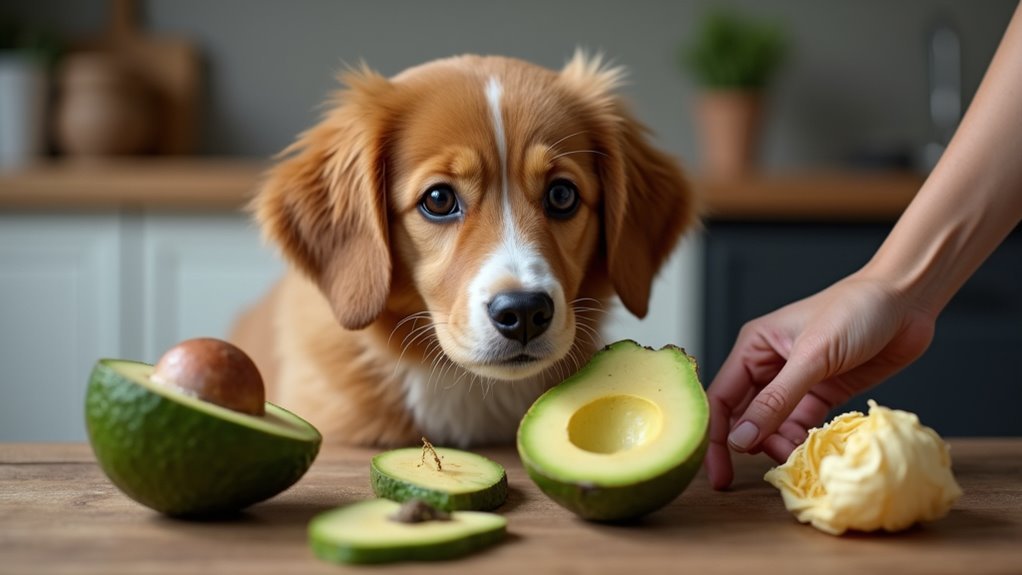

Yes — plain avocado flesh can be safe for some dogs in very small quantities. Avocado skin, pit, and leaves contain compounds and physical hazards that can harm pets. The pit poses a choking risk and can cause intestinal blockage if swallowed. Rich, fatty avocado flesh can trigger upset stomachs or pancreatitis in sensitive dogs or after large servings. Always watch for vomiting, diarrhea, lethargy, or signs of distress after feeding any avocado.
Can Dogs Eat Avocado?
Yes, dogs can eat a small amount of plain avocado flesh, but that doesn’t mean it’s a great everyday snack.
You’ve probably heard avocado myths that make it sound harmless, yet feeding moderation matters more than hype.
In case you share a tiny bite, keep it plain and skip the pit, skin, and any extras.
Your dog’s body could handle a little flesh, but too much can upset the stomach and add extra fat your pup doesn’t need.
So, regard avocado as a rare treat, not a routine reward.
Whenever you want your dog to feel included, choose safer snacks often, and use avocado only with care.
That way, you stay kind, practical, and on your dog’s side.
Why Avocado Can Be Risky for Dogs
Avocado can be risky for your dog because persin, a natural plant toxin, can upset his stomach and make him feel sick.
Even though the flesh has less persin, the skin, pit, leaves, and stem can raise the danger fast. On top of that, avocado’s high fat content can trigger vomiting, diarrhea, and even pancreatitis in some dogs.
Persin Poisoning Risks
Although dogs are usually more resistant to persin than many other animals, avocado can still be risky because the plant’s leaves, skin, seed, bark, and pit hold the highest concern.
Whenever you look at persin biochemistry, you see why these parts matter. Persin can disturb cellular mechanisms that help cells stay stable, so your dog might react with vomiting, diarrhea, or a sore belly.
The flesh has less toxin, but it still isn’t a free pass. Should your dog chew the pit or gnaw on leaves, the risk climbs fast.
You’re not overreacting by staying careful here. A small bite could pass uneventfully, yet bigger exposure can bring trouble, and you’d want quick veterinary help once signs show up.
High-Fat Digestive Upset
Because avocado is rich and fatty, even a small serving can upset your dog’s stomach. You might notice loose stool, vomiting, or a queasy belly soon after eating it.
Whenever your dog has high fat intolerance, that rich flesh can strain lipid digestion and make mealtime rough. In case your dog already has a sensitive gut, the extra meal fat content can trigger painful pancreatic flare ups, and that’s scary for both of you.
So, provided you share food at the table, keep avocado off your dog’s plate. Plain, tiny bites could still feel risky for some dogs, especially smaller ones.
Watch for appetite loss, restlessness, or repeated tummy trouble. Should these signs show up, call your vet quickly for guidance and comfort.
Which Parts of Avocado Are Dangerous?
The tricky part is that not every piece of avocado carries the same risk for your dog. The pit, skin, leaves, stem, and bark are the parts to worry about most. They hold more persin and can also cause choking or blockage. | Part | Main concern | Why it matters |
| — | — | — |
|---|---|---|
| Pit | Choking | It can get stuck fast |
| Skin | Persin | It’s harder to digest |
| Leaves | Persin | Pet exposure can rise near trees |
| Stem | Toxin residue | Environmental residues can spread during household cleanup |
If your dog sniffs avocado pollen or licks fallen scraps, keep a close eye on them. You’re not alone in this mess, and a quick cleanup helps lower risk. The flesh is less risky, but the dangerous parts belong out of reach.
Is Avocado Flesh Safe for Dogs?
Avocado flesh is usually less risky for dogs than the pit, skin, or leaves, but that doesn’t make it a free-for-all snack. You can share a tiny taste and still keep your pup’s tummy in mind. In a nutritional comparison, avocado gives some healthy fats, yet your dog already gets balanced nutrients from regular food.
- Choose plain flesh only
- Skip salt, spices, and sauces
- Offer moderate portions, not daily treats
- Watch for vomiting or diarrhea
- Ask your vet should your dog have pancreatitis
Even a small serving can upset sensitive stomachs, so you ought to start with caution and notice how your dog reacts. Provided your dog feels fine, you’re still better off treating avocado like an occasional extra, not a habit. That way, you stay in the safe lane together.
How Much Avocado Is Too Much?
A too-full bowl can turn a harmless bite into a stomachache fast, so it helps to know where that line sits.
For most dogs, a tiny taste of plain avocado flesh is the safest place to stop. Use portion control and keep treats to about 1 teaspoon per 10 pounds of body weight, and only once in a while.
Should you offer avocado more often, the fat can stack up and upset your dog’s stomach or add extra calories. Feeding frequency matters too, because even small servings can become too much whenever they show up again and again.
In case of doubt, treat avocado like a rare snack, not a daily habit. That way, you stay in the same happy routine your dog already trusts.
Signs Your Dog Ate Too Much Avocado
Should your dog eat too much avocado, you could notice vomiting or diarrhea initially, and that can be upsetting to see.
You may also spot belly pain, like whining, pacing, or a tense stomach, especially in case your dog seems uncomfortable whenever you touch the area.
Should your dog become quiet, skip meals, or act unusually tired, those changes can signal a bigger problem and mean it’s time to call your vet.
Vomiting And Diarrhea
Watching your dog start to vomit or get diarrhea after eating avocado can feel scary, but these signs usually mean the fruit upset their stomach rather than caused a major emergency. You’re not alone in this moment, and you can help your pup feel safer by watching closely.
- Offer small sips of water for hydration management.
- Keep meals simple for a short time.
- Watch for repeated vomiting.
- Notice loose stool and energy changes.
- Call your vet should symptoms keep going.
Avocado fat can irritate the digestive microbiome, so even a small extra bite could trigger a messy tummy.
In case your dog seems bright and drinks normally, you can usually stay calm while you monitor. Should vomiting or diarrhea get worse, contact your vet so you and your dog can move forward together with confidence.
Abdominal Pain Signs
Pain in your dog’s belly can show up fast after too much avocado, and it often looks more serious than a simple tummy upset. You might see your dog tense up, hunch, or pull away whenever you touch the area. Some dogs whine, pace, or resist lying down.
A gentle abdominal massage can feel soothing, but cease should your dog flinch or stiffen. Use pain scoring to record how strong the discomfort seems, since that helps you spot changes quickly. Should your dog guards the belly, pants without reason, or seems restless after eating avocado, take it seriously. These signs can point to irritation or even a blockage should a pit was swallowed. Trust your gut and call your veterinarian soon.
Lethargy And Loss Of Appetite
A sore belly can be the initial clue, but many dogs also slow down and lose interest in food after eating too much avocado. You might notice quiet behavior, extra napping, or subtle anorexia that feels unlike your dog’s normal self. That change matters because avocado can upset the stomach and, in larger amounts, add enough fat to make your dog feel worse.
- sniffing food, then walking away
- skipping meals or eating very little
- seeming tired and withdrawn
- moving less than usual
- acting uncomfortable after treats
When you see these signs, stay calm and watch closely. Your dog could just need rest, but repeated loss of appetite or weakness warrants a call to your vet. Quick support helps you protect your buddy and keep your pack feeling safe.
What To Do If Your Dog Eats Avocado
Provided your dog just ate avocado, stay calm and act fast. Initially, check what your dog ate, how much, and whether the pit or skin was involved. Then call your vet or a pet poison line for emergency steps. While you wait, keep your dog quiet and offer fresh water. Don’t make your dog vomit unless a vet tells you to. Use this guide:
| What happened | Your move | Why it matters |
|---|---|---|
| Small bite | Watch closely | Mild upset perhaps pass |
| Large amount | Call vet now | Fat and stomach upset can build |
| Pit eaten | Go in right away | Blockage risk is serious |
| No symptoms yet | Remember time | Helps the clinic decide |
Afterward, use preventive measures via keeping avocado foods out of reach and sharing safe snacks with your pack.
Why Avocado Pit and Skin Are Dangerous
Avocado pits and skin can turn a harmless snack into a real problem for your dog. The pit is hard, round, and easy to swallow mistakenly. It can block the throat or gut, and that means urgent care. The skin is risky too because it carries persin and can cause skin abrasion while your dog chews.
- choking risk
- bowel blockage
- persin exposure
- mouth cuts
- seed germination
You belong in the careful crowd whenever you keep these parts away from your pup. Even a playful bite can lead to vomiting, pain, or a scary trip to the clinic. So, whenever you share food, choose the soft flesh only and skip the rest. That simple habit helps you protect your dog and feel more at ease.
Can Dogs Eat Avocado Oil or Guacamole?
Avocado oil might look harmless, but you should still use caution because it’s very high in fat and can upset your dog’s stomach.
Guacamole is even riskier since it often contains onion, garlic, salt, lime, or spices, and those ingredients can harm your dog.
Avocado Oil Safety
Should you’re curious about avocado oil or guacamole, the safest answer is to be careful because these foods aren’t the same as plain avocado flesh. Avocado oil might look dog friendly, but you still need to check how it’s made. Some extraction methods use heat and can change the final product, so cooking temperatures matter too.
- Oil gives no fiber
- Fat can upset tummies
- Small tastes still add calories
- Dogs need simple foods
- Your vet knows your dog best
Guacamole needs even more caution because it often includes seasonings and extras that don’t belong in your dog’s bowl. Were you to want to share something special, choose plain, tiny amounts only after your vet says yes. That way, you keep your pup in the safe circle.
Guacamole Ingredient Risks
Once you mix the ingredients, guacamole becomes a very different story from plain avocado flesh. You’re not just handling with fruit; you’re facing onion, garlic, lime, and extra salt. Those add-ons can upset your dog’s stomach or even cause harm. Check this quick guide:
| Ingredient | Risk |
|---|---|
| Onion | Toxic to dogs |
| Garlic | Toxic to dogs |
| Lime | Could irritate |
| Salt | Raises sodium content |
If your recipe includes spice, skip sharing it. Even a small lick can trigger ingredient allergies or digestive trouble in sensitive pups. Avocado oil sounds safer, but guacamole isn’t the place to trial it. You want your dog to feel included, not uncomfortable. So keep the bowl on your side, and offer a dog-safe treat instead.
Should Dogs With Health Problems Avoid Avocado?
Provided that your dog already has a health problem, it’s wise to be extra careful with avocado.
In case your pup has pre existing conditions, like pancreatitis or a sensitive stomach, even a small bite can upset the belly.
You also want to consider medication interactions, since some dogs take treatments that already strain the digestive system.
- Watch for vomiting.
- Watch for diarrhea.
- Skip the pit and skin.
- Ask your vet initially.
- Stop should symptoms start.
Because avocado is fatty, it can be harder on dogs who need gentle meals.
So, assuming you’re part of a team caring for a dog with ongoing issues, choose caution and keep things simple.
A quick vet call can help you protect your buddy with confidence.
Safer Fruit Alternatives for Dogs
Provided you want to keep snack time safe and simple, fruit can be a smart place to look. You can share small pieces of apple, blueberries, banana, melon, and strawberries with your dog. These choices give you easy, friendly options whenever you want to include your pup in the moment.
Make homemade fruitcuts with no seeds, peels, or added sugar, so you both feel good about treat time. Seasonal snacks like watermelon in summer or pear in fall can keep things fresh and fun. Just keep portions small, since your dog doesn’t need much.
Whenever you pick whole, plain fruit, you help protect your dog while still joining in on the happy snack routine.
When To Call Your Vet About Avocado
Call your vet right away should your dog ate avocado pit, skin, leaves, or a large amount of flesh, because that’s the point the risk starts to climb. Provided your dog vomits, has diarrhea, seems painful, or won’t eat, you need help fast.
- A swallowed pit can block the gut.
- Repeated vomiting requires a vet now.
- Belly swelling or straining is urgent.
- Lethargy can signal a serious problem.
- Don’t wait should symptoms worsen.
Use the emergency timeline your clinic gives you, since quick action can protect your dog from choking or pancreatitis.
In case your dog only nibbled a tiny bit of flesh and acts normal, home monitoring could be enough for now. Watch closely, keep water nearby, and call provided anything changes.
Frequently Asked Questions
Can Puppies Eat Avocado Safely?
No, you shouldn’t feed puppies avocado routinely. If you do, keep portions tiny and plain. Feeding guidelines favor caution because nutritional benefits don’t outweigh risks such as vomiting, diarrhea, or hazards from the pit and skin.
Is Avocado Bad for Dogs Every Day?
Yes, feeding avocado to your dog every day can be harmful. Offer it only in moderation and as part of a balanced diet, because too much can upset digestion, add excess fat, and crowd out healthier foods. Keep avocado occasional and plain.
Can Avocado Cause Allergies in Dogs?
Yes, avocado can provoke allergies or food sensitivities in your dog, though it is uncommon. Watch for itching, vomiting, or diarrhea. Immunotherapy research might help, but your vet should guide testing and care.
Does Cooked Avocado Change the Risk for Dogs?
Cooked avocado doesn’t really make it safer for your dog, like putting a bandage on a broken toy. You’ll still face digestion changes, and the pit, skin, and seasonings can keep the risks high.
Can Dogs Lick Avocado Seed Residue Safely?
No, you should not let your dog lick avocado seed residue. Even small amounts can carry seed toxicity and upset stomachs. Wipe it up, keep the pit away, and call your vet if your dog already licked some.