

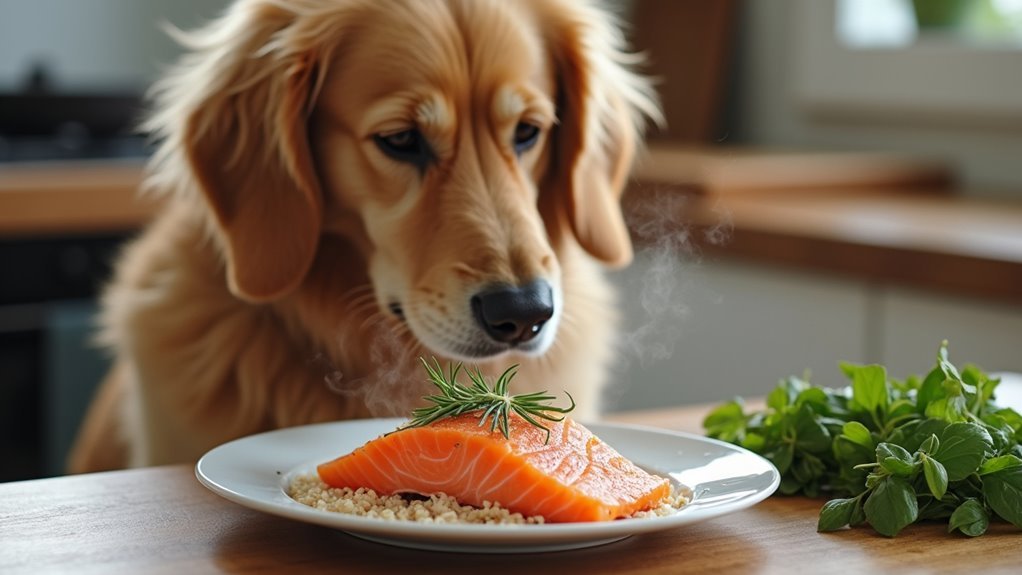

Yes — cooked, boneless salmon is safe and healthy for most dogs. It provides omega-3 fatty acids that support skin, coat, and joint health. Raw salmon, fish bones, and seasoned or oily preparations can cause illness or injury. Portion control matters: too much can upset digestion or add excess calories. Puppies, dogs with sensitivities, and dogs on certain medications should have salmon cleared by a veterinarian before adding it to their diet.
Can Dogs Eat Salmon Safely?
Yes, dogs can eat salmon safely, but only provided you serve it cooked, plain, and in small amounts.
You can feel confident whenever you choose careful salmon sourcing and skip pet owner myths that say any fish is fine.
Always remove every bone, since one tiny slip can hurt your dog.
Keep the fish fresh, and cook it fully so the center isn’t raw.
Then serve it without salt, butter, garlic, or sauce.
In case you’re adding salmon for the initial time, offer a small bite and watch how your dog reacts.
That simple step helps you stay in control and feel like you’re doing right by your buddy.
Whenever you ask, “Is this safe?” the answer depends on how you prepare it and how much you give.
Salmon Nutrition Benefits for Dogs
Salmon can offer your dog more than just a tasty meal. You give your pup a food that brings real support, not empty calories.
Its high-quality protein helps with muscle maintenance, so your dog can stay strong and active. The omega 3 benefits are another big win, because these fats help support a shiny coat, calm skin, and comfortable joints.
Salmon also provides vitamin D and B vitamins, which help your dog use energy well and keep body systems running smoothly. Whenever you add it in small amounts, you can enhance meals with flavor and nutrition at the same time.
That can make your dog feel cared for, and honestly, that feels good for you too.
How to Cook Salmon for Dogs
Upon cooking salmon for your dog, keep it plain and simple so you don’t add extra salt, oil, or spices. You can bake, steam, or poach it until it reaches 145°F, then check carefully for any bones.
A little plain cooked salmon can feel like a treat for your pup without turning dinner into a hassle.
Safe Cooking Methods
The safest way to cook salmon for your dog is to keep it simple and gentle, because plain food is usually the best choice for a sensitive stomach.
Use temperature control so the fish reaches 145°F and stays moist. You can try steam baking or foil wrapping to lock in heat without adding extras.
After cooking, let it cool, then check for bones and skin removal before you serve it. Flake the salmon into small pieces so your dog can chew it easily.
Should you be sharing for the initial time, start with a tiny portion and watch how your buddy does. This careful method helps you feel confident, and it helps your dog join family meals safely.
Simple Dog-Friendly Seasoning
For a dog-safe flavor enhancement, you can keep salmon seasoning very simple and very mild. Use plain salmon, then add a tiny sprinkle of parsley or dill provided your dog enjoys herb alternatives. Skip salt, garlic, onion, butter, and spicy blends, because they can upset your pup’s stomach.
In case you want a softer taste, you can mix in a little warm water or a spoon of plain pumpkin after cooking. That keeps the meal gentle and comforting. For a happy twist, try fruit pairings like a few blueberries on the side, not mixed in heavily. You’ll still protect the salmon’s natural flavor, and your dog gets a meal that feels special without extra risk. Always keep portions small, so your buddy stays safe and satisfied.
How Much Salmon Can Dogs Eat?
You can usually keep salmon safe for your dog through sticking to small, plain, cooked portions.
A good rule is to match the amount to your dog’s size, since a tiny dog needs far less than a big one. You should also keep salmon as an occasional treat, because too much can upset your dog’s stomach or add extra fat.
Safe Portion Sizes
Portion size matters just as much as how you cook salmon, because even a healthy food can cause trouble should your dog get too much.
You can keep things simple with portion control and calorie tracking, so the treat fits your dog’s daily needs.
For extra-small dogs, aim for 1 to 2 ounces a week. Small dogs usually do well with 2 to 3 ounces. Medium dogs can have 3 to 4 ounces, while large dogs might handle 4 to 6 ounces. Extra-large dogs can get 6 to 8 ounces.
Start with less in case your dog is new to salmon, and watch for a happy belly.
Were you unsure, consult your vet, especially in the event your pup has a sensitive stomach or weight goals.
Feeding Frequency Limits
Even though salmon is cooked and plain, it still shouldn’t show up in your dog’s bowl too often. You can keep meal frequency low, and that helps your pup enjoy the benefits without piling on risk.
For most dogs, once a week works well, and even less could suit sensitive stomachs. Should you offer salmon more often, long term exposure can raise concerns about extra fat, contaminants, and tummy trouble.
Signs Your Dog Tolerates Salmon
Often, a dog that handles salmon well will show clear, easy-to-spot signs after eating a small, plain, cooked piece. You’ll notice a balanced appetite, a happy mood, and no rush to hide from the bowl. | Sign | What You Could See |
| — | — |
|---|---|
| Appetite | Your dog eats normally |
| Stool | You see a steady stool |
| Skin | Less itch, no flare-up |
| Energy | Play stays bright |
| Belly | No gurgling or gas |
When these signs stay calm, your dog likely feels fine with salmon. You might also see a shiny coat and steady energy during walks or playtime. Still, watch your dog closely after each new serving. A good fit feels easy, not forced, and your dog’s routine stays smooth. Should your buddy seem comfortable, you are able to keep salmon as a small, shared treat.
Salmon Risks to Avoid
A dog that seems fine with a small cooked bite can still run into trouble in case the salmon is handled the wrong way. You want your pup safe, so keep a close eye on how it’s prepared and stored. Raw or undercooked fish raises parasite transmission risk, while spoiled salmon can trigger upset fast. Also, environmental contaminants can build up, so large servings aren’t a good idea.
- Bones can choke your dog or scratch the gut.
- Bad storage can bring bacteria and a nasty stomach crash.
- Heavy seasoning can irritate your dog and mask concealed spoilage.
When you share salmon, choose plain, fully cooked pieces and remove every bone. That way, you help your dog stay in the pack without worry.
Can Dogs Eat Raw Salmon?
Raw salmon isn’t a safe treat for your dog, because it can carry parasites that lead to salmon poisoning disease, and that illness can turn serious fast. You want your dog to stay in the safe circle, so skip raw salmon and choose cooked fish instead. The parasite risk is real, and raw bites can seem harmless while they hide trouble.
| Risk | What it means | Safer choice |
|---|---|---|
| Parasites | Can cause sickness | Cooked salmon |
| Bacteria | Can upset the gut | Plain, fresh fish |
| Bones | Can choke | Boneless pieces |
| Spoilage | Can make dogs ill | Fresh food |
When you share mealtime, you protect your buddy and keep your pack feeling calm. Should you be unsure, ask your vet before offering fish.
Can Puppies Eat Salmon?
- Start with a spoonful and watch for itching, vomiting, or loose stool.
- Use growth monitoring to check weight, energy, and steady development.
- Stop in case your puppy has a sensitive belly or your vet says fish isn’t a fit.
Salmon can add protein and omega-3s, which could support your puppy’s coat and brain. Still, you want your little buddy to feel safe and included, so introduce it slowly and solely as a small part of a balanced diet.
Healthy Salmon Treat Ideas
Healthy salmon treats can make snack time feel special, and they’re easy to keep safe whenever you keep things plain and simple. You can flake cooked, boneless salmon into tiny bites and mix it with your dog’s regular food for a gentle reward.
Should you want variety, freeze a little salmon broth into salmon popsicles for a cool treat on warm days. You can also bake thin strips into homemade jerky, but keep it unseasoned and fully cooked.
Start with a small piece, then watch how your dog handles it. That way, you can share something tasty while still keeping the moment calm, familiar, and kind.
Consider these treats as a cozy way to join your dog’s daily routine and make them feel included.
When Salmon Is Not a Good Choice
Even a treat as loved as salmon can be the wrong pick in some situations, and it helps to know whenever to pause before serving it. Should your dog has a fat-sensitive stomach, raw fish access, or a history of messy meals, skip it. Spoiled salmon, seasonal availability problems, and recipe incompatibilities can turn a happy snack into a rough night for your pack at home.
- Raw or undercooked salmon can carry parasites.
- Greasy, seasoned, or smoked salmon can upset digestion.
- Bones can scratch, choke, or scare you both.
Plain, fully cooked, boneless salmon fits best whenever you’re sharing safely. But should you can’t control freshness or preparation, choose another treat that keeps your dog feeling included, calm, and cared for.
When to Ask Your Vet
Should your dog has a health issue or in case you’re not sure how salmon fits into their diet, your vet can help you make the safest call.
A veterinary consultation matters most in case your dog has pancreatitis, food allergies, kidney disease, or a sensitive stomach.
You should also ask before giving salmon in case your dog takes daily medicine, because medication interactions can change what’s safe.
Your vet can suggest the right portion, cooking method, and how often to serve it.
Provided your dog ever vomits, gets diarrhea, or seems itchy after salmon, call your vet right away. That quick check helps you protect your pup and keeps mealtime calm for both of you.
Frequently Asked Questions
Can Dogs Eat Salmon Skin Safely?
No, you shouldn’t usually give your dog salmon skin safely. You’ll want plain, fully cooked skin only, and even then use it sparingly. Cooking methods matter, since seasoning and excess fat can upset digestion.
Should Dogs Eat Canned Salmon or Fresh Salmon?
You should usually choose fresh salmon for your dog, because you lets you control the cooking and remove all bones. Canned salmon offers convenience and protein, but choose plain boneless low sodium varieties, and serve only occasional small portions.
Can Dogs Eat Salmon Bones?
No, you should not give your dog salmon bones; they can cause choking, splintering, or gut injuries. Instead, offer boneless, cooked salmon, and avoid it if your dog has a salmon allergy.
Is Salmon Oil Better Than Salmon for Dogs?
Not always. Salmon oil can be a star performer for omega supplementation, but salmon wins when your dog craves taste preferences and whole food nutrients. You will choose based on goals, tolerance, and your veterinarian’s guidance.
How Often Can Dogs Eat Salmon Treats?
You can give salmon treats once a week in small portions. Keep portion control tight, since omega 3s help your dog, but too much can upset digestion or add unwanted calories quickly.