
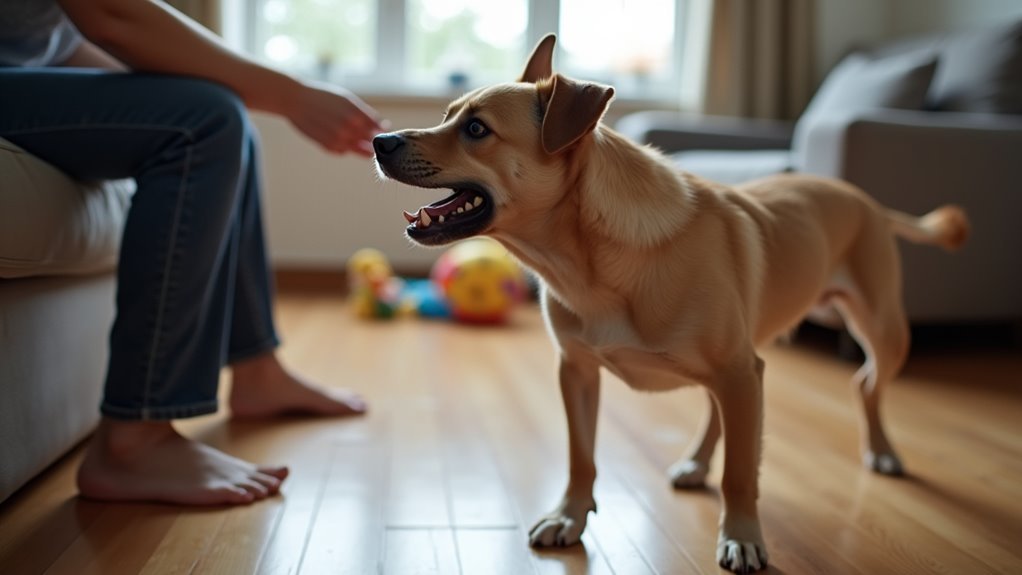

A dog growl is usually a clear warning signal, not an act of meanness. Common causes include fear, pain, stress, resource guarding, or discomfort with nearby activity. Reading body language like stiff posture, raised hackles, or a tucked tail helps pinpoint the reason. Responding calmly and removing the trigger protects both dog and owner and lowers escalation risk. Practical steps—gentle assessment, veterinary check for pain, and consistent training—reduce future growling and build safer communication.
What a Dog Growl Means
A dog’s growl isn’t just noise, and it’s usually your dog’s way of speaking up before things get worse. You can consider it as vocal signaling, a clear message that says something feels off.
The emotional setting matters a lot, because a growl can mean unease, fear, pain, or simple pressure. So whenever you hear it, look at your dog’s body, the setting, and what changed nearby.
A stiff face, tucked tail, or frozen stance helps you read the message better. Even a soft growl deserves respect, because your dog is trying to keep distance and stay safe. Should you listen early, you give both of you a better chance to relax and connect.
Why Dogs Growl at You
Dogs usually growl at you because something in the moment feels wrong to them.
Your dog could be using vocal signaling to say, “I need space,” or “That doesn’t feel safe.” Sometimes the growl comes from your dog’s view of social hierarchy, especially when food, toys, beds, or your attention feel worth protecting.
In other moments, your dog might growl because play got too rough or a goal got blocked, and frustration builds fast.
You can regard growling as an initial message, not a personal attack. Whenever you listen calmly, you help your dog feel heard and keep trust strong between you. Watch the situation, give room, and notice what changed right before the growl.
Is Your Dog Scared, Hurt, or Stressed?
Should your dog has suddenly started growling, it’s worth asking whether fear, pain, or stress is driving the behavior. You don’t have to guess alone, because your dog is trying to tell you something crucial. Watch for tucked tails, wide eyes, stiff posture, or avoiding touch. Then check the situation:
- Fear: loud sounds, strangers, or sudden movement can make your dog ask for space.
- Stress: a crowded home, too much activity, or little rest can push your dog past comfort.
- Pain or illness: in case the growling is new, a veterinary examination can help rule out concealed problems.
While you wait, give calm space and add environmental enhancement like sniffing games or chew toys. That can help your dog feel safer and more included.
When Pain Makes a Dog Growl
Pain can make even the sweetest dog growl, and that growl is often their way of saying, “Something hurts.” Should your dog suddenly growl whenever you touch a spot, lift them, brush them, or move them a certain way, pain could be the real cause.
| Clue | What you might see | Why it matters |
|---|---|---|
| Concealed injuries | A limp or flinch | Touch can sting |
| Chronic pain | Slow stiffness | Movement might hurt |
| Sudden growl | Guarding a body part | It’s a warning |
You’re not coping with attitude here; you’re hearing discomfort. Arthritis, sore muscles, or an ear ache can all make your dog react fast. Because pain can be concealed well, a vet check helps you protect your dog and keep trust strong between you.
Why Dogs Growl Over Food or Toys
Provided your dog growls over food or toys, they’re usually not trying to be “bad” or dramatic. They’re telling you they feel a need to protect something significant. This often comes from resource guarding, which can show up around bowls, chews, balls, or even your lap. You can help via giving your dog space and avoiding sudden grabs.
- Keep mealtimes calm and separate whenever needed.
- Trade items instead of taking them away.
- Watch for play signaling, since some growls happen during happy tug games.
Whenever you respect what your dog values, you build trust. That helps your dog feel safer with you, and it keeps small tense moments from turning into bigger ones.
Body Language Signs That Explain Growling
If your dog growls, look at the rest of his body, too.
A stiff posture, pinned-back ears, and raised hackles often show that he feels tense, worried, or ready to protect himself.
These signs can help you understand that the growl is his way of asking for space before things get worse.
Stiff Body Posture
A stiff body is one of the clearest clues that your dog’s growl means more than sound alone. Whenever you notice tense muscles and a rigid stance, your dog might be telling you he’s uneasy, scared, or wants space. You don’t have to guess in the dark; his body gives you a map.
- A frozen frame often indicates your dog feels pushed.
- A hard posture can signal discomfort before he reacts.
- Quiet stillness with growling says, “Please back off.”
Whenever you see this, pause and give room. Your calm choice helps your dog feel safer, and that matters. He isn’t trying to be difficult. He’s trying to communicate before the moment gets bigger.
Pinned Back Ears
| Ear look | What it could mean | What you can do |
|---|---|---|
| Flat ears | Fear or worry | Give space |
| Tight head | Stress | Soften your voice |
| One ear back | Uneasy focus | Watch the trigger |
| Both ears pinned | Strong discomfort | Pause touch |
| Ear shaking | Ear infections or pain | Call your vet |
Your dog isn’t being mean; he’s asking for relief. In case you keep reaching, his growl might grow louder. Instead, step back, speak gently, and let him reset. That calm choice helps you and your dog stay on the same team.
Raised Hackles
Raised hackles can look dramatic, but they don’t always mean your dog is about to act out. When you see coat piloerection, your dog is showing emotional signaling, not making a threat on its own. You can read the full image by watching the rest of the body.
- In case the hackles rise with a stiff tail and hard stare, your dog could feel tense or guarded.
- In case they rise during play, your dog might be excited, not angry.
- In case they appear with growling, your dog might want space right now.
When Your Dog Is Telling You to Back Off
As your dog growls, it’s often their way of saying, “Please back off.” You’ll want to notice the warning signs, like stiff posture, hard staring, or moving away, and give them space right away.
Respecting that space can keep both of you safer and help your dog feel heard.
Warning Signs To Notice
A dog’s growl often comes with other warning signs, and noticing them beforehand can help you avoid a bigger problem. You might see a stiff body, a hard stare, or ears pinned back before the sound starts. These baseline indicators matter because they tell you your dog feels uneasy, not naughty. Sometimes you’ll also hear juvenile vocalizations during play, but the tone stays loose and bouncy.
Watch for these cues:
- Freezing or leaning away
- Lip licking, yawning, or whale eye
- Low tail movement with tense muscles
When you catch these signs in advance, you can read your dog’s mood better and help everyone feel safer. That awareness builds trust, and your dog learns you’re paying attention.
Respecting Personal Space
Back off a little, and your dog could relax faster than you expect. Whenever you respect personal boundaries, you show that you hear the growl as a clear message, not a challenge. Step away, soften your voice, and give your dog room to breathe. That simple human etiquette can help your dog feel safe again.
If you keep reaching, hugging, or leaning over, you might add pressure and make the warning stronger. Instead, pause and watch for signs that your dog wants space, like turning away or stiffening. Then let them choose whenever to come close. This builds trust, lowers stress, and helps your dog feel like part of the family, not a cornered guest.
With patience, you create a calmer bond and fewer tense moments.
What to Do After Your Dog Growls
Initially, stay calm and give your dog some space, because your reaction can either lower the tension or make it worse. You’re not failing your dog; you’re reading a crucial signal. Use this moment to build trust and set up an emergency plan for the future.
- Check what happened right before the growl.
- Look for pain, fear, or guarding of food, toys, or space.
- Call your vet provided the growling is new or sudden.
After that, adjust the situation so your dog doesn’t need to warn you again. Gentle avoidance conditioning can help your dog feel safer when a trigger appears. Should the growling keep happening, bring in a trainer or behaviorist who uses kind methods.
With the right support, you and your dog can feel like a team again.
How to Respond Without Escalating It
As your dog growls, stay calm so you don’t add more stress to the moment.
Give your dog space right away and avoid reaching, staring, or moving closer, since that can make the warning stronger.
A quiet pause helps your dog feel safer and gives you both a better chance to reset without making things worse.
Stay Calm
Stay calm, because your dog will read your energy faster than your words. Take deep breaths and keep a neutral tone, so you don’t add pressure to an already tense moment. Your steady voice helps your dog feel safer and lets you stay in control.
- Pause before you speak, and soften your face.
- Move slowly, and avoid sudden gestures.
- Use short, calm words your dog already knows.
When you stay grounded, you help your dog trust that you’re not a threat. That sense of safety matters, because your dog wants to belong with you, not battle you.
Should your nerves spike, step back mentally to begin with, then respond with care. A calm handler often turns a hard moment into a safer one.
Give Space
Provided your dog is growling, the safest move is to give them room right away. Step back, turn your body sideways, and let them choose distance. This lowers pressure and tells your dog you hear their avoidance cues. Don’t reach, grab, or lean over them, even should you want to help fast. A quiet pause can calm the moment and protect trust.
Next, check the setting for what sparked the growl. In case food, a toy, a bed, or a stranger is involved, remove yourself and let the trigger stay put. Then you can work on boundary training later, whenever everyone feels safer. Were growling starts often, take note of the pattern and call your vet or a trainer. That support helps you handle it with care, not fear.
How to Train a Dog That Growls at You
Should your dog growl at you, the goal isn’t to “win” the moment, but to help your dog feel safe enough to trust you again.
Start by backing up, softening your voice, and rewarding calm choices with positive reinforcement.
Then use threshold training so you stay far enough away that your dog can relax while you build new habits.
- Watch for the distance where your dog stays loose and quiet.
- Pair your approach with treats, then stop before tension rises.
- Repeat short sessions, so your dog learns you bring good things.
Next, keep routines steady and avoid sudden grabs.
In the event your dog guards food, toys, or rest spots, trade for something better instead of reaching in.
With patience, you teach respect, and your dog learns you’re part of the safe circle.
Warning Signs a Growl Could Escalate
When your dog’s growl gets tighter or sharper, you need to treat it like an initial warning, not a challenge. You might also spot threshold cues like a hard stare, stiff legs, lip licking, or a frozen tail. These signs tell you your dog is edging closer to a snap. Use situational mapping to notice what happened right before the growl. Was someone reaching for a toy, crowding the couch, or touching a sore spot?
Whenever the whole body looks tense, the growl is usually getting louder in meaning, even if the sound stays low. You can protect your bond through backing off fast, giving space, and keeping things calm. That simple reset helps your dog feel heard, and it lowers the chance that fear or pressure takes over.
When to Call a Vet or Behaviorist
A sudden growl can feel alarming, but it’s often your dog’s way of saying something is wrong, not that they’re “being bad.” Call your vet should the growling start out of nowhere, keep happening, or appear whenever you touch a certain spot, because pain from things like arthritis, dental trouble, or an ear infection can hide behind that warning sound.
In the event you see emergency indicators like snapping, limping, swelling, or trouble breathing, get help right away. For ongoing cases, a behaviorist can sort out fear, stress, or guarding issues and build a plan that fits your home.
- Tell the vet once it starts.
- Share what sets it off.
- Ask about follow up planning.
You’re not alone, and getting support promptly can protect both of you.
How to Prevent Dog Growling at Home
Start with calm, because most growling gets worse once a dog feels pressured. You can lower the odds at home through predictability routines, so your dog knows whenever meals, walks, play, and rest happen.
Add environmental stimulation with chew toys, sniff games, and puzzle feeders to ease boredom and frustration. Then give your dog clear space around food, beds, and favorite toys, because many growls start with guarding.
Watch body language closely, and back off promptly should your dog stiffen, freeze, or turn away. Use gentle handling, not rough grabs, so touch feels safe.
In case your dog seems sore, call your vet initially. With patience, you help your dog feel secure, and that trust makes your home feel calmer for both of you.
Frequently Asked Questions
Can Certain Dog Breeds Growl More Often Than Others?
Yes, certain breeds might growl more often because of genetic predispositions and breed history, but vocalization frequency also depends on socialization needs, training, and environment. You can shape calmer communication with patient, positive guidance.
Why Does My Dog Growl Only When Strangers Visit?
Your dog might growl at strangers because territorial signaling and stranger anxiety kick in like a guard alarm. You can help by giving space, staying calm, and building positive visitor experiences so your dog feels safe.
Is Growling During Play Normal or Something to Worry About?
Yes, play growling is often normal provided your dog stays loose, bouncy, and relaxed. It can signal a playful warning and help teach bite inhibition. Be concerned if tension, stiffening, or snapping appears.
Can My Dog Growl Because It Feels Trapped or Cornered?
Yes, your dog can growl whenever it feels trapped or cornered. You will often see space avoidance, escape attempts, or threshold stress, and resource guarding can add pressure. Give it room and lower the tension quickly.
Does Age Affect Why a Dog Starts Growling?
Yes, age changes can shift why you hear growls, like seasons turning in a familiar pack. In different developmental stages you will notice fear, pain, or guarding emerge, so you will want to watch patterns and seek help should it be needed.