
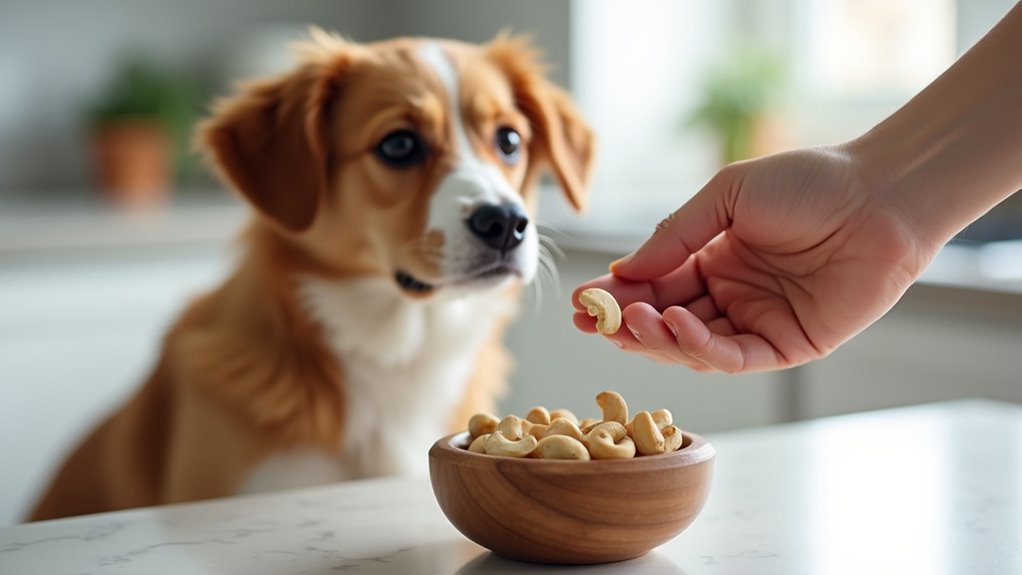

Yes — plain, unsalted, shelled cashews are safe for most dogs in very small amounts. A 20-pound dog that swallows two plain cashews will likely be fine, though larger quantities can cause stomach upset or pancreatitis. Cashews provide protein, healthy fats, and some vitamins, but they are calorie-dense and low in fiber. Avoid seasoned, salted, or chocolate-coated nuts and never let dogs eat shells. Stick to occasional tiny treats and monitor your pet for vomiting, diarrhea, or lethargy after feeding nuts.
Can Dogs Eat Cashews Safely?
Yes, cashews can be safe for dogs as long as you give them the right way and in the right amount. You can share plain, unsalted, shelled cashews as an occasional treat, not a daily habit. They’re not toxic, but they do bring fat and calories, so your dog’s body can feel the strain if you overdo it.
That’s why you should watch for tummy upset, itchy skin, or unusual tiredness after the initial taste. Should your dog has allergies, health issues, or a sensitive diet, ask for veterinary consultation beforehand. Some dogs might also need allergenic testing in case you’re unsure how they’ll react.
Whenever you stay careful, you help your dog join treat time safely and feel included without trouble.
How Many Cashews Can Dogs Eat?
You can give your dog cashews in small amounts, but the exact number depends on your dog’s size, health, and daily diet.
For most dogs, just a few plain, unsalted, shelled cashews at a time is enough, and you’ll want to keep them as an occasional treat.
Should you be unsure, start with one or two and watch for any tummy trouble before offering more.
Safe Serving Sizes
A few cashews can fit into a dog’s day, but the right serving is much smaller than most people expect. You can use portion calculators to match your dog’s size, and age adjusted servings help you stay fair to pups, adults, and seniors.
Start with one plain, shelled cashew for a small dog. Give two or three to a medium dog, and three to five to a large dog. Keep the pieces unsalted and unseasoned, so your dog gets the snack, not the extras.
Should your dog be tiny, older, or has a sensitive stomach, trim the amount even more. You want your buddy to feel included, safe, and comfy, not stuffed like he won a peanut parade.
Treat Frequency Limits
Cashews should stay a rare treat, not a daily habit, because even a healthy dog can get too much fat and too many calories from them.
You could aim for two to three cashew snacks a week, not more, and keep each serving tiny.
For small dogs, one cashew is usually enough.
For bigger dogs, two to four cashews might fit, but only when you watch their total diet.
This is where treat rotation helps, since you can swap in other safe snacks and avoid overdoing one food.
Also, portion tracking keeps you honest and helps you spot patterns when your dog gets a soft stomach.
Should your dog have pancreatitis, obesity, or diabetes, consult your vet initially.
What Cashews Do to a Dog’s Diet
When added the right way, cashews can give your dog a small lift of protein, healthy fats, and key minerals, but they also change the balance of the diet fast should you’re not careful.
You want to treat them as meal enhancement, not a staple, so your dog’s macronutrient balance stays steady.
Since cashews carry lots of fat and calories, even a few can crowd out better foods should you’re not watching portions.
- Keep treats small and plain.
- Count cashews within daily calories.
- Skip salted or seasoned pieces.
- Watch for tummy changes after feeding.
That way, you stay in control and your dog still feels included at snack time.
Benefits of Cashews for Dogs
Even a few plain cashews can offer your dog some helpful nutrients, and that’s why they sometimes earn a spot as an occasional treat. You give your dog protein, healthy fats, magnesium, and small amounts of vitamin K and B vitamins. Those nutrients can support energy, muscle use, and a shiny coat.
Cashews also bring fiber and minerals, so they add variety to a treat routine without taking over your dog’s bowl. Because nutrient bioavailability can vary, your dog might absorb some parts better than others, but the snack still adds value in small amounts. Cashews also contain canine antioxidants, which help support normal cell protection.
Whenever you share them wisely, you can feel good offering something simple, tasty, and part of your dog’s happy, everyday pack life.
Risks of Feeding Cashews to Dogs
That little snack can seem harmless, but a few safety issues matter before you share it with your dog. Cashews pack a lot of fat and calories, so too many can upset your dog’s stomach and add to long term obesity. They can also raise pancreatitis risk, which no one wants at treat time.
- Stick to plain, unsalted, shelled nuts only.
- Skip mixed nuts, since concealed ingredients can cause trouble.
- Watch for itching, vomiting, or loose stools after a bite.
- Consult your vet initially in case your dog has kidney concerns or a sensitive diet.
When you keep portions tiny, you lower the chance of trouble and help your dog stay comfy.
Can Puppies Eat Cashews?
Cashews aren’t teething relief, so don’t use them to soothe sore gums. They’re also rich and fatty, which can upset a young stomach fast. Start with one tiny piece, then check for vomiting, loose stool, or itching. In case your puppy has a sensitive belly or any food allergy history, skip cashews and choose a safer treat.
Raw, Roasted, or Salted Cashews?
After you know cashews can be a rare treat, the next question is what kind is safest for your dog.
Plain roasted cashews are usually the best pick because they’re easier to store and less likely to carry extra moisture. Raw cashews in the shell aren’t a good idea, since the shell can be risky and the nut might be harder to keep fresh. Salted cashews should stay off your dog’s menu because extra sodium can add trouble. Whenever you choose, believe about flavor preference and storage safety for your home, too.
- Plain, shelled nuts fit best
- Roasted nuts often feel simpler
- Salted nuts add avoidable risk
- Mixed nuts can hide danger
How to Serve Cashews to Dogs
In case you serve cashews to your dog, keep things simple and gentle. Choose plain, unsalted, shelled cashews, then break them into tiny pieces so your pup can chew them easily. That little texture checking helps you spot any hard bits before they become a problem.
Next, use smart presentation tips: place a few pieces in the food bowl, or tuck them into a training reward when your dog already feels calm and happy. You can also mix a small amount with regular kibble for a familiar taste.
Keep the serving small, and don’t make cashews a daily habit. Whenever you stay steady and thoughtful, you help your dog enjoy a treat that feels special, safe, and part of your shared routine.
Signs of a Cashew Allergy in Dogs
As soon as a dog has a cashew allergy, the signs can show up fast or slowly, and they often look like everyday upset initially. Your dog’s immune response could overreact, and you might notice itching, paw chewing, or skin swelling. Then the clues can shift into the gut or breathing.
- Red, warm skin or hives
- Vomiting or loose stool
- Sneezing, coughing, or wheezing
- Restlessness, head shaking, or drooling
If your dog seems off after cashews, trust your gut and watch closely. You know your buddy’s usual habits best, so even small changes matter. A mild reaction can start with one odd scratch, then grow. Whenever you see several signs together, treat it as a real warning and stay calm while you keep your dog comfortable and safe.
What to Do if Your Dog Overeats Cashews
Should your dog eats too many cashews, stay calm and look for signs like vomiting, diarrhea, belly pain, or unusual tiredness.
Check your dog closely for any trouble breathing, swelling, or a sudden change in behavior, since those symptoms need quick attention.
In the event you notice anything worrying or your dog ate a large amount, call your veterinarian right away so you can get clear next steps.
Recognize Overeating Signs
Watching for the warning signs after your dog sneaks too many cashews can help you act fast and keep things calm. Start with portion monitoring, because even a few extra nuts can push a small tummy too far. You might notice behavior changes like begging for water, pacing, or wanting to hide.
- Your dog seems restless or clingy
- Your dog skips play and naps more
- Your dog acts less interested in food
- Your dog seems uncomfortable after treats
These shifts matter because your dog can’t tell you what feels off, so you’re the one who spots the pattern. Should the snacks have come from your hand, don’t feel guilty. Just tighten your treat plan, take note of what happened, and keep cashews as a tiny, occasional reward.
Check For Symptoms
Once your dog has eaten too many cashews, the next step is to check for symptoms that tell you how their body is handling it. Watch for vomiting, diarrhea, belly pain, or nausea, since too much fat can upset the stomach fast.
Also note behavior changes like restlessness, hiding, whining, or sudden tiredness, because your dog might feel off before the signs look dramatic. Keep appetite monitoring simple by seeing whether your dog skips food, drinks less, or seems less excited at mealtime.
You should also look for itchy skin, swelling, coughing, or trouble breathing, which can suggest a reaction. Stay calm and keep your dog nearby so you can notice any new signs right away.
Early observation helps you feel more in control whenever your pup’s tummy starts acting dramatic.
Contact Your Veterinarian
Call your veterinarian as soon as you notice your dog has eaten too many cashews, because quick advice can help you handle the next steps with less stress. A veterinary consultation can tell you whether your dog needs home care or an exam. Stay calm, and share how many cashews your dog ate, at what time it happened, and any signs you saw. Should your dog take regular medicine, mention possible medication interactions too.
- Tell your vet your dog’s size and age.
- Ask what symptoms need urgent care.
- Keep water nearby unless your vet says otherwise.
- Follow dosing or feeding directions exactly.
You’re not overreacting by calling. Should your dog have vomiting, belly pain, or trouble breathing, get help right away. Your vet can guide you like a trusted teammate.
When to Call Your Vet
Even though a few plain cashews may be safe, you should reach out to your vet should your dog eats too many, shows any signs of upset, or has a health condition that makes nuts risky.
In case your dog gets stomach pain, vomiting, diarrhea, swelling, itchiness, or trouble breathing, call right away. These signs can move fast, so use your emergency contacts and follow veterinary timelines without waiting to see whether things pass.
You know your dog best, and should something feels off, trust that instinct. Dogs with pancreatitis, obesity, diabetes, or kidney issues need extra caution, because a small snack can hit harder than you’d expect.
Your vet can tell you whether home care is enough or whether your buddy needs prompt treatment and monitoring.
Safer Dog Treats Than Cashews
In case you want a safer snack than cashews, start with simple, dog-friendly treats that are lower in fat and easier on your pup’s stomach. You can build trust with small bites your dog already enjoys, like plain carrot coins or apple pieces. These homemade alternatives let you skip extra salt and oil, while still giving your buddy a happy crunch.
- Baby carrots for a crisp, low-fat reward
- Sliced cucumber for cool, light chewing
- Plain pumpkin spooned into a lick mat
- Vegetable chews that support longer chewing time
If your dog likes variety, rotate treats slowly and watch how they respond. That way, you and your dog can keep snack time calm, safe, and part of your everyday bond.
Cashew Butter and Cashew Milk for Dogs
Should you want to share cashew butter with your dog, choose a plain version with no salt, sugar, or xylitol, and give only a tiny amount.
Cashew milk can seem gentle, but you still need to check for added sweeteners, oils, or flavors that can upset your dog’s stomach.
Start small, watch how your dog reacts, and keep these treats as occasional extras, not daily staples.
Cashew Butter Safety
Cashew butter can be a safe treat for dogs, but only provided you choose a plain version with no salt, sugar, xylitol, chocolate, or added oils. Whenever you make homemade cashewbutter, you control ingredient interactions and keep the snack simple. That helps you share a small spoonful with more peace of mind.
- Check the label before you buy.
- Offer only a tiny lick or smear.
- Watch for tummy upset or itchy skin.
- Save it for an occasional reward, not daily use.
If you want to use it with kibble or a puzzle toy, keep the amount modest. A little goes a long way, and your dog gets the fun without the extra stress.
Cashew Milk Risks
Even though cashew milk could sound gentle and wholesome, it can bring real risks for dogs whenever it’s not made with care. You can feel good checking cashew milk labeling initially, because concealed sugar, salt, or oils can upset your dog’s stomach fast. Homemade cashewmilk can seem safer, yet it still needs plain ingredients and clean prep. Whenever you share it, watch for:
| Risk | Why it matters |
|---|---|
| Added sugar | Can upset digestion |
| Salt | Raises strain on the body |
| Oils | Could trigger tummy trouble |
| Flavorings | Some aren’t dog-safe |
| Thick texture | Can be hard to handle |
If your dog licks a little, stay calm and notice any itching, gas, or loose stool. You’re doing your best, and that care truly matters.
Serving Size Guidelines
Whenever you offer cashew butter or cashew milk to your dog, small portions matter more than anything else, because these treats can add up fast. Use portion calculators in case you want a simple starting point, then check calorie comparisons so you can see how much room the treat has in your dog’s day.
- Tiny dogs might do well with a lick or half teaspoon.
- Medium dogs can start with one teaspoon, not more.
- Large dogs usually need only a small spoonful.
- Keep cashew milk to a few sips, plain and unsweetened.
You’ll stay in a good place provided you treat these as extras, not snacks that fill the bowl. In the event your dog has a sensitive stomach, start even smaller and watch closely. That way, you keep the moment joyful and safe for both of you.
Frequently Asked Questions
Can Dogs With Pancreatitis Have Cashews?
No, you should not give cashews to dogs with pancreatitis; even small servings can worsen pancreatitis management. Since cashews can be about 44% fat, they raise recurrence risk, so you will want vet guided enzyme monitoring.
Are Cashews Okay for Dogs on Prescription Diets?
Usually you should not give them unless your veterinary consultation says it is fine. Prescription diets need strict control, and cashews’ phosphate content can interfere. You are safest keeping treats out unless your vet approves.
How Often Can Dogs Safely Eat Cashews Each Week?
You can safely give cashews about 2 to 3 times a week provided you keep portion control tight and watch serving frequency. Offer only plain, unsalted pieces and adjust for your dog’s size and tolerance.
Can Cashews Cause Long-Term Weight Gain in Dogs?
Yes, if you keep giving your dog cashews you can trigger long term weight gain; treats can add up fast—just 10% of daily calories matters. Watch calorie accumulation and metabolic slowdown, and help your pup stay included, healthy.
Should Cashews Be Avoided in Dogs With Kidney Disease?
Yes, you should usually avoid cashews in dogs with kidney disease unless your vet approves. You will want kidney monitoring, because extra phosphorus and fat can worsen illness and trigger electrolyte imbalance or stomach upset.