
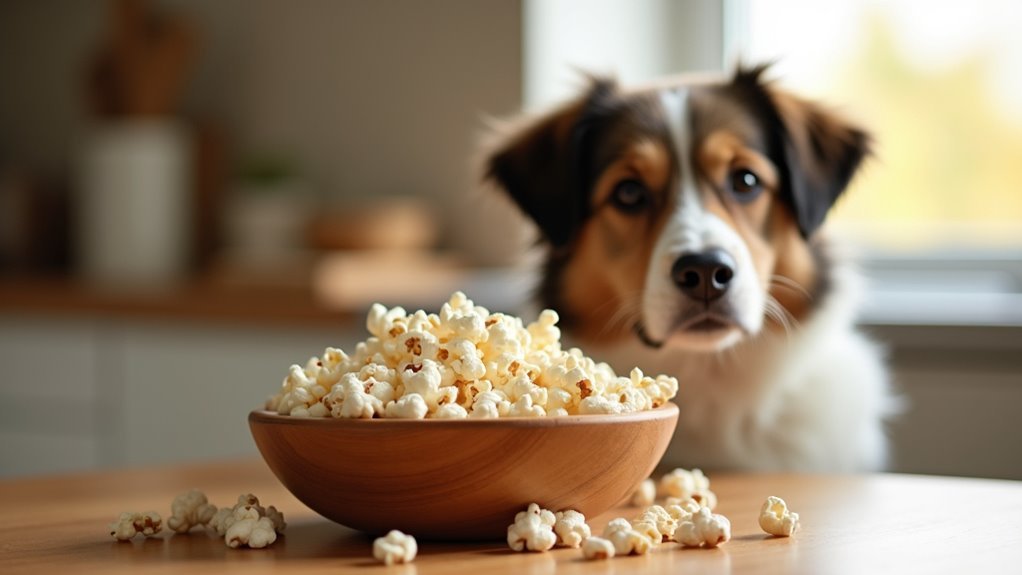

Yes — plain, air-popped popcorn is safe for dogs in very small amounts. Butter, salt, and flavored toppings are unsafe and can upset digestion or cause other health problems. Hard, unpopped kernels and half-popped pieces present choking and dental risks. Always offer only fully popped, plain kernels and supervise your dog while eating. Portion control and vet guidance are best for any new human snack.
Can Dogs Eat Popcorn?
Yes, dogs can eat popcorn, but only provided you serve it plain, air-popped, and in small amounts. You can share a few pieces during movie nights and still keep movie etiquette in mind.
Plain popcorn can fit into dog digestion better whenever you skip salt, butter, and flavorings. It also works best if you pick fully popped pieces and remove every kernel to begin with.
That small step helps you avoid choking and tooth trouble. Because your dog’s body needs balance, popcorn should stay a rare treat, not a meal.
Is Plain Popcorn Safe for Dogs?
Plain, air-popped popcorn can be safe for your dog in small amounts, but you’ll want to skip the butter, salt, and flavorings.
Should you see whole corn kernels or half-popped pieces, don’t offer them, since they can be a choking risk.
A few plain pieces can work as a treat, but you ought to keep the serving tiny and watch your dog while they eat.
Plain Corn Kernels
Whenever you’re sharing a bowl of popcorn with your dog, the safest choice is the simple kind, because plain air-popped corn kernels can be okay in small amounts provided they’re fully popped and free of extras. Should your dog have corn allergies, skip it and choose a safer treat.
Even with no allergy, kernel digestion can be tricky, so you’ll want only soft, popped pieces, never hard or half-popped bits. Those can lodge in teeth, irritate the throat, or upset the belly.
Whenever you keep the snack plain, you give your dog a treat that feels included at movie night without piling on junk. Still, watch how your dog chews, and stay alert for coughing or discomfort. That extra attention helps you share popcorn with confidence and care.
Safe Serving Size
Serving popcorn to your dog starts with getting the amount right, because even a safe snack can cause trouble provided you pile on too much. You can keep it friendly and easy by using portion control and simple calorie counting.
| Dog size | Safe amount | Notes |
|---|---|---|
| Small | 1 to 2 pieces | Offer only as a tiny treat |
| Medium | 2 to 3 pieces | Keep it occasional |
| Large | 3 to 5 pieces | Stay within daily treat limits |
Plain, air-popped popcorn fits best whenever you share it sparingly. You can offer a few fully popped pieces, then stop. Treats should stay near 10% of daily calories, so this snack won’t crowd out real food. Once you measure initially, you help your dog enjoy movie night with you, without upsetting the balance.
Watch For Choking
Even though plain, air-popped popcorn is usually safe for dogs in small amounts, the real worry is choking on loose kernels or hard, partially popped pieces. Whenever you share a few pieces, stay close and watch your dog chew each bite.
Small kernels can slip into the throat fast and cause airway obstruction, especially in enthusiastic eaters who gulp without chewing. In case your dog tends to snatch food, slow the pace with chew training and offer only fully popped pieces.
You can also break larger bits apart and remove every kernel before serving. This simple habit helps your dog enjoy snack time with less stress for both of you.
Should coughing, gagging, or pawing at the mouth starts, stop right away and check.
What Are the Benefits of Popcorn for Dogs?
As soon as you offer plain, air-popped popcorn in small amounts, you can give your dog a low-calorie treat that feels special without going overboard.
It also brings a little fiber and a few helpful minerals, which adds a small bonus to snack time.
Plus, that light crunch can make popcorn feel like a fun occasional reward for movie night with you.
Low-Calorie Treat
Popcorn can be a handy low-calorie treat for your dog, especially provided you’re looking for a small reward that won’t pile on extra fat. Whenever you keep portion control in mind, it fits nicely into calorie counting without upsetting your dog’s daily balance.
You can use a few plain, air-popped pieces to celebrate good behavior, share a movie-night moment, or just add a little joy to the routine. Because it’s light, you don’t need much to make it feel special. That said, the real win is moderation. A tiny serving helps you give your dog something fun whilst still protecting their waistline and keeping treats in check. It’s a simple way to show love and stay on track together.
Fiber Content
A small handful of plain, air-popped popcorn can offer your dog a little fiber, and that’s one of the simple benefits people often forget.
Whenever you share it the right way, the dietary fiber in popcorn can support gut health and help your dog feel more settled after a snack.
You’re not giving a miracle food, but you’re adding a modest lift that fits a kind, balanced routine.
- Fiber can help move food through the digestive tract more smoothly.
- It might support a healthier stool pattern whenever your dog’s belly stays calm.
- It gives you a small way to share a treat that feels friendly and familiar.
That little crunch can help your dog feel included without making snack time complicated.
Occasional Crunchy Reward
Most dogs enjoy a little plain, air-popped popcorn because it gives them a light, crunchy reward that feels special without being heavy.
You can use a few fully popped pieces to add variety during movie nights, and your dog gets to feel part of the family fun.
Because it’s low in calories, plain popcorn can also work as one of your training rewards whenever you want a quick treat that doesn’t overwhelm your dog’s meal plan.
It could even offer a bit of fiber and trace minerals, which gives this snack a small bonus.
Still, the real benefit is simple: you get an easy way to share a happy moment, and your dog gets a safe, plain snack in moderation.
What Are the Risks of Popcorn for Dogs?
Even though plain popcorn can be safe in small amounts, the risks start to show up fast once you add toppings or should you leave kernels behind.
You want your dog to feel included, but those hard bits can slip into the throat and cause airway obstruction. They can also lodge in teeth and spark discomfort.
Too much popcorn adds extra calories, and that can lead to long term weightgain whenever snacks become a habit.
- Unpopped kernels can trigger choking or mouth pain.
- Seasoned pieces can upset your dog’s stomach.
- Big handfuls can crowd out healthier treats.
Why Butter, Salt, and Toppings Are Risky
Butter, salt, and toppings can turn a simple snack into a problem for your dog very quickly. Whenever you share popcorn, those extras bring concealed fats and heavy seasoning that your dog’s body doesn’t need. Butter can upset the stomach and add extra calories fast. Salt can push your dog toward sodium toxicity, especially whenever you keep sharing bits during movie night. Toppings make it worse. Cheese, caramel, oil, and spice mixes can irritate digestion and cloak more fat than you’d expect.
| Add-on | Main concern | Safer choice |
|---|---|---|
| Butter | concealed fats | plain popcorn |
| Salt | sodium toxicity | no seasoning |
| Cheese | rich coating | air-popped only |
| Sugar | sticky topping | small plain pieces |
Are Popcorn Kernels Dangerous for Dogs?
The plain popcorn itself might be fine, but the kernels are a different story for your dog. When you see kernel ingestion, act fast, because hard pieces can trigger a digestive obstruction or painful choking. Your dog could gulp them down before you notice, and that’s once trouble starts.
- Watch for gagging, drooling, or pawing at the mouth.
- Check for a kernel stuck between teeth or under the tongue.
- Call your vet should vomiting, belly pain, or poor appetite show up.
You belong in the safe-snack crowd, so keep kernels out of reach and offer only fully popped pieces. That small habit helps protect your pup’s smile and keeps snack time calm, happy, and worry free.
How Much Popcorn Can Dogs Eat?
You can keep popcorn as a tiny treat, not a snack meal, so portion size matters a lot.
For a small dog, just a few plain, air-popped pieces can be enough, while a bigger dog can handle a little more provided you stay within treat limits.
In the event you have a puppy, give even less and save popcorn for rare moments so you don’t crowd out the food they need to grow.
Portion Size Guide
Whenever you share popcorn with your dog, size really matters, because even a safe snack can turn into too much whenever the portion grows. You can keep things simple with portion control and a little calorie counting, so treat time still feels easy and kind. For most dogs, a few plain, air-popped pieces is enough to feel included without piling on extra calories.
- Small dogs usually do best with 1 to 2 pieces.
- Medium or large dogs can have a few more, but not a pile.
- Should your dog get other treats that day, trim the popcorn amount.
That way, you stay in the same happy routine together. Keep the serving tiny, and let the fun stay light.
Puppy Serving Limits
Puppies need even smaller popcorn limits than grown dogs, because their stomachs are still learning how to handle new foods. You should keep servings tiny, since teething safety matters and hard kernels can hurt sore gums. Start with just 1 or 2 plain, air-popped pieces, then watch for comfort. For calorie monitoring, popcorn should stay rare and fit within your puppy’s treat budget.
| Puppy size | Safe start | Notes |
|---|---|---|
| Tiny | 1 piece | Easy to manage |
| Small | 1 to 2 pieces | Watch closely |
| Medium | 2 pieces | Plain only |
| Large | 2 to 3 pieces | No extras |
| Any puppy | Stop provided uncertain | Ask your vet |
Supposing your puppy seems excited, that’s okay. You’re helping them join snack time safely, one small bite at a time.
Treat Frequency Tips
In everyday life, the safest popcorn habit for dogs is simple: keep it rare, keep it small, and keep it plain. You can build treat scheduling around that rule, so popcorn stays a special moment, not a daily snack. Most of the time, a few air-popped pieces are enough to make your dog feel included without crowding out better choices.
- Count popcorn as part of the 10% treat limit.
- Offer it only after a walk, training, or quiet bonding time.
- Swap it for reward alternatives like carrot coins or apple bits when you need more frequent praise.
This rhythm helps you protect your dog’s waistline and still share the fun. Should you notice begging growing stronger, pause and reset the habit gently.
How to Serve Popcorn to Dogs Safely
To serve popcorn safely, start with plain, air-popped kernels and keep every add-on off the table, because your dog’s stomach can handle the simple version much better than the movie-theater upgrade.
During movie nights, let the popcorn cool, then offer only fully popped pieces and toss out every hard kernel.
You can share a few pieces at a time, not a bowlful, so your dog stays comfy and you stay relaxed.
In the event your dog has a sensitive belly or you’re trying new snacks, consider allergy screening before making popcorn a treat.
Keep an eye on your dog while they eat, and make sure the snack fits into a balanced day.
That way, you both get a safe, easy moment to enjoy together.
Signs Your Dog Ate Too Much Popcorn
- Check for belly bloating.
- Watch for coughing or gagging after eating.
- Look for pawing at the mouth, which can mean a kernel is stuck.
If you spot these signs, stay calm and keep your dog nearby.
Safer Treats Than Popcorn for Dogs
Provided that you want to give your dog a safer snack than popcorn, you’ve got plenty of better choices that are easier on the stomach and lower in risk.
Try plain carrot coins, apple slices without seeds, green beans, or a few blueberries. These picks feel like a shared win, because your dog gets something tasty and you get peace of mind.
You can also make a homemade dog safe treat with pumpkin or mashed banana, then chill it in small spoonfuls. For a training reward, use tiny bits so your pup stays focused without extra calories.
Just skip salt, sugar, spices, and rich sauces. Whenever you choose simple foods, you help your dog join snack time safely and happily.
Frequently Asked Questions
Can Puppies Eat Popcorn Safely?
Yes, your puppy can eat plain air popped popcorn in small portions sometimes. You will need to skip butter, salt, and kernels, then watch for choking. Keep it as an occasional treat, not a habit.
Is Microwave Popcorn Okay for Dogs?
No, you should not give your dog microwave popcorn; it usually contains butter toxins, salt, and bag chemicals. You are better off offering plain, air popped kernels in tiny amounts, with every unpopped kernel removed initially.
What Should I Do if My Dog Choked on Popcorn?
You should act fast: check their mouth, use emergency removal only provided you can safely see the popcorn, then follow a choking protocol and call your vet or ER now—better safe than sorry, friend.
Can Dogs Be Allergic to Popcorn?
Yes, dogs can have popcorn allergies, although they are uncommon. If your dog is prone to corn allergies or has digestive sensitivity, avoid feeding popcorn. Watch for itching, vomiting, or diarrhea, and contact your vet promptly.
How Often Can I Give Popcorn as a Treat?
You can give popcorn as an occasional treat, not daily. Keep feeding frequency low and portion size tiny, just a few plain, air popped pieces, so you and your dog share a little moonbeam of comfort, safely.