

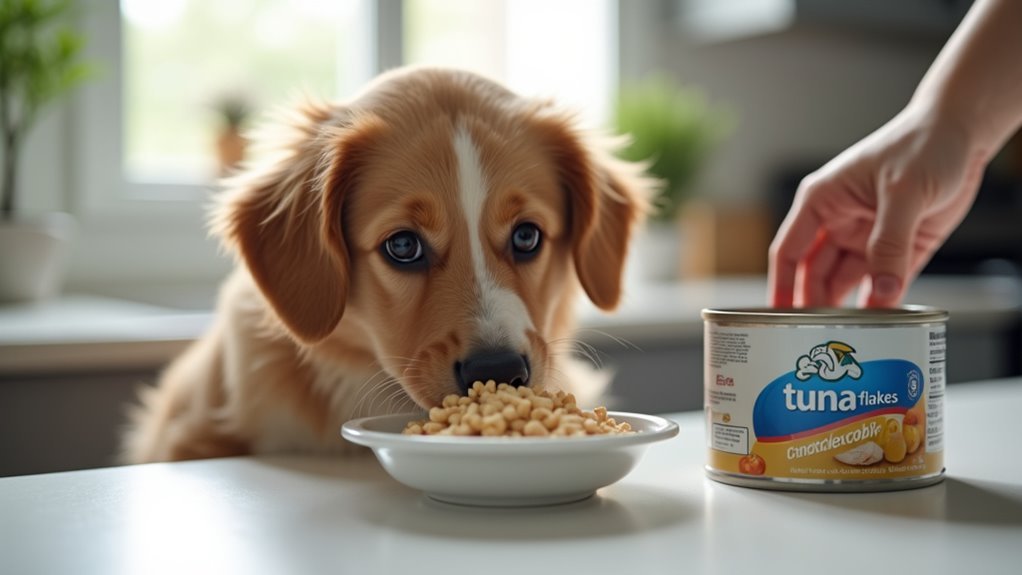

Yes, dogs can eat tuna sometimes, but it carries risks like mercury and excess sodium. Plain, water-packed tuna in small amounts is the safest option. Avoid tuna packed in oil, flavored varieties, and seasoned fish. Regular or large portions can lead to mercury buildup and digestive upset. Always check ingredient lists and limit tuna to an occasional treat.
Can Dogs Eat Tuna Safely?
When you’re musing whether your dog can safely eat tuna, the short answer is yes, but only in small amounts and not very often. You can share a little plain, cooked tuna or water-packed canned tuna without turning snack time into a stress fest.
Still, you need mercury monitoring, since repeated servings can build up over time. That matters even more should your dog be small or still growing.
You should also watch household exposure from salty brine, oil, sauces, onions, or garlic, because those extras can upset your pup fast. Keep portions tiny, keep it plain, and treat tuna like an occasional treat, not a meal.
Assuming your dog has allergies or a sensitive stomach, your vet can help you choose a safer option.
Is Tuna Good for Dogs Nutritionally?
Tuna can offer a few useful nutrients for your dog, but it’s not a top-tier food for daily feeding.
You get protein, omega-3s, and key minerals, and your dog might enjoy the taste.
Still, tuna’s protein bioavailability can vary according to preparation, so it shouldn’t replace a complete diet.
Consider it as a small extra, not a meal builder.
Whenever you use it as an occasional treat, you support variety without crowding out better foods.
That balance helps with mercury mitigation, too, because less frequent feeding means less buildup over time.
Should you want your dog to feel included at mealtime, tuna can fit in now and then, as long as you keep it plain and modest.
Tuna Risks: Mercury, Salt, and Seasonings
Although tuna can be a tasty treat, the biggest concern is what it can do over time should you feed it too often. You want to watch mercury closely, because it can build up in your dog’s body and strain the kidneys or nerves. That’s where mercury monitoring matters, especially provided tuna shows up more than once in your week.
Salt is another issue. Canned tuna packed in brine or with added salt can leave your dog thirsty and uncomfortable. Seasoning interactions matter too, since garlic, onion, spicy blends, and rich sauces can upset your dog or even harm them. Plain tuna gives you a safer path, but only assuming you keep it simple and stay alert to what’s inside the can.
How Much Tuna Can Dogs Eat?
You should keep tuna servings small, since even a little can go a long way for your dog.
A few plain bites now and occasionally is usually the safest approach, while regular or large portions can raise mercury and sodium concerns.
Whenever you’re unsure, it’s better to treat tuna like an occasional snack, not a meal.
Safe Portion Sizes
Whenever it comes to safe portion sizes, less really is more, because dogs only need a tiny amount of tuna to enjoy it without adding too much mercury to their diet.
You can consider in meal scaling terms: a few flakes for a toy dog, a small spoonful for a medium dog, and a modest bite or two for a larger dog. Those portion comparisons help you keep tuna as a treat, not a meal.
Keep the fish plain, cooked, and water packed, then mix it with your dog’s usual food should you want a familiar, comforting taste. That way, you remain in control of the serving while your dog still feels included at the table.
Should your pup have health issues, consult your vet beforehand and keep portions even smaller.
Feeding Frequency Limits
In general, tuna should stay on the rare side of your dog’s menu, because the mercury risk builds up over time even whenever each serving looks small. You can regard it as a once-in-a-while treat, not a weekly habit.
For most dogs, a few bites of plain, cooked tuna or water-packed tuna now and then is enough. In the event that you share fish often, you raise the chance of trouble without much payoff.
Also, local sourcing can help you ask smarter questions about freshness, but it won’t remove mercury. And because tuna’s environmental impact matters too, choosing it sparingly fits better with a caring routine.
Which Tuna Is Safest for Dogs?
Whenever it comes to tuna for dogs, the safest choice is plain, cooked tuna or water-packed canned tuna with no added salt, oil, or seasoning. You can feel good choosing light tuna, since it usually has lower mercury than larger fish. That matters because your dog deserves a safer treat, not a worry on the side.
Albacore concerns are real, since albacore often carries more mercury and can raise risk with repeat feedings. So, pick a small spoonful of simple tuna instead. Also, check the label for added broth, spices, or flavoring. Should the fish smell strong or look oily, skip it. By keeping it plain and modest, you give your dog a treat that fits right into your shared routine.
Tuna Forms Dogs Should Avoid
Even a safe-looking bite can turn risky fast, so it helps to know which tuna forms you should skip right away.
You should avoid raw tuna because it can carry germs and parasites. You should also pass on oil-packed tuna, brined tuna, and anything with added salt, garlic, onion, or spices.
Those canned flavored versions might smell tempting, but they can upset your dog’s stomach and add extra sodium. Tuna in heavy sauces or oil can also feel too rich for your buddy, especially provided you’re offering birthday treats.
Stick with plain, water-packed tuna only once your vet says it’s okay. Whenever you choose carefully, you help your dog stay safe, and you keep treat time simple, calm, and part of the family.
Signs Your Dog Ate Too Much Tuna
Provided that your dog ate too much tuna, you’ll usually notice the signs pretty quickly. You could see behavioral changes, like restlessness, whining, or acting clingy.
Next, watch for tummy trouble and keep an eye on the litter box habits, because tuna can upset your dog’s system.
- Vomiting or loose stool
- Less appetite or sudden pickiness
- Itchy skin or scratching
- Neurological signs like wobbliness or tremors
In the event your dog seems tired, thirsty, or off-balance, don’t brush it off. Those clues can point to a bigger issue, especially after a large serving.
Stay calm, and consider how much tuna your dog had and at what time it happened. Should the signs don’t fade soon, call your vet and describe everything clearly so you can get support fast.
Safer Fish for Dogs Than Tuna
In case you want a fish that’s gentler on your dog than tuna, salmon and sardines are smart places to start.
You still need to serve them plain, cooked, and in small amounts, but they usually bring fewer mercury worries. That makes them a safer, calmer choice whenever you’re trying to treat your dog without stressing over every bite.
Salmon For Dogs
Salmon can be a safer fish choice for dogs than tuna, because it usually has less mercury and can fit into your dog’s diet more comfortably whenever you serve it the right way.
- Choose cooked, plain salmon.
- Offer wild salmon or canned salmon in water.
- Remove every bone before you share it.
- Keep portions small so your dog stays happy and steady.
You can feel good giving this fish whenever you prepare it simply, because your dog gets protein and healthy fats without the heavy risks that come with tuna.
Still, you should skip raw salmon, since it can carry germs or parasites that upset your dog’s stomach.
Suppose you want your pup to join the snack moment, make the fish unseasoned and soft.
That way, you and your dog can enjoy treat time together safely.
Sardines As Safer Choice
Sardines can often be a smarter fish choice for your dog than tuna, and that’s a relief whenever you wish to share a safe little treat without worrying so much.
You get real sardine benefits, like protein, omega-3s, and key minerals, with less mercury than tuna. That means you can feel more confident whenever you offer a tiny serving now and then.
Still, you’ll want plain sardines in water, not ones packed with heavy salt, oil, or spicy extras. Good sustainable sourcing also matters, because you can care for your dog and the planet at the same time.
What Vets Recommend About Tuna for Dogs
Veterinarians usually say tuna can be okay for dogs, but only as a tiny, occasional treat and never as a daily meal. That veterinary consensus comes from mercury concerns, sodium, and lifecycle considerations for puppies, adults, and seniors. You’ll fit in better with your vet’s advice if you keep tuna rare and simple.
- Use it as a reward, not dinner.
- Skip tuna in case your dog has fish allergies.
- Avoid it for puppies and tiny breeds.
- Ask your vet initially provided your dog has kidney or diet issues.
Your dog could love the smell, and you could love the happy tail wag, but the safest plan is to treat tuna like a special extra. Whenever you’re unsure, your vet can help you choose a fish option that feels safer for your dog’s pack.
How to Serve Tuna to Dogs Safely
Whenever you serve tuna to your dog, keep it plain, simple, and rare so it stays a safe little treat instead of a risky habit.
Choose cooked tuna or water-packed canned tuna, then drain it well and break it into tiny bites.
You can serve chilled pieces unless that makes it easier to handle, but skip salt, oil, sauces, onions, and garlic.
Keep portions small, because even a happy dog can get too much mercury from repeated servings.
Offer tuna as a topper, not a meal, and watch your buddy for itching, tummy upset, or sneezing.
Should your dog loves food games, tuck a few flakes into interactive puzzles so snack time feels special without going overboard.
In case of doubt, ask your vet to begin with.
Frequently Asked Questions
Can Dogs Eat Tuna Salad?
No, you should not feed your dog tuna salad. The mayonnaise, salt, onions, and seasonings can upset them. If you ever offer tuna, keep it plain, give a small amount, and watch for tuna allergies or seasonal tuna concerns.
Is Tuna Juice Safe for Dogs?
No, you shouldn’t give your dog tuna juice often. It can carry mercury exposure and has high sodium content, so keep it away. If you want to share, offer plain water packed tuna in tiny amounts instead.
Can Dogs Eat Tuna Every Day?
No, you should not feed your dog tuna every day. Tuna frequency should remain low to limit mercury exposure and protect your pup’s health. Offer plain, water packed tuna only as an occasional treat, not a staple.
Are Tuna Fish Treats Okay for Dogs?
Yes, tuna fish treats can be okay for your dog, but keep them tiny and occasional. Many dogs love the flavor, and about one in four pups has a food sensitivity. Try homemade treats with plain water packed tuna.
Can Puppies Have Tuna as a Snack?
No, you shouldn’t give puppies tuna as a snack. Their tuna introduction should be skipped, since mercury’s risk is higher for growing bodies. Provided your vet approves, keep puppy portioning tiny and very occasional.