
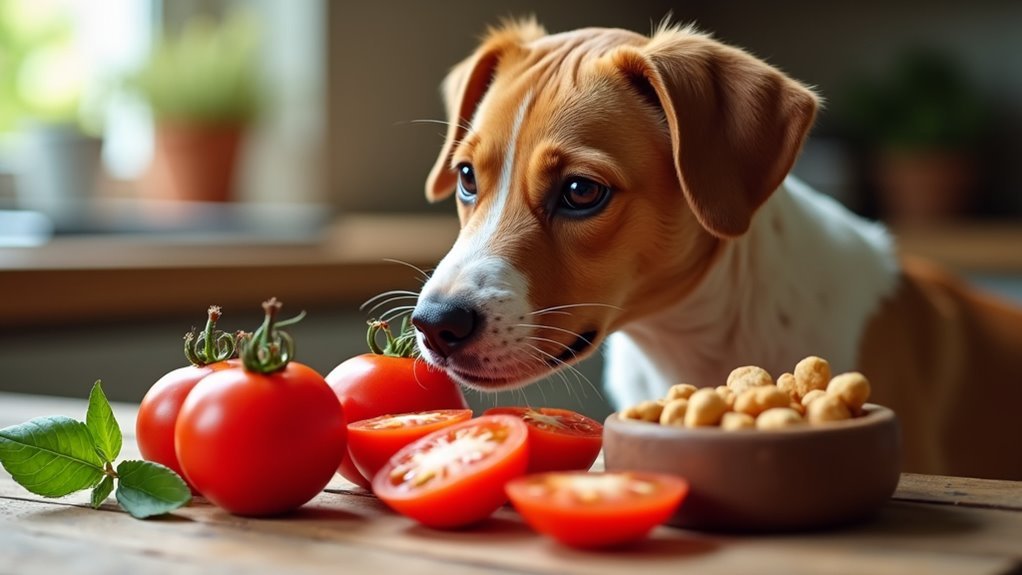

Yes — ripe red tomatoes are generally safe for most dogs in small amounts. Green tomatoes, stems, and leaves contain solanine and can cause stomach upset or worse. Small tomato bites can be a refreshing, low-calorie treat if served plain and ripe. Watch for vomiting, diarrhea, or unusual behavior after offering tomato. When in doubt about quantity or a reaction, contact a veterinarian.
Can Dogs Eat Tomatoes Safely?
Yes, ripe tomatoes can be safe for dogs provided you give them in small amounts and keep them plain. You can share a few soft, red pieces as an occasional treat, and that can fit nicely into your routine.
Still, you should skip green parts, stems, and leaves, since those can upset your dog. Watch for behavioral changes like a tired mood, vomiting, or loose stool after eating any new food.
Should your dog handles tomatoes well, you can keep using them only now and then, especially whenever seasonal availability gives you fresh ones. Cut the fruit into tiny bites, and keep seasoning far away.
That way, you help your dog stay comfortable, and you keep snack time simple, safe, and friendly for both of you.
Are Tomatoes Good for Dogs?
Yes, tomatoes can give your dog a few helpful nutrients like lycopene, vitamin C, and a low-calorie treat option provided you keep portions small. But you’ll want to stick with ripe, red tomato flesh, because green tomatoes and plant parts can be harmful.
Nutritional Benefits
Tomatoes can give your dog a few small nutritional perks whenever you offer them the right way. Ripe red tomato flesh brings lycopene, vitamin C, and a little fiber, so your pup gets a light lift without many calories. That can feel good whenever you want a fresh treat that fits your dog’s routine and seasonal availability.
Better yet, tomatoes might support antioxidant absorption, which helps your dog’s body use those plant compounds more effectively. Still, the benefit stays modest, so regard tomatoes as a tiny side snack, not a must-have food.
You can mix a few plain, chopped pieces into treat time and keep things simple. That way, you share something tasty while staying in your dog’s happy circle.
Tomato Safety
Although ripe tomatoes can be safe for dogs, tomato safety depends on what part of the plant your dog eats and how much they get. You can share a few plain, red pieces, but you should skip green tomatoes, stems, leaves, and vines because those parts can upset your dog’s stomach. In case your dog sneaks a bite, watch for vomiting, drooling, or tiredness and call your vet should it seem off.
You also need to consider kitchen crosscontamination. Wash tomatoes well, use a clean cutting board, and keep seasoned sauces away from your dog’s bowl. That helps your pup stay in the safe crew. Seasonal availability can change, so fresh tomatoes might be easy to find in summer but harder later. Even then, only offer small, unseasoned bites and keep treats occasional.
Tomato Risks for Dogs
Tomatoes can be safe for you to share, but the wrong parts of the plant can cause real trouble for your dog.
Green tomatoes, leaves, and stems contain toxic compounds like tomatine and solanine, which can upset your dog’s system fast.
Should your dog eats too much or gets into garden plants, you might notice vomiting, diarrhea, drooling, or low energy soon after.
Toxic Plant Compounds
At the time a dog sneaks a bite of a tomato plant, the real danger usually comes from the plant itself, not the red fruit on your counter.
Those leaves, stems, and green fruit carry tomatine and solanine, two alkaloids tied to the plant’s defense system. You can consider them as the plant’s built-in warning label.
Plant breeding has reduced some risks in modern tomatoes, but the green parts still matter. Should your dog loves garden escapades, stay alert.
- Green tomatoes hold more toxin
- Leaves and vines are the biggest risk
- Ripe flesh isn’t the same threat
When you spot chewing, remove access fast and keep your dog near your circle of care. That simple step helps you protect the pack you love.
Gastrointestinal Upset
Should your dog consumed too much tomato, their stomach could react pretty fast. You might see vomiting, loose stool, drooling, or a grumbly belly as digestive enzymes work overtime. That rush can also disturb the gut microbiome, so your dog can feel off for hours. In case you notice this, pause treats and offer fresh water.
| Sign | What you could notice |
|---|---|
| Vomiting | Food comes back up |
| Diarrhea | Soft, urgent stools |
| Belly pain | Your dog curls up or seems uneasy |
Most dogs bounce back after a small upset, but you know your pup best. Should symptoms get worse, last longer, or follow green tomato parts, call your vet right away. Your calm help can make your dog feel safer and cared for.
Which Parts of Tomato Plants Are Toxic?
Even a healthy-looking tomato plant can hide parts that are unsafe for your dog, so it helps to know exactly what to avoid. For garden safety, focus on the green parts initially, because those hold the most risk. In pet education, you and your family can learn the warning signs together.
- Leaves, stems, and vines can upset your dog’s stomach.
- Unripe green tomatoes can contain harmful compounds.
- Blossoms and fallen plant scraps could also be unsafe.
These details matter, because simple preventive measures can keep curious dogs out of trouble. Skip household remedies and don’t guess should your dog have nibbled a plant part. Instead, remove access, rinse paws as necessary, and watch for drooling, vomiting, or tiredness. Whenever you know the risky parts, you help your dog feel safer in your shared space.
Can Dogs Eat Ripe Tomatoes?
Yes, your dog can eat ripe tomatoes in small amounts, and the red, plain flesh is generally considered safe.
You’ll also get a little nutritional value from them, like lycopene and vitamin C, but they should stay an occasional treat, not a regular snack.
To keep things safe, wash the tomato, remove every green part, and cut it into small pieces before you offer it.
Ripe Tomato Safety
Ripe tomatoes can be a safe, occasional treat for dogs provided you offer them the right way. You can share a few plain, washed pieces and still keep your pup in the loop. Choose firm, red fruit from seasonal varieties or organic heirlooms, then skip anything green. Remove stems and leaves, because those parts can upset your dog fast.
- Cut the flesh into small bites.
- Serve it plain, with no salt or sauce.
- Offer only a little, so your dog stays comfortable.
Should you keep tomato time simple, you help your dog enjoy a tasty snack without drama. Watch for tummy trouble after the initial try, and pause when your dog seems off.
Nutritional Benefits
A few small bites of tomato can give your dog some useful nutrients, but the payoff is modest, not magic. You’ll get a bit of vitamin C, plus lycopene, which adds antioxidant content that could help support everyday cell health.
Because ripe tomatoes are low in calories, they can fit into your dog’s routine without crowding out the foods that truly matter. You might also like that tomatoes bring a fresh taste, and their seasonal availability can make them a simple, affordable treat whenever they’re at their best.
Still, your dog doesn’t need tomatoes to thrive. Regard them as a small bonus, not a must-have. That way, you can share a little variety while keeping your pup’s bowl balanced and familiar.
Serving Guidelines
Each time you share tomatoes with your dog, keep it simple and keep it small. You’re helping your pup enjoy a safe treat, not a meal. Stick to ripe, red tomato flesh only, and wash it well initially.
Remove stems, leaves, and any green bits, then cut it into tiny pieces for easy chewing.
- Use portion control and offer just a few bites.
- Keep serving frequency low, like an occasional snack.
- Skip salt, sauce, and seasonings, because your dog doesn’t need them.
If your dog has a sensitive stomach, start with one small piece and watch closely. You and your dog can enjoy this little snack together provided you keep it plain and calm.
Why Green Tomatoes Are Riskier
Green tomatoes are riskier because they still carry higher levels of natural plant chemicals, especially tomatine and solanine, and those compounds can upset your dog’s stomach or cause worse reactions should your dog eat enough.
That unripe toxicity comes from a stronger alkaloid concentration than you find in ripe fruit, so even a curious nibble can matter.
In the event your dog gets into a garden, the green fruit, leaves, and stems can all add to the problem. You may notice vomiting, drooling, or a tired, uneasy look soon after.
Because dogs depend on us to keep their snacks safe, it helps to choose only fully red tomatoes and keep the rest out of reach. That way, your dog stays in the happy circle with you.
How Much Tomato Is Safe for Dogs?
For most dogs, just a few small pieces of ripe tomato are enough, because tomato should stay a tiny treat, not a real snack session.
You can consider portion sizes that fit your dog’s size and daily treats, so everyone stays in the safe zone and feels included at the table.
- Small dogs: 1 or 2 bite-size pieces
- Medium dogs: a few slices, not a full tomato
- Large dogs: a little more, but still modest
Keep the tomato plain, washed, and red, and adjust with seasonal availability so you’re not tempted to overdo it whenever garden tomatoes pile up.
Provided you share often, keep the total low and make sure tomato doesn’t crowd out your dog’s usual food.
Signs Your Dog Ate Too Many Tomatoes
Should your dog got into too many tomatoes, the initial signs usually show up in the stomach, and that can feel scary fast. You might notice vomiting, loose stools, drooling, or a gassy, cramped belly.
Watch the digestive timing too, because symptoms can start soon after a big bite, or appear a few hours later in case your dog ate plant parts or a lot of fruit. You could also see behavior changes, like restlessness, hiding, whining, or sudden tiredness.
Some dogs act off before their tummy looks bad, so trust those small clues. In the event your pup seems weak, won’t eat, or keeps licking the lips, something’s wrong. Stay close, keep track of what was eaten, and notice any shifts.
What To Do If Your Dog Eats Tomatoes
Should your dog just ate tomatoes, take a calm breath initially, because the next few steps matter more than panic.
To start, check what your dog ate and how much. In case it was a ripe tomato piece, your dog might only need watching. In the event it was green tomato, leaves, or stems, call your vet right away. Use plant identification so you can name the exact plant and part eaten. Then watch for vomiting, drooling, diarrhea, weakness, or trouble breathing.
- Save emergency contacts before you need them.
- Keep the tomato plant and scraps out of reach.
- Follow your vet’s advice prior to giving food or water.
You’re not alone in this. Quick action helps your dog, and your calm care can make a real difference.
Best Ways to Serve Tomatoes to Dogs
The best way to serve tomatoes to your dog is usually the simplest one: use only ripe, red tomato flesh and keep it plain.
You can wash it well, then remove stems and any green bits.
Next, cut it into tiny pieces so your dog can chew safely. This gives you texture variety without making the snack hard to handle.
Since seasonal availability changes, fresh tomatoes can be a nice occasional treat whenever they’re in season and fully ripe.
Offer just a few pieces at outset, and watch how your dog feels.
Should your dog enjoys it, you can keep sharing small amounts now and then. That helps you join the treat time routine while keeping things calm, safe, and friendly.
Tomato Products Dogs Should Avoid
Jarred tomato foods can seem harmless, but many of them are a bad fit for dogs. You might spot sauce, salsa, soup, ketchup, or paste on your shelf, yet these often hide salt, sugar, garlic, onion, and spices that can upset your dog’s stomach. Even a small taste can turn into a messy night for you both.
- Skip canned soups and sauces with added seasonings.
- Avoid ketchup, salsa, and pizza-style toppings.
- Choose homemade tomato free treats whenever you desire a safer snack.
At the moment you’re reading ingredient labels, watch for onion powder, garlic, and extra salt. Those extras can make a simple food risky fast.
Should you share your home with a picky pup, you’re not being fussy, you’re being caring.
Safer Veggies to Share Instead
Whenever you want to share something fresh and simple with your dog, a few veggies can make a nice little treat. You can reach for garden carrots, cucumber slices, or steamed broccoli, since they’re easy to serve and usually gentle on your pup’s tummy.
Keep each piece small, plain, and washed well, so you’re not adding extra salt, oil, or spice. In case you’re building a snack routine, these choices can help you feel confident and included in your dog’s care.
Zucchini and green beans also work well, especially whenever you want a crunchy bite without much fuss. Just introduce one veggie at a time, then watch how your dog handles it. That way, you can share a happy snack and keep mealtime feeling safe and friendly.
When to Call Your Vet About Tomatoes
Should your dog sneak a bite of tomato, it’s smart to pay close attention and contact your vet right away should you notice vomiting, diarrhea, drooling, weakness, shaking, or trouble breathing. In case the tomato was green, a plant part, or a seasoned product, don’t wait. Your vet can guide toxin identification and set an emergency timeline for action, which helps you feel less alone in a stressful moment.
- Save the package or a photo of the tomato item.
- Record how much your dog ate and when.
- Monitor for new signs, even though your dog seems okay now.
You should also call provided your dog has a sensitive stomach, has eaten garden vines, or keeps acting off. Quick care gives your dog the best chance to recover with less fuss.
Frequently Asked Questions
Can Puppies Eat Tomatoes?
Yes, you can offer puppies tiny amounts of ripe, plain tomato, but you must avoid green parts and any tomato exposure risks. Keep puppy feeding cautious and ask your vet if you are unsure.
Are Cherry Tomatoes Safe for Dogs?
Yes, cherry tomatoes can be safe for your dog provided they’re ripe and plain. I once saw a single berry split between two friends, small kindness matters. Watch ripe versus unripe, because tomato toxicity lurks in green parts.
Can Dogs Be Allergic to Tomatoes?
Yes, your dog can have a tomato allergy; it is an immune response. You may notice itching, vomiting, or diarrhea. If you see these signs, stop feeding tomatoes and call your vet so your pup stays safe.
Do Cooked Tomatoes Affect Dogs Differently?
Yes, cooked tomatoes can affect your dog differently. Heat altered nutrients might lower some benefits, but cooked tomato toxicity remains a concern provided you add salt, garlic, onions, or sauces. Stick to plain, ripe, small portions.
Can Dogs Eat Tomato Seeds?
Tomato seeds are not usually dangerous for your dog, and they typically pass like tiny pebbles through the digestive system. Still, you should offer only ripe tomato flesh, since tomato nutrients come without the risky green parts.