

Yes — dogs can eat ripe pear flesh in small amounts. Remove the stem, core, and seeds before offering any to a dog. Pears provide fiber, vitamin C, and small amounts of other nutrients that can be a healthy treat. Too much pear can cause stomach upset or diarrhea in some dogs. Always introduce pear gradually and monitor for any digestive or allergic reactions.
Can Dogs Eat Pears?
Yes, dogs can eat pears in small amounts, and this fruit can even make a nice occasional treat whenever you prepare it the right way.
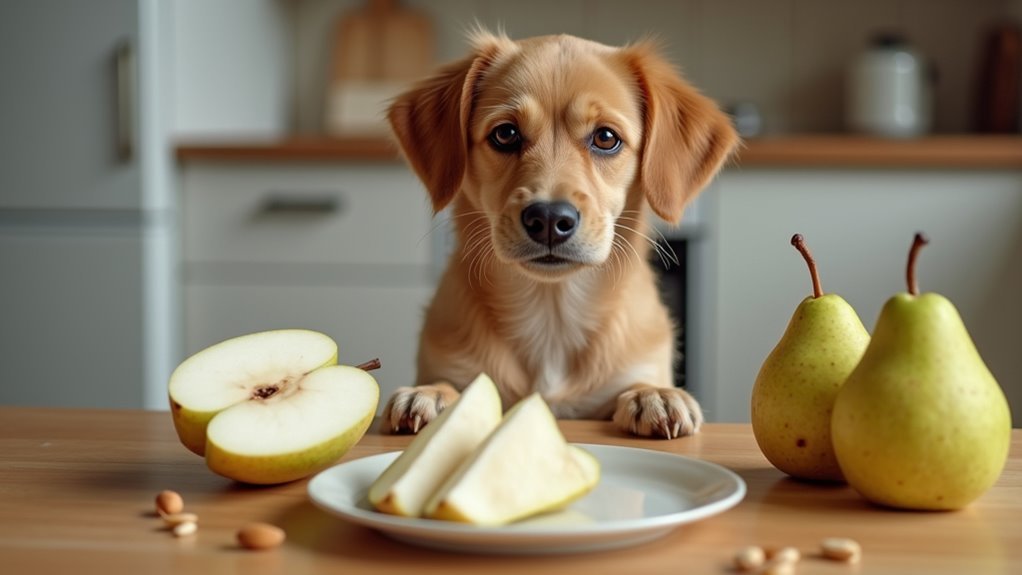
You can share fresh pear flesh with your dog, especially whenever seasonal availability makes ripe pears easy to find. Wash the fruit well, remove the seeds, core, stem, and leaves, then cut it into bite-size pieces. That simple prep keeps things friendly for your pup and easy for you.
Should you like trying pear recipes, keep them plain and skip added sugar or syrup. A few small pieces once or twice a week usually fits well within treat limits.
Because pears are sweet, you’ll want to keep portions small, especially should your dog needs to watch weight.
Are Pears Safe for Dogs?
Although pears are generally safe for dogs, you still need to serve them with care.
You can share a few fresh bites and keep your pup included at snack time.
Choose ripe pear varieties, wash them well, and remove seeds, core, stem, and leaves before you offer any pieces.
Cut the fruit into small chunks so your dog can chew it easily.
- A glossy slice in a bowl
- Tiny cubes on a clean plate
- A wagging tail near your feet
- A pear half with no seeds
- A calm, happy dog waiting nearby
Keep serving frequency low, so pears stay an occasional treat, not a habit.
Too much can upset your dog’s stomach, and that can spoil a good day for both of you.
Should your dog has health issues, consult your vet initially.
What Nutrients Do Pears Offer Dogs?
Pears give your dog helpful vitamins and minerals, including vitamin C, vitamin A, copper, and vitamin K, which support everyday health.
They also add fiber, which can help keep your dog’s digestion moving in a gentler way.
Plus, pears bring a bit of hydration since they hold plenty of water, so they can feel like a light, invigorating treat.
Vitamins And Minerals
Often, a few ripe pear bites can give your dog more than just a sweet taste. You also share vitamin C, vitamin A, copper, and vitamin K in a gentle way that fits pear treats. These nutrients support your dog’s antioxidant content and mineral balance, which helps you feel good about snack time.
- Bright pear cubes on a clean plate
- A few soft bites beside kibble
- Fresh slices with the seeds removed
- A happy tail near the treat bowl
- Small pieces in a calm kitchen scene
Because pears stay low in calories, you can use them for a simple reward without crowding out meals. Whenever you keep portions small, you help your dog enjoy a fruity treat that feels like part of the pack.
Fiber For Digestion
A few crisp pear bites can do more than satisfy your dog’s sweet tooth, because the fiber in fresh pear flesh can help support smooth digestion. You’re not just giving a treat; you’re giving your dog a little help with gut health. Pears offer soluble fiber, which can soften stool and keep gut motility moving at a steady pace.
| Pear nutrient | Digestive role |
|---|---|
| Soluble fiber | Supports easy stool flow |
| Fresh pear flesh | Adds gentle bulk |
| Small portions | Helps prevent tummy trouble |
When you serve pear pieces, you fit right in with pet parents who choose simple, wholesome snacks. Keep the pieces small, and your dog can enjoy a sweet bite without straining the belly.
Hydration Benefits
Sometimes, a few juicy pear bites can do more than taste good for your dog, because they also help add water to the diet in a simple, natural way.
Whenever you share ripe pear pieces, you give your pup a snack with strong water content and a soft texture that feels invigorating.
- a cool, glistening slice in a bowl
- tiny drops on a furry chin
- a gentle crunch after a walk
- a light snack beside fresh water
- a happy tail alongside your side
That extra moisture can support hydration on warm days or after play.
It also works with your dog’s normal meals to help electrolyte balance stay on track.
What Are the Benefits of Pears for Dogs?
Pears can give your dog a few real benefits provided you serve them the right way. They bring fiber, vitamin C, and vitamin A, which can support digestion, immunity, and general wellness. Their crisp texture also makes pear based enrichment activities fun, since your dog gets a tasty reward while staying engaged.
| Benefit | Why it helps |
|---|---|
| Fiber | Supports smoother digestion |
| Vitamins | Helps everyday health |
| Seasonal availability | Makes fresh treats easy to find |
You can feel good offering this fruit as a low-calorie treat that fits into family routines. Just keep it fresh, washed, and free of seeds or core, and your dog can enjoy a sweet snack that feels like part of the pack.
How Much Pear Can Dogs Eat?
Keeping pear portions small is the safest way to share this fruit with your dog, because even healthy treats can upset a sensitive stomach if you overdo them.
You’ll want to ponder in portion sizes, not slices from your own plate. A tiny dog might do best with one or two bite-size pieces, while a bigger dog can handle a few more. Keep treats under 10% of daily calories, and use calorie tracking should your pup get other snacks too.
Try this simple illustration:
- a pebble-sized cube for a toy dog
- a few soft chunks for a spaniel
- pear bits in a food bowl
- a tail wag at snack time
- a calm tummy later
Offer pear only once or twice weekly, so your dog feels included without getting too much fruit.
Can Dogs Eat Pear Seeds?
No, dogs shouldn’t eat pear seeds. Even a few can add seed toxicity risk because they contain trace cyanide.
Should your dog snags one, stay calm, but don’t make it a habit. You can protect your pup through removing every seed before you offer pear flesh, then cutting the fruit into small pieces.
This simple step helps you feel confident at snack time and keeps treats safe. It also reduces garden contamination if dropped seeds end up outdoors, where curious dogs might find them later.
Once you prep pears with care, you join a community of pet parents who put safety foremost. Fresh, seed-free pear pieces are the friendly choice, and your dog can still enjoy a sweet treat without the worry.
Why Stems and Leaves Are Dangerous
You should remove pear stems and leaves before you offer any fruit, because they can carry plant compounds that don’t belong in your dog’s bowl.
They can also irritate your dog’s mouth or stomach, which could leave your pup feeling uncomfortable fast.
And since those bits can be tough and awkward to chew, they might add a choking risk too.
Toxic Plant Compounds
Although pear flesh can be a safe treat, the stems, leaves, and other tough plant parts are a different story because they don’t belong in your dog’s bowl. Whenever you skip them, you help your dog stay in the safe group of pear lovers.
- green leaves that hide cyanogenic glycosides
- stiff stems that carry bitter sap
- small bits your dog may sniff and nudge
- yard clippings mixed with fruit scraps
- sharp plant tissue with plant lectins
These compounds can upset your dog’s body, so you’ll want to remove every stem and leaf before serving pear. You’re not being fussy; you’re being caring.
That simple step helps you protect your buddy and keep treat time relaxed, happy, and safe for everyone at home.
Choking And Irritation
Stash those pear stems and leaves out of reach, because they can do more than upset your dog’s stomach. They can scratch the throat and trigger throat irritation, especially should your dog gulp a stray bit without chewing.
The stem can also splinter, and leaf edges might poke sensitive tissue on the way down. So, whenever you prep pears, strip away every tough part and give only the soft flesh. Cut it into small pieces so your buddy can chew safely and swallow with less risk.
That simple step helps you protect your dog while still sharing a sweet treat. Should your dog seem to cough, gag, or paw at the mouth after eating pear scraps, stop feeding and watch closely.
How to Prepare Pears for Dogs
Fresh pears can make a safe, simple treat for your dog provided you prep them the right way. Start with a ripe pear, then wash it well and trim away the stem, seeds, and core. Gentle peeling techniques can help in case your dog has a sensitive tummy, while leaving the skin on is fine for many pups. Next, cut the fruit into tiny bites so you can share it without stress. Should you desire easy future treats, try portion freezing in a small tray, then pop out one serving at a time.
- shiny fruit on the counter
- a clean cutting board
- careful hands with a peeler
- neat little cubes
- frozen pear gems for later
Keep each serving small, and you’ll fit right in with smart dog parents everywhere.
Can Dogs Eat Pears in Chunks?
Yes, your dog can eat pears in chunks, as long as you keep the pieces small, clean, and safe.
You’re giving a friendly treat, not a full snack bar, so focus on pear chunksafety every time.
Wash the fruit, remove the seeds and core, and cut each chunk to fit your dog’s mouth.
That serving technique helps lower choking risk and makes chewing easier.
Should you share a few pieces, stay calm and watch how your buddy handles them.
Keep portions modest, because too much pear can upset the stomach.
For small dogs, a couple of bite-size chunks could be enough.
For larger dogs, you might offer a few more, but still only as an occasional treat within your regular routine.
Can Dogs Eat Canned or Dried Pears?
Canned and dried pears are usually not the best choice for your dog, even though plain pear flesh can be safe in small amounts. You want the fresh fruit, because preservation methods often add sugar or syrup, and that brings canned drawbacks your dog doesn’t need. Dried pears can also pack more sugar into a tiny bite.
- Imagine a shiny syrupy slice in a bowl.
- Envision a chewy ring stuck to tiny teeth.
- Visualize a label with “no added sugar.”
- Picture a ripe pear on a clean cutting board.
- Picture your dog waiting kindly at your side.
If you do share, choose plain, unsweetened pieces only. Still, fresh pear is easier for you to trust and your dog to enjoy. Use it as an occasional treat, not a regular snack.
Signs Your Dog Ate Too Much Pear
Should your dog got into too much pear, the signs usually show up pretty quickly, and they often look like simple tummy trouble initially. You might notice loose stool, extra gas, or a queasy belly, and your pup could seem off in small but clear ways. Watch for these behavior changes, too, because a tired, restless, or clingy dog often needs comfort. In case your dog has diabetes or a sensitive diet, high sugar can raise concern for sugar toxicity, so take it seriously.
| Sign | What You See | How You Feel |
|---|---|---|
| Loose stool | Frequent bathroom trips | Worried |
| Vomiting | Pear pieces or foam | Frightened |
| Lethargy | Quiet, low energy | Protective |
Should symptoms keep building, call your vet and stay close.
Can Pears Cause Allergies or Upset Stomach?
Yes, pears are usually gentle on your dog’s stomach, but a few dogs can still react with itching, swelling, or loose stools after eating them.
In case you notice vomiting, diarrhea, hives, or face rubbing, stop offering pears and watch your dog closely. Contact your vet right away should the symptoms don’t fade fast, seem severe, or your dog has trouble breathing.
Allergy Signs In Dogs
Even though pears are usually safe for dogs, they can still cause trouble for some pups, especially provided your dog has a sensitive stomach or eats too much at once.
In case you notice itchy skin, watery eyes, or ear rubbing, consider allergy signs. Seasonal pollen can make symptoms look worse, and a genetic predisposition could also play a part.
- Red patches on the belly
- Swollen lips or face
- Sneezing after a bite
- Licking paws nonstop
- Soft tummy sounds
You know your dog best, so trust changes that seem new or odd. A few small pear pieces should feel like a happy treat, not a scratchy surprise.
Should signs keep showing up, skip pears and ask your vet for guidance.
Digestive Upset Symptoms
Should your dog eats pears, a little tummy trouble can happen, especially whenever the pieces are too big or the serving is too much.
You could see loose stools, mild vomiting, gas, or a gurgly belly.
Pear fiber can shift gut motility, and a sudden change in fruit intake could trigger enzyme changes that leave your dog feeling off.
Should your pup has a sensitive stomach, even a small treat can seem like a lot.
Luckily, most dogs bounce back quickly once the pear is out of the menu.
To keep your dog comfy, choose small, fresh pieces and stay aware of how your dog usually handles new foods.
With a calm start and close attention, you’re able to share snacks without upsetting your pack’s routine.
When To Contact Vet
Provided your dog tries pears and then starts acting off, it’s worth paying close attention because allergies and stomach upset can look similar initially. Watch for itchy paws, face rubbing, vomiting, diarrhea, swelling, or repeated lip licking. If your dog seems wobbly, has trouble breathing, or keeps retching, call your emergency contact vet right away.
- A shiny pear slice on the floor
- Sudden scratching near the ears
- A tense belly after a few bites
- Loose stool in the yard
- Water bowl ignored beside the crate
Also take note the symptom timeline. Should signs start within minutes, consider allergy. Should they build over hours, pear upset could be the cause. Either way, keep the fruit out and ask your vet for next steps.
What Other Dog-Safe Fruits Can They Eat?
In case you want to give your dog a fruity treat beyond pears, you’ve got plenty of safe options to choose from. You can share apple slices after removing the seeds and core, and you can offer blueberry berries for a tiny burst of flavor.
Many dogs also enjoy banana coins, which feel soft and easy to chew. For a cool snack, try melon slices or a few seedless watermelon cubes, since they’re juicy and gentle.
You can also mix in strawberry bits or other berry varieties for variety. Just keep each treat small, fresh, and plain, because extra sugar or syrup can upset your pup’s stomach.
Whenever you rotate fruits wisely, you help your dog feel included at snack time.
Frequently Asked Questions
Can Puppies Eat Pears Safely?
Yes, puppies can eat pears safely in small amounts. You should offer a few bite sized pieces; treats should stay under 10% of calories. Remove seeds and core, and use pears for teething relief and portion sizing.
Are Pear Skins Okay for Dogs to Eat?
Yes, you can usually let your dog eat pear skin in small amounts, but watch the texture for chewing ease and consider risks. Keep pieces washed, ripe, and occasional; peeling might help with vitamin retention.
Can Dogs Eat Pear Jam or Pear Sauce?
You should not give your dog pear jam or pear sauce. Pear preserves often contain sugar or syrup, and jam toxicity risks come from added ingredients. Stick with plain, fresh pear pieces instead, in very small amounts.
Should Pears Be Refrigerated Before Serving to Dogs?
You don’t have to refrigerate pears, but you can serve them chilled for an invigorating treat. Slice thin, remove seeds, and offer only a little—your dog’ll reckon it’s the greatest snack ever, perhaps!
Can Dogs With Kidney Disease Eat Pears?
You can offer pears to dogs with kidney disease only sparingly, provided your vet agrees. Choose kidney friendly portions, watch electrolyte considerations, remove seeds and core, and skip sugary canned pears or treats.