

Dogs commonly sleep 12 to 18 hours daily. Puppies and senior dogs often rest even longer. Excessive napping can reflect breed traits, energy level, recent activity, or underlying health changes. Observing shifts in sleep patterns, energy during awake periods, appetite, and behavior provides clues about causes. Small changes in routine or a vet check can clarify whether sleepiness is normal or signals a problem.
Why Does My Dog Sleep So Much?
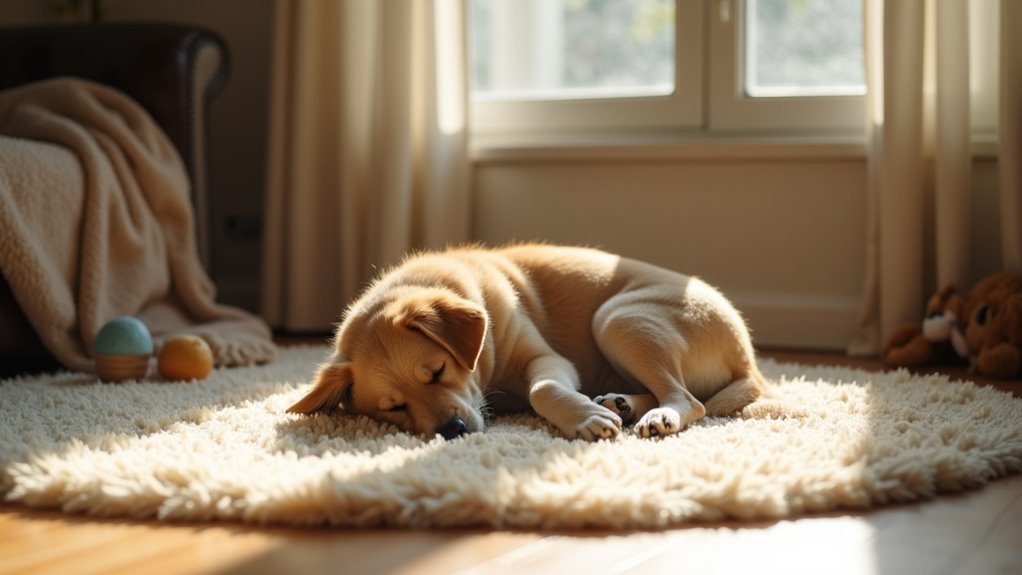
Your dog might sleep in nap clustering bursts because his body likes short rest breaks across the day.
A calm sleep environment helps him settle, especially should the house feel busy or loud.
After play, walks, or training, he could crash for a bit, then wake and check in with you again.
That pattern can look odd, but it often supports recovery, memory, and steady energy.
Should your dog seem relaxed, eats well, and moves comfortably, his long naps can simply be part of his normal rhythm.
You can feel good being aware many dogs just rest this way.
How Much Sleep Dogs Need by Age
As your dog grows, his sleep needs can change a lot, and that shift is often completely normal. Your puppy might sleep 18 to 20 hours a day, and those puppy REM cycles help his brain, body, and immune system grow strong.
As he becomes an adolescent, he usually needs less sleep than a pup, but adolescent naps still matter, often totaling 12 to 16 hours.
Once he reaches adulthood, many dogs settle into about 12 to 14 hours of rest, though some healthy dogs sleep a bit more or less.
Later, senior dogs often slow down again and could need 14 to 18 hours. So should your dog seem extra sleepy, age might be the reason.
Dog Sleep Patterns at Home
At home, your dog’s sleep pattern can tell you a lot about how he feels, what he does all day, and whether his body is just taking a normal break.
You might see long crate naps after a busy morning, then quick stretch breaks before he settles again.
Some dogs love window watching, then drift off once the room gets quiet.
Others nap on and off beside you, which can feel like a sweet little badge of trust.
Should your dog sleep most of the day but still wakes alert, eats well, and greets you with energy, that rhythm often fits his life.
Still, should his sleep seem new, heavy, or hard to wake from, pay close attention.
Your steady routine helps him feel safe and keeps his rest more regular.
Why Dogs Sleep More After Exercise
After a good workout, it’s very common for your dog to crash on the floor and stay there a while. You may see this and worry, but that pause often helps with post exercise recovery.
When your dog runs, jumps, or plays hard, its muscles work fast and need time to reset. Sleep gives the body space for muscle repair, energy balance, and calm breathing. It also helps your dog process the day’s activity, so tomorrow feels easier. You can regard that nap as the body’s quiet team huddle after the game.
Should your dog look relaxed, drink water, and wake up normally, this extra rest is usually a healthy sign. Most dogs bounce back with short naps, then settle into their familiar routine again.
Common Non-Medical Reasons Dogs Sleep More
Your dog might sleep more simply because of age and breed, since puppies, older dogs, and large breeds often need extra rest.
Daily activity also matters, because a dog that runs, plays, and learns a lot will usually nap more to recover.
Should your dog’s sleep looks normal for their stage of life and routine, it could be just part of how they’re built.
Age And Breed
At what point you’re contemplating why your dog seems to sleep all the time, age and breed are two of the biggest clues.
Should you’ve got a puppy, those puppy sleep cycles can look wild, but they’re normal because growing bodies and busy brains need lots of rest.
Once your dog gets older, geriatric naps often stretch longer, and that slower pace can feel familiar and comforting.
Breed matters too. Big dogs like Mastiffs or Newfoundlands often snooze far more than tiny, spry companions. Some breeds are simply built to save energy and recover slowly.
So provided your dog’s sleep fits its stage and breed, you’re likely seeing healthy rest, not laziness.
That kind of comprehension can help you feel more at home with your dog’s rhythm.
Daily Activity Levels
Even although age and breed make a lot of sense, daily activity can still explain a sleepy dog too. Should you pack your dog’s day with walks, play, and training, you might notice more deep rest afterward. That’s normal recovery, not laziness.
On the other hand, a dog with too little movement could nap from boredom, especially when your mental stimulation runs thin. You can see this whenever your dog stares, sighs, then curls up again.
A steady feeding schedule also matters because predictable meals help shape energy and rest times. So should your dog seems drowsy, check the day initially. More exercise, sniffing games, and short training sessions can build a better rhythm and help your dog feel included, busy, and happily tired.
Signs Your Dog’s Sleep Is Unhealthy
In case your dog seems sleepy all day, can’t stay awake provided you’d expect, or acts drained after normal activity, that’s worth watching closely.
You should also notice whether your dog gets restless at night, paces, or keeps changing sleep spots instead of settling down.
Whenever sleep shifts suddenly or looks very different from your dog’s usual pattern, it can point to a problem that needs attention.
Excessive Daytime Sleepiness
A dog that sleeps a lot is often just being a dog, but heavy daytime sleep can sometimes point to a problem. Should your dog seems glued to the couch after meals, or stays groggy for hours, watch for sleep inertia that doesn’t fade.
Normal daytime napping should still leave your dog alert, keen, and ready to join you. Whenever sleepiness looks new, extreme, or out of place, you should pay attention.
It could come with low energy, slow movement, or less interest in play, food, and family time. You know your dog’s usual rhythm best, so trust that bond.
Should the extra sleep keeps showing up, or your dog seems hard to wake, a vet visit can help you rule out pain, illness, or another health issue.
Restlessness At Night
Restless nights can be a real clue that your dog’s sleep isn’t as healthy as it should be. Should your pup keep shifting, whining, or getting up often, you could notice nocturnal pacing that breaks up the whole night.
You may also see bedroom anxiety, especially should your dog follow you, scratch at the door, or can’t settle after lights out. These signs can make both of you feel worn down, and that’s tough when you just want calm, shared rest.
Try to watch for patterns, like noise, stress, or discomfort, that seem to spark the behavior. Once you understand what’s disturbing your dog, you can help create a safer, quieter space.
Small changes in bedtime routine frequently make nights feel more peaceful.
Unusual Sleep Changes
Sometimes a dog’s sleep changes in ways that don’t match their normal routine, and that can feel worrying fast.
In case your dog starts sleeping far more, crashing hard after tiny walks, or acting dull when they’d usually perk up, trust that shift. You know your dog best, so notice patterns around appetite, energy, and mood too.
Seasonal fatigue can happen, but it usually passes with daylight and activity changes. Medication lethargy can also make your dog seem extra sleepy after a new prescription or dose change.
Still, should the sleep change lasts, comes with limping, coughing, thirst, weight gain, or confusion, your vet should check it. You’re not overreacting. You’re paying attention, and that’s exactly what good care looks like.
When Dog Sleep Signals Illness
Whenever your dog starts sleeping far more than usual, it can be more than just a lazy day at home. You know your dog’s normal rhythm, so watch for behavioral indicators like low energy, hiding, poor appetite, coughing, limping, or trouble standing. These changes can point to pain, infection, thyroid trouble, diabetes, or another issue that needs care.
Provided your pup seems hard to wake, drinks more or less than usual, or acts confused, don’t brush it off. Sleep diagnostics at home aren’t perfect, but they can help you notice a pattern fast. Trust your gut and call your vet provided the extra sleep lasts more than a day or two, or provided it comes with vomiting, fever, or sudden weakness.
Breed and Size Differences in Dog Sleep
Even within the same home, two dogs can sleep very differently because breed and body size shape how much rest they need. You might notice that a big dog sprawls out and naps longer, while a lively little dog pops up more often.
Large breeds often need extra recovery time because their bodies work harder, and their coat insulation can help them stay cozy during long rests. Smaller, high-energy breeds usually stay alert longer and move more between naps.
Your dog’s metabolic rate also matters, since faster burn rates can make some dogs seem busy even after a short snooze. So in case your pup’s sleep style looks different from a friend’s dog, that’s often normal. Breed and size help explain those lovable, snoozy habits.
When to Call Your Vet
Should your dog’s sleep seems tied to breed or size, the next question is whether that extra rest still fits what’s normal for your own dog.
In case your dog also seems weak, stiff, clingy, or hard to wake, call your vet soon.
You should check in whenever sleep changes come with appetite loss, weight gain, thirst, pain, or bathroom changes. Those signs can point to illness, not just a cozy schedule.
Also, suppose your dog’s sleep hygiene looks off because noise, stress, or behavioral triggers keep shifting the routine, your vet can help you sort out what’s happening.
You know your dog best, and trust matters here. Whenever something feels off for more than a few days, reach out. That call can bring real peace of mind.
Frequently Asked Questions
Can My Dog Dream While Sleeping?
Yes, your dog can dream while sleeping. Their dream cycles often trigger little paws, twitches, or whimpers, like a private movie. In REM behavior you are seeing their brain replay safe, familiar moments.
Do Dogs Have Circadian Rhythms Like Humans?
Yes, your dog does have an internal clock and daily rhythms, though they are looser than yours. You can help them feel secure by keeping meals, walks, and bedtime predictable so they stay happy and settled.
Why Do Dogs Twitch or Bark in Their Sleep?
Your dog may twitch or bark during REM sleep because dreaming can trigger muscle spasms and small movements. These are usually harmless signs of normal brain activity, but unusual or very frequent episodes should be checked by a veterinarian.
Can Changes in Temperature Affect My Dog’s Sleep?
Yes, temperature changes can affect your dog’s sleep. If you keep their bed in a cozy, draft free nook they will rest easier; too much heat or cold can disrupt temperature comfort and seasonal shedding.
Does My Dog Need a Special Bed for Better Sleep?
Yes, you can help your dog sleep better with a bed that offers orthopedic support and a non slip base. You’ll give older, large, or achy dogs extra comfort, stability, and a cozy place to belong.