

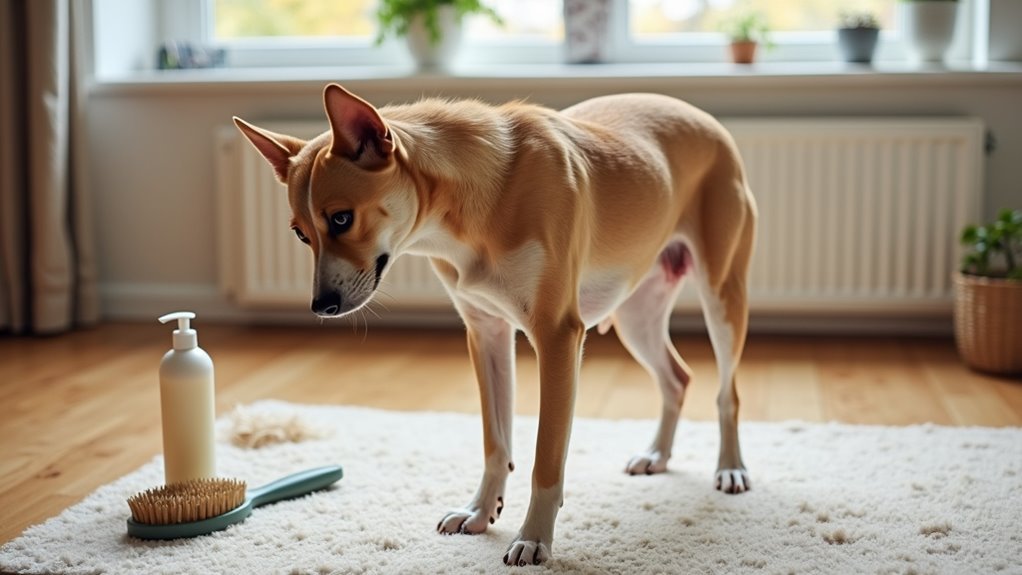

Dogs scratch because something irritates their skin; common causes include fleas, allergies, dry skin, and infections. Flea bites trigger intense itching and small red bumps. Environmental or food allergies often cause persistent scratching and hair loss. Dry skin from bathing or low humidity leads to flaky, itchy patches. Skin infections need veterinary care and can turn mild irritation into painful sores.
Common Reasons Dogs Scratch Excessively
Whenever your dog is scratching a lot, it usually means something is making the skin feel irritated, uncomfortable, or downright miserable.
Often, you’re coping with fleas, ticks, mites, or mange, and even one flea bite can spark big itch.
Allergies can do the same, especially whenever pollen, mold, dust, or certain foods set off seasonal itching.
You could also notice trouble after contact with soaps, detergents, or rough fabrics.
Skin infections, like yeast or bacteria, can join the party and make the itch worse.
In some cases, play induced scratching or seasonal shedding can look suspicious too, but they usually don’t explain nonstop scratching.
Should your dog keep going, you’re not alone, and getting the real cause matters.
Dry Skin and Dog Itching
Sometimes, dry skin is the simple reason your dog won’t stop scratching. You might notice dull fur, tiny flakes, or extra chewing after bath time or during cold months. That’s frustrating, but you’re not alone, and small changes can help your buddy feel better fast.
- Use gentle shampoo and avoid overbathing.
- Try humidity control indoors, especially in winter.
- Add omega supplements should your vet say they fit your dog’s needs.
- Brush your dog often to spread natural oils.
When the skin stays flaky, you could also check bedding, detergent, and grooming products for anything harsh. A calm skin routine gives you both a better day and less scratching around the house.
When Allergies Make Your Dog Itch
Allergies can make your dog scratch nonstop whenever pollen, mold, dust mites, food, or even flea bites set off that itchy skin reaction.
You might also notice red skin, licking, ear rubbing, or small bumps that seem to flare up at the same time.
Fortunately, once you spot the trigger, you can start easing the itch with the right care and vet-guided relief.
Allergy Triggers
A dog can turn into a nonstop scratch machine fast, and allergies are one of the biggest reasons why. You might notice the trigger hiding in everyday life.
Seasonal pollens can set off spring or fall itching, while contact allergens like shampoos, cleaners, or grass can bother your dog after one walk. Food can also play a role, especially whenever the itch seems to hang around.
To help you sort it out, watch for patterns and ask yourself:
- Does the scratching flare up outdoors?
- Does it start after baths or yard time?
- Does it improve in winter?
- Does it stay steady all year?
If you spot the pattern, you can feel less alone and make smarter next steps with your vet.
Signs Of Allergy Itch
In case allergy itch begins, it often shows up in a few very clear ways, and your dog could look like they just can’t get comfortable.
You might notice nonstop paw licking, ear scratching, or facial rubbing on the carpet or couch.
Many dogs also bite at their feet, belly, or armpits, where the skin feels most irritated.
These signs often come and go with seasonal patterns, so spring pollen or late summer mold can cause the itching to flare up.
Your dog might also shake their head, whine a little, or keep shifting positions because the itch won’t quit.
Once you see this pattern, you’re not alone.
It’s a common allergy story, and your dog deserves to feel calm again.
Relief Options
Relief starts with finding out what’s really making your dog itch, because the best fix depends on the cause. Provided allergies are to blame, you can help your dog feel calmer fast.
- Ask your vet about medicine that eases inflammation and itch.
- Try home remedies like a gentle oatmeal bath or a cool rinse.
- Wash bedding often and vacuum to cut down on pollen and dust.
- Use behavioral modification through redirecting licking, scratching, and chewing with walks, play, and chews.
You’re not alone in this. Small changes can bring real comfort, and your dog can start feeling like themselves again.
Should food or contact triggers seem likely, your vet could suggest a diet trial or swapping shampoos. With patience, you can build a relief plan that fits your home and your dog.
Fleas and Parasites That Cause Dog Itching
Fleas can make your dog scratch nonstop, and even one bite can trigger big discomfort should your dog’s skin reacts strongly.
Mites can also hide on the skin and cause intense itching, redness, and hair loss that’s hard to ignore.
Ticks mightn’t always cause the worst itch, but they can still irritate your dog and leave you both coping with a very annoying problem.
Flea Bites And Itch
A single flea bite can set off a big scratching fit, especially whenever your dog’s skin is sensitive to flea saliva.
You might notice that one tiny pest brings a huge reaction, and that can feel unfair for both of you.
During seasonal resurgence, fleas multiply fast and keep the itch going. To help you stay ahead, watch for these signs:
- Quick biting at the tail base
- Red, irritated skin
- Small black flea dirt
- Restless pacing or chewing
If your dog keeps scratching, don’t wait and hope it fades.
Regular flea control helps break the cycle, and it also gives your dog relief from that constant buzz under the skin.
If you act promptly, you protect your dog’s comfort and help your whole home feel calmer too.
Mite Infestations In Dogs
Mite infestations can sneak up on your dog and make the itching feel nonstop. Whenever Demodex mites grow out of balance, you might notice patchy hair loss, red skin, and sore spots that keep your dog restless.
Sarcoptic mites can cause even stronger scratching, especially around the ears, elbows, and belly. You could also see scabs, dandruff, or thickened skin, and your dog might seem tired from all the discomfort.
A vet can confirm the cause with a skin examination and guide Demodex management with medicine and follow-up care. Quick treatment matters because some mites spread between pets, and there can be Zoonotic risk for people too. With the right help, you and your dog can get back to calmer, more comfortable days.
Tick Irritation And Scratching
As your dog keeps scratching, fleas and other outside parasites are often the initial suspects, even should you not spot them right away. You’re not imagining the worry; these tiny pests can make skin feel miserable fast. Tick bites could stir up tick saliva reactions, and flea bites can bring local inflammation that keeps the itch going.
Look for 1. nonstop chewing, 2. red bumps, 3. scabs near the tail, and 4. restless pacing. You can also find tiny black specks, loose fur, or a sudden need to rub on rugs. Because parasites spread easily, your dog might need quick relief and a careful check.
If you act promptly, you help your dog feel safe, comfortable, and back with the pack.
Skin Infections That Make Itching Worse
Skin infections can make your dog’s itching feel much worse, especially in case the skin already looks sore or irritated.
Whenever your dog keeps scratching, bacteria can sneak in and cause secondary pyoderma, which brings more redness, bumps, and discomfort. Yeast can also build up, and fungal overgrowth often adds a musty smell and greasy skin.
You might notice your dog licking one spot again and again, or shaking after an ear infection flares up. These infections don’t just sit there, they feed the itch-scratch cycle and make your dog feel stuck in it.
Should you spot crusts, hair loss, or tender skin, your vet can check for the cause and help you calm things down. Prompt care can help your dog feel like themself again.
Food Allergies Behind Dog Scratching
Even after you’ve dealt with a skin infection, the scratching could keep going should food be part of the problem. You’re not alone, and this can feel frustrating for both you and your dog. Food allergies often cause year-round itch, and they might show up with tummy upset too.
To find the trigger, your vet might suggest:
- Elimination trials to remove likely ingredients.
- Novel proteins your dog hasn’t eaten before.
- Careful label checks so treats don’t undo progress.
- Slow, steady tracking of skin changes and poop.
During this plan, you’ll need patience, because small bites from the wrong snack can muddy the results. Still, each step brings you closer to comfort, and that’s worth it for your shared, scratch-free life together.
Common Environmental Triggers
Many dogs start scratching because something in the environment is irritating their skin or stirring up an allergy. You might notice your dog itch more whenever pollen rises, dust settles, or mold grows indoors.
Airborne pollutants, like smoke and traffic fumes, can also bother sensitive skin and make your dog rub, lick, or chew. As seasonal humidity changes, the skin can feel drier or more reactive, so the itch seems to flare up fast.
You’re not alone should this feel frustrating, because these triggers can hide in plain sight. Try watching for patterns after walks, windy days, or time near damp areas. Small changes at home and outside could make your dog feel calmer and more comfortable.
How Grooming Helps Reduce Itching
A good grooming routine can do a lot to ease your dog’s itch, because it helps you catch problems promptly and calm irritated skin before it gets worse.
- Brush often to lift loose hair, dirt, and tiny irritants from the coat.
- Check skin folds, paws, and ears for redness, flakes, or trapped debris.
- Use gentle shampoo and follow with coat conditioning to support moisture.
- Finish with light skin massage, which can enhance comfort and help you spot tender spots.
When you groom with care, you also build trust, and your dog starts to see the routine as a safe, calm time with you.
That steady handling can make itchy days feel less stressful for both of you, while keeping the coat cleaner and the skin more comfortable.
When Itching Needs a Vet Visit
Sometimes, a little scratching is normal, but your dog needs a vet visit should the itching keeps going, gets worse, or starts to change how they act. You know your dog best, so trust your gut whenever something feels off.
| What you notice | Why it matters |
|---|---|
| Red skin or sores | It can mean irritation or infection |
| Hair loss or scabs | The itch could be causing skin damage |
| Constant ear rubbing | Ear trouble often needs care |
| Swelling, hives, or trouble breathing | These are emergency signs |
Owner education helps you spot whenever home care isn’t enough. Were your dog seems restless, won’t sleep, or keeps chewing one spot, make the call. Quick help can ease their discomfort and help your pup feel safe again.
How Vets Diagnose Dog Itching
To find out why your dog won’t stop scratching, your vet will start with a close look at your pup’s skin, ears, and coat. Then they’ll use diagnostic algorithms to guide the next steps.
- They ask about fleas, diet, bathing, and any recent changes.
- They check for parasites, infection, and signs of dry or irritated skin.
- They use differential diagnostics to compare allergies, hormone issues, and skin disease.
- They might suggest allergy testing, skin scrapings, or lab checks, then track response monitoring over time.
This process helps you feel less lost because each clue narrows the cause. Your vet isn’t guessing; they’re building a clear image so your dog can get the right care and you can breathe easier too.
Treatment Options for Itchy Dogs
You can start with simple relief like soothing shampoos, medicated sprays, or creams that calm irritated skin.
Should the itch keeps coming back, your vet might use oral itch medicine to break the scratch cycle fast.
Whenever allergies are behind the problem, a management plan can help you control triggers and keep your dog more comfortable day after day.
Topical Relief Options
Topical relief can bring real comfort whenever your dog is scratching nonstop, and it often works best as you also figure out what’s driving the itch. You can join many caring dog owners alongside trying gentle products initially.
- Apply Herbal balms to calm dry, irritated patches.
- Use Cooling sprays for quick, soothing relief after a walk or bath.
- Choose oatmeal rinses or wipe-downs to ease surface discomfort.
- Ask your vet about medicated shampoos once skin looks red or greasy.
These options can help you break the scratch cycle without overwhelming your pup. Still, you’ll want to keep the skin clean and dry, since damp fur can make trouble linger.
With a little patience, you and your dog can get back to calmer, cozier days together.
Oral Itch Medications
Whenever topical care isn’t enough, oral itch medications can help your dog feel better from the inside out. Your vet might suggest antihistamines, steroids, or newer options whenever scratching keeps stealing your dog’s peace.
With careful antihistamine dosing, you can ease mild itching, but the right dose depends on your dog’s size, health, and other medicines. For stronger flare-ups, prescription tablets can calm inflammation and break the scratch cycle fast.
You could also hear about novel therapies that target itch signals more directly, which can be useful whenever older medicines don’t help enough. Because every itchy dog is different, your vet will match the medicine to your dog’s skin, comfort, and daily life. That way, you can support your dog with confidence and less worry.
Allergy Management Plans
Building an allergy management plan can feel overwhelming at the outset, but it’s often the key to calming a dog’s nonstop scratching. You’re not alone in this, and small changes can make a big difference.
- Work with your vet to find the trigger, whether it’s fleas, pollen, or food.
- Use tailored diets whenever food allergies seem likely, and stick with the plan.
- Keep up with flea control and rinse paws after outdoor time.
- Support stress management with calm routines, play, and rest.
Next, pair these steps with skin care that fits your dog’s needs. Gentle baths, clean bedding, and quick treatment for flare-ups help stop the itch-scratch cycle before it takes over.
Whenever you stay consistent, you give your dog real relief and a better chance to feel safe again.
Frequently Asked Questions
Can Anxiety Alone Make My Dog Scratch Constantly?
Yes, anxiety alone can make your dog scratch constantly, like a buzzing alarm. Separation anxiety or attention seeking can drive compulsive scratching, but you will still want to rule out fleas, allergies, or skin irritation.
Is a Single Flea Bite Enough to Cause Severe Itching?
Yes. If your dog has flea hypersensitivity, even one bite can trigger intense itching. You could see bite sensitization, so your dog scratches hard, chews, or licks. Do not wait; ask your vet today.
Do Hormonal Problems Like Cushing’s Disease Cause Itching?
Yes, hormonal problems like Cushing’s disease can cause itching. You may notice hormonal itching from endocrine causes, along with hair loss and oily skin. If your dog’s scratching seems stubborn, your vet can help.
Can Cleaning Products or Fertilizers Trigger My Dog’s Itching?
Yes, cleaning products and fertilizers can trigger your dog’s itching through chemical sensitivity and residue irritation. Rinse their paws, keep your dog off treated areas, and ask your vet if the scratching does not stop.
Why Does My Dog Scratch More After Bathing?
You might think bath time would soothe your dog, but it can leave skin residue or the wrong water temperature behind, which dries sensitive skin and makes itching worse. Try a gentler shampoo, lukewarm baths, and thorough rinsing.