

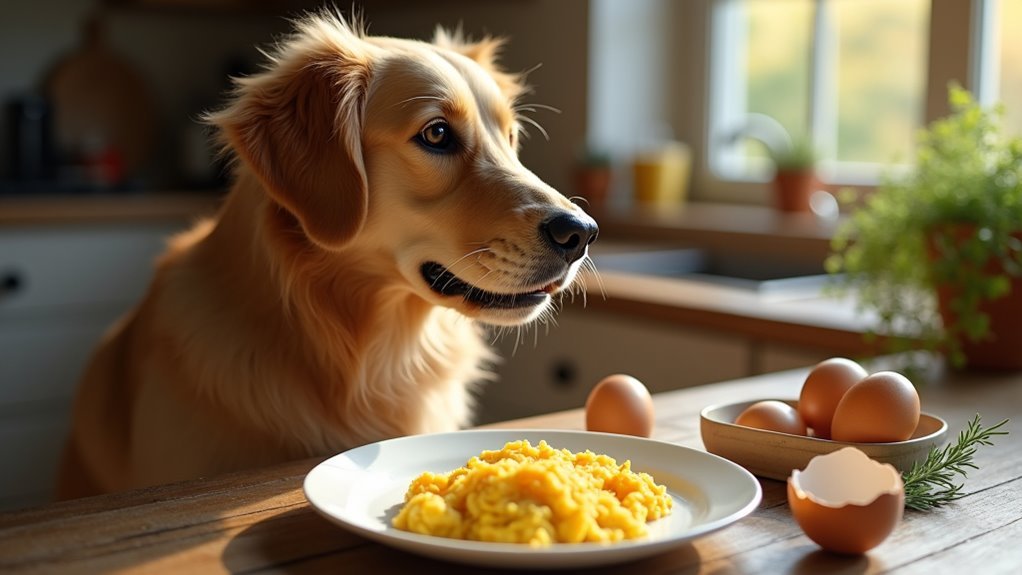

Yes — plain cooked eggs are safe for most dogs and can be a nutritious addition to their meals. Eggs offer high-quality protein, essential amino acids, and vitamins like B12 and riboflavin. Proper cooking eliminates harmful bacteria and makes nutrients easier to absorb. Feed eggs in moderation so they complement, rather than replace, balanced dog food. Avoid added salt, oils, seasonings, and raw egg preparations.
Are Eggs Safe for Dogs?
Yes, eggs can be safe for dogs whenever you serve them cooked, plain, and in the right amount. You can feel good offering them as a small treat whenever you keep dietary moderation in mind.
A steady feeding schedule helps you avoid overdoing it and keeps your dog’s tummy happier. Start with a tiny bite, then watch for itching, vomiting, or loose stool. Provided your dog does fine, you can give eggs a few times each week.
Still, eggs shouldn’t replace balanced meals, and raw or undercooked eggs aren’t worth the risk. Plain boiled or scrambled eggs work best, because rich add-ins can upset your dog’s stomach. As long as you stay careful, you help your dog join in safely.
What Health Benefits Do Eggs Offer Dogs?
Eggs can give your dog high-quality protein, which helps support strong muscles and steady energy.
They also bring useful vitamins and minerals that can help round out a balanced diet.
Plus, the healthy fats in eggs can support your dog’s skin and coat, so your pup might look as good as they feel.
Protein for Muscle Health
A plain, cooked egg can give your dog a strong protein lift that helps support muscle repair and maintenance.
Once you share one, you’re giving your buddy nutrients that fit well with muscle recovery and amino balance, so active dogs can feel ready for their next romp.
- Protein helps rebuild worn muscle after play or training.
- The amino acids in eggs support steady tissue upkeep.
- A small serving can help your dog feel satisfied between meals.
- You can add eggs to your routine as an easy, friendly treat.
Because you want your dog to thrive beside you, serve eggs plain and cooked.
That keeps the benefit simple and safe, while still giving your pup a tasty surge that feels like part of the pack.
Essential Vitamins and Minerals
Along with helping your dog build strong muscles, cooked eggs also bring a nice mix of vitamins and minerals that support everyday health. You give your pup vitamin A for eye support, vitamin B12 for nerve function, and riboflavin for energy use.
You also offer folate and selenium, plus small amounts of iron, zinc, and phosphorus. This micronutrient collaboration helps your dog’s body work smoothly, because each nutrient plays a different role.
Cooked eggs also improve trace element bioavailability, so your dog can use these minerals more easily than from many richer snacks. Whenever you add eggs in moderation, you’re giving your dog a simple, nourishing lift that fits into a balanced routine and helps your buddy feel cared for.
Healthy Fats and Skin
Just as significant, the healthy fats in cooked eggs can help your dog’s skin stay calm, soft, and less flaky.
Whenever you add a little egg to meals, you might notice better coat elasticity and a shinier look over time.
These fats also support omega 3s in the diet, which can help your dog feel more comfortable from the outside in.
Keep it plain and cooked, so your pup gets the good stuff without extra grease or seasoning.
- You can serve boiled or scrambled egg in small bites.
- You can watch for a smoother, less brittle coat.
- You can pair eggs with a balanced meal for steady support.
- You can stop should your dog seem itchy or upset
How Often Can Dogs Eat Eggs?
You can give your dog eggs a few times a week, as long as you keep the portions small and plain.
The right amount depends on your dog’s size, so a small dog might only need a quarter egg while a larger dog can handle more.
Should you start slowly and watch for tummy trouble or itching, you can see what works best for your dog.
Feeding Frequency
Dogs can eat eggs a few times a week, and that’s usually enough to give them a tasty lift without overdoing it.
You can make egg time part of your routine, then watch how your dog feels after each serving. Should your dog do well, you can keep it steady with a few training treats on busy days.
During seasonal adjustments, you might notice appetite changes, so stay flexible and keep eggs occasional.
- Offer eggs on set days so your dog knows what to expect.
- Skip eggs when your dog seems uneasy after the last meal.
- Use cooked eggs as a small reward, not a daily habit.
- Ask your vet beforehand in case your dog is young or has health needs.
Portion Size
Portion size matters just as much as how often you offer eggs, because even a healthy treat can become too much provided the serving is too big. For portion control, consider small and steady, not generous and random. A few bites can fit nicely into your dog’s day with the right caloric adjustment.
| Dog size | Egg amount | Frequency |
|---|---|---|
| Small | 1/4 to 1/2 egg | 2 to 3 times weekly |
| Medium | 1/2 to 1 egg | 2 to 3 times weekly |
| Large | Up to 1 egg | 2 to 3 times weekly |
You can start lower should your dog be new to eggs. Watch for tummy upset, and keep eggs under 10% of daily calories so your pup stays happy, balanced, and right at home with you.
How Should You Cook Eggs for Dogs?
Start with simple cooking methods so the eggs stay safe and easy on your dog’s stomach. You can boil, scramble, or steam poached them, as long as you skip salt, butter, and oil. Keep it olive oil free, too, so you don’t add extra fat. Cook the egg until both the white and yolk are firm, because raw parts can carry germs. Then let it cool before you serve it.
- Use plain water or a dry pan.
- Stir scrambled eggs gently.
- Mash cooked egg for tiny mouths.
- Watch your dog after the initial taste.
When you keep it simple, you help your dog feel included at mealtime without upsetting their belly.
What’s the Best Way to Serve Eggs to Dogs?
You’ll want to serve your dog’s eggs fully cooked and plain, since that keeps them safe and easy to digest.
Start with a small portion, because even a healthy food can upset your dog’s stomach in case you give too much at once.
As you watch how your dog handles it, you can use eggs as a simple, nourishing treat in the right amount.
Cooked Egg Safety
Cooking eggs is the safest and easiest way to share them with your dog, because heat lowers the risk of harmful bacteria and makes the egg gentler on the stomach.
You can keep it simple and still feel good about what you’re serving. Follow basic temperature guidelines so the whites and yolks set fully, then cool the egg before you offer it. That helps with yolk preservation in a safe, easy-to-eat form.
- Boil, scramble, or poach the egg plain.
- Skip salt, butter, oil, and spices.
- Let it cool so your dog doesn’t rush.
- Offer cooked egg as a calm, shared treat.
When you prepare it this way, you’re giving your dog something kind, familiar, and easier to digest.
Serving Size Tips
Whenever you serve eggs to your dog, portion size matters just as much as how you cook them. Start small, then watch how your pup handles it. For tiny dogs, a quarter egg is often enough. Medium dogs can usually handle half to one egg, while larger dogs might do well with one egg.
Keep treats under 10% of daily calories, so calorie counting helps you stay on track. Because eggs add extra protein and fat, you don’t need to offer them often. A few times a week is plenty for most dogs.
Should your dog be new to eggs, use portion control and give only a bite or two initially. That way, you can spot tummy trouble early and keep mealtime safe, simple, and part of your shared routine.
How Much Egg Can Dogs Eat?
How much egg your dog can eat depends mostly on size, weight, and general diet, so a little goes a long way. With good portion control, you can fit eggs into your dog’s day without crowding out regular meals. Use calorie tracking so treats stay under 10% of daily intake, and keep servings plain and cooked.
- Small dogs usually do well with 1/4 to 1/2 egg.
- Medium dogs can often handle 1/2 to 1 egg.
- Large dogs might’ve up to 1 egg.
- Serve eggs a few times a week, not every day.
If your dog is new to eggs, start small and watch closely. That way, you’ll feel confident, and your dog can enjoy a tasty bite that still fits the pack’s routine.
Are Raw Eggs Safe for Dogs?
Raw eggs aren’t the safest choice for dogs, even though they could seem like a quick, natural snack. You want your dog to feel good, so it’s smart to skip raw eggs and choose cooked ones instead.
Raw eggs can carry salmonella, which makes salmonella prevention a real priority in your kitchen. They can also affect biotin absorption over time, so your dog might miss out on a helpful nutrient.
In the event you do share eggs, cook them fully and serve them plain. That keeps things simple and lowers risk.
Because your dog deserves snacks that support health, not stress, cooked eggs give you a safer path. Should your pup have ever had a sensitive stomach, this choice can feel even more reassuring.
Can Dogs Eat Eggshells?
Eggshells are usually not the best choice for dogs, even though they could seem harmless at initial glance. You might believe they add a calcium source, but the shell texture can feel sharp and rough in your dog’s mouth and stomach.
- Small pieces can still scratch or bother your dog.
- Larger bits could cause choking.
- The powder can help only provided you prepare it safely.
- Plain cooked eggs give you a softer option.
In case you want to share eggs with your pup, stick with fully cooked, plain egg instead. That way, you keep things simple and friendly for your dog’s tummy.
Whenever you’re unsure, ask your vet what fits your dog’s needs best. You and your dog deserve choices that feel safe, calm, and easy together.
Can Dogs Be Allergic to Eggs?
Yes, dogs can be allergic to eggs, and it can feel frustrating whenever a food that seems simple causes trouble. Should your dog has food allergies, their immune response could see egg proteins as a threat. You might notice that eggs don’t sit well for every dog, even once cooked and plain.
That doesn’t mean your dog is being picky or difficult. It just means their body needs a different choice. Whenever you try eggs for the initial time, offer a tiny amount and watch your dog closely. Should eggs don’t agree with your dog, you can still find plenty of other safe, tasty foods that fit your routine and help your pup feel included at mealtime.
What Are the Signs of Too Many Eggs?
Should your dog has had too many eggs, the signs usually show up in their tummy initially. You might notice loose stool, gas, or vomiting, and that can feel worrying whenever you’re trying to do right toward your buddy.
After that, watch for mild behavioral changes like restlessness, low energy, or skipping meals. Those shifts can occur because the extra eggs upset digestion or create a nutrient imbalance in case treats crowd out regular food.
- Belly rumbling or bloating
- Diarrhea that starts soon after eating
- Itchy skin or paw licking
- A sudden drop in appetite
Provided these signs keep going, pause eggs and call your vet. Small portions help you keep mealtime safe and comfortable for your dog.
Can Puppies and Senior Dogs Eat Eggs?
For a puppy introduction, start with a tiny bite of fully cooked egg and watch how your pup feels for the next day. That slow start helps you spot tummy trouble or allergy signs initially.
For senior supplementation, eggs can add gentle protein and useful nutrients, which might support older joints and muscles. Keep portions small, because treats shouldn’t crowd out regular meals.
You can offer eggs a few times a week, provided your dog’s vet agrees. Should your buddy have a health issue, ask beforehand.
Then you can share this simple treat with confidence and calm.
Which Egg Dishes Should Dogs Avoid?
Even though eggs can be a healthy treat, some egg dishes are best kept off your dog’s plate. You want your pup to stay safe, so skip dishes that add extra fat, salt, or concealed ingredients. Runny yolks can leave germs behind, and they’re not worth the gamble. Fried omelets might taste great to you, but butter, oil, cheese, and spices can upset your dog’s stomach.
- Avoid raw egg dishes and soft centers.
- Skip fried eggs cooked in grease.
- Leave out omelets with onions or garlic.
- Don’t serve egg dishes with heavy sauces.
When you choose plain food, you help your dog feel included at mealtime without risking an upset belly. Simple cooked eggs are the friendlier pick, and your dog gets the treat you both can feel good about.
How Can You Feed Eggs Safely?
To feed eggs safely, start with plain, fully cooked eggs and keep the serving small enough to fit into your dog’s normal treat limit. Consider it like a graduation introduction for a new food: keep it gentle, simple, and low pressure.
Offer a little boiled, scrambled, or poached egg without salt, butter, milk, or spices. Then watch how your dog feels over the next day or two.
Next, follow a steady feeding schedule and give eggs only a few times a week, not every day. Start with a tiny amount, then increase slowly should your dog stay happy and comfortable.
In the event you notice vomiting, itching, diarrhea, or less interest in food, pause and check with your vet. That way, your dog can join in safely.
Frequently Asked Questions
Can Eggs Help Dogs Gain Weight?
Yes, eggs can help your dog gain weight if you feed them as high calorie treats in moderation. You can mix them into weight building recipes, but keep meals balanced and check with your vet.
Are Egg Whites Better Than Whole Eggs for Dogs?
No. Whole eggs usually provide better nutrition for your dog. Cooked egg whites can be acceptable, but yolks add healthy fats and vitamins. Avoid raw egg whites because they increase the risk of allergies and cause digestive problems.
Do Eggs Affect a Dog’s Coat Health?
Yes, eggs can help your dog’s coat look shinier. About 1 in 5 dogs has a dull coat, and eggs’ protein and fats support skin elasticity and nutrient absorption when you feed them cooked, plain, and sparingly.
Can Dogs Eat Eggs Every Day?
No, you should not feed eggs every day; daily feeding can upset your dog’s balanced diet. Offer cooked eggs a few times weekly instead, and watch for yolk toxicity signs, allergies, or digestive upset.
Should Eggs Be Mixed With Dog Food?
Yes, you can mix cooked plain eggs with your dog’s food for texture variety and meal enhancement. Start small, keep eggs under 10% of daily calories, and watch for tummy upset or allergies.