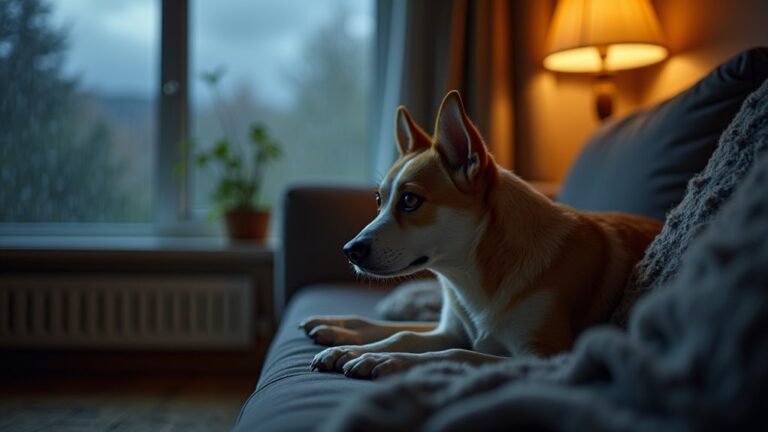

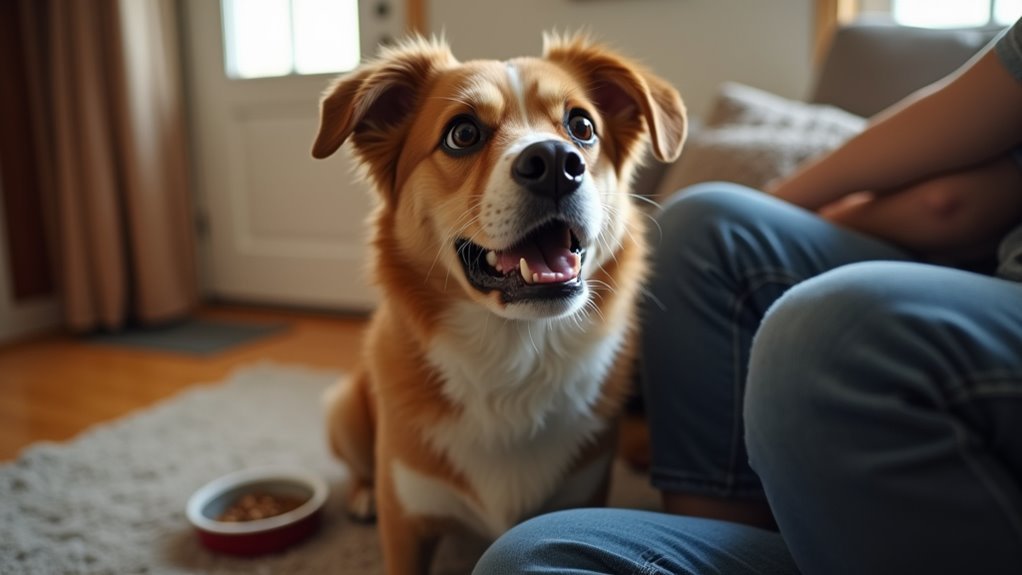

Dogs whine for clear reasons: excitement, anxiety, pain, attention-seeking, or unmet needs. The sound’s tone and timing often reveal the cause. A high, bouncy whine usually signals joy or eagerness. A low, steady whine can indicate fear, discomfort, or stress. Watching posture, facial cues, and context helps pinpoint what the dog is communicating.
What Does Dog Whining Mean?
A single whine can mean a lot, and that’s what makes it so hard to read at the outset. You need to look at the whole moment, not just the sound. Your dog’s vocal modulation can shift with excitement, worry, or a wish to connect, and body language cues help you sort it out.
A tucked tail, soft eyes, or a crouched stance can point to uncertainty. A bright posture and quick whining may show enthusiasm instead. In case your dog whines near you, he might want attention, comfort, or access to something he values.
Sometimes the sound is a quiet request, and sometimes it’s a signal that something feels off. Once you notice the pattern, you start grasping your dog with more confidence and care.
Why Does My Dog Whine So Much?
When your dog whines a lot, there’s usually a reason behind it, and it’s often more than “just being noisy.” Dogs use whining to ask for attention, show excitement, signal stress, or point out a need that feels urgent to them.
You might notice it whenever your dog wants food, a walk, comfort, or a little reassurance from you. Sometimes, breed tendencies make certain dogs more vocal, while sleep whimpering can happen during dreams and doesn’t always mean distress.
Should the whining feels sudden, constant, or paired with limping, hiding, or restlessness, it could point to pain or anxiety. Through watching the pattern, you can understand what your dog is trying to tell you and respond in a way that helps both of you feel calmer.
Dog Whining From Excitement
As your dog whines with excitement, you’ll often hear it right before a walk, playtime, or a visitor arrives.
You might also notice quick tail wags, bright eyes, bouncing, or pacing because your dog can’t quite hold in the thrill.
In these moments, a calm greeting can help lower the hype and ease the whining.
Excitement Triggers
Excitement can make your dog whine almost instantly, especially during moments that feel big and fun, like greetings, playtime, or the second you reach for the leash. You might hear greeting yips whenever your dog’s joy spills over, and that’s normal. | Trigger | What You Could Hear | What Helps |
| — | — | — |
|---|---|---|
| You arrive home | quick whines | stay calm |
| You grab toys | sharp squeaks | pause a moment |
| Guests walk in | happy barking | use short greetings |
| Leash time | keen whining | wait for quiet |
| Busy sounds | soft cries | reduce sensory overstimulation |
Whenever your dog’s arousal rises, the noise can feel automatic, not rude. So, you can help by keeping moments simple and steady. That way, your dog feels included without getting swept up in all the buzz around them.
Anticipation Signs
Your dog couldn’t be barking just to make noise. Once you notice anticipation body language, like a bright stare, wiggly hips, or a lifted tail, your dog could be telling you a walk, meal, or visitor feels close. You may also see pre excitement pacing, quick spins, or little hops before the big moment. That whining often comes from happy tension, not trouble.
- Watch for fast breathing and perked ears.
- Notice once the whining starts near a leash, bowl, or door.
- Keep greetings calm so your dog can settle faster.
Should you answer this excitement with loud praise or rushing, you can feed the squeal. Instead, stay steady, offer quiet cues, and let your dog learn that calm behavior gets the good stuff and helps them feel safe.
Attention-Seeking Dog Whining
Your dog might whine because it has learned that noise brings you closer, and even a quick look or “what’s wrong?” can reward the habit.
Over time, that response can turn whining into a routine way to ask for petting, treats, toys, or your full attention.
Should you want to change it, stay calm and reward the quiet moments instead.
Attention Reinforcement Patterns
As soon as a dog whines for attention, the habit can grow fast because almost any response teaches him that whining works. Your response timing matters a lot. Should you look at him, speak, or reach for him right away, he learns that noise opens the door to connection. Instead, stay calm and wait for a quiet moment. That’s how attention extinction starts to work.
- Turn away whenever the whining begins.
- Reward the initial quiet pause with praise or petting.
- Keep your reactions steady so he can trust the new pattern.
Once you answer only after silence, you help him feel included without feeding the old cycle. That creates a kinder rhythm at home, where he can relax and earn attention in a way that feels clear and fair.
Learned Whining Habits
Learned whining often starts with a simple win, and then it turns into a habit that sticks.
Whenever you answer with petting, food, or even a quick look, your dog learns that whining works. Over time, owner inconsistency can make this worse, because your dog never knows which try will pay off. That uncertainty can keep the habit alive.
Response timing matters too, since a fast reply after the whine teaches the wrong lesson.
Suppose you want your dog to feel secure and included, stay calm and clear with your cues. Reward the quiet moments that you like, and your dog will begin to trust that peaceful behavior gets noticed. This helps you build a kinder routine together.
Ignoring Without Reward
Whenever attention-seeking whining starts, the best move is often to make it go nowhere. Should you give eye contact, talk back, or touch your dog, you might reward the sound. That’s why ignore training works best whenever you stay calm and steady. Use a quiet silent treatment, then wait for a pause before you respond.
- Turn away and keep your face neutral
- Reward the initial quiet moment with praise or a treat
- Give your dog a clear, regular routine
This approach helps your dog feel safe, not shut out. You’re teaching that calm behavior brings connection, which is what your dog really wants. Should the whining grow loud or sudden, check for boredom, stress, or a need that needs real help.
Dog Whining From Anxiety or Fear
Whenever your dog whines from anxiety or fear, they’re usually not trying to be dramatic, even though it can sound that way. You might notice it during noise phobias, crate hesitation, or whenever new people crowd their space. In those moments, your dog is asking for safety, not attention.
Their body could look tense, with wide eyes, a tucked tail, or slow steps. You can help through keeping your voice calm, lowering the stress around them, and giving them a safe place to retreat.
Should fireworks, storms, or sudden changes set them off, stay nearby and offer steady comfort. Once you spot the trigger, you can support your dog better and help them feel like part of your team.
Dog Whining From Boredom
Should your dog whine more whenever nothing much is happening, boredom could be the reason. You could notice other signs too, like pacing, nudging you, or staring at the door as though the day requires a meeting.
Dogs often need more mental work, exercise, and play than they’re getting, and that extra energy can come out as whining.
Signs Of Boredom
A bored dog often whines because he’s energy to spend and nothing useful to do with it. You might notice pacing, sighing, or following you from room to room. He could stare at the door, flop down, then pop up again as though he’s waiting for the fun to start. That restless pattern can make you feel like you’re both stuck in the same slow afternoon.
- He keeps nudging you for play.
- He checks the same spots again and again.
- He settles, then quickly gets restless.
To help, give him interactive puzzles, short training games, and sensory enhancement like sniffing mats or safe scent trails. These activities let him join your routine and feel included. Once his day has variety, his whining often fades, and your bond feels calmer too.
Missing Mental Stimulation
Left without enough to contemplate about, many dogs start to whine because their brains are asking for a job.
Whenever your dog has nothing interesting to do, that sound can become a way to ask for help, company, or change. You can ease this through offering creative enrichment that makes your dog reflect, sniff, and solve simple problems. Try hiding treats, rotating toys, or using interactive puzzles that reward calm focus.
These small tasks give your dog a purpose and help the day feel less empty. You don’t need fancy gear, either. A cardboard box, a towel roll, or a treat maze can spark real interest.
Once you meet that need, your dog often feels more settled, and the whining might fade because life finally feels engaging again.
Exercise And Play Needs
Many dogs whine whenever they’ve extra energy, because their bodies and minds both want a job to do.
Whenever you skip walks or games, your dog might feel stuck and start asking for action.
You can help through building a steady routine that mixes movement and fun.
- Take brisk walks to burn off restlessness.
- Use structured play like fetch or tug with clear start and stop cues.
- Try endurance training in short, safe sessions for active dogs.
After exercise, add a calm chew or puzzle toy so your dog can settle.
This balance helps your dog feel included, tired in a good way, and less likely to complain for attention.
Should your dog still whine, check whether the schedule needs more playtime or variety.
Is Your Dog Whining Because Something Hurts?
Provided your dog’s whining sounds new, louder, or more desperate than usual, pain could be the reason. You know your dog best, so trust that uneasy feeling whenever the sound seems off. Concealed injuries, sore joints, tooth pain, or tummy trouble can all make your pup cry out. Watch for subtle lethargy, limping, licking one spot, guarding, or flinching whenever you touch them.
| Clue | What you might notice | Why it matters |
|---|---|---|
| Limping | One leg looks weaker | Possible injury |
| Guarding | They avoid touch | Pain response |
| Quiet slump | Subtle lethargy | They don’t feel well |
If whining starts after a rough jump, a play roughhouse, or a fall, call your vet. You’re not being dramatic. You’re being a good teammate.
Whining for Food, Water, or Potty Breaks
Sometimes whining is your dog’s way of saying, “Hey, I need something right now.” In case the sound shows up around meal time, after a long stretch without water, or whenever your dog is clearly asking to go outside, the message could be simple and practical.
- Check the bowl initially so you can rule out hunger or missed hydration cues.
- Watch for potty signaling like pacing, sniffing, or standing near the door.
- Keep a steady routine so your dog feels safe and knows what comes next.
Whenever you answer these needs quickly, you help your dog feel understood, and that can lower the whining.
You also build trust, because your dog learns you listen. Provided the whining stops after food, water, or a potty break, you’ve likely found the reason.
Dog Whining During Training or Play
When you train or play with your dog, whining often means they’re excited, frustrated, or both. Your dog might whine whenever a reward feels close, a toy is just out of reach, or the next cue takes too long.
Should you stay calm and reward quiet moments, you can help your dog settle and learn more clearly.
Training Frustration
- Keep sessions short and upbeat.
- Reward calm, quiet moments right away.
- Make each step easier whenever whining starts.
During training, guide your dog with simple wins, then pause before stress builds.
Should you be playing too, use the same calm rhythm so your dog feels safe with the rules.
That steady approach helps your dog stay connected to you instead of getting stuck in the moment.
Excited Play Whining
Excited play can make whining pop up fast, even in a dog that seems otherwise happy and well-behaved. You could hear it whenever you grab the leash, show a toy, or start a game, and the sound often comes in short bursts. That’s because your dog’s energy is climbing and play escalation is building.
The whining can feel loud, but it usually means your dog is excited and wants the fun to keep going.
You can help through keeping your own energy steady and giving clear, simple cues. Short pauses, calm praise, and quick resets can keep the moment friendly. Should you stay relaxed, your dog can settle into the game instead of spinning higher.
That way, you both stay in the same happy groove.
Reward Expectation
A lot of dogs whine during training or play because they’re hoping for a reward, and that hope can build fast. Whenever you hand over a treat, toss the ball, or say “good dog,” your pup learns that whining might pay off. That’s why reward timing matters so much. In case you respond after the whine, you can accidentally teach more of it. Instead, wait for quiet, then reward that calm moment.
- Keep your cues clear and your timing steady.
- Use expectation management so your dog knows what comes next.
- Praise patience, not noise, and you’ll feel more in sync.
Whenever you stay consistent, your dog feels safer, and your training sessions start to feel smoother for both of you.
Puppy Whining: What’s Normal?
Puppies often whine for simple, normal reasons, and usually they’re just trying to tell you something. You could hear it whenever your puppy wants food, a potty break, a cuddle, or a little help settling in.
During crate training, whining can mean your pup feels unsure, so keep sessions short and calm. Good sleep schedules also matter, because overtired puppies get noisy fast.
You may notice more whining after play, during greetings, or while they’re alone for a moment. That’s often just excitement, not a problem.
Still, should your puppy whine nonstop, seems hurt, or acts upset for long periods, pay attention and check for a real need. With patience, you help your puppy feel safe, seen, and part of your home.
Senior Dog Whining and Disorientation
As dogs get older, whining can mean more than just a simple request for attention, and disorientation can make the sound seem even more worrying. Whenever you notice your senior dog pacing at night, staring at walls, or seeming lost in familiar rooms, cognitive decline could be part of the scene.
- You might hear more whining after sunset.
- Your dog could forget where you are.
- Small changes can feel bigger and scarier.
These signs can make your dog feel unsure, and you might feel it too. A gentle routine, dim lights, and calm reassurance can help your dog feel less alone. Should the whining come with confusion, restlessness, or sudden behavior changes, you’ll want to talk with your veterinarian soon.
How to Stop Dog Whining at Home
Should your senior dog’s whining comes with confusion or restlessness, the next step is to focus on what you can change at home. Start by keeping routines steady, because dogs feel safer when meals, walks, and bedtime happen on time.
Then add environmental enhancement with puzzle toys, sniffing games, and gentle chew time so your dog has something rewarding to do. In case your dog seems uneasy, try calming aids like a snug wrap, soft music, or a favorite blanket.
You can also ignore attention-seeking whining and reward quiet moments right away. Keep greetings short and calm, since big reactions can stir things up. Most of all, stay patient. Your dog isn’t trying to give you a hard time. They’re asking for help, and you can answer with consistency.
When Dog Whining Needs a Vet
Provided your dog’s whining starts suddenly, sounds more intense than usual, or comes with other changes, a vet visit is the right next step. You know your dog best, and that gut feeling matters. Whenever whining pairs with limping, vomiting, hiding, shaking, or trouble eating, medical causes move to the top of the list.
- Ask yourself whether the sound feels new or urgent.
- Notice changes in movement, appetite, or bathroom habits.
- Share the timeline so your vet can choose diagnostic evaluations.
A clinic visit can bring real comfort, because it helps you rule out pain, injury, or illness fast. Your vet might check your dog’s body, then use diagnostic evaluations to find what’s going on. That way, you can stop guessing and start helping your buddy feel safe again.
How to Prevent Dog Whining
Now that you know on what occasions whining could signal pain or illness, you can start cutting down the everyday triggers that keep it going. Start with consistent routines for meals, walks, play, and bedtime, because predictability helps your dog feel safe.
Next, give enough environmental stimulation with chew toys, puzzle feeders, sniff walks, and short training games so boredom doesn’t sneak in.
Whenever your dog whines for attention, stay calm and wait for quiet before you respond. In case excitement sets him off, keep greetings short and low-key.
Also, meet basic needs on schedule, so hunger, thirst, and bathroom breaks don’t turn into vocal protests.
Finally, notice stressors promptly and adjust the space, so your dog can settle in with you, not against you.
Frequently Asked Questions
Can Certain Dog Breeds Whine More Than Others?
Yes, some breeds do whine more, due to breed tendencies and vocal genetics. You will often notice it in dogs bred for close teamwork, since they are tuned to communicate, seek connection, and stay engaged with you.
Why Does My Dog Whine When Seeing Other Dogs?
Your dog whines at other dogs because social excitement and leash reactivity surge together; many dogs vocalize as arousal jumps. You can calm greetings, reward quiet focus, and help your dog feel included.
Can Whining Be a Sign of Submission or Appeasement?
Yes, your dog’s whining can signal submission or appeasement, especially when paired with body language cues like a tucked tail or lowered posture. You could also reinforce it through vocal conditioning whenever you respond quickly, warmly, or repeatedly.
Does Whining Always Mean My Dog Wants Something?
No, it does not always mean that. You may notice it appear like a signal — an emotional expression, attention seeking, stress signal, or learned behavior. Watch the pattern and you will better understand what your dog needs.
Why Does My Dog Whine After Being Corrected?
You’re likely hearing vocal stress after correction, plus a learned response that gets attention. Your dog might feel emotional discomfort or uncertainty, so keep corrections calm, brief, and reward the behavior you want instead.