

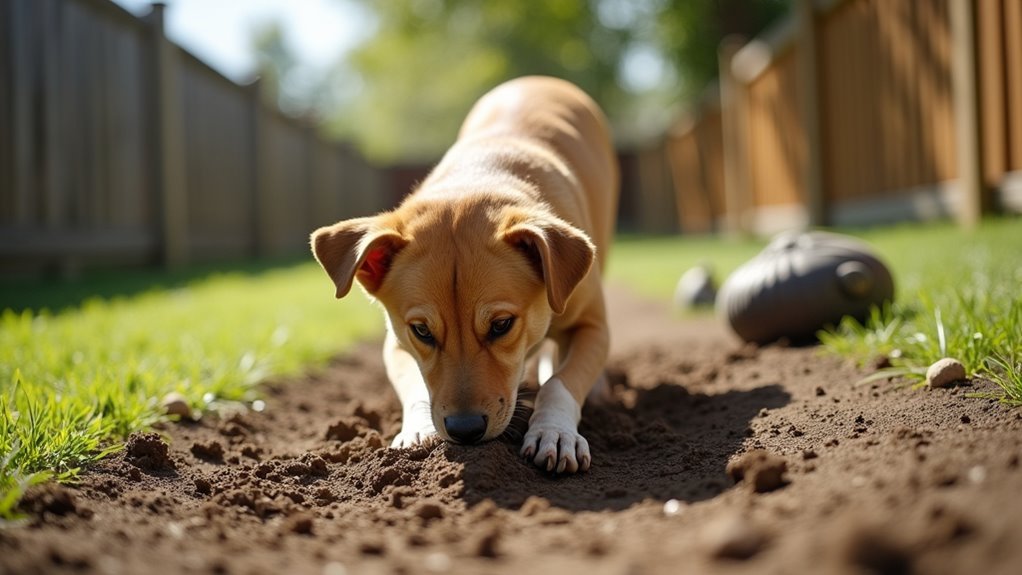

Dogs dig holes for clear reasons rooted in instinct, comfort, and attention-seeking. They chase scents, hunt small animals, create cool spots to lie in, or burn off extra energy. Certain breeds have stronger digging drives built into their genetics. Soil conditions, pests, or buried objects can trigger rapid digging episodes. Once the cause is identified, targeted solutions like extra exercise, training, deterrents, or a designated digging spot help reduce destruction and keep dogs happier.
Why Do Dogs Dig Holes?
Dogs dig holes for a lot of very normal reasons, and most of the time they’re not being naughty just to put your patience to the trial. You might see digging rituals whenever your dog feels playful, restless, or simply following instinct. Some dogs also have soil preferences, and they’ll choose loose, cool, or sandy ground because it feels right under their paws.
You’re not contending with a bad dog here; you’re seeing natural behavior in action. In case your dog keeps choosing one spot, that spot could just fit their comfort, scent, or habit. Once you understand that, you can stop feeling frustrated and start feeling more connected. Then you can look at the pattern with calm eyes and see what your dog is telling you.
Common Reasons Dogs Dig in the Yard
Now that you know digging is often just a normal dog habit, it helps to look at the real reasons it shows up in your yard. You might see it whenever your dog feels bored, anxious, or full of extra energy.
Some dogs dig after smells from moles, voles, or grubs, while others dig to cool off on hot days or make a snug resting spot.
Seasonal patterns can matter too, since warm weather and shifting routines frequently change behavior. Your yard’s soil composition also plays a part, because loose dirt is easier to move and invites digging.
Sometimes dogs dig near fences, garden beds, or shaded corners because those spots feel useful, exciting, or comforting to them.
Which Breeds Are Most Likely to Dig?
Terriers are some of the most enthusiastic diggers, and that’s no accident. Should you live with one, you’re sharing space with a true earth-loving teammate. Their hunting roots make them quick, bold, and ready to tunnel after concealed scents.
You’ll also see digging in northern breeds like Huskies and Malamutes, which are natural abundant earth lovers and often dig to make a cool spot. Many scent work breeds, such as Beagles and Dachshunds, might also start pawing when a smell pulls them in.
Female dogs sometimes dig more for nesting, while some males show roaming-style digging near fences. So in case your dog loves to dig, you’re not alone. It often comes from breed instincts, not bad manners, and that can help you feel more patient and connected today.
What Triggers Dogs to Dig at Home?
At home, digging usually starts as something in your dog’s world feels off, too empty, too hot, too exciting, or too stressful. You might see your dog scratch rugs, paw at beds, or nose into corners whenever boredom builds and indoor enrichment is missing.
Stress can do it too, especially whenever your dog feels alone, unsure, or keyed up. Some dogs dig because their substrate preference pulls them toward soft blankets, carpet, or cushions that feel den-like.
Others follow instinct and try to cache toys, make a nest, or chase a smell near a wall. Hot rooms, noisy homes, and sudden changes can all spark the habit.
Once you notice the trigger, you can better understand your dog and help them feel like they belong.
How to Stop Dog Digging
To stop your dog from digging, start by spotting what’s pushing the behavior, like boredom, stress, heat, or concealed critters.
Once you know the trigger, you can step in prematurely and guide your dog toward something better.
Then you can offer safer outlets, like a dig pit, more exercise, or a fun training game that gives those busy paws a job.
Identify Digging Triggers
Before you can stop your dog from digging, you need to spot what’s setting it off. Watch for environmental cues like hot ground, fence lines, or busy yards, and notice medical causes in case the digging starts suddenly. Your dog might be telling you something, and you’re not alone in figuring it out.
| Trigger | Clue | What it could mean |
|---|---|---|
| Heat | Digs in shaded spots | Needs cooler ground |
| Pests | Fixates on one area | Chasing scents or prey |
| Stress | Digs when alone | Anxiety or worry |
You can also look for changes in routine, new animals nearby, or less playtime. These clues help you connect the dots without guessing. Once you understand the pattern, you’ll feel more confident, and your dog will feel more understood too.
Redirect With Alternatives
Once you spot the trigger, give your dog a better job to do right away. In case boredom starts the digging, swap in a walk, fetch, tug, or a quick scent game. This kind of environmental enhancement helps your dog feel busy and included, not left out.
Should your pup still want to dig, offer a sandbox or a soft blanket pile as a safe outlet. You can also use indoor alternatives like puzzle feeders, lick mats, or training sessions on rainy days.
Keep the new task fun and rewarding, and praise your dog the moment they switch. That fast redirection teaches, “This choice pays off.” With practice, your dog learns that your yard isn’t the only place to dig, and you both stay on the same team.
Best Ways to Redirect Dog Digging
The positive news is that you can usually steer your dog away from digging without turning your yard into a no-fun zone.
Start with sandbox training, so your dog learns one approved spot that feels exciting and safe. Add supervised playtime, because you can catch digging early on and guide your dog to the right place before the habit grows. Then make the new spot rewarding with praise, treats, and buried toys.
Next, give your dog daily exercise and short training games, since tired minds and bodies dig less. Also, block favorite problem areas with rocks or mesh, while keeping the sandbox easy to reach.
Assuming your dog heads back to a bed, calmly redirect again. Over time, you’ll help your dog feel included, busy, and understood.
When Dog Digging Signals Anxiety or Stress
Even with a good digging spot and plenty of exercise, some dogs still scratch at the ground while their nerves are running high. You might notice separation pacing, whining, or clinging before the digging starts. That tells you your dog isn’t being stubborn; they’re trying to cope.
Stress can also show up as grooming compulsion, trembling, or sudden restlessness, and the digging can happen at doors, windows, or quiet corners. Whenever your dog feels unsure, the ground can become a comfort cue, almost like a nervous habit.
Should you spot this pattern, stay calm and give steady reassurance. A predictable routine, gentle attention, and a safer emotional space can help your dog feel like part of the family again.
How to Protect Your Yard From Dog Holes
Protecting your yard from dog holes starts with grasping what’s pulling your dog to dig in the initial place, because a simple block on the ground won’t fix a bored or worried dog. You can then build a yard that feels safe for you and fair for your pup.
Try these steps:
- Add soil barriers under fence lines and garden edges.
- Use plant friendly fencing around beds and young shrubs.
- Give your dog a digging zone with loose sand.
- Check for pests, shade, and enough daily exercise.
Next, make the yard less tempting by filling old holes and keeping toys nearby. Whenever you guide your dog with patience, you protect your space and help them feel like they still belong there. Small changes really do add up.
Frequently Asked Questions
How Can I Tell if My Dog’s Digging Is Medical or Behavioral?
You can tell by watching for sudden changes, signs of discomfort, excessive licking, appetite loss, or other unusual symptoms as these suggest medical issues. If your dog is otherwise fine it is probably behavioral, but assessing for pain and having a fecal analysis can help.
Do Puppies Dig Differently Than Adult Dogs?
Like a child exploring, you’ll notice puppies dig more playfully and impulsively than adults, because puppy instincts and developmental stages drive curiosity, teething, and energy. You can guide them with patience, training, and safe outlets.
Can Indoor Dogs Develop a Digging Habit Too?
Yes. Indoor dogs may dig out of boredom, anxiety, or habit. Provide indoor stimulation, extra play, and puzzle toys so they are less likely to destroy carpet and will feel more settled.
Is Digging More Common After a Move or Routine Change?
Yes, you’ll often see more digging after a move or routine change. You’re likely watching stress relief or territory marking as your dog adjusts, so keep comforting routines, exercise, and attention steady.
When Should I Contact a Trainer About Digging?
Contact a trainer whenever your dog’s digging keeps happening despite exercise and redirection, or if anxiety, escape attempts, or compulsive patterns show up. Seek professional help promptly to prevent escalation and to protect your yard.