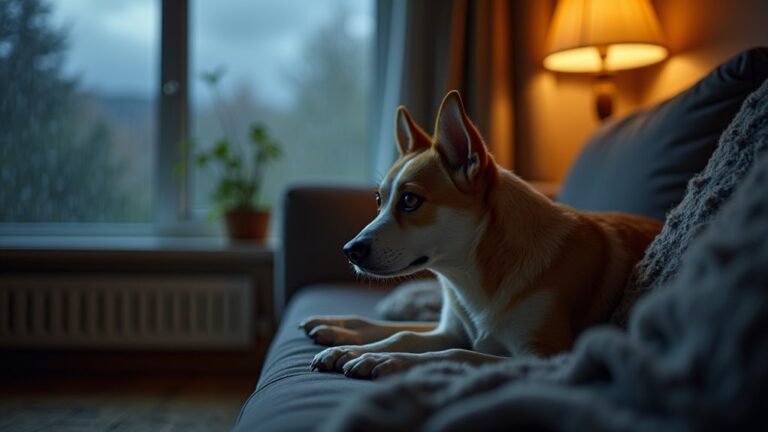

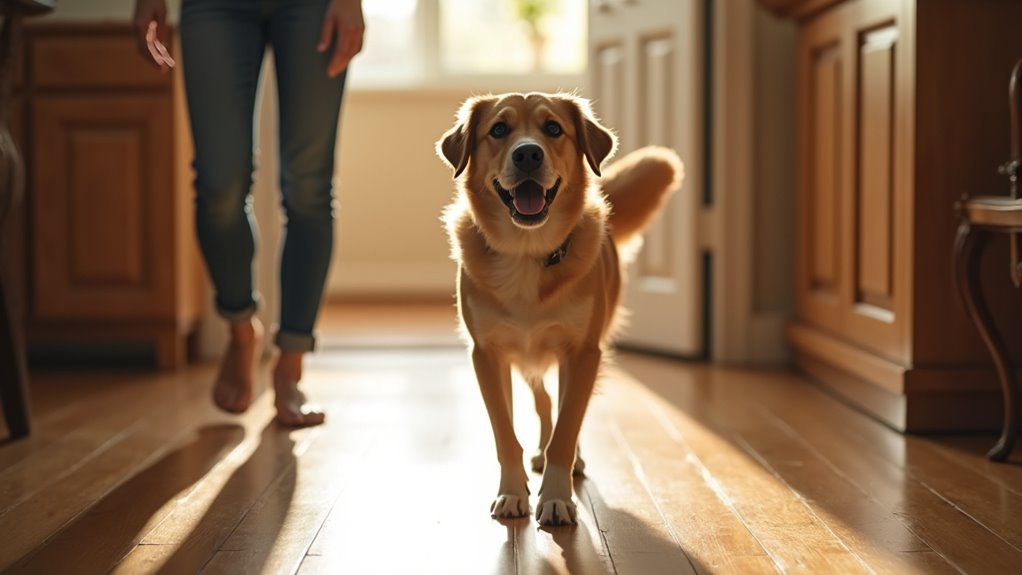

Your dog follows you everywhere because strong social bonding drives that behavior. Dogs also trail owners to access rewards like food, attention, or walks. Some follow due to separation anxiety or fear and need calming support. Boredom or lack of mental and physical stimulation can prompt constant shadowing. Reading body language and routine patterns reveals which reason fits your dog.
Why Your Dog Follows You Everywhere
Should your dog follows you everywhere, it’s usually a sign that you matter a lot to them. They might use scent tracking to stay close, because your smell helps them feel safe and connected.
Your dog also learns that you bring food, play, and comfort, so following you becomes a smart habit. In homes with strong routines, your movement can signal good things next. That’s why your pup could trail you from room to room, not because they’re rude, but because they’re tuned in to you.
Sometimes, close watching can also connect to resource guarding, where your dog feels safer near you or near valued spots. Most of the time, this behavior reflects trust, affection, and a wish to belong right beside you.
Is It Normal Dog Behavior?
Yes, it’s usually normal whenever your dog follows you because dogs often show attachment, trust, and simple curiosity.
Breed, age, and even your dog’s daily routine can make this behavior stronger, especially in human-focused dogs or older dogs who want reassurance.
It becomes concerning only whenever your dog seems panicked, can’t settle, or falls apart as soon as you leave.
Typical Attachment Behavior
Most of the time, your dog following you everywhere is completely normal, and it often means you’ve become their favorite person. This close habit usually grows from early imprinting and a secure base, so your dog feels safest near you. | Behavior | What It Means |
| — | — |
|---|---|
| Stays nearby | Trusts your presence |
| Watches your moves | Wants to share your routine |
| Follows from room to room | Seeks comfort and connection |
| Rests whenever you stop | Feels settled with you |
You’re not just a walker to them; you’re home, helper, and favorite teammate. That’s why they shadow you while you cook, fold laundry, or grab a snack. Their affection shows in these little steps, and it can feel sweet, funny, and a little clingy. Still, this kind of attachment is a normal part of healthy dog bonding.
Breed And Age Factors
Breed can play a big role in how closely your dog sticks to your side, and age can shape it too. Some dogs have a genetic predisposition to stay near people, especially breeds bred for work, herding, or close partnership. That doesn’t mean your dog is needy. It often means your dog is doing what feels natural.
Puppies might shadow you more as they learn your patterns and build trust. At this developmental stage, they lean on you for comfort and direction. Older dogs could also follow more when they want reassurance or find your movement easier to track.
When It Becomes Concerning
Should your dog follows you everywhere but still eats well, settles down, and acts relaxed, that behavior is usually normal. You probably have a loyal shadow, not a problem. Still, watch for signs that the closeness feels driven by fear or pain.
- Your dog panics as soon as you leave.
- Your dog won’t relax, even after reassurance.
- Your dog shows sudden changes from possible medical causes.
- Your dog reacts more during environmental stressors like storms or moves.
If the behavior comes with pacing, whining, accidents, or destructive chewing, talk with your vet. You deserve support, and your dog does too. A calm checkup can rule out health issues and help you spot anxiety before it grows.
Whenever you notice the shift soon, you can help your dog feel safe, steady, and more at ease.
How Bonding Drives Following Behavior
Bonding often lies at the heart of why your dog keeps trailing after you from room to room. As you built trust through meals, play, and quiet care, your dog learned that staying near you feels safe and good. Initially imprinting can deepen that link, especially provided you raised your dog young. Social referencing also matters, because your dog watches you to check what’s okay and what’s not. | What you do | What your dog feels | Result |
| — | — | — |
|---|---|---|
| You move | Security | Your dog follows |
| You pause | Connection | Your dog stays close |
| You relax | Trust | Your dog settles |
This closeness isn’t clinginess by default. It’s often affection in motion, a simple way your dog says, “You’re my person.”
Why Your Dog Follows You for Attention
Your dog might follow you because your attention feels rewarding, and even a quick glance or smile can teach that habit fast.
Whenever you keep reacting, you can accidentally train your dog to shadow you for more pats, words, or play.
Sometimes your dog also tags along because it’s bored and hopes you’ll make something fun happen.
Seeking Your Attention
Dogs often follow you because they’ve learned that being near you gets them something good, and that can be as simple as your attention.
When you talk, laugh, or look down, your dog feels included in your little world. That closeness can feel reassuring to both of you, like a tiny team.
- Your dog might nudge for attention signals, such as eye contact or a smile.
- A gentle pat can feel like winning the petting economy.
- Movement gives your dog a reason to stay close and check in.
- Warm responses allow your dog to feel safe, wanted, and part of the family.
Learned Attention Behavior
As soon as a dog keeps following you around, it’s often because that habit has paid off many times before. You could hand over a treat, a kind word, or a quick pat, and your dog learns, “Sticking close works.” That’s attention shaping in action, because your responses teach your dog which behavior gets your focus.
Even a glance, laugh, or soft talk can reward the pattern. Over time, your dog could shadow you just to keep that steady connection.
Should you want to change it, use training extinction through ignoring the follow-up behavior and rewarding calm, independent moments instead. Then you can give attention on your terms, so your dog still feels close without demanding your every move.
Boredom And Engagement
Sometimes, the reason your dog follows you everywhere is plain old boredom. Should your dog doesn’t have enough to do, you become the most interesting thing in the house. That doesn’t mean you’re doing anything wrong. It just means your dog wants more engagement and a job.
- Offer interactive toys that make your dog ponder and move.
- Add environmental enrichment, like sniffing games and safe chew spots.
- Break up the day with short training sessions or fetch.
- Rotate toys and activities so your dog doesn’t get tired of the same routine.
When you give your dog more to investigate, follow, and solve, you can turn clingy shadowing into happy teamwork.
When Curiosity Keeps Your Dog Nearby
Your dog might trail behind you from room to room simply because life with you looks interesting. While you open cabinets, move dishes, or reach for a leash, your dog notices every clue. Curiosity makes nearby moments feel worth watching, and that can look like quiet shadowing.
You can support this with environmental enhancement, like puzzle toys, scent games, and short exploratory walks that let your dog gather fresh information. These activities give your dog other things to inspect, so your presence feels like part of a richer day, not the only attraction.
That’s a good sign, because it shows your dog feels safe enough to stay engaged. So should your companion keeps pace with you, they could simply be saying, “I want to see what happens next.”
How Routine Reinforces the Habit
Your dog learns your daily rhythm fast, so meal times, walks, and bedtime can start to feel like clues that guide every step you take.
When your movement keeps leading to food, attention, or a favorite outing, your dog starts to expect good things each time you leave a room. Over time, that predictable pattern can turn simple following into a strong habit.
Daily Patterns Build Expectation
Dogs are great pattern readers, so daily routines can make them follow you even more closely. Whenever you move at the same times each day, your dog starts to expect good things from you and stays near you to keep up.
- Environmental cues like shoes, a leash, or the kitchen light can signal what’s next.
- Meal timing tells your dog that breakfast or dinner is coming soon.
- Your steps from room to room can mean attention, play, or a treat.
- Repeated success teaches your dog that sticking close feels safe and rewarding.
Predictable Routines Strengthen Following
Whenever a routine stays the same, it can quietly train your dog to follow you more often, because predictable actions start to feel like clues. Assuming you grab your keys after breakfast, your dog learns that meal timing, doors, and movement belong together. Then he starts trailing you, hoping to be part of what happens next.
Environmental cues matter too, since a certain sound, path, or routine can tell him a reward is coming. You might notice this most before walks, treats, or bedtime. And once following works, the habit gets stronger through attention, praise, or a quick pat.
Healthy Attachment or Separation Anxiety?
Sometimes a dog that sticks close is showing love, not worry, and that’s a vital difference to notice. Your dog might see you as a secure base, shaped by attachment history and daily trust.
- A calm dog relaxes whenever you move around the house.
- He eats, plays, and settles without trouble while you’re busy.
- He greets your return with joy, not panic.
- He can rest alone for short periods and still feel safe.
Whenever your dog stays near because you’re his favorite person, that closeness builds connection, not fear. In that case, following you can feel like a warm “we’re together” habit, almost like a furry shadow with purpose. Should he also handle short separations well, you’re likely seeing healthy attachment.
Signs Your Dog Follows You From Anxiety
Should your dog follow you from room to room because he feels uneasy, the clues usually show up in more than just his footsteps. You might notice stress signals like panting, pacing, whining, tucked ears, or wide eyes whenever you get up. He could cling to you, ignore toys, or struggle to relax even when nothing exciting is happening. In these moments, his body says he wants comfort, not just company. You can help through keeping routines steady, giving calm praise, and using coping strategies such as quiet spaces, chew toys, or gentle enhancement.
Should he settle only when you’re near, his following could come from worry. Pay attention to whenever it starts, because timing often reveals what’s making him feel unsettled.
Separation Anxiety vs. Healthy Closeness?
Whenever your dog sticks close to you, it can feel sweet, but it can also make you question whether something is off. Healthy closeness looks calm and flexible. Your dog checks in, then settles, eats, and relaxes as you move away.
- Normal bonding: Your dog wants company and feels safe with you.
- Routine cues: Your steps might signal food, walks, or attention.
- Stress signs: Separation anxiety shows panic, whining, or escape attempts.
- Deeper causes: past trauma or resource guarding can make your dog stay near to feel secure.
How to Encourage Independent Behavior
Helping your dog feel safe on their own often starts with small changes that teach calm confidence, not fear.
You can build this by giving your dog a cozy spot, then praising quiet moments away from you.
Try environmental enrichment, like puzzle toys, chew items, and safe scents, so your dog has something rewarding to do.
Next, use gradual desensitization by stepping away for a few seconds, then coming back before worry builds.
Slowly add more time as your dog stays relaxed.
You can also vary your routine, so your dog learns that your movement doesn’t always mean they must tag along.
Short, positive practice sessions work best.
Whenever you stay patient and consistent, your dog can start enjoying little moments of independence while still feeling connected to you.
What Your Dog’s Body Language Means
Whenever your dog follows you around, their body language can tell you a lot about what’s going on inside. You can read the message by watching small signals together, not one clue alone.
- Ear position: Forward ears often show interest, while pinned-back ears can mean worry.
- Pupil dilation: Wide pupils might show excitement, stress, or intense focus.
- tail posture: A loose, mid-level tail usually looks calm, while a stiff high tail can show tension.
- ear flicking: Quick flicks can indicate your dog is tracking sounds, feeling unsure, or checking in with you.
Whenever these signs look soft and relaxed, your dog probably feels safe beside you. In case they seem tight or restless, they could want comfort, routine, or a little space.
When Following Behavior Needs a Vet Check
Provided that your dog follows you around all the time, it’s usually sweet, but there are moments whenever it can point to a real health or stress issue. Should the shift feel sudden, talk to your vet and ask about medical causes. A quick pain assessment can also help, since sore joints, belly pain, or ear trouble can make your dog clingy. Watch for signs like limping, shaking, hiding, whining, or not eating.
| Clue | Why it matters |
|---|---|
| Sudden shadowing | Could mean illness or anxiety |
| Changes in appetite | Might signal discomfort |
| Restlessness at night | Often links to stress or pain |
Should your dog follows you and seems panicked whenever you leave, don’t brush it off. You deserve support too, and your dog does, too. A vet visit can help you both feel better.
Frequently Asked Questions
Why Does My Puppy Shadow Me More Than My Adult Dog?
Because your puppy is in a more dependent developmental stage with stronger socialization differences, so you will observe extra shadowing. Isn’t it lovely when you feel chosen? Your adult dog is likely more secure and independent already.
Can Certain Breeds Be Naturally More Clingy Than Others?
Yes, certain breeds can be naturally more clingy than others because breed tendencies and genetic predisposition shape how closely they stick beside you. You will often see this in dogs bred for partnership, protection, or constant companionship.
Does My Dog Follow Me Because of Pack Instinct?
Yes, your dog might follow you because pack instinct makes them seek your social hierarchy and leadership bonds. They are wired to stay near the group, and they will often treat you as their trusted protector.
Why Does My Senior Dog Follow Me More Closely Now?
Your senior dog might follow you more closely because age related anxiety and vision decline make you feel like a safer guide. You can comfort them with routine, reassurance, and gentle predictable movement.
Can Boredom Make My Dog Follow Me Around All Day?
Yes. Boredom can make your dog shadow you all day, especially if you are their main source of fun. Add mental stimulation and environmental enrichment with toys, puzzles, sniff walks, and training so they feel more content.