

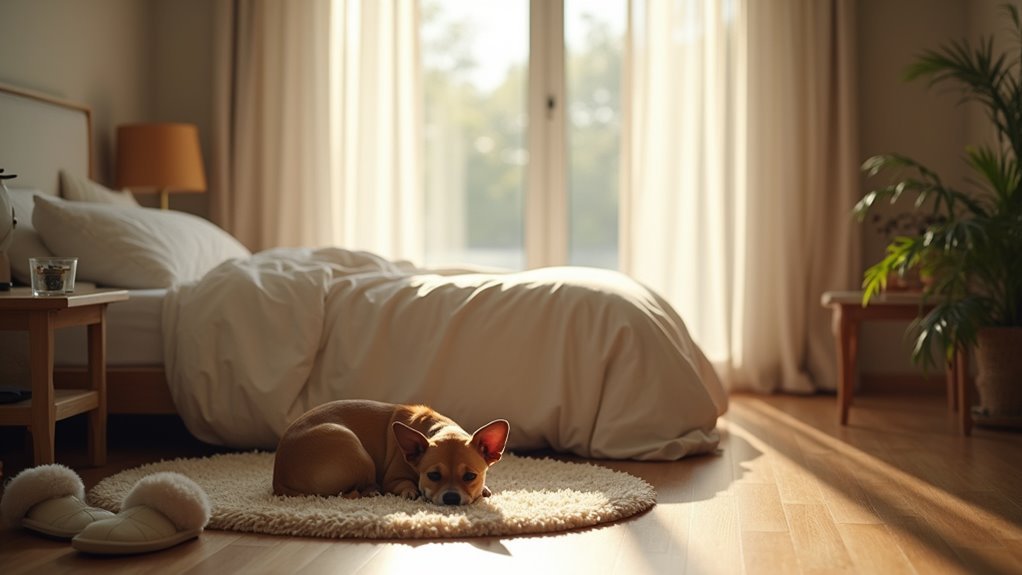

Dogs often sleep under the bed because that space feels like a safe, den-like refuge. It can be cooler and quieter than open rooms, offering shelter from noise and foot traffic. Persistent hiding can signal stress, pain, or age-related changes that reduce a dog’s desire for contact. Watch the frequency and behavior around the spot for clues about your dog’s needs. Small changes in routine, comfort, or health can explain why the bed becomes a preferred resting place.
Common Reasons Dogs Sleep Under the Bed
Provided your dog sleeps beneath the bed, there’s usually a reason that makes sense to them. You’re not seeing stubbornness; you’re seeing a need. Some dogs want a cozy den, much like crate training teaches them to settle in a small space. Others feel drawn there whenever noise, visitors, or a change in routine leaves them unsure.
In a busy home, your dog might also pick that spot to rest away from household traffic and social hierarchy pressure from other pets or even kids. Heat and comfort matter too, since the floor can feel cooler in warm weather. Should this hiding start suddenly, or your dog seems off, you’ll want to notice that shift.
Seeking Safety in a Den-Like Space
Once your dog sleeps beneath the bed, you might be seeing a normal need for a den-like hideout that feels safe and snug.
That enclosed space can help your dog feel protected from noise, movement, and too much household activity.
For a shy or stressed dog, this concealed spot can function like a private retreat where your dog can relax and feel in control.
Den-Like Comfort
Dogs often crawl under the bed because it feels like a safe little den. Your dog could love den preferences, and that’s normal. The low ceiling, dark edges, and snug fit can soothe nerves and make enclosed naps feel restful.
Once the room gets busy, this tucked-away spot can cut down on noise, movement, and extra attention. That calm can matter a lot provided your dog likes quiet, close-in spaces. You may notice your dog settle there after play, visitors, or a noisy day, then relax as if the world finally slowed down.
Supposing your dog looks calm, eats well, and acts like themself, this habit usually shows comfort, not trouble.
Hidden Safe Space
A dog concealing under the bed often isn’t being “difficult” at all, because that tucked-away spot can feel like a small safe room. You might notice your dog choosing this private retreat whenever the house feels loud, busy, or unpredictable. In that concealed sanctuary, your dog can relax without so much watching or touching.
| Clue | What it could mean |
|---|---|
| Cuddles less | Wants quiet |
| Hides after guests | Needs calm |
| Sleeps deeply there | Feels secure |
| Comes out slowly | Regains trust |
| Stays healthy | Prefers space |
If your dog still eats, plays, and greets you, this choice might simply show a need for protection and belonging. You can honor that need by keeping the area calm and offering gentle company nearby.
Staying Cool in a Quiet, Dark Spot
Under your bed, the air often stays cooler, which can feel great whenever your dog wants relief from a warm room.
That dark, low-traffic space also gives your dog a quiet refuge where movement and household noise fade away. Should your home feel busy or noisy, this concealed spot can offer the calm your dog’s body might be looking for.
Cooler Air Beneath Bed
Whenever the room feels too warm, the space beneath the bed can become a quiet little escape. You might notice your dog slipping there because cooler air settles close to the floor, and that can feel soothing on a hot day.
In some rooms, ventilation patterns move fresh air low and slow, so your dog finds a breezier pocket there. Also, mattress insulation can trap warmth above, making the open space below feel more comfortable.
Should your dog be healthy and relaxed, this choice usually means they’re just seeking comfort, not trouble. You can regard it as your dog’s way of saying, “I found my spot.” A small, cool nook can help them rest while still feeling close to your home.
Dark, Low-Traffic Refuge
In the hush beneath the bed, your dog could find the kind of calm that a busy room can’t offer. This dark, low-traffic refuge can feel like a nighttime sanctuary, especially whenever your dog wants less light and fewer eyes on them.
You might notice your pup slipping there after a full day, then settling into a low light retreat that feels safe and familiar.
- Your dog gets a quiet break from people moving around.
- The shaded space can help your dog relax without feeling watched.
- A tucked-away spot can match your dog’s need for privacy and comfort.
Escape From Household Noise
Should your home becomes loud, your dog could head under the bed to escape the noise and settle into a calmer spot. You might notice this during storms, kids playing, vacuuming, or visitors talking. Under the bed can feel like a soundproof retreat, where harsh sounds fade and your dog can relax.
It also gives your pup a break from busy rooms and constant movement. In that dark space, your dog can listen less and rest more. In case your home has quiet corners, your dog could choose them for the same reason.
You can help through keeping one calm area ready, with a blanket and steady routine. That way, your dog feels included, safe, and understood whenever the house gets too noisy.
Hiding From Noise and Activity
Should your dog slip under the bed whenever the house gets loud, that’s often a sign they’re trying to feel safer, not being stubborn. You can help by lowering the pressure around them and making the room feel calmer. Start with simple soundproofing tips like rugs, curtains, and a white-noise fan. Then use activity mapping to record at what times chores, kids, or visitors create the most commotion. That pattern helps you plan quieter rest times.
- Keep their bed nearby so they still feel part of the group.
- Give them a covered crate or blanket fort for a cozier retreat.
- Offer calm praise whenever they choose a safer spot.
If you respect that need for space, your dog can relax without feeling left out.
Signs Stress Is Driving the Behavior
Provided your dog keeps slipping under the bed, pay attention to the clues around that choice, because stress often leaves a clear trail. You might notice behavioral cues like tucked ears, a tight mouth, pacing, or a sudden wish to avoid touch.
On a stress scale, your dog could move from calm to uneasy whenever routine changes, loud guests, or a busy home pile up. You may also see less play, fewer tail wags, or more startle reactions.
Should your dog seems better only once the house quiets down, stress could be steering the habit. Stay close, keep the day steady, and notice what happens before the hiding starts. Your calm presence can help your dog feel safer without forcing a cuddle party.
Fear Triggers That Send Dogs Under Beds
Fear can send a dog under the bed in a hurry, especially provided something in the home feels loud, strange, or hard to predict.
Whenever you notice this, look for the trigger initially. A slammed door, a visitor, or a vacuum can start the fear, then trigger stacking can make your dog feel cornered fast.
- Sudden noise can feel bigger than you suppose.
- New people can break your dog’s sense of safety.
- Chaos from kids, pets, or repairs can overwhelm rapidly.
You can help through using predictable cues before busy moments, like a calm voice or a steady routine.
That gives your dog a safer path and helps you both feel more connected in the same home.
Why Dogs Choose the Bed at Night?
At night, your dog might slide under the bed because it feels safe, snug, and tucked away from the busy world.
That concealed space can act like a tiny den, so your dog can relax while still keeping close to you.
It can also reflect a natural pack instinct, since many dogs want comfort and connection without being right in the middle of everything.
Comfort And Security
Whenever your dog slips under the bed at night, it’s often because that spot feels safe, snug, and a little like a den. You can regard it as a safe retreat, where enclosed comfort helps your dog relax whenever the world feels busy or too open.
- The low space blocks noise and movement, so your dog can settle faster.
- The tight fit can ease worry, especially if your dog likes small, covered places.
- The darker area could help your dog feel tucked in, almost like sharing a quiet hideaway with the family.
Once you notice this habit, look at your dog’s mood and the home’s pace. In case your space feels calmer and more predictable, your dog might sleep with less tension and more trust.
Nighttime Pack Instinct
Because dogs are social in nature, your dog might sleep beneath the bed at night to stay close to the family while still keeping a little space of its own. That instinct fits nocturnal bonding, whenever your dog checks in on you while the house quiets down.
It also reflects pack synchronization, since many dogs relax best when they feel the group is nearby and settled. Under the bed gives your dog a cozy watchpost, so it can rest without losing touch with you.
Should your dog hears your breathing, footsteps, or soft movement, it could feel safer and more connected. In that sense, the spot isn’t rejection. It’s your dog’s gentle way of saying, “I’m here with you.”
Dog Breeds That Prefer Small Spaces
Some dog breeds are simply built for cozy, tucked-away spots, and that can make under-bed sleeping feel extra inviting. In case you notice this, you’re not weird, and your dog isn’t broken.
Small breed preferences often include tight corners, while burrowing breeds love nesting under blankets or beside furniture. That den-style comfort can help your dog feel safe and included.
- Terriers often squeeze into concealed spots to rest.
- Dachshunds and similar burrowers might dig in before settling.
- Toy breeds could choose low, covered spaces whenever the room feels busy.
Senior Dogs and Comfort-Seeking Behavior
As your dog gets older, you could notice that he starts choosing the space under the bed more often because it can ease sore joints and help him feel tucked away.
You might also see him picking that spot whenever he wants a warmer, softer rest, especially provided the room feels chilly or drafty.
Should he seem more nervous too, that quiet hiding place can be his way of coping with age-related anxiety and feeling a little safer.
Joint Pain Relief
For many senior dogs, slipping under the bed can be a quiet way to ease sore joints and find a more comfortable resting spot. You could notice this more whenever your dog’s joint mobility slows, because the low, tucked space can feel easier on aching hips, knees, or elbows.
Good pain management starts with watching for stiffness, hesitance to rise, or a shorter walk.
- Your dog might prefer a stable, low-pressure area.
- The concealed space can reduce extra steps and strain.
- A calm retreat helps your dog rest without feeling observed.
If this habit grows, check for limping or trouble climbing.
Whenever you stay alert and caring, you help your old buddy feel safe, understood, and part of the pack.
Warmer Sleeping Spots
Older dogs often seek warmer sleeping spots because comfort starts to matter more as their bodies slow down.
You might notice your senior dog drifting beneath the bed whenever the room feels chilly or the floor holds gentle radiated warmth. That concealed space can feel like a cozy nest, especially assuming blankets slide away or the main bed feels too firm.
You can make the area more inviting with heated mats placed safely nearby, or by offering a soft bed in a draft-free corner.
Whenever you notice this habit, regard comfort foremost. Your dog could simply want steady warmth, quiet, and a place that feels snug. Through meeting that need, you help your older companion rest easier and feel cared for at home.
Age-Related Anxiety
A warm spot under the bed can still appeal to a senior dog, but age can also bring a softer kind of worry that renders that concealed space feel extra safe. Whenever you notice this, you’re not alone, and your dog isn’t being odd. Age related anxiety can grow as memory decline makes familiar rooms feel less certain, so your dog might hide where sounds and movement seem smaller.
- Keep routines steady so your dog feels anchored.
- Offer a blanket or low bed nearby for easy comfort.
- Watch for pacing, confusion, or clingy behavior.
If your dog still seeks you out, that closeness matters. Your calm voice, gentle touch, and patient presence can help the bedroom feel less scary and more like home.
Puppies vs. Adult Dogs: Sleep Spot Differences
Puppies and adult dogs often use under-bed sleeping in different ways, and those differences can tell you a lot about what they need. Your puppy might slip there during crate training because the space feels small and safe, especially while it’s hitting new developmental milestones and learning your home.
An adult dog, though, often picks that spot after it has already learned the house rules and wants quiet, shade, or a little privacy. So, should your young dog hides there, it could just be exploring comfort. In the event your older dog does it, watch for changes in routine or stress.
Either way, you can help through offering calm rest spots and ensuring your dog still feels close to you.
Health Problems That Change Sleep Habits
Should your dog’s under-bed habit changes all of a sudden, health could be part of the story. You know your dog best, so trust that gut feeling whenever sleep patterns shift. Some medical causes, like joint pain, stomach upset, or an ear infection, can make your dog look for a quiet, concealed place. Medication effects might also leave your dog sleepy, unsettled, or less comfortable in bed.
- Watch for less bouncing and more stiffness.
- Notice appetite changes or extra licking.
- Check whether rest seems calmer in a cool, private spot.
These clues don’t mean panic, but they do mean you should pay attention. Whenever you notice several changes together, you’re helping your dog feel seen, safe, and supported.
When Under-Bed Sleeping Is a Red Flag
As your dog starts sleeping beneath the bed more often, it can seem cute initially, but certain patterns can point to a bigger problem.
Should your dog hides there after loud noises, guests, or big routine changes, that can be a behavioral warning.
You should also pay attention provided the change feels sudden, or suppose your dog seems withdrawn, shaky, or less social than usual.
Once under-bed sleeping comes with poor appetite, limping, vomiting, heavy panting, or low energy, it’s time for a medical evaluation.
Even though your dog still greets you, persistent retreat can mean pain or stress.
You know your dog’s normal habits best, so trust that inner check.
In case the pattern keeps growing, your vet can help you sort out what’s really going on.
How to Encourage a Better Resting Spot
To help your dog choose a cozier spot, start making a resting area that feels safer, softer, and more inviting than the space beneath the bed. You want your dog to feel like it belongs there, not trapped there. Place the spot in a calm corner, then keep your voice easy and warm.
- Use crate training cues gently, so your dog sees the area as a trusted choice.
- Add scent enhancement with a blanket that smells like home.
- Reward your dog whenever it settles there, even for a few minutes.
Next, keep the area consistent and quiet. Should your dog still hides, stay patient. You’re building comfort, and that takes time. Small wins matter, and your dog will notice the welcome.
Cozy Beds Dogs Actually Want to Use
Now that you’ve made a calmer place to rest, the next step is choosing a bed that your dog actually wants to use. Pick one that feels snug, not stiff, so your dog can curl up and breathe easy.
Look for orthopedic supports in case your dog likes to lean, because soft edges can mimic the safe feeling of a den. Should your dog runs warm, try raised loungers, since airflow can help them stay comfortable.
You should also match the size to your dog’s stretch style, because too much open space can feel lonely. Add a washable cover and a familiar blanket so the bed smells like home. Whenever comfort feels personal, your dog might finally choose the bed over the floor.
Frequently Asked Questions
Is Under-Bed Sleeping Normal for All Dog Breeds?
No, under bed sleeping isn’t normal for all breeds. You’ll see it more in small breeds and brachycephalic breeds, but any dog might do it for comfort, privacy, or stress relief.
Can My Dog Sleep Under the Bed After a Move?
Yes, your dog can sleep under the bed after a move. In a new home it can symbolize a small harbor; use gradual acclimation, scent items, and a safe space so your dog feels belonging.
Why Does My Dog Prefer Under the Bed at Night?
Your dog might prefer under the bed at night because it feels safer, quieter, and cozier. You are giving them cool spots, scent comfort, and a den like retreat that helps them relax and sleep.
Should I Worry if My Rescue Dog Hides Under the Bed?
Not necessarily—you should not panic. Your rescue dog might just need time, space, and safety. Use trust building, watch for changes, and consider a behavioral assessment should hiding feel extreme, sudden, or paired with illness.
How Can I Tell if My Dog Wants Privacy or Feels Anxious?
Watch your dog’s body language: relaxed posture, soft eyes, and easy breathing suggest privacy; tucked tail, trembling, or hiding from noise suggest anxiety. Give gentle space training and you’ll help your dog feel secure.