

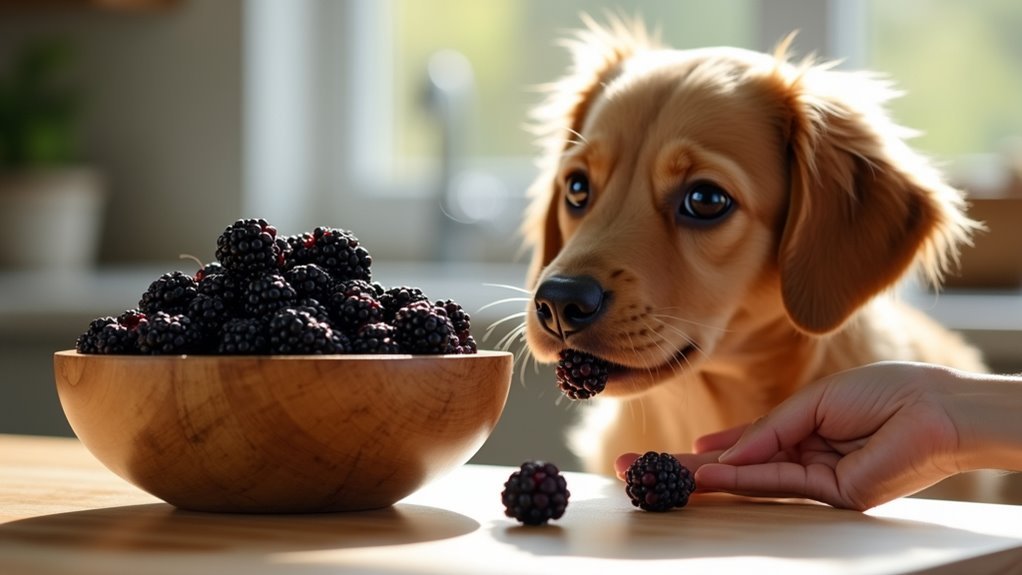

Yes, plain blackberries are safe for most dogs in small amounts. They provide fiber, vitamin C, and antioxidants that support digestion and immune health. Too many can cause stomach upset or diarrhea. Dogs with sensitive tummies, pancreatitis, or diabetes should avoid them. Always wash berries and serve whole or mashed, without sugar, syrup, or xylitol-containing sweeteners.
Can Dogs Eat Blackberries?
Yes, dogs can eat blackberries, and for most pups, these little berries are a safe and tasty treat provided you offer them in moderation.
You can feel good sharing a few fresh, plain berries because they’re generally safe and not toxic. Still, you should keep portion sizes small, since your dog only needs an occasional snack, not a full fruit bowl.
Seasonal availability can make blackberries easy to find in summer, but you can also buy them year-round.
Should you be picking them yourself, focus on foraging safety choosing clean areas away from pesticides, roads, and unknown plants. Wash the berries well, then start with one or two.
That way, you help your dog enjoy a simple treat while staying part of the pack.
Blackberry Benefits for Dogs
Blackberries do more than give your dog a sweet little snack. Their antioxidant profile helps fight cell damage, and that can support everyday wellness in a gentle way.
You also get fiber benefits, which could help keep your dog’s digestion steady whenever you offer a few berries as a treat.
Plus, blackberries bring vitamin C and other nutrients that make each bite feel like a smart choice, not just a tasty one. Should you like giving your dog rewards that feel fresh and wholesome, this fruit can fit right in.
You’re not just sharing food. You’re sharing a small moment of care that can help your dog feel included, happy, and loved whilst enjoying something simple and natural.
How Many Blackberries Can Dogs Eat?
A few blackberries can be a safe and tasty treat for your dog, but the right amount depends on your dog’s size, habits, and health.
Start with portion control: offer 1 berry for a tiny dog, 1 to 2 for a small dog, 2 to 5 for a medium dog, and up to 7 or 8 for a large dog. Keep treats under 10% of daily calories, so your dog still gets balanced meals.
In case your pup has berry allergies or a sensitive stomach, begin even smaller and watch for itching, gas, or loose stool.
Whenever you stay consistent, you help your dog enjoy a fun snack without overdoing it. Should your dog do well, you can use blackberries as an occasional reward.
How to Serve Blackberries Safely
To keep blackberry time safe and stress-free, start with fresh berries that you’ve rinsed well under cool water. Then check each one for stems, mold, or bruises, and toss any that look off. Serve them plain, with no sugar, syrup, or other extras.
Keep portion control in mind, so you offer just a few at the outset and watch how your dog handles them. You can halve the berries for small mouths, or gently crush them should your pup tends to gulp.
For a soothing treat, pay attention to serving temperature too. Chilled berries can feel invigorating, but room-temp berries might be easier for some dogs to enjoy. Offer them from hand or in a clean bowl, and keep the moment calm and friendly.
Signs Blackberries Upset Dogs
When blackberries don’t agree with your dog, you could notice vomiting, diarrhea, or a loose stool soon after eating them.
You might also see stomach pain signs like whining, restlessness, or a tense belly.
And should your dog suddenly skip a meal or seems less interested in food, that can be another clue that the berries upset their stomach.
Vomiting And Diarrhea
Even though blackberries are usually safe, too many can upset your dog’s stomach and lead to vomiting or diarrhea. Whenever that happens, your dog could also lose water and key minerals fast, which can strain gut flora and trigger an electrolyte imbalance.
You can help through pausing the fruit, then offering fresh water in small sips. Should your dog keep gagging, passes watery stool more than once, or seems weak, contact your vet soon.
Start with just one or two berries next time, and watch how your dog handles them. That way, you stay in tune with your pup and keep treat time friendly, calm, and easy on the tummy.
Stomach Pain Signs
A sore belly can show up in small but clear ways provided blackberries don’t sit well with your dog, and you’ll often notice it before things get messy. You might see abdominal tenderness whenever you touch the area, or your dog could pull away and protect the belly. Restlessness pacing can also pop up, especially assuming your dog can’t seem to get comfy.
- A hunched posture can mean the belly feels tight or sore.
- Whining, lip licking, or quiet groans might show discomfort.
- Gentle stretching or repeated lying down could signal gas pain.
Provided you notice these signs, stay calm and keep your dog close. You both deserve that steady, caring moment. Avoid more berries, and watch your dog closely for changes.
Changes In Appetite
At the point blackberries upset your dog’s stomach, you could also notice a change in appetite prior to anything else. Your dog might sniff the bowl, walk away, or eat much less than usual. That appetite suppression can show up before diarrhea or vomiting, so heed meal timing and how enthusiastic your dog feels at breakfast or dinner.
In case your pup usually races you to the bowl but now hesitates, trust that signal. You know your dog best, and small shifts often matter. Try pausing blackberries for a day or two, then offer plain food and water. Should appetite stays low, or your dog skips more than one meal, call your vet. Quick action helps you protect your buddy and keeps worry from growing.
When Dogs Should Skip Blackberries
You should skip blackberries in case your dog has a sensitive stomach, since even a small serving can lead to gas, loose stool, or vomiting.
You should also hold off should your dog have diabetes or weight concerns, because the extra sugar and calories can work against their health goals.
And in the event the berries look moldy, overripe, or questionable in any way, don’t offer them at all.
Dogs With Digestive Issues
Whenever tummy troubles are already part of your dog’s day, blackberries couldn’t be the best choice straight away. In case your pup has a sensitive stomach, start with fiber management and watch for loose stool, gas, or extra gurgles. A tiny taste can help you see how your dog reacts, but you don’t need to push it.
- Offer only one berry initially
- Skip berries during active vomiting or diarrhea
- Ask your vet about probiotic support should upset keep coming back
Because digestion can be touchy, you want treats that feel safe and familiar. Fresh water and simple foods usually work better whenever your dog needs calm meals. Provided blackberries cause discomfort, set them aside and choose gentler rewards your dog can handle with confidence.
Diabetes And Weight Concerns
At the outset your dog has blood sugar concerns or needs to lose weight, blackberries could require a hard pause, even though they’re safe for many other pups. You still can include them, but only with Portion control and Blood sugar monitoring. A few berries can fit into a treat plan, yet too many can add extra carbs and calories.
| Dog need | Berry choice | Your move |
|---|---|---|
| Diabetes | Plain blackberries | Ask your vet initially |
| Weight loss | Small servings | Track treats daily |
| Senior dog | Frozen, plain | Watch appetite |
| Small breed | 1 to 2 berries | Serve slowly |
| Busy home | Preportioned snacks | Keep them handy |
That way, you stay in the same corner as your dog, making smart choices together with calm confidence.
Moldy Or Overripe Berries
Even though blackberries are usually safe for dogs, moldy or overripe berries are a different story. You should skip them because they can upset your dog’s stomach and add unwanted microbes. With mold identification, look for fuzzy spots, odd colors, or a sour smell, since those signs mean the fruit’s gone bad.
Overripe berries can also turn mushy fast, which makes spoilage prevention harder provided you leave them in a warm bowl.
- Toss berries that feel slimy or leak juice
- Rinse and check each berry before sharing
- Store fresh fruit in the fridge right away
Should you be unsure, it’s kinder to your dog to pass on the snack. A fresh berry feels like a safe little win, and your dog deserves that peace of mind.
Other Safe Fruits for Dogs
Blackberries are just one of many dog-safe fruits you can share in small amounts, and they’re often a nice place to start because they’re simple, fresh, and easy to portion.
You can also offer apple slices and banana chunks whenever you want variety without making snack time feel complicated. Apples give crunch, while bananas add a soft, sweet bite, so your dog gets a little change of pace.
Just keep each fruit plain, wash it well, and remove seeds, cores, or peels that can cause trouble.
As you rotate safe fruits this way, you help your dog enjoy treats that feel special while still staying sensible. That balance can make you feel like part of a caring, treat-smart pack, and your dog gets to join the fun too.
Frequently Asked Questions
Can Puppies Safely Eat Blackberries?
Yes, you can safely offer puppies a tiny blackberry or two. They are low calorie, and ninety percent of a dog’s daily calories should come from food, not treats. Watch puppy digestion and start slowly when introducing solids.
Are Frozen Blackberries Okay for Dogs?
Yes, you can give your dog frozen blackberries in moderation. The frozen texture can help cool them down, but keep the serving size small, wash them first, and avoid any sweetened or processed versions.
Can Dogs Eat Blackberry Leaves or Stems?
No, you shouldn’t let your dog eat blackberry leaves or stems; they can irritate mouths and stomachs. Imagine a rough, green tangle under berry tea and garden mulch, and keep your pup to ripe fruit only.
Do Blackberries Interact With Dog Medications?
Blackberries usually don’t cause drug interactions, but you should still check with your vet, especially if your dog takes diabetes medications, blood thinners, or stomach medications. Veterinary consultation helps you keep treats safe and customized.
Should Diabetic Dogs Avoid Blackberries?
Not necessarily. You can sometimes offer diabetic dogs blackberries, but you should keep the fruit portion tiny and watch blood sugar closely. You will want your vet’s guidance, since your dog’s needs and tolerance can vary.